
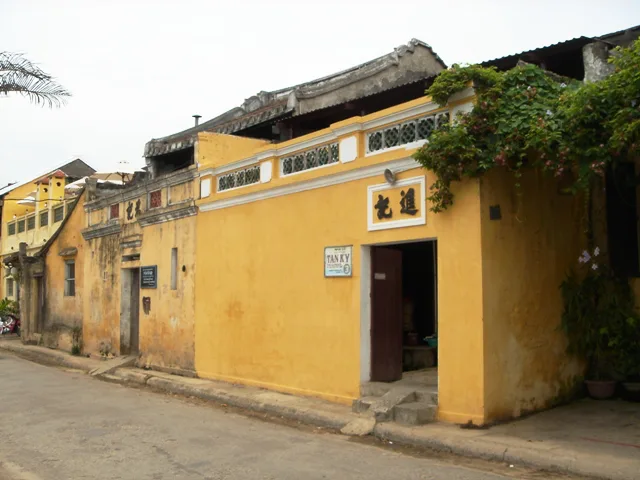
Tan Ky Old House in Hoi An: What to See Inside a 200-Year-Old Merchant Home

Tan Ky Old House is worth 20 focused minutes, and probably no more, if you are already in Hoi An's Ancient Town with a heritage ticket in hand. It is a timber merchant home at 101 Nguyen Thai Hoc Street, kept by one family across seven generations and described by VietnamNet as the best-preserved old house in town. This guide covers where it sits, what to examine inside, how long to plan for, and which details to confirm on the day.
A merchant home, not a museum case
The house is also known by its Vietnamese name, Nhà Cổ Tấn Ký, and the name Tấn Ký is usually translated as something close to "Progress Shop." VietnamNet reports that a second-generation owner chose it to express a wish for prosperous trade. What makes the building readable rather than simply old is that it worked as both residence and place of business in a port town that once drew Chinese, Japanese and Vietnamese traders.
Source accounts of the founding date disagree: some describe construction in the late 18th century under Lord Nguyen Phuc Khoat, others an early 19th-century build. Every account agrees the house is over 200 years old, so treat the exact year with caution. Anabas Restaurant's write-up notes a 1990 certificate recognizing the house as a national historical and cultural relic; that is a national listing, not a UNESCO one for the house itself.
Where it is and how to walk there
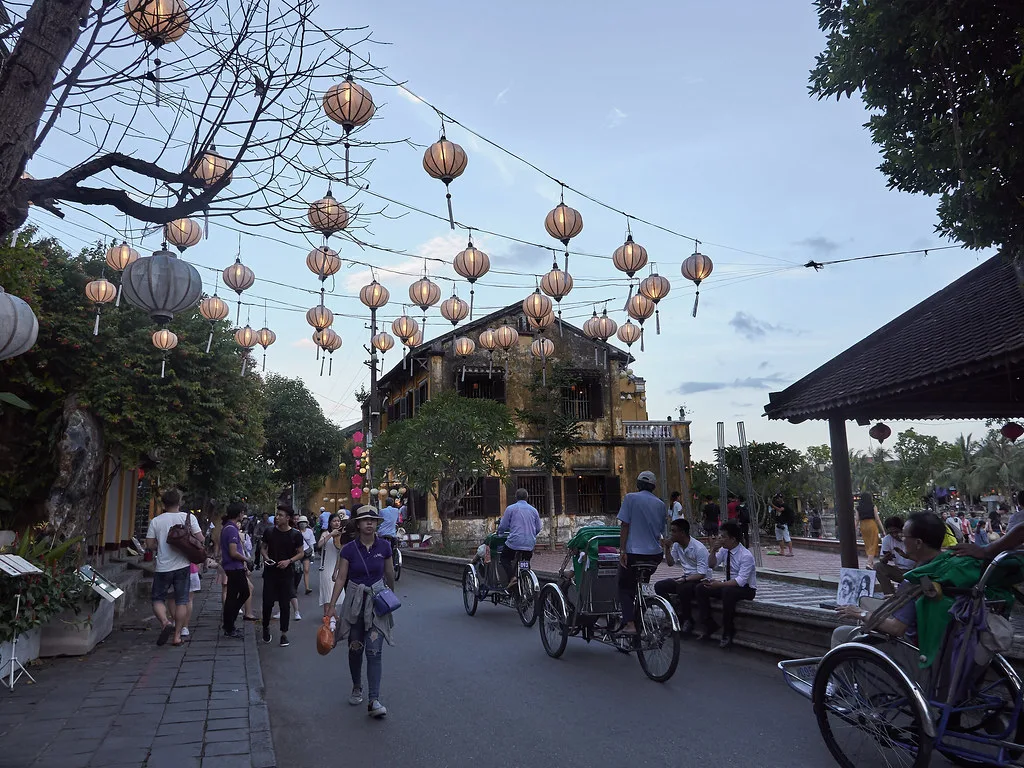
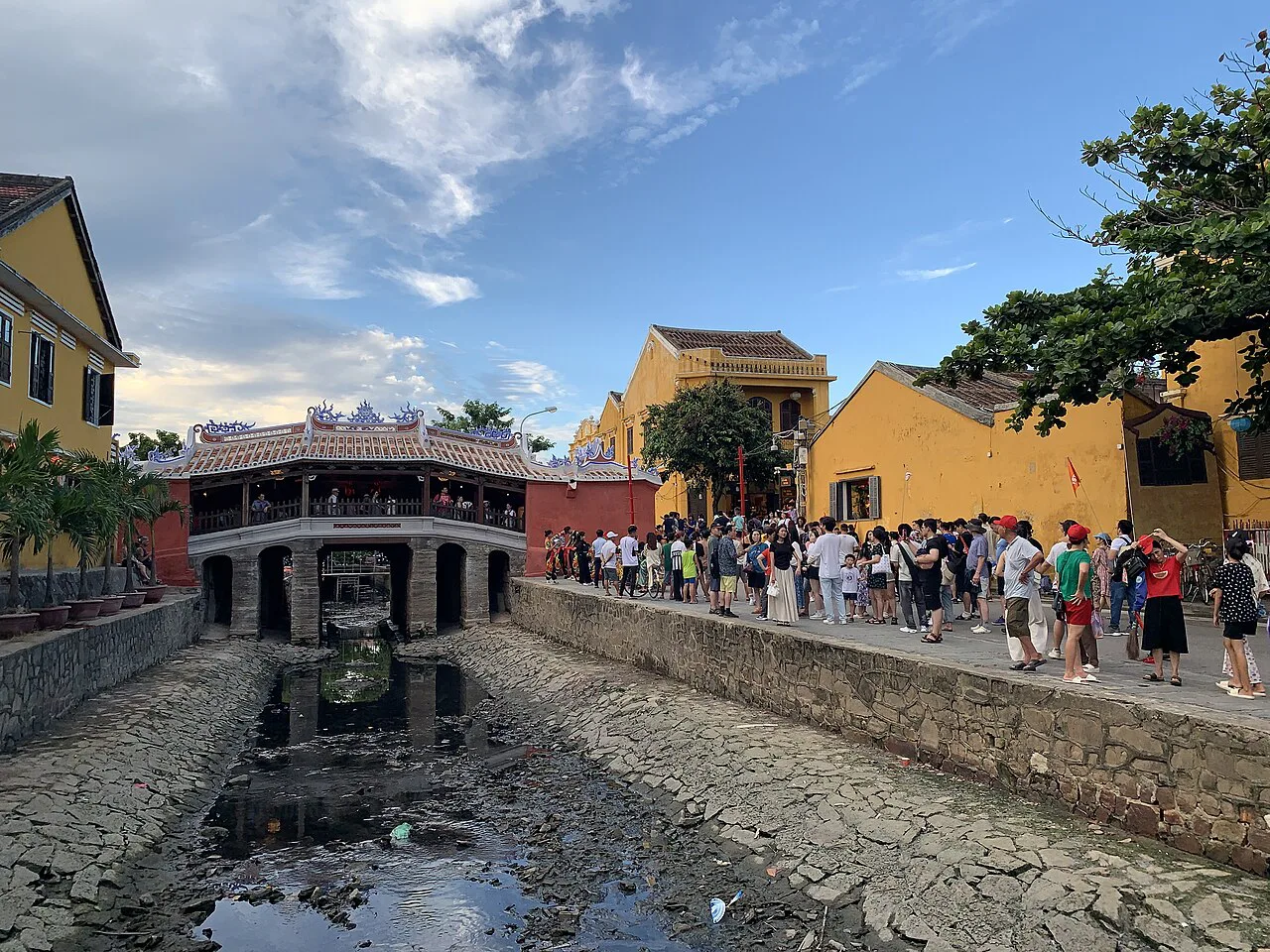
You will find the house on Nguyen Thai Hoc Street in Minh An Ward, on the south side of the Ancient Town grid and a short stroll from the Thu Bon River waterfront. From the Japanese Covered Bridge area, walk east along the lanes rather than the riverside road; the facade is narrow, so watch the house numbers instead of looking for a grand frontage. See the Japanese Covered Bridge for the other headline sight on this stretch.
Most of the old quarter is pedestrianized at least for part of the day, so plan on walking in from its edge rather than being dropped at the door. Wear shoes you can slip off, since historic houses in Hoi An commonly ask guests to remove footwear or cover bags. Confirm the current entry arrangements at the ticket office when you buy your Ancient Town ticket.

Opening hours and the adult ticket price
According to Anabas Restaurant, Tan Ky Old House opens 08:00 to 17:30 daily and charges 35,000 VND per adult per visit, with free admission for children under 10. The same source says entry runs on a 20-minute slot and that groups of eight or more get free commentary. Treat those figures as indicative and confirm at the house or the Hoi An heritage ticket office on arrival, since times and prices change.
Like a Local Guide describes the house as included on the heritage ticket rather than sold as a standalone attraction. If you are buying the multi-site Ancient Town ticket, ask at the counter whether Tan Ky is a current inclusion and how many entries it allows. That answer decides whether you pay once for a cluster of houses, halls and museums or pay separately here.
Pacing a 20-minute visit
Twenty minutes is enough for the house but only in a deliberate order. Start in the front compartment with the antiques and model boats, push through to the courtyard for light and air, and finish at the rear family rooms. Linger on the carved beams first and you may run out of time before the flood marks, the most locally specific thing in the building.
One traveler's account describes the rooms as crowded enough to feel rushed, and she missed the flood-level pillar until she read about it afterward. If a tour group is at the entrance, step aside and let them move ahead. A guide helps here, and VietnamNet advises taking one because the construction details are easy to walk past.
The tube-house layout: narrow front, courtyard, rooms behind
The house follows the classic Hoi An tube plan: a narrow street frontage stretching deep back through connected compartments. A Facebook video feature highlights the internal courtyard, which pulls daylight and breeze into the middle of the plan while screening the family from street noise. That courtyard is the hinge of the visit, separating the trading-facing rooms from the private ones.
VietnamNet describes four rooms with four purposes, including one for receiving Chinese merchants, plus a living room, courtyard and bedroom, and notes visitors may enter three rooms but not the bedroom. The closed room is a family space, not an oversight. Because the rooms are small and packed with wooden antiques, keep bags close and hands off the furniture.
What to look for in the timber frame and the poem panel
Look up. VietnamNet notes the roof combines three traditions: curved beams with elaborate Chinese decoration, a Japanese-style roof peak, and Vietnamese crosshatch supports. Seeing three building cultures in one roof frame quickly explains how cosmopolitan this port was, and the wooden pillars are carved and set on stone bases.
On one pillar hangs a Chinese poem whose characters are made from shell, and a close look shows each character composed of bird figures. The traveler who recorded it only noticed the detail after slowing down, so make this panel your one deliberate close-up.
Flood marks: reading Hoi An's water history
Hoi An floods, and Tan Ky keeps the record. Both the traveler's account and the video feature mention flood-level markings that explain why the ground floor is built as it is, so find them and compare them with your own height.
Anabas reports that the 1964 flood put water through the entire first floor and that flood warning lines remain visible near the souvenir area. That detail turns the house into a lesson in resilience rather than a period room, and it makes the family's upkeep across generations easier to appreciate.
Seven generations of the Le family
The house belonged to the Le family, traced through seven generations, which is why it still feels inhabited rather than curated. Prosperity was the point of the business, and the house was the family's stake in it. When you see family objects and old furniture, they are the surviving evidence of that continuity.
Like a Local Guide notes that descendants of the original family still live in the house, which is reason to keep your voice low and your camera out of the private rooms. Treat the visit as a guest in a working home rather than a walk through a display case.
Photography, crowding and timing the rooms
The house's appeal to tour groups is also its drawback: a narrow plan fills quickly and the timed slot pushes everyone through at the same pace. No source gives crowd data by hour, so aim for the quieter edges of the published visiting window and check the hours at the door first. Low light inside makes handheld photos difficult, so steady your phone against a doorframe rather than using flash near the antiques, and use the courtyard for natural light.
Nearby stops on the same ticket
The Fujian Assembly Hall (Hoi An) is a natural pairing, since both buildings show how merchant communities from outside Vietnam shaped the town and both sit within the same walkable old quarter. If your heritage ticket covers multiple sites, string the two together rather than crossing town between single entries, and check the current inclusion list at the ticket office first.
Two smaller museums reward a similar slice of time: the Museum of Trade Ceramics, Hoi An (Bảo Tàng Gốm Sứ Thương Mại) for the port's export trade, and the Museum of Folklore Hoi An for daily life and craft. Both sit close enough to fit one loop with the riverside. Pick one, since doing both plus the house will exhaust your attention. See more options among the Hoi An Attractions: 5 Visitor Guides.
Practical notes and a half-day plan
Go in knowing three things: the admission and timing details need confirming on the day, the bedroom is off-limits, and the house suits a short, focused visit. If you are a party of eight or more, ask about the group commentary described by Anabas, since a guide effectively doubles what you get from the building.
With only a half day in the old town, put Tan Ky early, then walk to the river for the Japanese Bridge and pick one museum or assembly hall to finish. That gives you a coherent thread about trade and architecture without turning the morning into a checklist, leaving shopping and coffee for the afternoon.
Is Tan Ky worth one of your old-town ticket entries?
Yes, if you enjoy reading a building as a record of trade, flood and family life, and if you give it the 20 focused minutes it rewards. Skip it if you want a long, air-conditioned museum visit or cannot tolerate small rooms shared with tour groups. Either way, confirm the current opening hours, price and ticket inclusion at the heritage ticket office before you commit the day around it.
Explore more Hoi An guides
Frequently Asked Questions
How old is Tan Ky Old House?
Sources describe it as built in the late 18th or early 19th century, and all agree it is more than 200 years old. The exact founding year is disputed between accounts, so treat the specific date with caution and focus on the architecture and family history instead.
Can you go inside Tan Ky Old House?
Yes. Visitors may enter several of the rooms, including the front compartments, the courtyard and the living areas, but the family bedroom is not open. VietnamNet describes four rooms with different purposes and notes that three are accessible to visitors.
Who built Tan Ky Old House?
It was built for a merchant family, later known as the Le family, whose descendants kept the house through seven generations. The name Tan Ky, often translated as Progress Shop, reflects the family's trading business and their wish for prosperity.
Sources
- An old house
- Tan Ky Ancient House - 200 Year Old House Still Maintains Its Value
- Tan Ky Old House - Like A Local Guide
- 🏮 TAN KY OLD HOUSE — A QUIET WINDOW INTO HOI AN’S MERCHANT PAST In the heart of Hoi An Ancient Town, Tan Ky Old House offers a very different experience from the lanterns, cafés and riverside views most visitors first notice. Built by a merchant family and preserved through generations, the house re
- Photos