
Hoi An Museum of Folklore: Visitor Guide for 2026

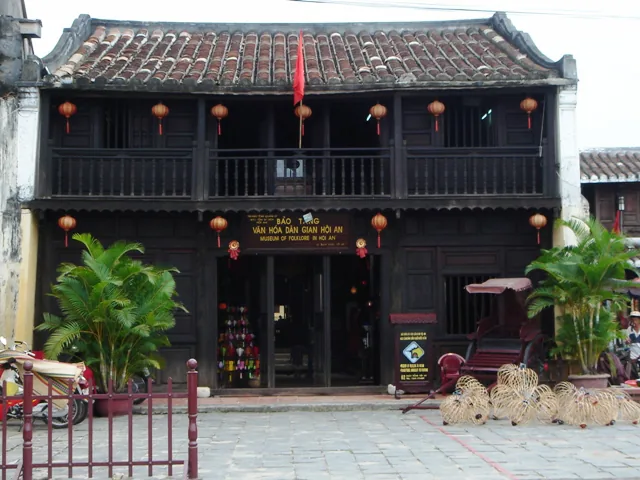
The Hoi An Museum of Folklore (Bao tang Van Hoa Dan gian Hoi An, also signed as the Museum of Folk Culture) fills a two-story timber house in the Old Town with displays on folk art, performing traditions, craft villages, and everyday life. This visitor guide covers hours, tickets, highlights, and how to fit the stop into a day on foot. Check the closing dates first, because the museum shuts twice a month and older guides list the wrong days.
The address is 33 Nguyen Thai Hoc Street, with a second entrance at 62 Bach Dang Street, Hoi An Ward, Da Nang. Hoi An is now a ward of Da Nang city after the administrative merger, and official addresses are written that way. If you are building a wider plan, our guide to things to do in Hoi An shows where this stop fits.
Hoi An Museum of Folklore Overview
The museum opened to visitors on 24 March 2005 in a traditional house of the Old Town. The building is 57 meters long and 9 meters wide, with two stories and wooden floors. It runs the full depth of the block, with one entrance at 33 Nguyen Thai Hoc Street and another at 62 Bach Dang Street.
Inside, 369 square meters of display space hold 483 objects arranged under four themes. Those themes are folk visual art, folk performing arts, traditional craft villages, and folk daily life. Another 346 or more objects, including Chinese and Vietnamese costume collections and craft-village tools, stay in storage for research and rotating displays.
The Hoi An Center for the Conservation of World Cultural Heritage runs the museum. The same body manages the Hoi An Museum and the Sa Huynh Culture Museum, along with the Museum of Trade Ceramics.
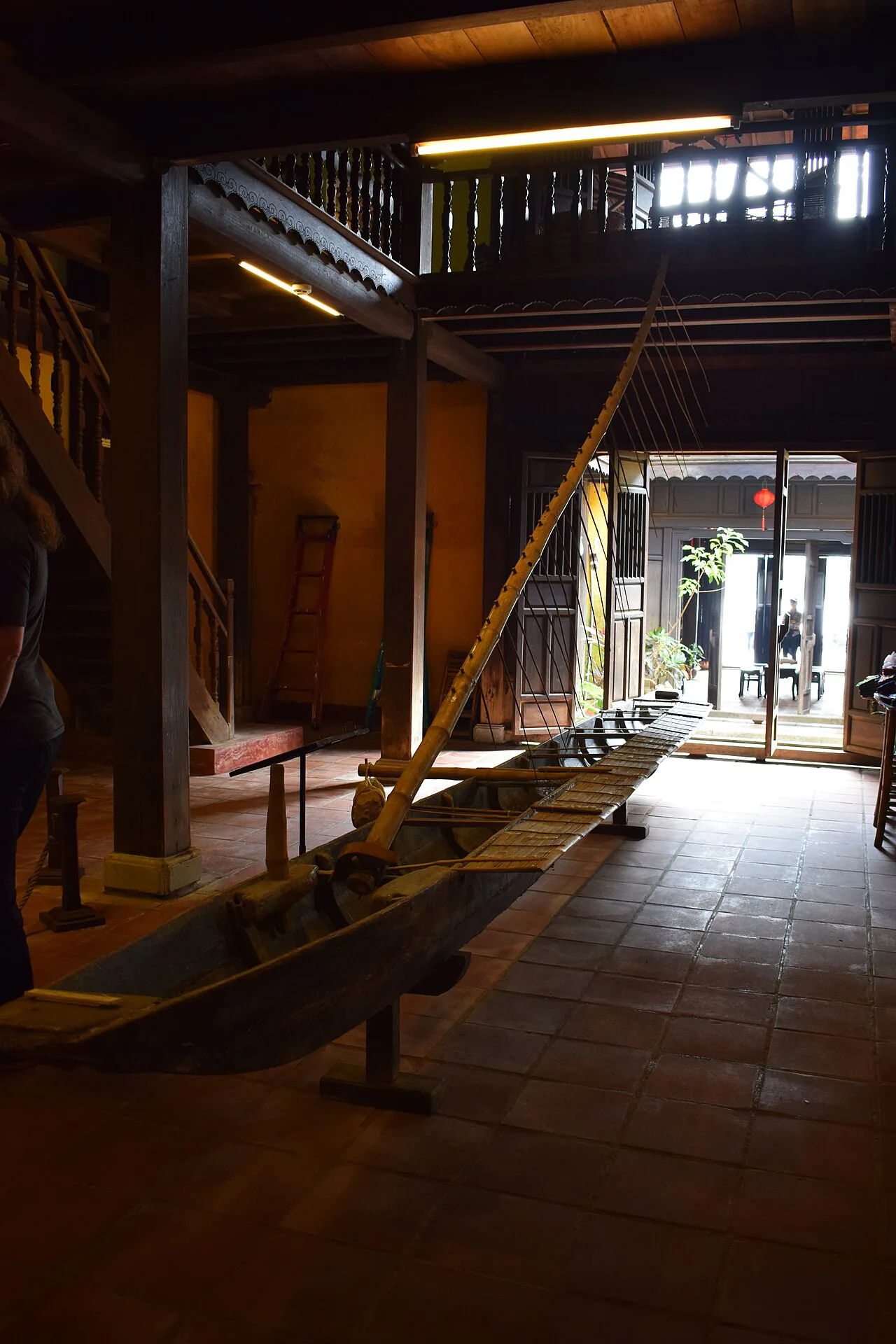
The house itself is part of the visit. It stretches from the street to the riverside, so walking through it from the Nguyen Thai Hoc entrance to the Bach Dang side takes you along the full length of a traditional Old Town building, under the timber gallery and over the wooden floors.
The museum's focus is Hoi An's intangible heritage. Rather than a single history timeline, it uses original objects, photos, and demonstrations to show the traditions behind the lanterns, silk, and festivals you see elsewhere in town.
Tickets and Opening Hours
The museum's operator lists the museum as open daily from 07:30 to 21:30 on its 2026 website. It closes on the 13th and 28th of each month for museum work. Older guides, including the heritage center's own earlier pages, give a different schedule and closing day, so go by the current figures here.
The museum has no separate ticket, so you enter with the Hoi An Ancient Town ticket. Official ticket descriptions list the museum system only under the 120,000 VND tier. That ticket covers the Old Town landscape, the Japanese Covered Bridge or Quan Cong Temple, optional museum visits, and three other cultural sites of your choice.
The cheaper 80,000 VND ticket covers the Old Town landscape, the bridge or temple, and two other cultural sites, and it does not list the museums. If the Museum of Folklore is on your list, the 120,000 VND ticket is the one to buy. Official sources describe the two tickets by what they include, not by the visitor's nationality, and no child or concession prices appear in them. The Da Nang Tourism Promotion Center says a ticket stays valid for your stay of up to 3 days. Groups of eight or more ticket holders get a free guide, according to the heritage center.
- Visit snapshot
- Hours are 07:30 to 21:30 daily, except the 13th and 28th of each month.
- Entry comes with the 120,000 VND Hoi An Ancient Town ticket, valid for up to 3 days.
- The two entrances are 33 Nguyen Thai Hoc Street and 62 Bach Dang Street.
Getting There
The museum is inside the Old Town and runs the full depth of the block, with entrances at 33 Nguyen Thai Hoc Street and 62 Bach Dang Street on the riverside. Use whichever side is closer: Nguyen Thai Hoc Street if you are walking through the center of the Old Town, or the Bach Dang entrance if you are strolling along the river.
Walking is the easiest way in. The Old Town is reserved for pedestrians and non-motorized vehicles from 09:00 to 21:30 in summer and from 09:00 to 21:00 in winter, so walk or cycle in during those hours rather than arriving by motorbike or car.

What to See: Layout and Highlights
Start on the ground floor, where displays and demonstrations introduce products of Hoi An's craft villages. Lanterns, silk, do-paper prints, and woven mats are the main examples, and a traditional wooden fishing boat stands in the ground-floor hall.
The 483 objects on display are grouped into four themes, which work like chapters: you can follow them in order or go straight to the one that interests you. Each draws on original objects, photos, and demonstrations.
- Folk Visual Art
- This theme presents Hoi An's folk art through original objects and photographs.
- It is one of the four themes that share the 483 displayed objects.
- Folk Performing Arts
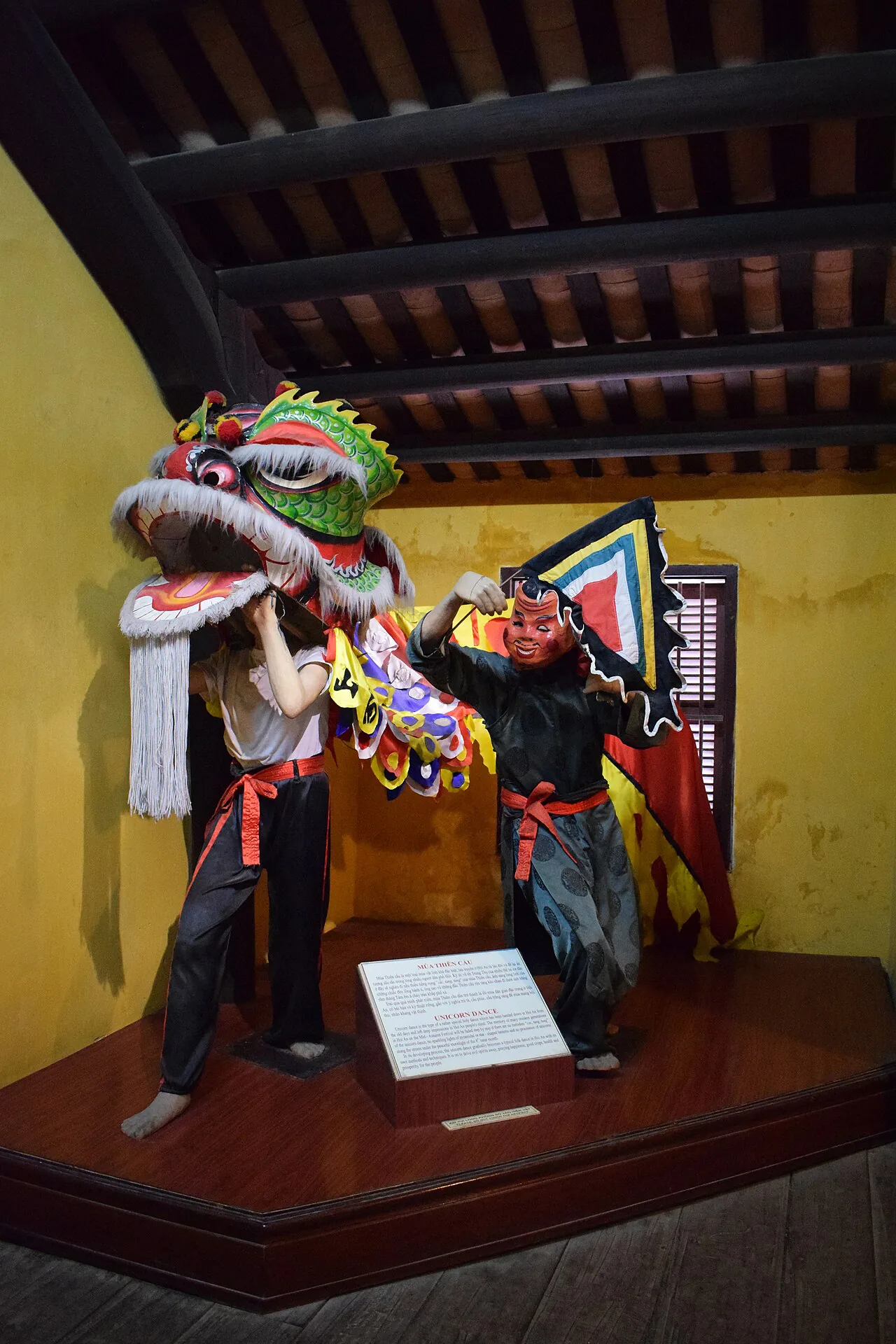
- Displays cover the Thien Cau unicorn dance, with costumed mannequins under a tiled roof.
- Ba trao rowing chants, sung at whale-worship and fishing festivals, also get their own display.
- Bai choi, a card-calling game, rounds out this section of the museum.
- Traditional Craft Villages
- Lanterns, silk, do-paper prints, and woven mats show what Hoi An's craft villages produce.
- Ground-floor demonstrations and displays introduce these products.
- Folk Daily Life
- This theme covers everyday life in Hoi An through original objects and photographs.
- Chinese and Vietnamese costume collections and craft-village tools are among the 346-plus objects kept in storage for research and rotating displays.
Is the Folklore Museum Worth Visiting?
It suits travelers who want context for the lanterns, silk, and festivals they see elsewhere in town. If you mostly want ornate halls, the Fujian Assembly Hall may suit you better.
Closing days are the detail most guides skip. The operator's museum website shows the Folklore museum closing on the 13th and 28th. The Museum of Trade Ceramics closes on the 11th and 26th. The two never close on the same day, so you can swap one for the other when your plan lands on a closure.
Cost is simple once you hold the 120,000 VND ticket, because the museum system is part of that tier. Since the ticket lasts up to 3 days, you can split sights between a morning and an evening and avoid midday heat.

Practical Tips for Your Visit
Evenings work well, because the museum stays open until 21:30 and the Old Town's pedestrian-only hours run into the evening. A late visit also pairs naturally with dinner in the Old Town.
Weekdays and weekends share the same hours. Only the 13th and 28th of each month break the pattern.
The heritage center's visitor rules from 2013 ask for modest dress and no touching of objects. No reservation or passport requirement appears in any official source, and no photo policy was found, so ask staff before using a tripod.
- Before you go
- Check that the date is not the 13th or 28th, when the museum is closed.
- Carry the Old Town ticket you bought at a kiosk, since there is no separate museum ticket.
- Inside the museum
- Dress modestly and keep your hands off the displayed objects at all times.
- Read the performing-arts labels slowly, since the ba trao and Bai choi terms are easy to skip past.
Pair the Museum With Nearby Sights
The museum sits in the middle of the Old Town, so other ticketed sights are a short stroll away. The Tan Ky Old House is another Old Town house you can step inside after this one.
The Cantonese Assembly Hall adds an assembly-hall stop that contrasts with the museum's focus on daily life. The Museum of Trade Ceramics, run by the same heritage center, is the natural second museum. Choose the sites you want before you buy, since the 120,000 VND ticket lets you pick three other cultural sites.
Many older guides pair the museum with traditional arts performances held a few doors from its riverside entrance. According to the Da Nang Tourism Promotion Center, those performances moved to Song Hoai Square, 01 Cao Hong Lanh, from 7 March 2026.
More Hoi An planning
Frequently Asked Questions
What are the opening hours of the Hoi An Museum of Folklore?
The museum's operator lists opening hours of 07:30-21:30. It closes on the 13th and 28th of every month for museum work, so plan around those dates.
How much does it cost to visit the Hoi An Museum of Folklore?
There is no separate ticket; you enter with the Hoi An Ancient Town ticket. The official ticket description lists the museum system under the 120,000 VND ticket, which also covers the Japanese Covered Bridge or Quan Cong Temple and three other cultural sites. The 80,000 VND ticket covers two other sites and does not list the museums.
Where is the Hoi An Museum of Folklore?
It is in the Old Town at 33 Nguyen Thai Hoc Street, with a second frontage at 62 Bach Dang Street on the riverside. The building runs the full depth of the block between the two streets.
What can you see inside the museum?
About 483 objects arranged in four themes: folk visual art, folk performing arts, traditional craft villages and folk daily life. Highlights include displays on the Thien Cau unicorn dance, ba trao rowing chants and the Bai choi card game, plus craft products such as lanterns, silk, do-paper prints and woven mats on the ground floor.
How long has the museum been open?
The Museum of Folklore opened to visitors on 24 March 2005.
How big is the museum building?
It occupies a traditional two-storey timber house with wooden floors, 57 m long and 9 m wide, with 369 square meters of display space.
Who runs the Hoi An Museum of Folklore?
It is managed by the Hoi An Center for the Conservation of World Cultural Heritage, which also operates the Hoi An Museum, the Museum of Trade Ceramics and the Sa Huynh Culture Museum.
Can I walk to the museum from the rest of the Old Town?
Yes. The Old Town is reserved for pedestrians and non-motorized vehicles from 09:00 to 21:30 in summer and 09:00 to 21:00 in winter, and the museum sits on Nguyen Thai Hoc Street in the middle of it.
The Hoi An Museum of Folklore rewards a slow walk through a 57-meter timber house and four themes of local tradition. Match your visit to the 07:30 to 21:30 hours, avoid the 13th and 28th, and bring the 120,000 VND Old Town ticket. For more stops to build around it, browse our Hoi An attractions guide.