
Quan Cong Temple in Hoi An: Tickets, Hours and History

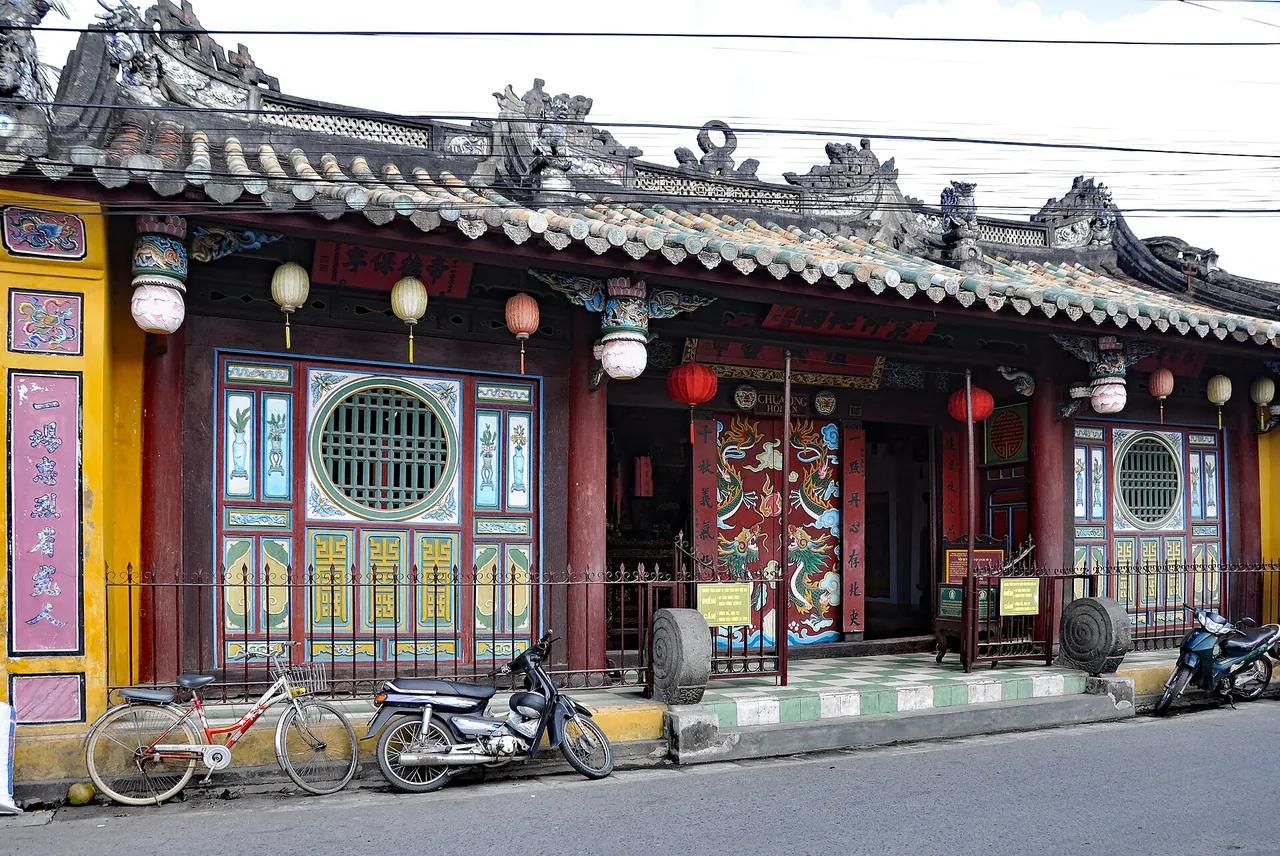
Quan Cong Temple sits on Tran Phu Street, directly opposite Hoi An Central Market, so most Old Town walks pass it at some point. Locals call it Chua Ong, but it honors a deified general rather than the Buddha. This Quan Cong Temple Hoi An visitor guide covers tickets, hours, history and what to look for inside.
Several rules changed recently, and many older guides are now out of date. Hoi An is a ward of Da Nang city today, and the ticket tiers below follow the heritage center's notice of 29 January 2026. For a wider route, pair this page with our things to do in Hoi An overview.
Quan Cong Temple Hoi An: Location and Getting There
The temple stands at 24 Tran Phu Street, at the junction with Nguyen Hue Street. Look for it directly opposite Hoi An Central Market inside the Old Town. Its official address now reads Hoi An Ward, Da Nang city (formerly Minh An ward), following the 1 July 2025 change in jurisdiction.
The Old Town is reserved for pedestrians and non-motorized vehicles from 09:00 to 21:30 in summer and 09:00 to 21:00 in winter. Arrive on foot or by bicycle, then buy your Old Town ticket before entering. You can use a staffed ticket counter or one of the 12 automated ticket machines introduced in February 2026, which accept international payment.
The Japanese Covered Bridge lies roughly 600 meters west along Tran Phu Street, so the two headline monuments sit on the same street. If a map pin looks off, use the market as your landmark: the temple faces it across Tran Phu.
Quan Cong Temple Tickets and Entry Rules
Entry is not free, despite what some online sources say. The temple is covered by the Hoi An Ancient Town ticket, and the heritage center's notice of 29 January 2026 sets two tiers. Confirm the current details at a ticket machine or counter, since notices can change.
The catch is the fixed monument slot on each ticket. Both tiers include one visit to either the Japanese Covered Bridge or Quan Cong Temple, not both. Decide which one you want before scanning in. The notice lists the other monuments separately, so do not count on using the temple as one of your free choices as well; confirm at the counter.
Many older guides and blogs still describe an earlier ticket system with different site counts. That structure has been replaced, so go by the two tiers below. The heritage center now defines the tiers by what they include, but some city portals still label them by nationality, so ask which ticket you are being sold.
- 80,000 VND Ticket
- This tier covers the Old Town landscape plus one monument, either the Japanese Covered Bridge or Quan Cong Temple.
- It also lets you choose two other monuments from the heritage center's list.
- 120,000 VND Ticket
- This tier covers the Old Town landscape plus one monument, either the Japanese Covered Bridge or Quan Cong Temple.
- It adds one site in the museum system and three other monuments of your choice.
- Children Under 16
- The heritage center, which runs the Old Town sites, exempts children under 16, so they enter without paying.
- Some third-party listings show different child fees; the heritage center's rule is the one that applies.
- Validity and Stubs
- One ticket is valid for your stay in Hoi An, up to 3 days.
- Keep the stub, since you need it for re-entry to the sites.

Quan Cong Temple Opening Hours
No official opening hours are published for the temple itself. The heritage center lists hours only for the Old Town's pedestrian zone (09:00 to 21:30 in summer, 09:00 to 21:00 in winter), and that is a traffic rule rather than a visiting schedule for the temple. For that reason, this page does not give a timetable.
Travel blogs quote conflicting opening and closing times, and none of them comes from the operator. A Da Nang tourism portal also lists a different range for the Old Town, marked as for reference only. Treat all of these figures as unconfirmed.
Ask at a ticket counter when you buy your ticket, then check again at the temple door. During Tet in 2026 (16 to 19 February), ticket sales and guided tours were suspended while the monuments stayed open for worship. Holidays can therefore change how a visit works, even when the site itself is open.
History of Quan Cong and Chua Ong
The Minh Huong community built the temple together with Vietnamese residents, and it stood by 1653 at the latest. A stele dated 1753 inside says the temple had already stood for more than 100 years. A wooden plaque at the front also carries the 1653 date.
The temple honors Quan Cong, also called Quan Van Truong or Quan Vu, a general from China's Three Kingdoms period. Worshippers revere him as a model of loyalty and righteousness. Some sites call him a Han dynasty general, but the official heritage sources say Three Kingdoms.
Repairs came in 1753, 1783, 1827, 1864, 1904 and 1966, yet the temple keeps its original form. The Dai Nam Nhat Thong Chi records that Emperor Minh Mang granted it 300 taels of silver when he passed through in the sixth year of his reign. The site was certified a National Historic and Cultural Relic on 29 November 1991.
The names confuse many visitors, so here is the short version. Chua Ong is the everyday name, Quan Cong Mieu is the formal one, and heritage records also use Trung Han Cung. English material from the heritage center sometimes says Ong Pagoda, but despite the word pagoda, this is a temple to Quan Cong. It is managed today by the Hoi An Center for the Conservation of World Cultural Heritage.

What to See Inside the Temple
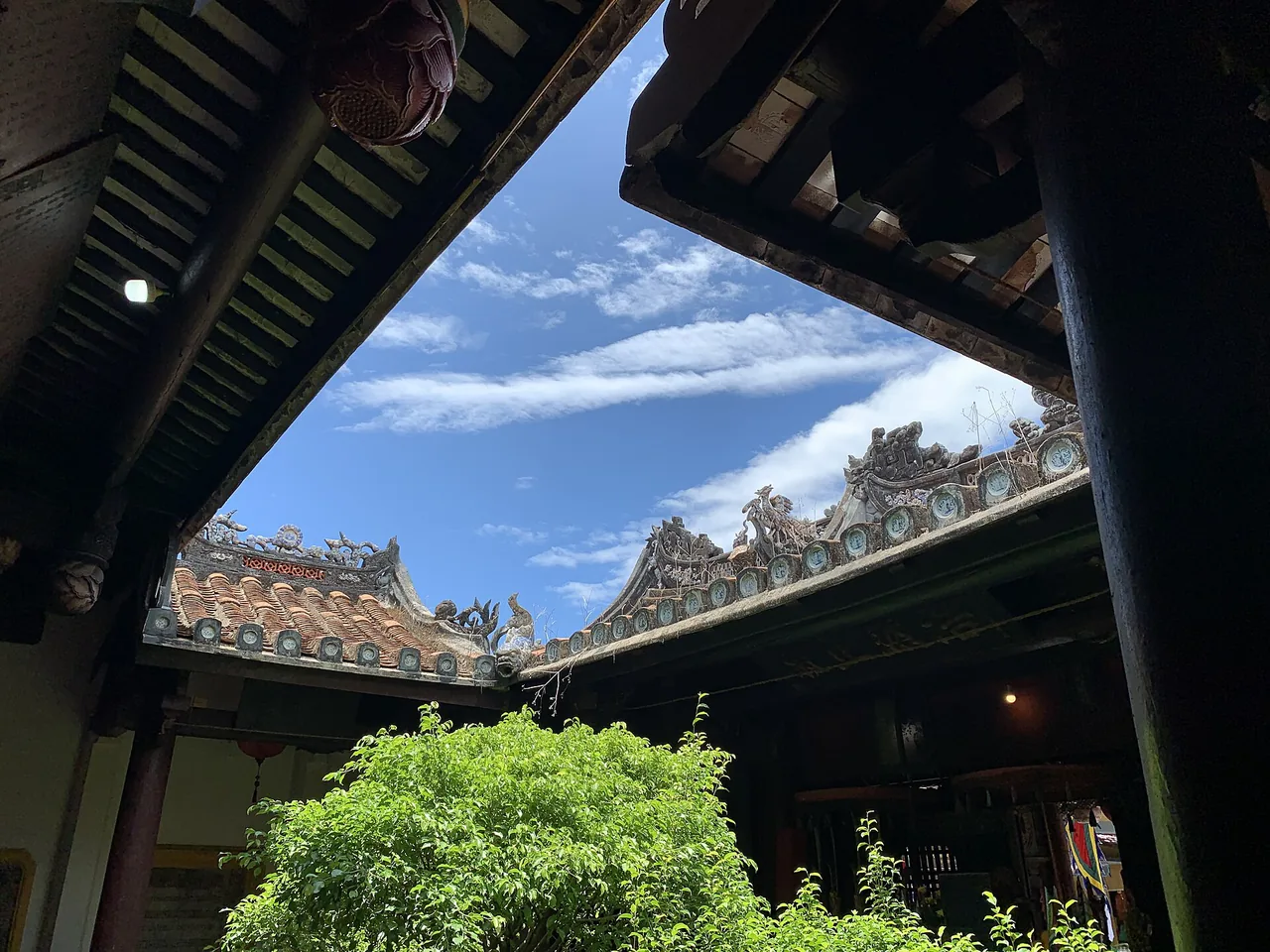
The layout is a square courtyard ringed by a front hall, two side wings and a main hall. Glazed tube tiles cover the roofs, and the ridges carry dragons, mythical beasts and inlaid ceramic pieces. Craftsmen from Kim Bong village did the woodwork.
Start at the street facade, then move into the courtyard and look up at the roof ridges. The temple is still a place of worship, so keep your voice low and ask before photographing worshippers.
Older guides say the Museum of History and Culture adjoins the temple, but that is outdated. Its history and culture rooms have moved from 7 Nguyen Hue to the Hoi An Museum at 10B Tran Hung Dao, which is temporarily closed until further notice. Do not build a museum stop into your temple visit.
- Front Hall and Dragon Door
- The street facade has round lattice windows and a dragon-painted central door.
- A tiled roof crested with dragons sits above the entrance.
- Courtyard and Roof Ridges
- The open courtyard gives the best view of the ceramic-inlaid ridges and mythical-beast ornaments above.
- Main Hall Statues
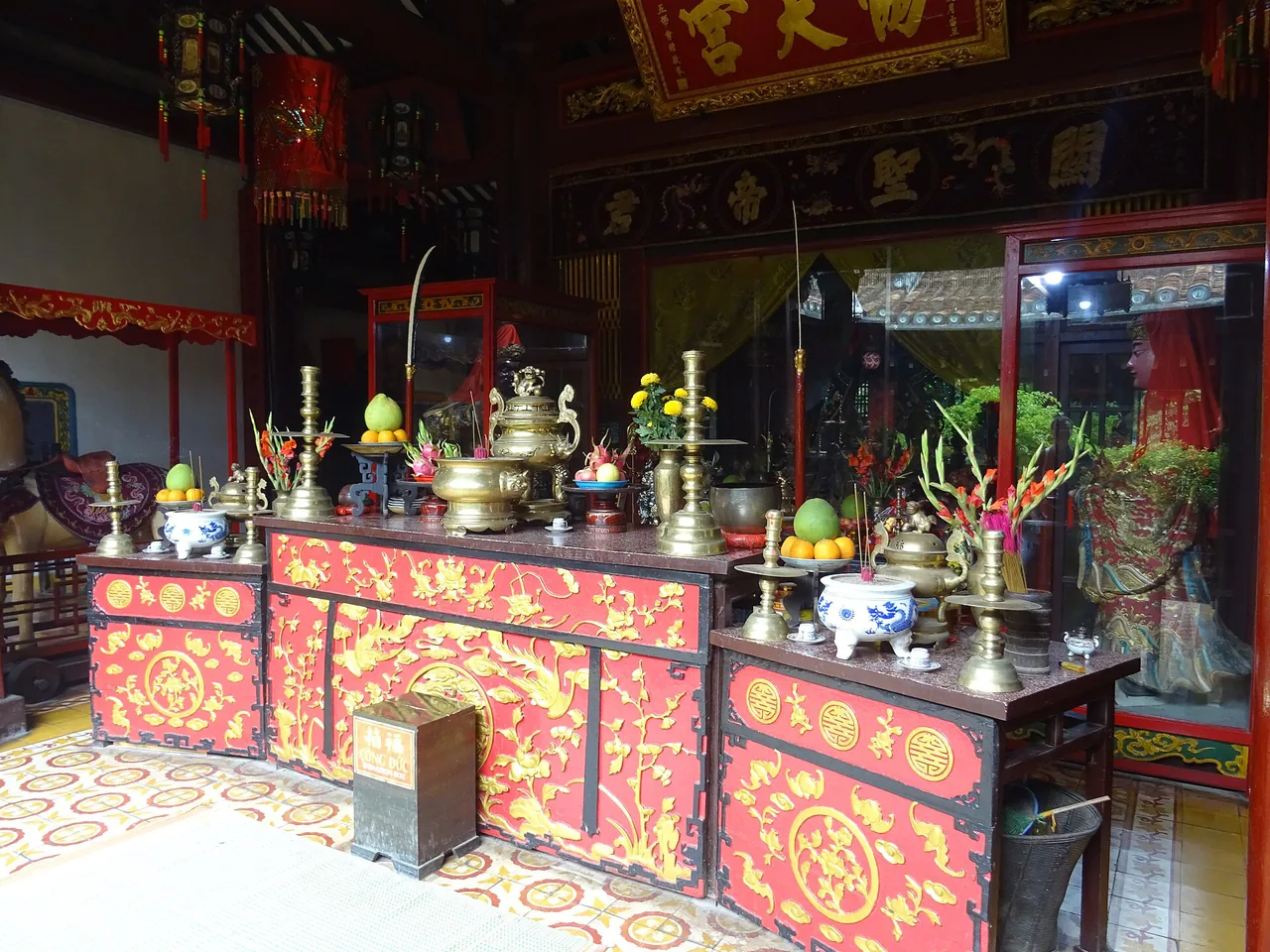
- The main hall holds statues of Quan Cong, flanked by his adopted son Quan Binh and his loyal guard Chau Thuong.
- Two Life-Size Horses
- Beside the statues stand two life-size horses, a white one and the red horse Xich Tho.
- Lacquered Boards and Poems
- More than 33 lacquered boards and 10 pairs of parallel sentences survive inside the temple.
- Poems written in 1775 by Nguyen Nghiem, father of the poet Nguyen Du, also remain.
Festival Day and Where to Go Next
The Le Via Quan Thanh De Quan festival takes place every year on the 24th day of the sixth lunar month. The heritage center has organized it at the temple since 1997. The 2025 edition fell on 18 July and began with incense offerings from 6 a.m., followed by a lion and dragon dance procession. The solar date moves each year with the lunar calendar, so check the heritage center's announcements before planning around it.
After the temple, the Cantonese Assembly Hall is another Old Town stop to consider. Ask ticket staff whether it counts toward your remaining monument choices.
The Fujian Assembly Hall is another option. Entry rules differ by site, so confirm each one when you buy your ticket.
If you would rather see a house than a temple, try the Tan Ky Old House. Check its entry terms on the day.
More Hoi An planning
Frequently Asked Questions
Is Quan Cong Temple free to visit?
No. It is entered with the Hoi An Ancient Town ticket. Both the 80,000 VND and the 120,000 VND tickets include one visit to either the Japanese Covered Bridge or Quan Cong Temple. Children under 16 are exempt.
Can I visit both the Japanese Covered Bridge and Quan Cong Temple on one ticket?
The heritage centre's 2026 notice gives each ticket one fixed monument slot for the Japanese Covered Bridge or Quan Cong Temple. Plan to pick one of the two for that slot.
What are Quan Cong Temple's opening hours?
The heritage centre does not publish separate hours for the temple. Its 2026 notice gives the Old Town's pedestrian hours as 09:00-21:30 in summer and 09:00-21:00 in winter, so check at a ticket counter on arrival.
Where is Quan Cong Temple?
At 24 Tran Phu Street, at the junction with Nguyen Hue Street, directly opposite Hoi An Central Market in the Old Town.
Who is worshipped at Quan Cong Temple?
Quan Cong (Quan Van Truong, also Quan Vu), a general of China's Three Kingdoms period honoured as a model of loyalty and righteousness. His statue stands with Quan Binh and Chau Thuong, beside life-size statues of a white horse and the red horse Xich Tho.
When was Quan Cong Temple built?
No later than 1653. A 1753 stele in the temple says it had already stood for more than 100 years, and it was repaired in 1753, 1783, 1827, 1864, 1904 and 1966.
Is Quan Cong Temple the same as Chua Ong (Ong Pagoda)?
Yes. Chua Ong is the everyday name and Quan Cong Mieu is the formal name. Despite the 'pagoda' name, it is a temple to the deified general Quan Cong.
When is the Quan Cong festival in Hoi An?
The Le Via Quan Thanh De Quan is held every year on the 24th day of the sixth lunar month at the temple, organised by the heritage centre. In 2025 it fell on 18 July, starting with incense offerings from 6 a.m. and a lion and dragon dance procession.
Quan Cong Temple rewards a short, well-planned stop on Tran Phu Street. Buy the right ticket, choose it for your one fixed slot, and confirm timing on site.
Then continue through the Old Town using our Hoi An attractions guide. Check each site's current rules at the kiosk, since notices there override older guides.