
Fujian Assembly Hall (Hoi An): What to See and How Long to Allow

The Fujian Assembly Hall is worth 30 to 45 minutes of your Hoi An Ancient Town walk: a compact Chinese temple compound where the carvings, the mosaic fountain and the sea-goddess altar carry more meaning than the building's modest size suggests. It sits in the old town core, so you reach it on foot between the riverside streets and the market. This page covers what the hall is, how to find it, what to look for inside, who the deities are, how long to allow, and where to confirm ticket and opening details before you go.
What the Fujian Assembly Hall actually is
The hall is a Chinese assembly hall and temple, not a museum. Merchants from Fujian province in China built it as a meeting place and place of worship for their community in Hoi An, and the altars remain in active use. Treat it as a temple first and a sight second; that framing changes how you dress, how loudly you talk and where you stand.
The Hoi An World Heritage center, the conservation body for the old town, dates the hall's founding to 1697 and describes it as an example of Chinese architecture built by merchants from Fukian province. The same page notes that the front entrance was later altered, giving 1975 as the date, so you are looking at layers rather than a single original structure. Older and newer accounts differ on the details, so treat the 1697 founding date as the conservation body's figure rather than a universally settled one.
Names vary. You will see it written as the Fujian Assembly Hall, the Fukian Assembly Hall and Phuc Kien Assembly Hall (Hội Quán Phúc Kiến), and all three refer to the same compound. If you are following a map or asking directions, the Phuc Kien name is the one most locally used.

Where it is in Hoi An Ancient Town
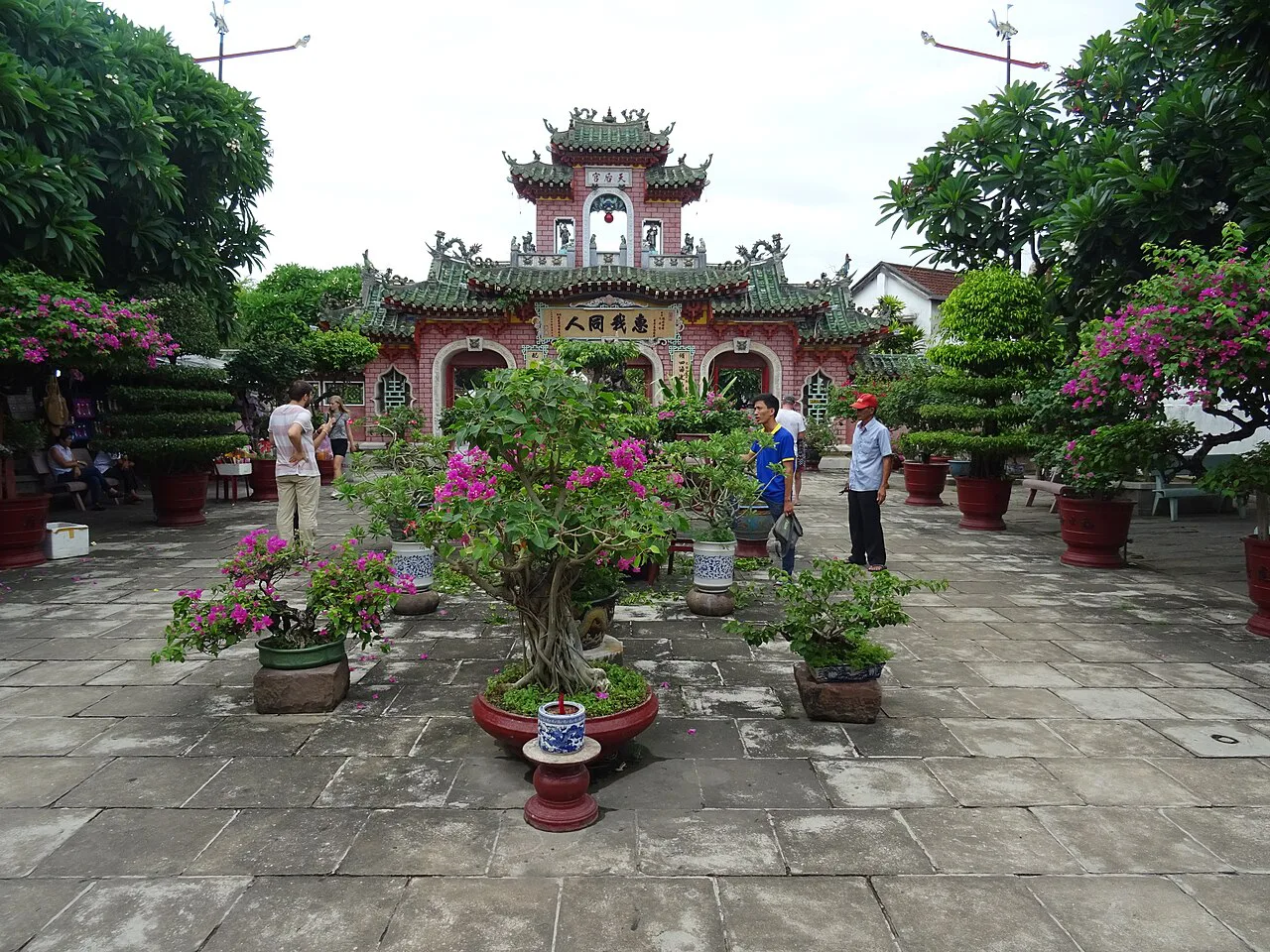
The hall stands within the old town's pedestrian zone, in the block between the Japanese Covered Bridge and the central market area. Rather than a street number, navigate by landmark: once you are on the lanes near the bridge and the riverside market, the hall's facade and gate are signposted and easy to spot.
If you are building a walking route, the hall fits naturally into the same circuit as the other old-town sights covered in Hoi An Attractions: 5 Visitor Guides, which maps the halls, houses and bridges by area. Reading that first saves backtracking on a hot afternoon.

How to get there and which gate you reach first
On foot is the normal way in: the old town is compact and much of the center is closed to through traffic at peak times, so walking from your hotel in the core is often faster than a car. If you are staying outside the center, take a taxi or ride-hailing car to the edge of the pedestrian zone and walk the last stretch.
Cycling works well earlier in the day, when the lanes are quieter and you can park near the entrance and continue to the market. Come by bicycle only if you are comfortable locking it and walking the rest, because the inner streets are not a place to ride through crowds.
Approaching from the Japanese Covered Bridge side, the hall's front gate is the first element you meet; from the market side you arrive at the same entrance from the opposite direction. The gate reads as a later addition to the older core behind it, which is worth noticing as you step through.
What you see as you move through the compound
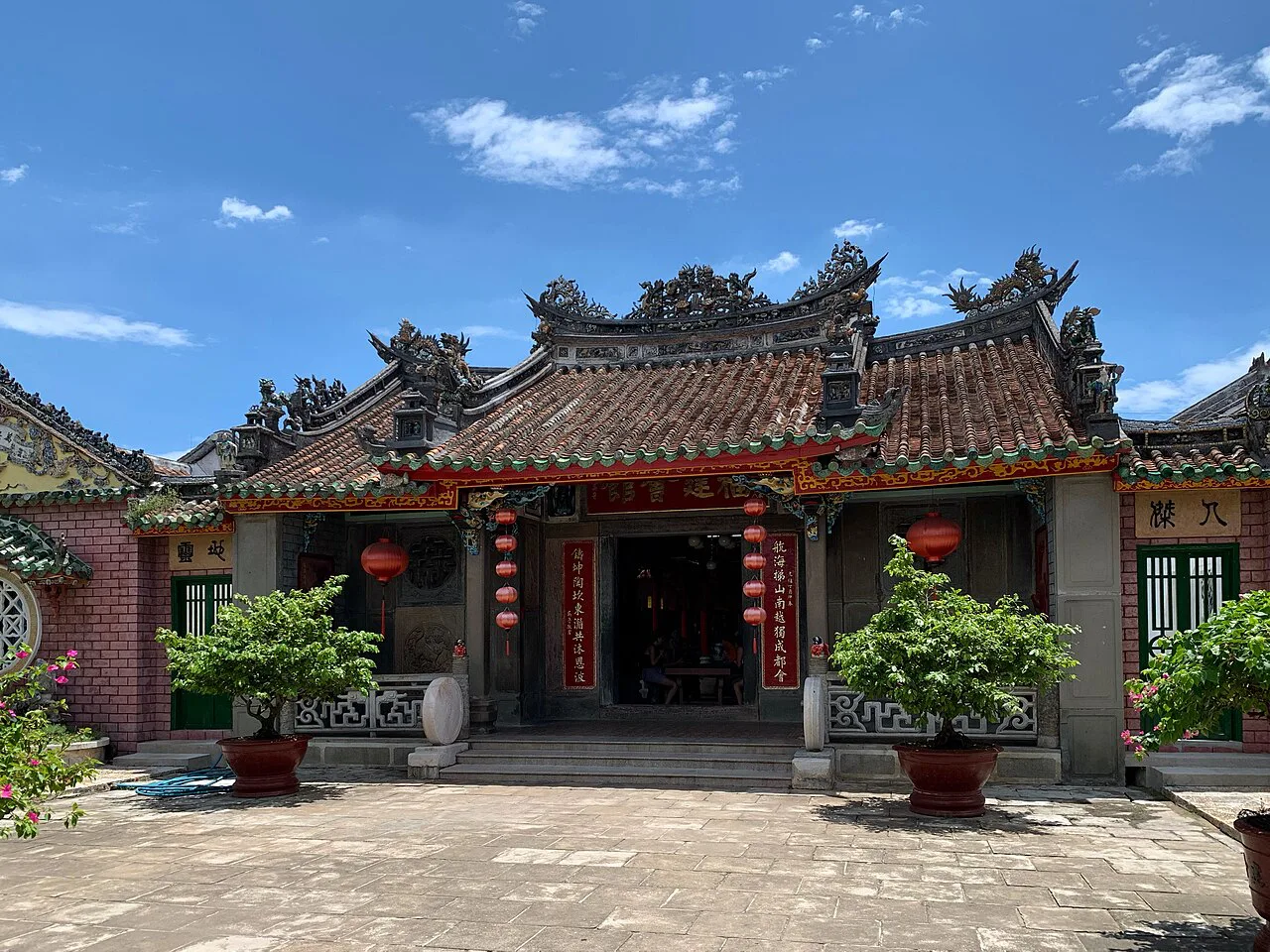
Start at the gate and look up before you go in. The entrance frames a sequence of courtyards rather than one open room, and the ornament is concentrated on the roofline, the door panels and the altars, so slow down and read the details instead of walking straight to the back.
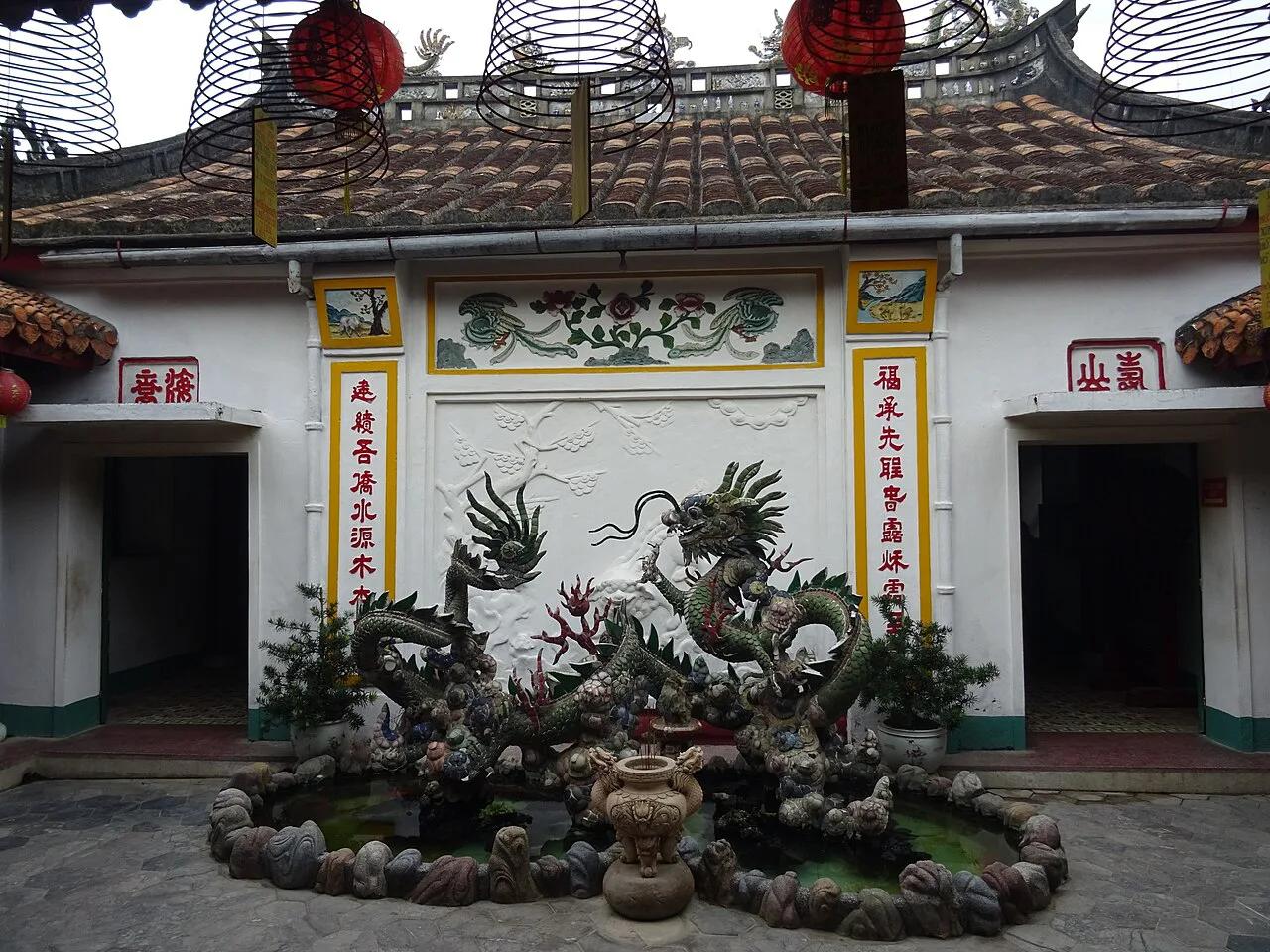
The mosaic fountain is the piece most visitors stop for, and it is more than decoration. The Hoi An World Heritage center describes a fish sculpture in the fountain as a symbol of achievement, with dragons, unicorns, phoenixes and turtles worked into the design, each standing for a different quality: power for the dragon, endurance for the turtle, knowledge for the unicorn and nobility for the phoenix. Knowing that turns a pretty wall into something you can actually read.
The main altar sits deeper in the compound and is the heart of the building for worshippers. Lighting is dim, surfaces are old, and people come here to pray, so keep your voice low and give anyone at the altar room rather than stepping in front of them for a photo.
Smoke from incense, low light and narrow passages make the interior feel close, which is part of the atmosphere but also why the visit works better as a short, focused stop than a long linger. Step back into the courtyard when you want air.
Who the three goddesses are
The hall is a temple to Thien Hau, the Chinese goddess of the sea, which is why a merchant town built around a river and a trading port honored her here. Sailors' families prayed to her for safe voyages and gave thanks after a return, and her altar is the reason this is a working shrine.
Flanking her are two attendants with a specific role, and the Hoi An World Heritage center explains them neatly: Thuan Phong Nhi is said to hear the sound of a ship from a thousand miles away, and Thien Ly Nhan is said to see distant ships from the same distance. For a trading community, that pair covered both halves of the worry, hearing news of a fleet and seeing it come home.
You do not need to be religious to appreciate this, but you do need to be respectful. If someone is lighting incense or praying, wait, and do not use a flash near the altars.
How long to allow, and how to fold it into a walk
Budget 30 to 45 minutes. That covers the gate, the courtyard and fountain, the main altar and a slow look at the carvings, with a few minutes sitting out of the sun. A quick pass takes 15 minutes; anyone interested in the symbolism will use the full three quarters of an hour.
Slot it into the middle of an old-town walk rather than making it a standalone trip. Pair it with one other interior stop, such as the Tan Ky Old House in Hoi An, so you alternate shaded temple space with open street walking and do not overheat.
Tickets and opening hours you should confirm first
Entry to the old town's monuments, including this hall, is normally handled through the Ancient Town ticket system rather than sold at the door, so check the current arrangement before you travel. The Hoi An World Heritage center does not publish an up-to-date adult ticket price or daily opening hours for the hall on its monument page, so confirm both at the Hoi An ticket office or with the Hoi An World Heritage center on arrival rather than planning around a figure you read online.
Lonely Planet lists the hall as an old-town attraction in the center, which is useful for confirming location but not for hours. Treat any published hours you find as a starting point, since temples close for festivals and ceremonies, and ask at your hotel the morning you plan to go.
Old-town access can shift with festivals, ceremonies and crowd control, so confirm opening on the day rather than months ahead. Ask your hotel or the ticket office the morning you plan to visit.
Etiquette inside an active temple
Cover your shoulders and knees, and take your hat off indoors. The hall is a place of worship, so modest dress is expected and it costs you nothing to carry a light layer for temple stops.
Photography is generally fine in the courtyards, but switch the flash off near the altars and never photograph someone mid-prayer. If a sign asks you not to photograph a particular area, follow it.
Keep your voice down in the inner rooms and put your phone on silent. Groups tend to bunch at the fountain, so move through to the altar and come back if you want an uncrowded look.
Nearby sights on the same walk
The Cantonese Assembly Hall is the closest direct comparison and sits within the same old-town circuit, so visiting both lets you see how different merchant communities built and decorated their halls. Many travelers see the two on the same afternoon.
The Japanese Covered Bridge is a short walk away and is the easiest landmark to navigate by. If you want something different in tone, the Museum of Trade Ceramics, Hoi An (Bảo Tàng Gốm Sứ Thương Mại) on the old-town streets adds context on the port trade that paid for these halls.
For a fuller list of what fits into a day, the guide to things to do in Hoi An covers the old town, the river and day trips beyond it. And if you want more on the walking route, the Hoi An Attractions: 5 Visitor Guides page groups the sights by area.
Smaller shrines dot the old town and make quiet stops if the main halls are crowded. They suit a short pause between larger sights rather than a destination in themselves.
Heat, crowds and the best time to stand in the courtyard
Hoi An gets hot and humid, and the hall's inner rooms trap heat, so go early in the morning or later in the afternoon when the courtyard is shaded. Midday is the worst window for both temperature and tour-group volume.
Cruise and coach groups tend to arrive in waves. If you see a crowd at the gate, walk on to the next sight and loop back; the flow usually clears within twenty minutes.
Carry water and wear shoes you can slip off, since some areas may require it and the stone floors are uneven. A small towel helps in the humidity, and that is a practical detail rather than a fashion note.
Is 30 to 45 minutes here worth your afternoon?
Yes, if you want to understand the trade town you are walking through rather than just photograph it. The hall takes under an hour, the symbolism is specific and readable, and it fits between the bridge and the market without a detour.
Skip it only if you are short on time and have already seen several Chinese temples in Asia, since the pleasure here is in the carvings and the sea-goddess story rather than scale. Confirm the day's entry terms at the ticket office first, then go early or late and walk the rest of the old town from there.