
Cantonese Assembly Hall Hoi An Visitor Guide: Tickets and Tips

The Cantonese Assembly Hall (Hội quán Quảng Đông) is a working Chinese guild hall and temple at 176 Tran Phu Street in Hoi An Ancient Town, built by Cantonese merchants around 1885. Its main altar is dedicated to Quan Cong (Guan Yu), and you enter it with the Hoi An Old Town ticket. This guide covers tickets, hours, what to see and how to find it, alongside the other Hoi An attractions.
Two facts shape your plan before you go. Since 1 July 2025, Hoi An has belonged to Da Nang city, not Quang Nam province. So the hall's address now reads Hoi An Ward, Da Nang. The hall also publishes no opening hours of its own, and we explain what the official sources do say below.
Cantonese Assembly Hall Hoi An: History and Worship
Cantonese Chinese families settled in Hoi An during the 18th and 19th centuries. They built the hall around 1885 as a shared place of worship and a base for mutual help in trade.
Heritage records say the hall first honored Thiên Hậu (Mazu), the patron of seafaring merchants. The community's ancestors and the God of Wealth stood on either side. Confucius was also honored for a time. Later the central altar passed to Quan Thánh Đế Quân (Guan Yu), who is still worshipped there today. The two official records disagree on when that change happened, so we do not give a year.
The hall is also known as Chùa Quảng Triệu, a name that appears in the official 1992 relic record. The Cantonese community of Hoi An still owns and runs it, and a major restoration in 1991 left the building structurally sound. It stands within the old quarter, which was recognized as a national historic and cultural relic in 1990.
Large festivals fall on Nguyên Tiêu, the 15th day of the first lunar month. Another falls on Quan Cong's day, the 24th day of the sixth lunar month, and lunar dates shift each year.
What to See Inside the Hall
The complex covers about 1,687 square meters and follows a quốc layout, named for a Chinese character shaped like a square frame. A grand front hall faces Tran Phu Street, then a stone-paved courtyard leads to the main worship hall.
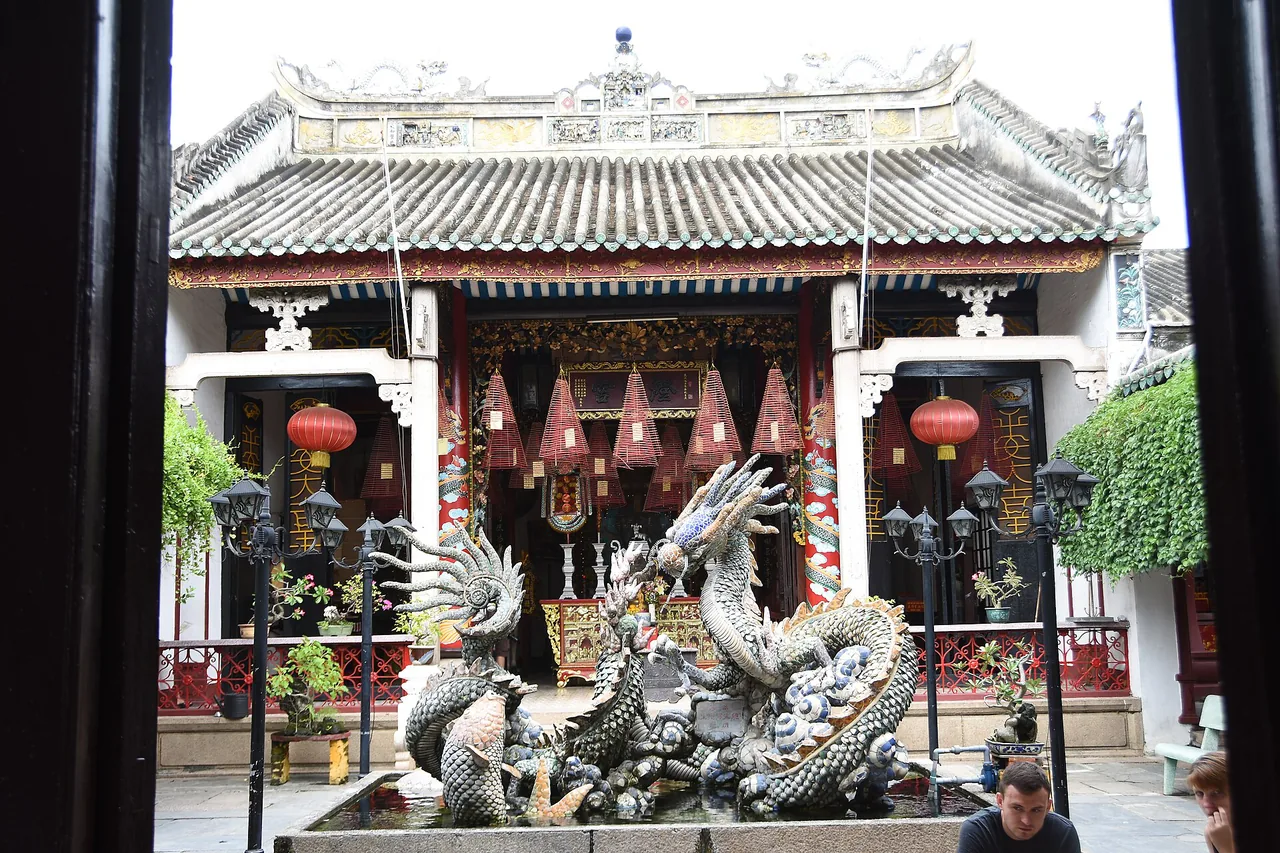
The hall is known for combining wood and stone in both its structure and its decoration. Published photos also show a ceramic mosaic dragon fountain in the courtyard, although the official sources do not describe it.
Because the altars are in active use, keep your voice low and ask before photographing worshippers. Dress modestly, since this is a temple first and a sightseeing stop second.
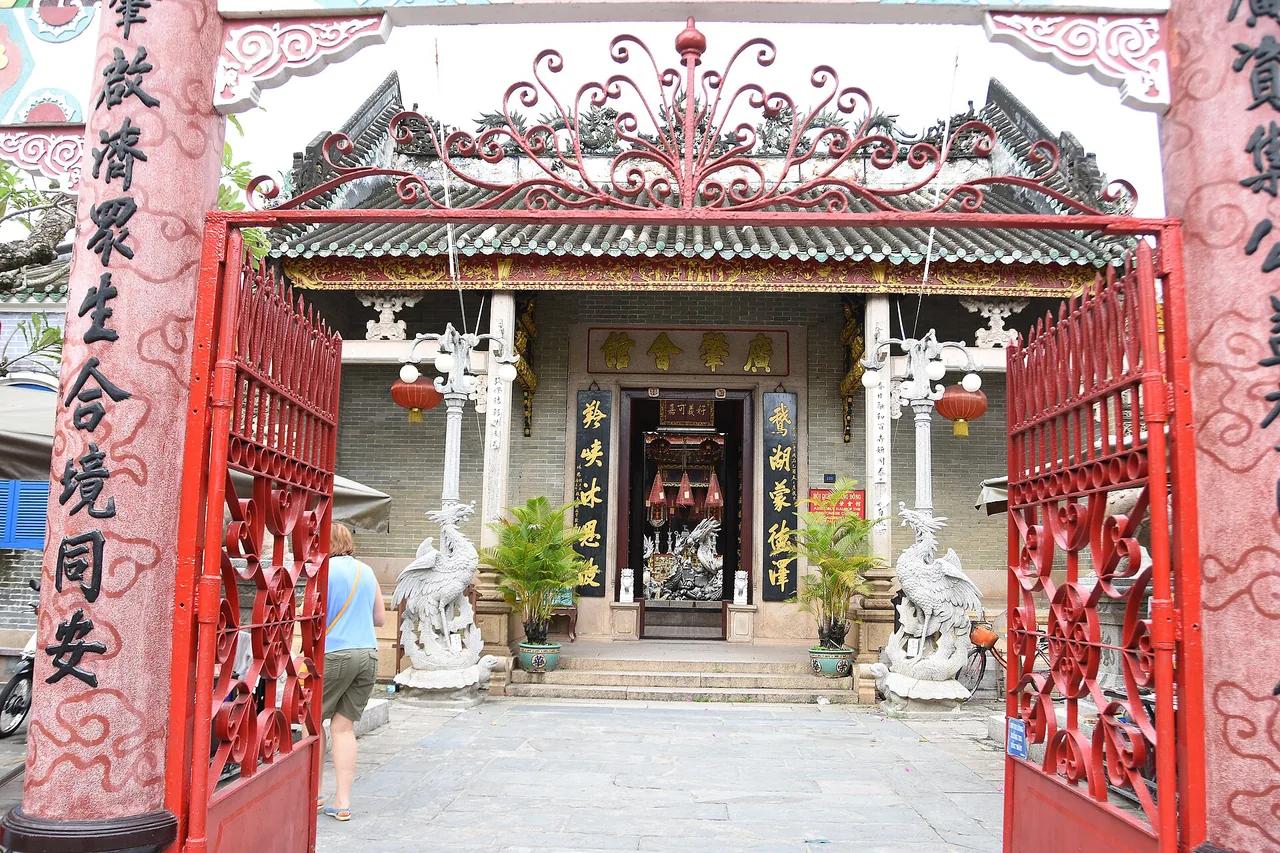
- Front Hall and Entrance Gate
- The grand front hall faces Tran Phu Street and is the first building you reach.
- Photos show a red iron gate, a signboard in Chinese characters, and white stone phoenix statues.
- Stone-Paved Courtyard
- The relic record gives the courtyard as about 6 by 6 meters. It separates the front hall from the main hall.
- A ceramic mosaic dragon fountain appears in published photos of this space.
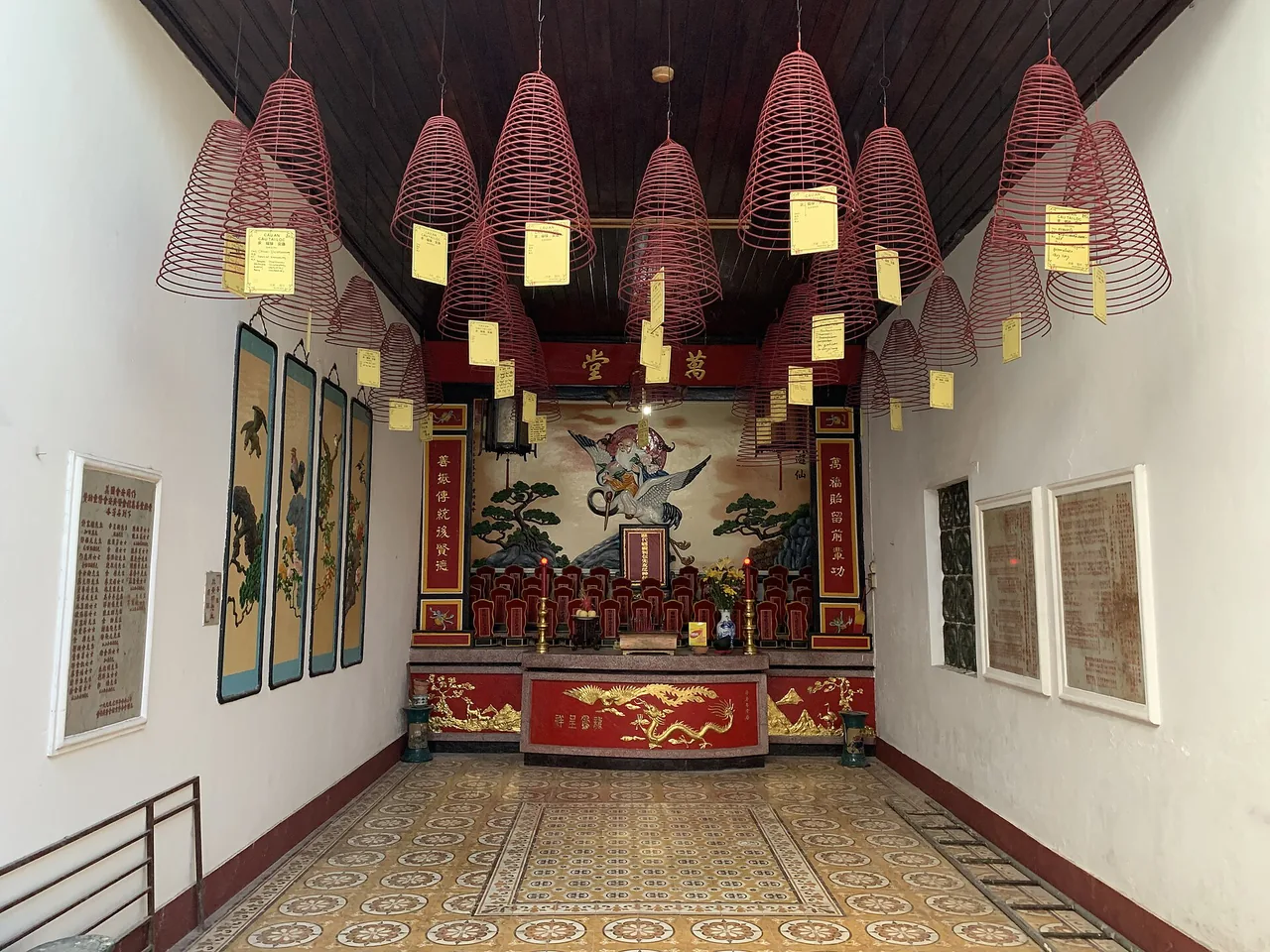
- Main Worship Hall
- Quan Thánh Đế Quân (Guan Yu) holds the central altar, which is the focus of worship.
- Side altars honor the God of Wealth and the founding ancestors of the Cantonese community.
- Heritage Objects
- The heritage portal lists four large lacquered horizontal boards among the surviving pieces.
- It also names a bronze incense burner measuring 1.6 by 0.6 meters and a pair of Chinese celadon porcelain stools.
- East and West Wings
- East and west houses flank the courtyard and main hall, completing the square-shaped plan of the complex.

Tickets and Opening Hours
You enter the hall with the Hoi An Old Town ticket rather than a separate hall ticket. The heritage portal's ticket page lists the Cantonese (Quảng Đông) Assembly Hall among the sites you can choose, so a visit uses one of your ticket's site choices.
In its January 2026 notice, the Hoi An World Cultural Heritage Conservation Center lists two Old Town tickets, and the Da Nang tourism portal repeated the same structure in March 2026. Both include the Old Town landscape and a choice of the Japanese Covered Bridge or Quan Cong Temple.
Older official pages split these prices by nationality, but the January 2026 notice does not say which tier suits which visitor. That notice also does not name the Cantonese hall, so confirm at a ticket kiosk that your chosen sites are covered. Since February 2026, 12 multilingual smart kiosks with international payment also sell tickets.
You buy the ticket once and it is valid for your stay, up to 3 days. Keep the stub after you have used your sites, because you need it to get back into the Old Town. The January 2026 notice also offers a free guide for groups of 8 or more.
Fees may change. A Da Nang city resolution that took effect on 21 February 2026 sets a framework for charging per site instead of a package, and leaves the exact rates to the city government. As of November 2026 we found no published per-site rates, and the heritage center still lists the 80,000 and 120,000 VND tickets. Check the latest notice before you go.
No official source publishes opening hours for the hall itself, and blogs give conflicting times, so we list none. The heritage center's ticket page gives visitor service hours of 7:30 am to 9:30 pm daily. That describes the ticket system, not the hall's timetable. Ticket sales and guiding were suspended from 16 to 19 February 2026 for Tết, while relics stayed open for worship.
- 80,000 VND Old Town Ticket
- It covers the Old Town landscape, the Japanese Covered Bridge or Quan Cong Temple, and 2 sites you choose.
- 120,000 VND Old Town Ticket
- It covers the Old Town landscape, the bridge or Quan Cong Temple, 1 museum, and 3 other sites you choose.
- Children Under 16
- Children under 16 enter free under the heritage center's 2026 notice, as they did on earlier official ticket pages.
Getting to the Hall on Tran Phu Street
The hall is at 176 Tran Phu Street, Hoi An Ward, Da Nang, inside the Old Town. From the Japanese Covered Bridge, known as Chùa Cầu, cross onto Tran Phu Street and walk about 20 meters. The hall is on the left, on the even-numbered side of the street.
The heritage center calls the Old Town a walking and cycling zone, 09:00 to 21:30 in summer and 09:00 to 21:00 in winter. Plan to arrive on foot or by bicycle. Carry your ticket, because tickets are checked at the Old Town entry streets, and since May 2023 tour groups must hold tickets to enter.
If a map app struggles, search for Quang Trieu Assembly Hall, the name on a Wikivoyage listing. Do not confuse it with the Cantonese Assembly Hall at 22 Hàng Buồm in Hanoi, a different building in another city.

Planning Your Visit: Using Your Ticket Choices
The Cantonese hall was built by and still belongs to Hoi An's Cantonese community. If you are also weighing the Fujian hall, our Fujian Assembly Hall guide covers another option.
Your ticket counts sites, not hours, so decide by what you want to see. The 80,000 VND ticket leaves only 2 free choices beyond the bridge or Quan Cong Temple. Spending them on similar halls means skipping other sites. The 120,000 VND ticket gives 3 choices plus a museum.
If you want to see the hall during a festival, the main dates are Nguyên Tiêu (15th day of the first lunar month) and Quan Cong's day (24th day of the sixth lunar month). Lunar dates fall on different calendar days each year, so convert them for your travel dates.
Common mistakes are easy to avoid. Do not trust a blog's opening hours or assume a ticket tier from your nationality. Never throw away the stub on day one of a multi-day stay.
More Hoi An planning
Frequently Asked Questions
Do you need a ticket to visit the Cantonese Assembly Hall in Hoi An?
Yes. The hall is one of the heritage sites you enter with the Hoi An Old Town ticket. The Hoi An heritage authority's ticket page lists the Quảng Đông (Cantonese) Assembly Hall among the sites you can choose.
How much is the Hoi An Old Town ticket?
In its January 2026 notice, the Hoi An World Cultural Heritage Conservation Center lists two tickets. The 80,000 VND ticket covers the Old Town landscape, the Japanese Covered Bridge or Quan Cong Temple, and 2 other sites of your choice. The 120,000 VND ticket covers the Old Town landscape, the Japanese Covered Bridge or Quan Cong Temple, 1 museum, and 3 other sites of your choice.
Is the ticket free for children?
Yes. Under the heritage center's 2026 notice, children under 16 do not pay.
How long is the Old Town ticket valid?
You buy the ticket once and it is valid for your whole stay in Hoi An, up to 3 days. Once you have used all its sites, keep the ticket stub, because you need it to get back into the Old Town.
Who is worshipped at the Cantonese Assembly Hall?
Quan Thánh Đế Quân (Guan Yu, also called Quan Cong) is on the central altar. The side altars honor the God of Wealth and the founding ancestors of the Cantonese community. The hall first honored Thiên Hậu (Mazu), the patron of seafaring merchants.
When was the Cantonese Assembly Hall built?
Cantonese Chinese merchants built it around 1885. A major restoration in 1991 left the building structurally sound.
Where is the Cantonese Assembly Hall and how do I get there?
It is at 176 Tran Phu Street in Hoi An Ancient Town. Cross the Japanese Covered Bridge onto Tran Phu Street and walk about 20 m; the hall is on the left. The Old Town is a walking and cycling zone from 09:00 to 21:30 in summer and 09:00 to 21:00 in winter.
What are the opening hours?
The heritage authority does not publish separate hours for the hall. Its Old Town ticket page gives visitor service hours of 7:30 a.m. to 9:30 p.m. daily.
The Cantonese Assembly Hall rewards visitors who want a living temple rather than a museum display. Bring your Old Town ticket, expect no posted hall hours, and treat the heritage center's 80,000 and 120,000 VND tickets as the current published prices.
For more ideas to fill your ticket's remaining site choices, browse our list of things to do in Hoi An. Check the heritage center's latest notice before you travel, since fee rules in Da Nang are changing.