
Dong Ba Market in Hue: A Visitor's Guide to Hours, Food and Shopping

Dong Ba Market is worth two hours of your Hue itinerary, and it is free to walk in. It is the city's largest and oldest market, set on the north bank of the Perfume River on Tran Hung Dao Street in Phu Hoa Ward, and it packs fresh food, a cooked-food hall, fabric, handicrafts and souvenirs into one building. Come hungry, bring small notes, and treat it as a market you shop and eat in rather than a sight you photograph and leave.
Look for the large red Cho Dong Ba sign on a grey block within sight of the river, about a hundred meters from Truong Tien Bridge. This guide covers how to get there from central Hue, which hours different sources give, how the floors are laid out, what to eat and what to buy. Entry costs nothing; your spending is food and souvenirs.
What Dong Ba Market Is and Why It Matters
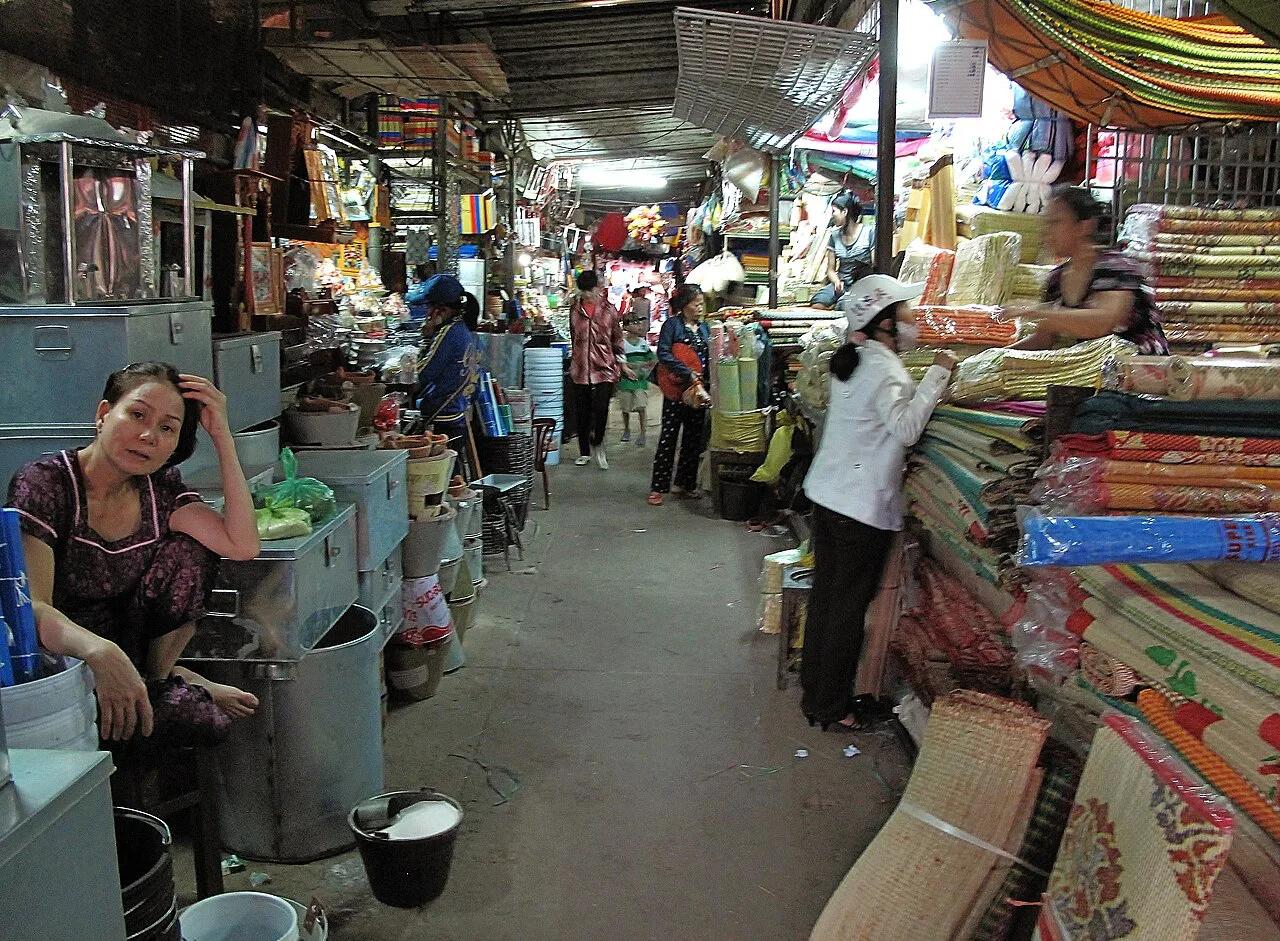
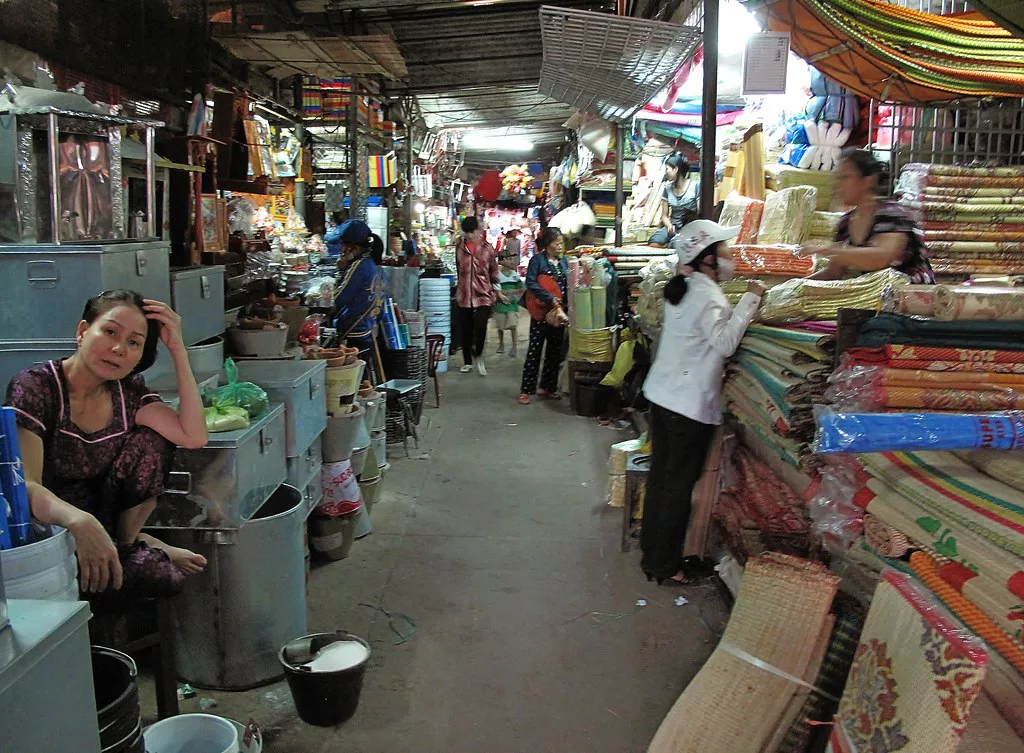
Dong Ba is where Hue shops: butchers, fishmongers, vegetable sellers, dried-goods traders, tailors and food stalls share a building of roughly 16,000 square meters. It is the commercial anchor of the city rather than a curated tourist market, which is exactly why it is worth an hour or two. The range is the point, from live seafood to ao dai fabric on the same visit.
To slot Dong Ba into a day rather than replace it, the wider set of Hue Attractions guides covers the Citadel, the tombs and the museums in the same format. Use them to plan what comes before and after the market.

Where It Is and How to Get There from Central Hue
The market sits at 2 Tran Hung Dao Street in Phu Hoa Ward, on the northern bank of the Perfume River. From the hotel cluster around Le Loi and Hung Vuong Streets, head north to Phu Xuan Bridge, cross the river, and continue straight onto Tran Hung Dao; the market is on your right. That route runs about 1.7 kilometers and takes roughly five minutes by taxi or motorbike in normal traffic.
Walking from the Truong Tien Bridge side is the pleasant option: the market is only a short stroll from the Bridge's northern end, so you can cross on foot and arrive without negotiating a fare. A cyclo is the classic Hue way to cover the riverfront and the market in one loop. VnExpress reported in 2022 that a cyclo tour covering several city sights including the night market cost VND150,000, so ask the driver for the current rate before you set off.
Opening Hours and the Best Times to Visit
One travel source lists the market as open 6:00 to 19:00 daily, and the same page states it closes only on the first day of Lunar New Year. That is a third-party travel site, not a market authority, so treat both the hours and the holiday claim as a guide rather than a guarantee. Confirm current hours and holiday closures with your hotel or at the market entrance before you build a morning around it.
Early morning, roughly 6:00 to 9:00, is the best window for fresh food and for watching the market work: produce is arriving, the wet section is at its busiest, and the cooked-food stalls are serving breakfast.
Late afternoon, around 15:00 to 18:00, suits souvenir hunting and people-watching, with fabric and handicraft sellers fully open.
Do not confuse the daytime market with the Dong Ba night market, which runs on a different clock. VnExpress reported in September 2022 that the night market operates from 6 p.m. to 5 a.m., with stalls for sweet soup, bun bo Hue, banh beo and com hen. If you want the night food scene, plan a separate evening rather than arriving at 18:30 expecting the daytime halls to still be in full swing.
How to Read the Market: A Floor-by-Floor Orientation
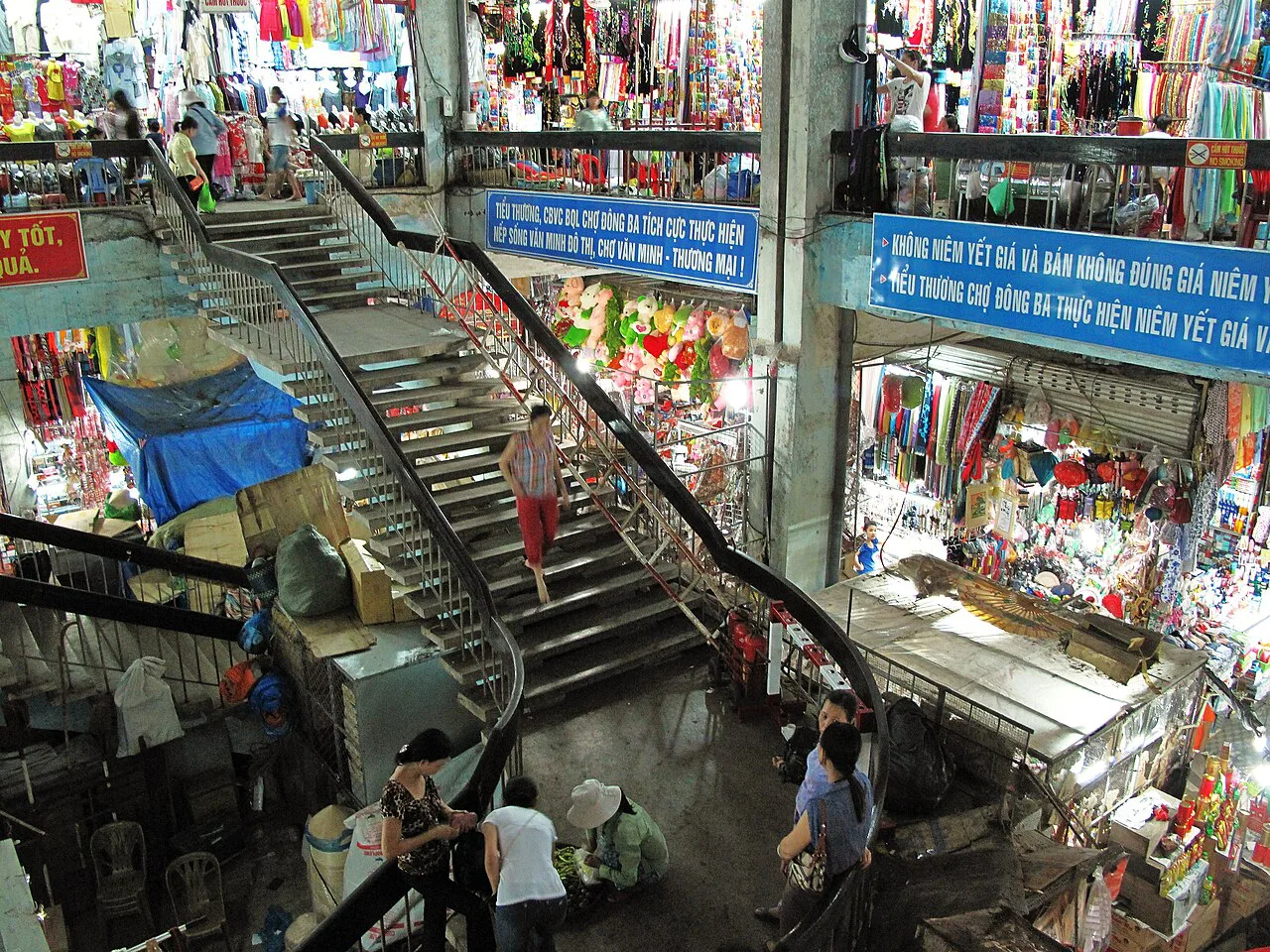
The building has three floors and hundreds of stalls, so orient yourself before you start browsing. The ground floor holds the food area, dried goods, fresh produce and the wet market; the second floor is where handicrafts and traditional items are sold, and the third is the fabric and clothing zone. Knowing this saves you from circling the wet market looking for ao dai cloth.
On the ground floor you will find dried seafood from central Vietnam and Hue's fermented fish pastes, including shrimp paste and snakehead fish paste, alongside the cooked-food stalls.
Outside the main building, fresh-produce sellers line the surrounding street with pork, fish, vegetables and tropical fruit. The market reportedly handles upwards of 7,000 visitors on a busy day and activity winds down by around 8 p.m. That scale is why a quick lap of the whole building first, then a second pass for purchases, beats wandering stall by stall.
What to Eat: Hue Specialties and What They Cost
The food court on the ground floor is the reason many visitors come, with stalls around a shared dining area that seats a few hundred people. Breakfast is the strongest meal here: pho, fresh spring rolls and Hue rice dishes are all on offer, and the cooks are at their freshest early. Sit where the locals are sitting and point at what looks good.
Bun bo Hue is the dish to order at least once in the city that invented it, and the market versions are cheap and fiery. VnExpress reported in September 2022 that a bowl at Ms. Vui's stall cost from VND20,000 to 30,000, while another travel source currently lists bun bo Hue at around VND35,000. Those are two snapshots of a moving price, so read the posted price at the stall and confirm before ordering.
Beyond noodles, look for banh beo steamed rice cakes, com hen rice with baby mussels and herbs, nem lui grilled pork skewers and che sweet soups. VnExpress reported sweet soup at about VND10,000 a bowl and snail dishes at VND10,000 to 20,000 per serving in 2022, which tells you the order of magnitude rather than today's exact price. Hue food runs spicy, so ask for it mild if you are unsure.
If you would rather have someone else navigate the stalls, guided street-food tours of Dong Ba are sold online and typically bundle several Hue specialties into one tasting.
What to Buy and What to Skip
The best buys are the things Hue actually makes: conical hats, ao dai fabric, incense, eucalyptus oil, Ke Mon jewelry and central Vietnamese dried seafood. These are light, packable and specific to the region. Skip generic souvenirs you can buy anywhere in Vietnam and focus on what the city is known for.
Fermented shrimp paste and fish paste are the most distinctive edible souvenirs, and the most problematic to carry.
For clothing, buy fabric upstairs and have it sewn rather than buying off the rack, which is where the market beats a souvenir shop. If you are also planning a museum stop, the Hue museum of royal fine arts gives you a calmer counterpoint to the market's noise.
Bargaining, Payment and Practical Etiquette
Bring cash in small notes. Card payment is unreliable in a market of this kind, and vendors may not have change for a large bill early in the day.
How Long to Allow and What to Pair With It
Allow about two hours for a proper visit: one lap to orient, a meal at the food court, and a focused pass for purchases. If you only want lunch and a quick browse, an hour is enough. Add time if you are buying fabric or having something tailored.
The Imperial Citadel is about a ten-minute walk west of the market, which makes a natural pairing: market breakfast, then the Citadel before the heat peaks. One travel source lists the Citadel as open 7:00 to 17:30 with a 200,000 VND adult ticket, but confirm current hours and fees at the entrance since that figure is third-party.
The Truong Tien Bridge is just south of the market and free to cross, best around sunset when the lights come on. Thien Mu Pagoda is roughly four kilometers west along the river and works as a later-afternoon stop. For the tombs and river trips that fill the rest of your day, the list of things to do in Hue covers the gaps.
Travelers heading south of the city sometimes pair a market morning with a tomb visit; the Gia Long tomb is the most remote of the royal tombs and needs its own transport, so book it as a half-day rather than an add-on.
Accessibility, Luggage and Other Practical Limits
The market is a busy, multi-level building with narrow aisles and stairs between floors, so wheelchair users and travelers with strollers should expect limited access; one travel source addresses accessibility directly, but conditions vary by entrance and floor. If access matters for your visit, ask your hotel to check the current situation before you go rather than assuming.
Nearby, two calmer stops round out a market day: the dong Khanh tomb sits among the royal tombs south of the river, and the Phu Cam cathedral is a short ride from the center. Both are short visits that pair well with a market morning rather than replacing it.
Should You Put Dong Ba Market on Your Hue Itinerary?
Yes, if you want to eat and shop where Hue actually eats and shops. Two hours, cash in small notes, an early start and a flexible attitude will get you the best of it. Go for breakfast, buy the region's dried goods and fabric, and skip the generic souvenirs.