
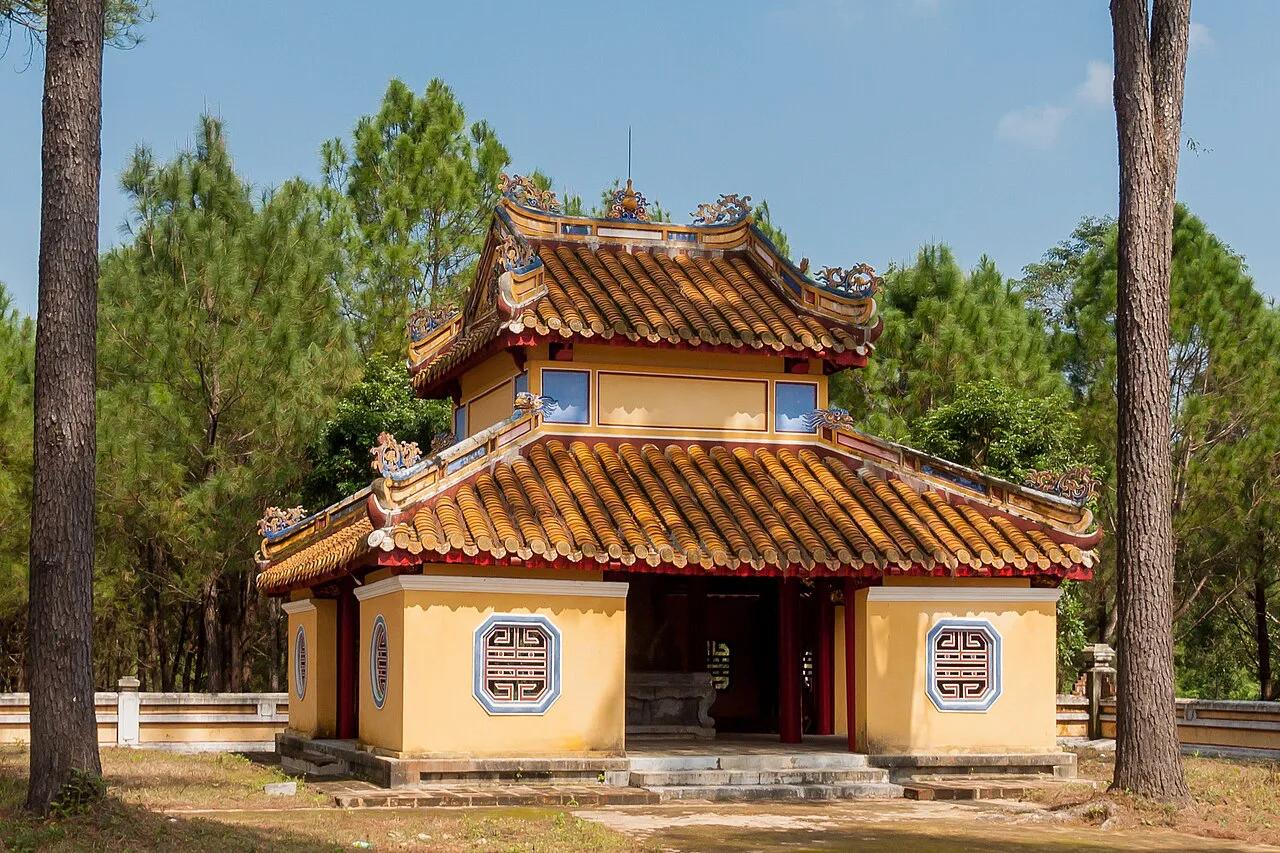
Gia Long Tomb (Thiên Thọ Lăng): A Visitor's Guide to Hue's Forgotten Mausoleum

Gia Long Tomb, officially Thiên Thọ Lăng, is the resting place of Emperor Gia Long (Nguyễn Ánh), founder of the Nguyễn Dynasty, and it sits roughly 19-20km south of central Hue in the countryside along the upper Perfume River. It is the oldest of the Nguyễn royal mausoleums and the quietest of the major ones, which makes it a very different outing from the crowded citadel. This guide covers where the tomb is, the hours and adult ticket price sources report, how to reach it by road or boat, what you walk past inside, how long to allow, and how to combine it with Minh Mang Tomb.
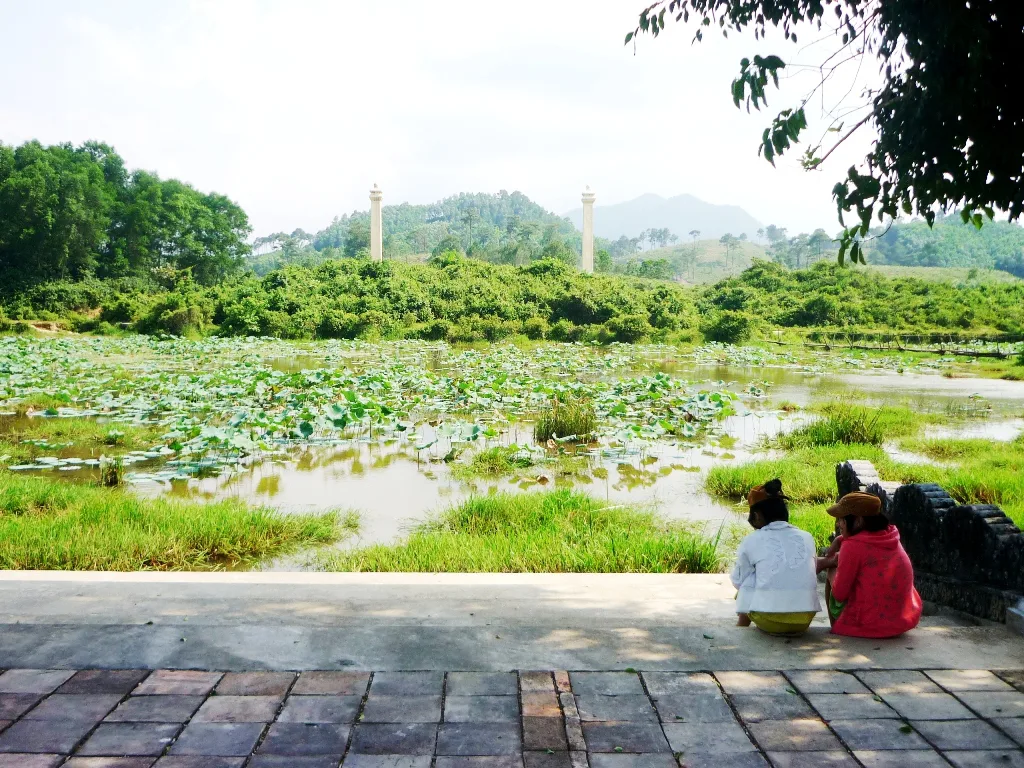
Expect a large, nature-integrated complex rather than a single monument: temples, a lake, a stele house, pine-shaded paths and the sarcophagi of Gia Long and several family members spread across a landscape of 42 hills. On most days you will share it with very few other visitors. The trade-off is distance, thin shade in the middle of the day, limited facilities and few explanatory signs, so plan transport and water before you set out.
What and Where Gia Long Tomb Is
Gia Long Tomb, known in Vietnamese as Lăng Gia Long and officially as Thiên Thọ Lăng, is the mausoleum of Emperor Gia Long, who unified the country and established the Nguyễn Dynasty in 1802 with Hue as his capital. The complex lies in the countryside south of Hue, in the area of Định Môn village, on the upper reaches of the Perfume River and near its Tả Trạch tributary. Slow Travel Hue puts it about 19km from the city center measured from Trường Tiền Bridge; Vietnam Coracle gives roughly 20km south of Huế, so treat the distance as about 19-20km either way.
Construction began before Gia Long's death: when his first wife died in 1814, mandarins selected the site, and the emperor was buried beside her after his death in 1820, according to Vietnam Discovery. The setting is the point as much as the architecture, with the tomb laid out among wooded hills that act as a natural enclosure. Because it sits outside the city, this is not a stop you can fold into a walking day in the citadel; it needs its own transport plan.

Opening Hours and Ticket Price
Vietnam Coracle, the most recent detailed guide to the site, gives opening hours of 7am to 5.30pm daily, with tickets bought at the entrance: 150,000 VND for adults, children free. Hoi An Day Trip likewise lists 150,000 VND for adults in 2024 but describes seasonal hours, roughly 6:30am to 5:30pm in the dry season and 7am to 5pm in the wet season. Older listings differ: Vietnam Discovery, updated in 2021, gives 7am to 5.30pm and a 50,000 VND adult fee. Treat the higher figure as the more recently reported adult price and confirm both hours and price with your hotel or a Hue operator before you travel, since published listings have not been updated consistently.
Some drinks and snacks are sold near the entrance gate, so bring your own water for the grounds themselves. Sources do not settle whether Gia Long Tomb is included in the Hue monument combination ticket, so ask at the ticket desk when you buy rather than assuming the citadel combo covers it. If you are building a tomb-focused day, our guide to Hue Attractions covers the other imperial sites and how they fit together.

Who Should Make the Trip and Who Should Skip It
Go if you want atmosphere and solitude over convenience: the complex is compelling, the grounds are beautiful, and the lack of crowds lets you read the layout at your own pace. Vietnam Coracle notes that even at midday you are likely to have the entire site to yourself, which is the opposite of the experience at the famous tombs closer to town. It suits travelers who have already seen the citadel and want the dynasty's story told from its beginning.
Skip it, or save it for a return trip, if you have only one full day in Hue and no private transport, if you are traveling with people who tire in the heat, or if you want interpretive exhibits and shade at every turn. The distance means about a half day once travel and walking are counted, and the facilities are minimal compared to city attractions. For a shorter, air-conditioned dose of royal Hue, the Hue Museum of Royal Fine Arts (Long An Palace) keeps Nguyễn Dynasty material close to the center.
Getting There from Hue
By road, arrange a private car or a motorbike and allow for the fact that the tomb is well outside the city: Slow Travel Hue recommends a car and notes the route runs through countryside rather than a direct urban corridor. A motorbike gives you flexibility to stop, but the return leg is the part to plan, so agree with your driver on a pickup time or keep a local SIM active for ride-hailing. Do not count on finding onward transport at the gate.
By boat, the Perfume River route is the scenic option, but Slow Travel Hue estimates around three hours from the city center and describes it as rather expensive, so it works best if the journey itself is part of the day. A guided slow-travel operator runs a full-day upstream tour combining the tomb with the Perfume River's source landscape, cycling through villages and a herbal-farm lunch, which suits travelers who want context and logistics handled. If you go independently, the boat-versus-car decision comes down to whether you value the river trip more than the hours it costs.
What to See Inside the Complex
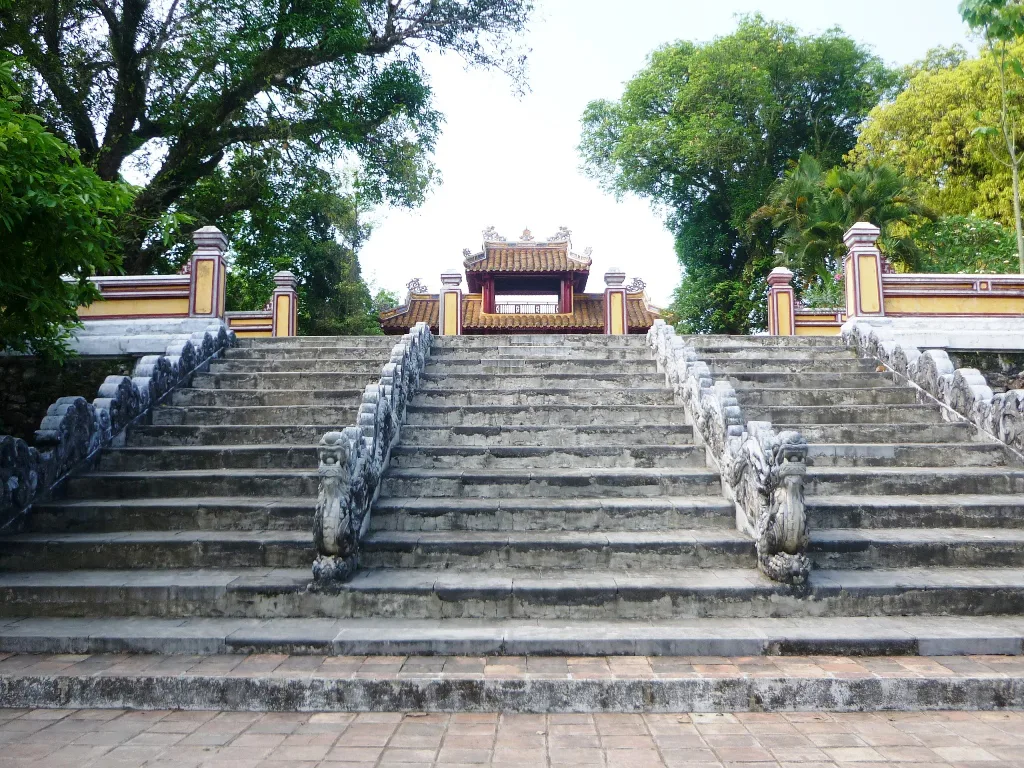
Walk the site in its three parts: the temple area with Minh Thanh Temple for worship, the tomb area with the royal sarcophagi, and the stele house, Bi Đinh, off to one side. Vietnam Discovery explains that the structures sit on three axes, with the tomb in the middle, the worship area right and the stele house left, and that the complex has one large lake at the front unlike the two typically found at later tombs. A pine-shaded path runs from the Perfume River bank up to the tomb, so start there and let the route carry you.
Look for Bửu Thành, the walled burial enclosure, and the surrounding tombs of Gia Long's family, including his wife, mother and other relatives, which spread beyond the central compound. Because the buildings are simpler than at later tombs, the interest is in the arrangement and the landscape: hills on all sides, a lake in front and the river behind the approach. Read the layout as a whole rather than hunting for ornate carving.
Why This Tomb Matters Architecturally
Thiên Thọ Lăng is the first Nguyễn imperial mausoleum, and its design set the pattern for the tombs of Gia Long's successors. Slow Travel Hue explains that instead of the older concentric rectangular plan, Gia Long's tomb introduced a larger complex with three distinct areas, the temple area, tomb area and stele house, a model later mausoleums followed. It is also the only royal tomb designed from the start as a double tomb, for the emperor and Empress Thừa Thiên.
The design deliberately folds the working landscape into the sacred one: villages, rice paddies and reservoirs connect through a waterway to the Perfume River, as Slow Travel Hue describes, so the emperor's resting place is bound to the agricultural life around it. That is why the approach through fields and hamlets belongs to the visit rather than being dead time. If you have already seen the elaborate later tombs, this one explains where their vocabulary came from, and the Wikipedia entry gives a concise overview of the mausoleum.
How Long to Allow and Pairing with Minh Mang Tomb
Allow about an hour to 90 minutes on the grounds at a relaxed pace, plus travel each way, which makes the tomb a half-day outing from Hue rather than a quick stop. The layout is spread out across hills and a lake, so the walking is more than a single courtyard even though the buildings are few. Bring water, sun protection and shoes that handle uneven paths, since shade is patchy away from the pine approach.
Pairing it with Minh Mang Tomb works well because the two are about 7km apart, with Minh Mang closer to the city on the way back, per Slow Travel Hue. See Gia Long first for the origins and Minh Mang second for the elaboration, and the comparison makes sense of both. Keep the pairing to two tombs; adding Tu Duc or Khai Dinh on the same loop makes for a long, hot day.
When to Visit
Vietnam Coracle recommends morning or late afternoon as the most atmospheric and coolest times of day, with the middle of the day hot but almost empty. Hue's summer months from April to September can be fiercely hot, while October to March can be surprisingly grey and cool. If you are heat-sensitive, take the early slot and finish before lunch.
Dress respectfully, with shoulders and knees covered, since this is an active place of worship as well as a monument; Vietnam Discovery lists polite clothing as the dress code. Rain in the wet season can make the paths and steps slick, so check the forecast the morning you go. Confirm the day's opening hours locally before setting out, given the seasonal variation some listings describe.
Nearby Royal Tombs and Temples
The countryside around Gia Long Tomb holds other Nguyễn Dynasty sites, and Vietnam Coracle suggests combining the visit with the surrounding tombs and temples rather than treating it as an isolated stop. Across the river and back toward Hue, the later tombs such as Minh Mang, Tu Duc and Khai Dinh are the standard pairings. If you want a quieter, smaller royal site on another day, Dong Khanh Tomb in Hue is an easy addition to a city-based itinerary.
Back in the city, balance the imperial circuit with everyday Hue: Dong Ba Market in Hue is the place to stock up on snacks and see the commercial side of town. For a wider shortlist that puts the tombs alongside the citadel and local food, see our things to do in Hue guide. Planning the tomb day around one of those city stops keeps the return leg useful rather than a straight drive back.
Is Gia Long Tomb Worth the Detour?
Yes, if you have half a day, a booked car or motorbike, and an interest in how the Nguyễn Dynasty's royal architecture began. The near-empty grounds and the landscape setting are the reward for the distance, and pairing the visit with Minh Mang Tomb about 7km back toward the city gives you a coherent half day. Book transport for the return before you arrive, and take water.
Before you go, reconfirm the ticket price and that day's hours with your hotel or the ticket desk, since published listings disagree, and check whether any combination ticket you hold covers the site. If you are still choosing which tombs to see in Hue, start with our Hue Attractions: 5 Visitor Guides overview and slot Gia Long in where the schedule allows.
Explore more Hue guides
Sources
- Tomb of the First Emperor – Vietnam Coracle – Independent Travel Guides to Vietnam
- Travel Guide to Tomb Of Gia Long (Thien Tho Lang) in Hue
- 3 spectacular discoveries about Gia Long tomb that most travelers missed - Slow Travel Hue
- Gia Long Tomb - Hue Royal Tombs - Things to Do in Hue
- Tomb of Gia Long