
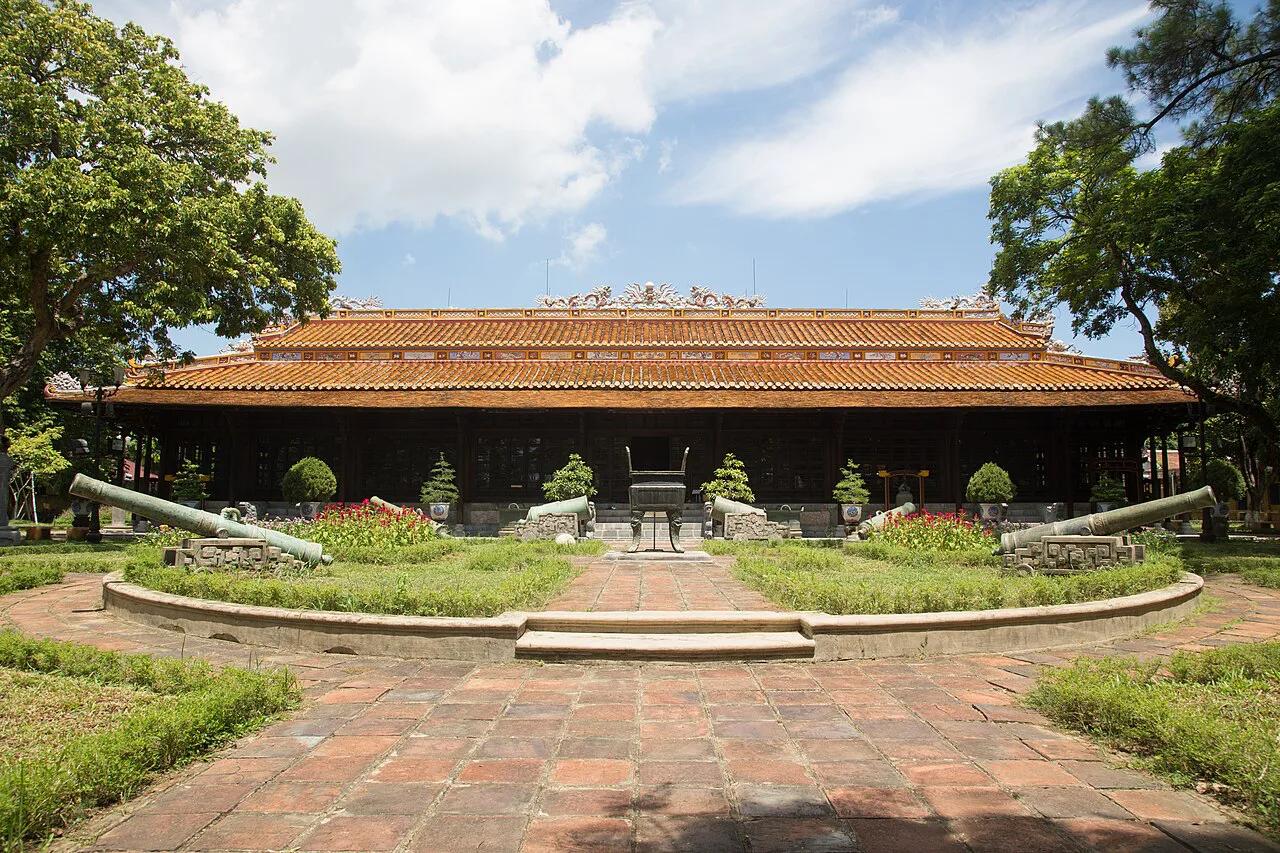
Hue Museum of Royal Fine Arts (Long An Palace): What to See and How to Visit

The Hue Museum of Royal Fine Arts is the same museum many listings call the Hue Museum of Royal Antiquities, housed in Long An Palace at 3 Le Truc Street in Thuan Thanh Ward, a short ride from the Imperial City. It is worth 45 minutes to an hour of an Imperial City day if you care about Nguyen court craftsmanship, and skippable if you are collecting big monuments rather than objects. This guide covers what the collection holds, how the palace itself became the largest piece on show, transport options, crowd timing and where to confirm hours and ticket prices.
What the Hue Museum of Royal Fine Arts Is (and Why It Has Two Names)
The museum was founded in 1923 under King Khai Dinh as the Khai Dinh Museum, and today it operates under the Hue Monuments Conservation Center as part of the Complex of Hue Monuments, the UNESCO World Heritage site listed in 1993, according to the travel guide Sovaba. Older and translated listings render it as the Museum of Royal Antiquities, while other pages use Royal Fine Arts for the same building and collection, so treat both names as one museum when you search for a map pin or ticket.
The collection is large but the display is compact: the Vietnam Tourism Information portal describes nearly 10,000 antiquities from the Nguyen Dynasty, while the People's Army Newspaper reports the center was preserving and displaying over 11,000 artifacts as of the museum's 2023 centenary, with eight sets comprising 33 pieces recognized as national treasures. Either figure tells you the same practical thing: only a few hundred objects are on show, so you are seeing a curated slice rather than a warehouse. For a headcount, use the most recent figure the conservation center publishes.

Where It Is: Le Truc Street, Near the Imperial City
The museum sits inside the city center, about 2 to 3 kilometers from the Trang Tien Bridge area and roughly 1.5 kilometers from the Imperial City, which is walkable in about 20 minutes, according to Sovaba. That puts it in the same outing as the citadel rather than across town, so you can pair the two without a second taxi. Some listings describe the museum as inside the Imperial Citadel, but 3 Le Truc Street, Thuan Thanh Ward, is the address to give a driver.

How to Get There: City Center, Imperial City and Phu Bai Airport
From the center, Sovaba lists a motorbike or bicycle ride of 5 to 10 minutes, a cyclo trip between 50,000 and 100,000 VND depending on distance, and a taxi of about 80,000 VND one way, with motorbike rentals quoted at 100,000 to 150,000 VND per day. Those are the guide's figures rather than an official tariff, so treat them as a planning range and confirm the fare in the app or with the driver before you set off.
From Phu Bai Airport, about 15 kilometers away, the same guide quotes roughly 200,000 to 250,000 VND by taxi or 50,000 VND on an intercity bus; from Hue Railway Station, 3 to 4 kilometers out, it gives about 100,000 VND by taxi or 50,000 VND by motorbike taxi. Use these to sanity-check a quote, not as a binding price. If you arrive by motorbike, park in the designated area at the entrance and follow security staff instructions.
Long An Palace Itself: 128 Carved Pillars and the Building as the Main Exhibit
Long An Palace was built under King Thieu Tri, who reigned from 1841 to 1847, and serves as the museum's main showroom, standing on a 6,330-square-meter site with a main hall of roughly 1,185 square meters. The structure has 128 precious-wood pillars carved with the four sacred creatures and more than 1,000 poems in Han script, including two poems by Thieu Tri himself, according to Vietnam Tourism Information. Look up before you look at the cases: the roof beams and pillar shafts are the finest craftsmanship in the building.
Sovaba makes the useful point that the palace is the largest artifact in the collection, a piece of Nguyen royal architecture rather than a neutral display box. Budget time for the carvings and courtyard, not only the glass cases, and expect the interior to be darker than a modern museum.
What's Inside: Porcelain, Royal Costumes, Ritual Instruments and Gilded Woodware
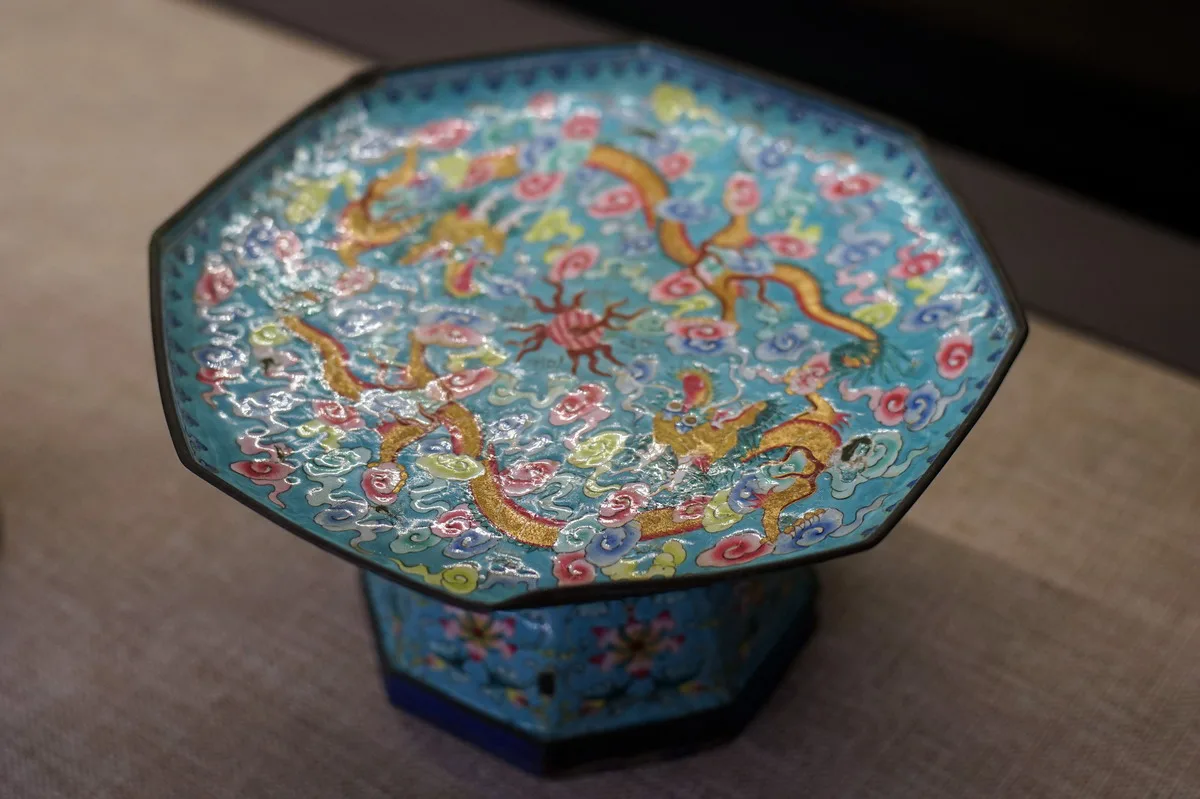
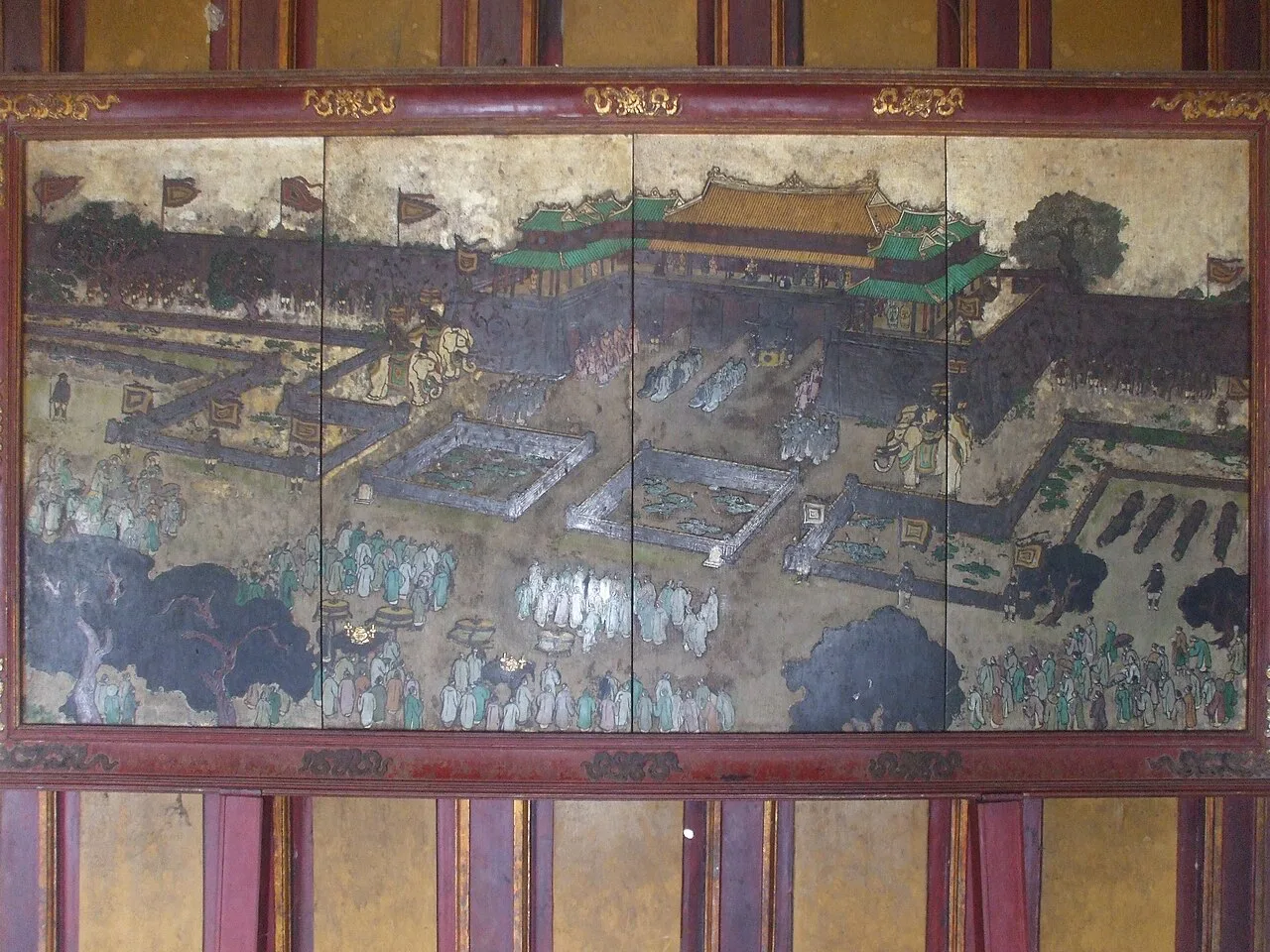
Inside the main hall, Sovaba describes around 300 objects across 17 collections: Nguyen Dynasty porcelain with four sacred animals and eight treasures motifs, dragon robes and Nhat Binh attire worn by empresses and queen mothers, bronze bells and stone chimes used at the Nam Giao Altar, Thieu Tri reign coins, and gilded lacquered woodware including a royal throne, palanquins and daybeds. Vietnam Tourism Information adds Hue enamelled bronze wares, gold tree branches with jade leaves, mother-of-pearl inlay, red lacquer trimmed with gold, and a folding screen painted by Indochina College of Fine Arts painters showing 78 Hue women in ao dai.
Labels and lighting are organized for self-guided reading, with explanatory panels that make the court context legible without a guide, according to Sovaba. Occasional thematic shows rotate through the space, such as exhibitions on dragons and phoenixes in Nguyen treasures or mother goddess worship in court culture. Because these change, check what is on during your dates rather than counting on a specific show.
The Champa Stone Sculpture Collection and the Outdoor Courtyard Pieces
Separate from the Nguyen court material is a Cham sculpture group: Sovaba describes about 80 artifacts excavated at Tra Kieu in 1927, and Vietnam Tourism Information calls the same body of Cham objects found in the O and Ly areas and the old Tra Kieu capital among the valued pieces of the Far East. Read them as a different culture and chronology from the royal cases, not as more Nguyen finery. The Tra Kieu origin is the detail worth noting, since it ties the pieces to the Cham capital south of Hue.
In the courtyard, Vietnam Tourism Information lists 30 cannons from the Nguyen Dynasty and earlier, stone statues and stelae from the Le and Nguyen dynasties, and large bronze bells, cauldrons and urns. Walk the outside display after the hall, when your eyes have adjusted and the light is better for stone and bronze. This is where a short visit quietly stretches, so watch the clock if you hold a citadel ticket for the same morning.
How Long to Allow and When to Go for Fewer Crowds
Plan 45 to 60 minutes for the palace hall, the Cham pieces and the courtyard at an unhurried pace; 30 minutes is enough if you move briskly through the cases. The footprint is small compared with the Imperial City, which is why this works best as an add-on before or after the citadel rather than a half-day on its own. Anyone who prefers monuments, gardens and open space to display cases can reasonably skip it.
Sovaba recommends February to April and September to November for cooler, drier weather in Hue, and suggests early morning from 7:00 to 9:00 or after 3:00 PM for thinner crowds and easier photography. Midday is the weakest slot: heat outside and dim light inside. If your trip falls on Lunar New Year, expect schedule changes and verify before you go.
Hours and Adult Ticket Price, and Where to Confirm Them
According to Sovaba, a third-party travel guide, the museum opens daily from 7:00 AM to 5:30 PM; confirm current opening times with the Hue Monuments Conservation Center or the museum's own channels before you travel. Sovaba also states that ticket pricing changed from April 1, 2023 under the conservation center, but neither Sovaba's excerpt nor the other available sources give the amount. Check the adult ticket price at the counter or on the conservation center's published notices rather than relying on a blog figure.
Practical Notes: Photography, Lighting and Self-Guided vs. Guided Visits
Interior light is low and uneven, so bring a phone or camera that handles dim rooms and skip flash if signs restrict it; check the rules at the entrance rather than assuming. The courtyard is the better place for bright, crisp shots of cannons, stelae and bronze urns.
Self-guided works well here because the panels explain the collections, and Sovaba notes the layout and labels are organized for independent visitors. A guide adds most value if you want the Nguyen court rituals and the Cham pieces put in sequence, so decide based on how much context you already have. Either way, read the palace carvings last, when you have the court story in mind.
What's Nearby: The Imperial City and the Rest of Thuan Thanh
The Imperial City is the obvious pairing, about 1.5 kilometers away and walkable in roughly 20 minutes, so many travelers do the citadel in the morning and the museum in the cooler late afternoon. For the rest of the city's sights, start with our Hue Attractions: 5 Visitor Guides before you fix a plan.
If you want a market stop for lunch or supplies, Dong Ba Market in Hue is the practical central choice. Travelers building a Nguyen-themed day often add Gia Long Tomb (Thiên Thọ Lăng), which is further out and needs its own transport, so slot it separately rather than squeezing it in.
Should You Add the Museum to Your Imperial City Day?
Add the museum if you want close-up Nguyen court objects, carved architecture and a quiet hour away from the citadel crowds, and skip it if your priority is scale, gardens and monuments. Build it into an Imperial City day rather than giving it a day of its own, and go early or late for better light and fewer people. Confirm current hours and ticket price with the Hue Monuments Conservation Center before you set out, since those are the details most likely to change.
Explore more Hue guides
Frequently Asked Questions
Is the Hue Museum of Royal Fine Arts the same as the Museum of Royal Antiquities?
Yes. Both names refer to the museum housed in Long An Palace at 3 Le Truc Street in Thuan Thanh Ward, Hue. Older and translated listings favor Museum of Royal Antiquities, while other pages use Royal Fine Arts, so use the address when giving directions or searching for a map pin.
Do I need to book tickets in advance?
The available sources describe walk-up entry and do not set out an advance booking requirement, so plan on buying at the museum and check with the Hue Monuments Conservation Center if you want certainty for a holiday period. Group or guided visits may follow separate arrangements.