Thien Mu Pagoda, Hue: Visit Guide, Getting There & Tips
Planning a Thien Mu Pagoda visit? Free entry, how to get there from Hue, how long to stay, what to wear and how to pair it with the tombs.
On this page
Last updated November 2026: Thien Mu Pagoda is worth a stop for most Hue visitors, and a standard visit takes about 45 to 60 minutes. Reach it by taxi, ride-hail, motorbike or river boat, since it sits roughly 5 km (3 miles) west of the centre. Entry is reported free, with opening hours of 7:00 to 18:00 daily.
Featured image: David McKelvey from Brisbane, Australia, CC BY 2.0, via Wikimedia Commons.
Thien Mu Pagoda at a glance
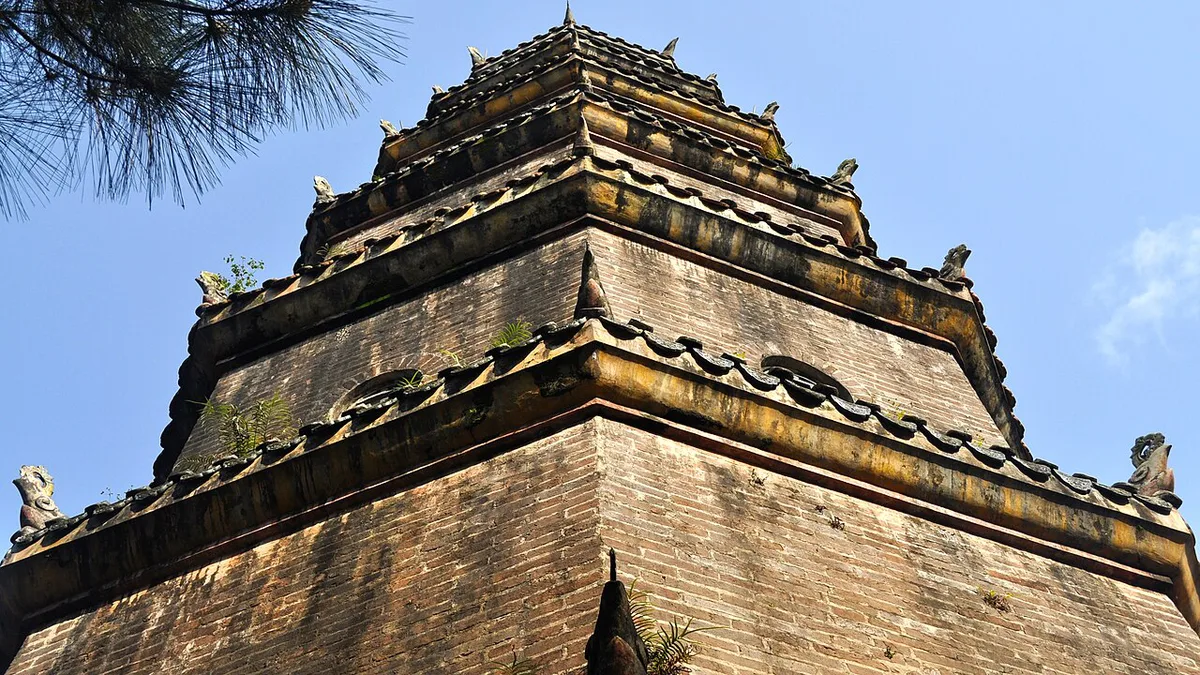
Thien Mu Pagoda, also called Linh Mu Pagoda, stands on Ha Khe Hill on the north bank of the Perfume River. Its seven-storey Phuoc Duyen Tower is 21 m (about 69 ft) tall and is one of Hue's best-known silhouettes. Founded in 1601, the complex ties into the story of the Nguyen lords and the later Nguyen dynasty. Resident monks still live and practise here, so you are visiting a working temple rather than a museum. Go if you have a free half morning or an hour near the river. Skip it only if every hour is committed to the Imperial City and the tombs.
- Location: Ha Khe Hill, north bank of the Perfume River, about 5 km (3 miles) west of central Hue
- Entry: free
- Hours: 7:00 to 18:00 daily
- Time needed: 30 to 90 minutes, our editorial estimate
- Best for: river views, Nguyen-era history, active Buddhist practice
How to get to Thien Mu Pagoda from central Hue
Thien Mu Pagoda sits about 5 km (3 miles) west of central Hue. By motorbike, the ride takes about 10 to 15 minutes. A taxi or ride-hail car is the easiest choice if you do not ride. Cyclists can manage the distance along the Perfume River, but should start early to avoid midday sun. Dragon boats are the slowest option and usually come bundled into a tour. For route detail, see our guide to river boat options. Boat times and fares change, so ask the operator whether the boat stops at the pagoda and how you return. Choose a motorbike only if you hold the right licence and feel confident in Hue traffic. Arrange your return ride before you leave town, or keep your ride-hail app open at the exit.
Plan to pay for the 5 km (3 miles) ride, since entry is free and you should not expect a ticket booth.
| Mode | Indicative time | Comfort and cost | Best for | Caveat |
|---|---|---|---|---|
| Motorbike | About 10 to 15 minutes | Lowest cost, least comfort | Confident riders on their own schedule | Needs a licence and traffic confidence |
| Taxi or ride-hail | Short road trip | Mid cost, high comfort | Families and anyone wanting simplicity | Arrange the return trip in advance |
| Bicycle | Slower than a motorbike over 5 km | Cheapest, most effort | Early starts along the river | Midday heat |
| Dragon boat | Slowest option | Highest cost, most scenic | A river day with the pagoda as one stop | Usually tour-based; confirm stops and return |
Opening hours, entry and what it really costs
Entry to Thien Mu Pagoda is free, and it is reported open from 7:00 to 18:00 every day. Prices and hours checked November 2026. For current notices, start with Thua Thien Hue tourism. Free entry still leaves small costs. Budget for your ride or boat, a guide if you want one, and flowers or incense if you wish to make an offering. Do not expect a ticket booth at the gate. Parking and toilets are not confirmed, so ask staff on arrival.
How long to spend and the best time to go
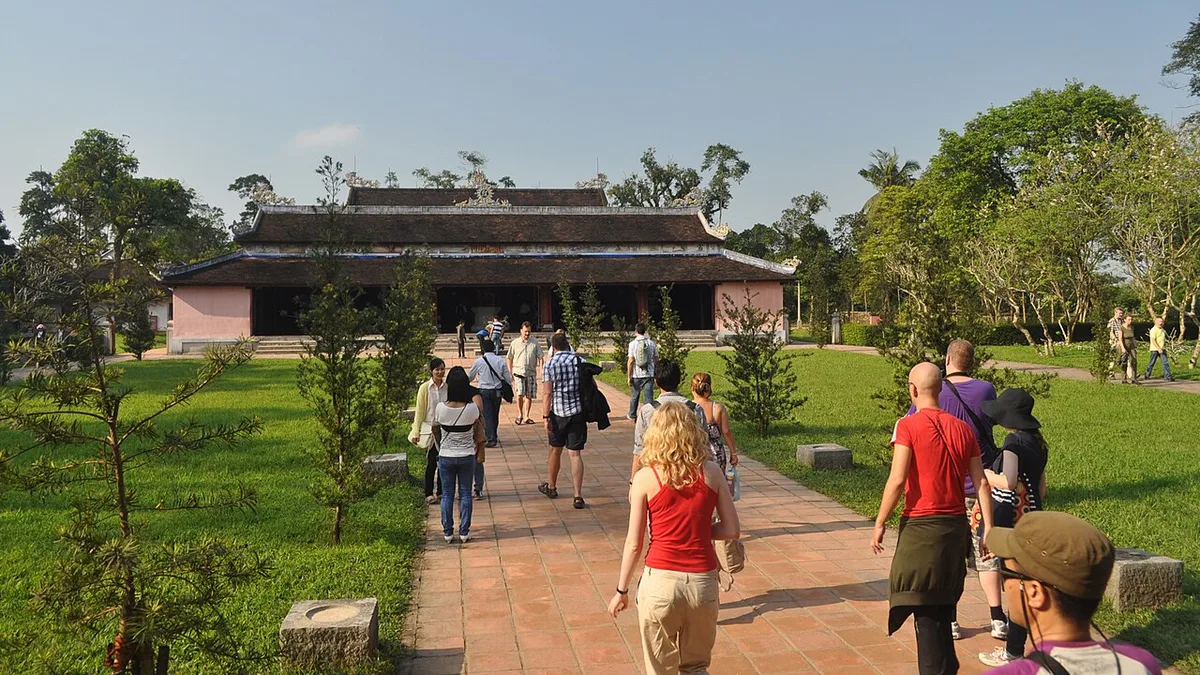
Plan 30 minutes for a quick stop, 45 to 60 minutes for a standard visit, and 90 minutes or more for a slow visit. These are editorial estimates, not official figures. Early morning and late afternoon are the best windows. Midday heat makes the open courtyards tiring, and flat light weakens photographs of Phuoc Duyen Tower. A late-afternoon visit also lets you finish the day by the river. Sources disagree on the driest months, giving February to August or March to August. Hue's wet season brings heavy rain, so carry a light rain layer if you travel outside that window.
| Visit style | Time | What it covers |
|---|---|---|
| Quick stop | About 30 minutes | Tam Quan Gate, Phuoc Duyen Tower, a look into Dai Hung Shrine |
| Standard visit | 45 to 60 minutes | Quick stop plus the Great Bell, Dia Tang Hall and the gardens |
| Slow visit | 90 minutes or more | Standard visit plus the tomb of Thich Don Hau, photography and a pause for prayer |
What to see at Thien Mu Pagoda
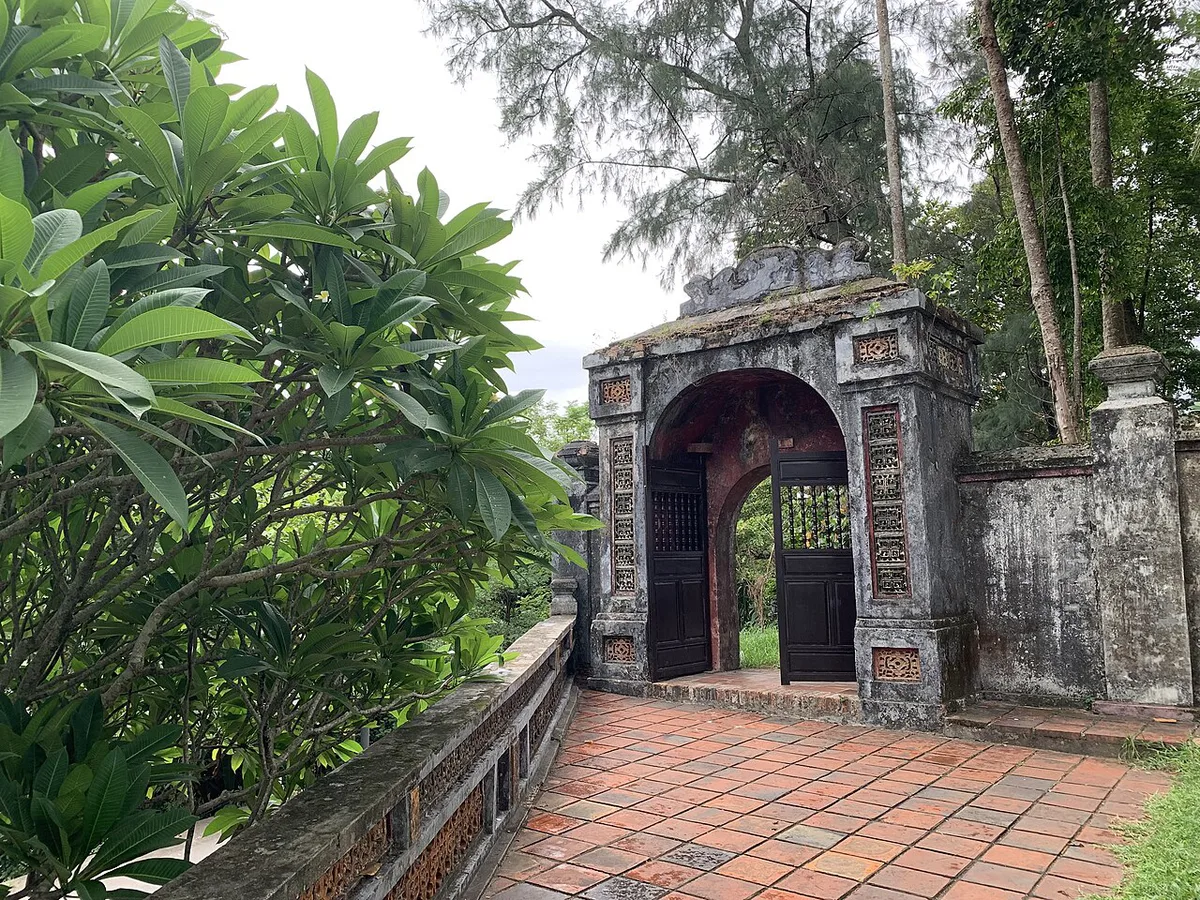
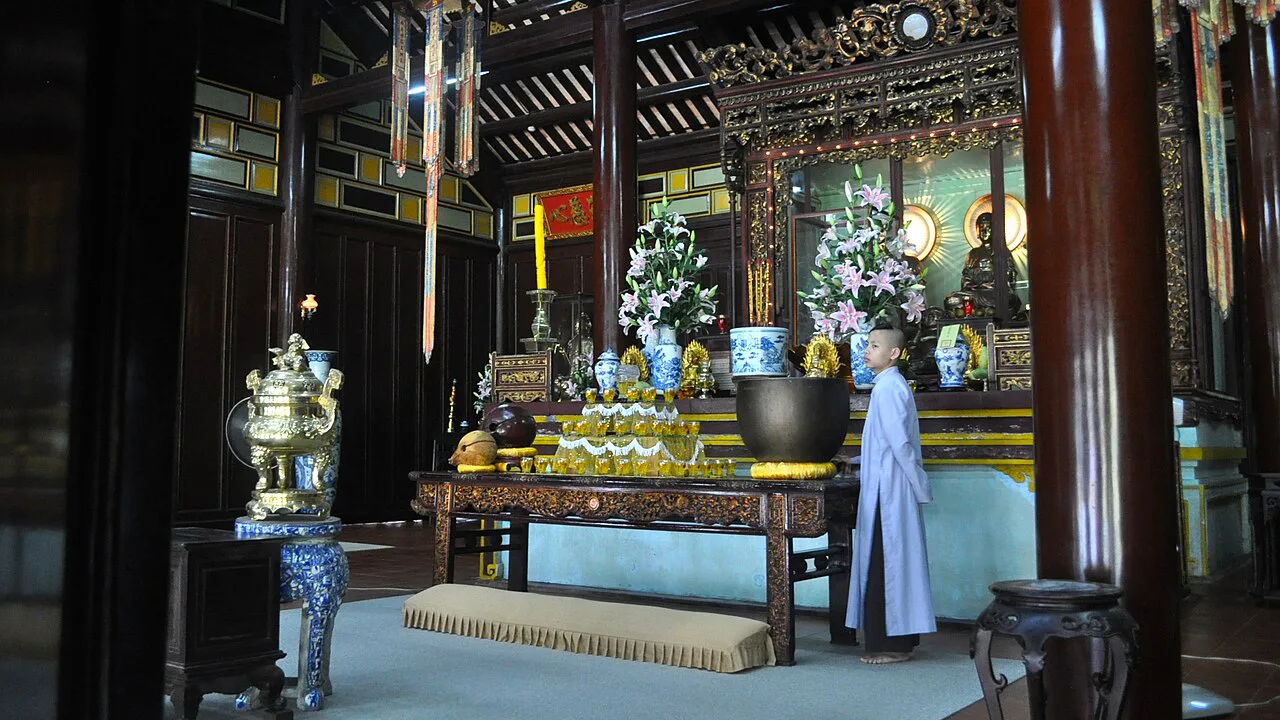
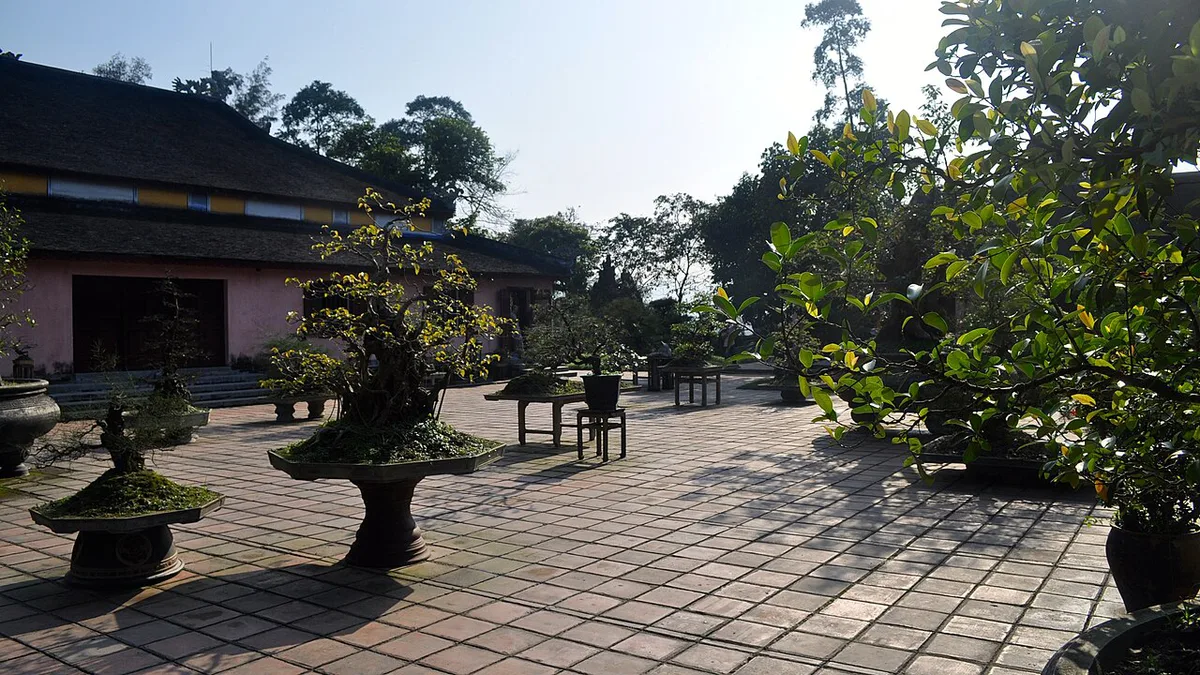
Start at Tam Quan Gate, the three-arched entrance. Its arches are said to echo the Three Doors of Liberation: emptiness, signlessness and wishlessness. Phuoc Duyen Tower comes next, with seven octagonal storeys rising 21 m (about 69 ft). Emperor Thieu Tri built it in 1844. Dai Hung Shrine is the main hall, where worshippers light incense before three Buddha statues. Dia Tang Hall, also called Ksitigarbha Hall, is quieter and used for prayers for the deceased. The Great Bell, Dai Hong Chung, was cast in 1710. It is reported to weigh over 2 tons and stand about 2.5 m (8 ft) tall. Gardens with pine and frangipani lead on to the tomb of Venerable Thich Don Hau.
- Tam Quan Gate: three-arched entrance
- Phuoc Duyen Tower: 21 m, seven octagonal storeys, built 1844
- Dai Hung Shrine: main hall with active worship
- Dia Tang Hall: prayers for the deceased
- Great Bell (Dai Hong Chung): cast 1710
- Tomb of Venerable Thich Don Hau: quiet landscaped corner
Thien Mu Pagoda history
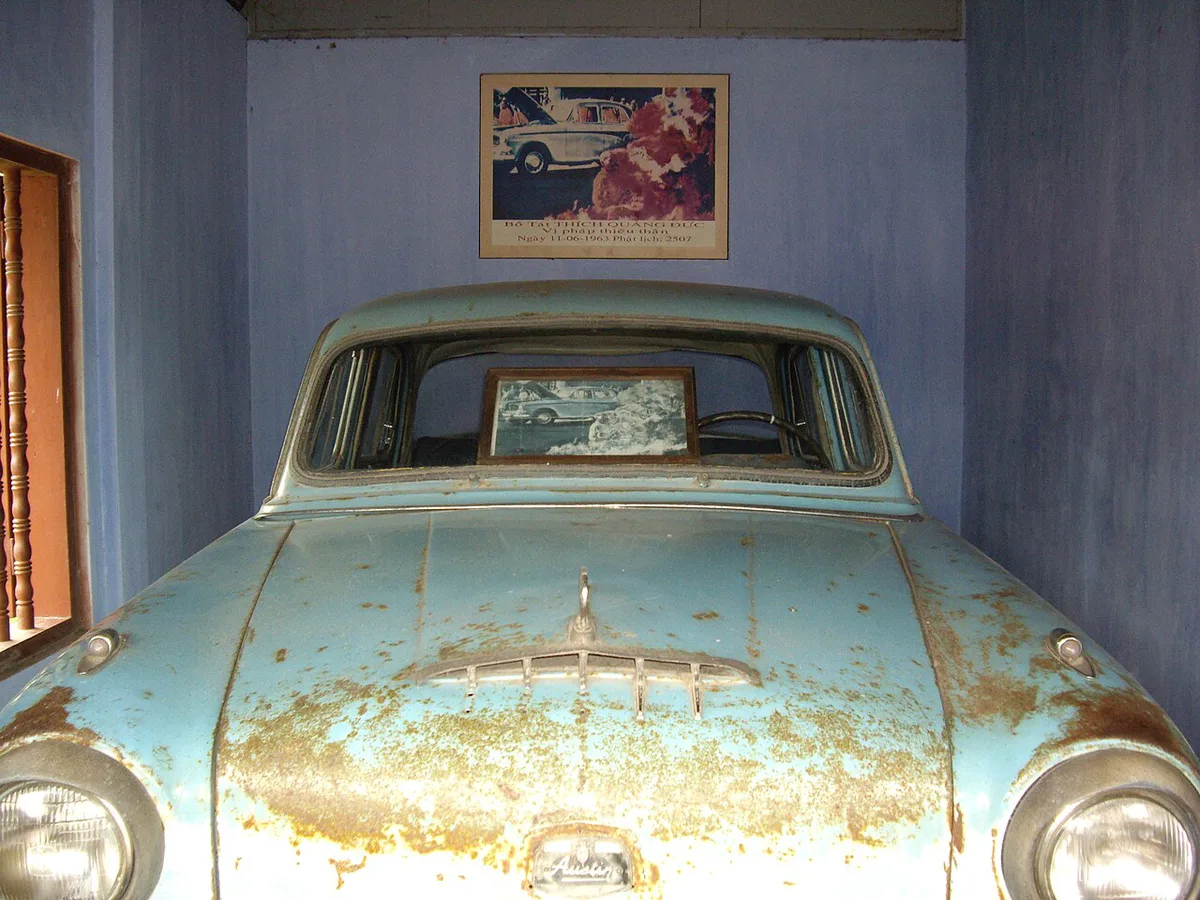
Tradition says a "heavenly lady" (Thien Mu) appeared on Ha Khe Hill and foretold a temple there. Lord Nguyen Hoang ordered the pagoda built in 1601. In 1710, Lord Nguyen Phuc Chu added the Great Bell. Emperor Thieu Tri built Phuoc Duyen Tower in 1844. During the 1960s the pagoda became a focus of Buddhist protest against the government of Ngo Dinh Diem. Accounts link Thich Quang Duc, a monk associated with the pagoda, to the 1963 self-immolation in Saigon. Keep that history in mind as you walk the grounds, and treat it with quiet respect. For wider context on Hue's monuments, see the Hue Monuments Conservation Centre.
Temple etiquette and what to wear
Cover shoulders and knees before you enter the grounds. Keep your voice low near the halls. Dai Hung Shrine hosts active worship, so do not cut through a service for a photograph. Dia Tang Hall is a space of remembrance, so move slowly and quietly there. Ask before photographing monks. Avoid flash near altars. Do not touch religious objects. Resident monks live and practise here, so treat the grounds as a working community rather than a set.
- Wrong dress: bare shoulders, shorts or short skirts
- Midday visits in full heat
- Expecting a ticketed attraction with a booth and a gate fee
- Leaving it for the end of a long tomb day, when you are tired and the light is poor
Combining Thien Mu with other Hue sights

Thien Mu sits on the western side of Hue, close to the river, which makes it a natural start or finish to a river day. Plan the water leg with our river cruise guide. A pagoda plus one tomb works better than a full circuit. Our royal tombs overview helps you plan a tomb day and compare distances. Read about Khai Dinh's mausoleum if you want a single, compact stop. Tu Duc's mausoleum suits a slower, longer visit. Minh Mang's mausoleum has its own page with hours and access. Check those pages for tomb distances rather than guessing from a map.
Pairing one tomb with the 45 to 60 minutes of a standard visit means the road transfer adds its own time.
| Combination | Best for | Trade-off |
|---|---|---|
| Pagoda + river boat | A relaxed half day on the water | Slower, and depends on the operator's route and return |
| Pagoda + one tomb | A focused heritage day | Needs road transport between the two |
| Pagoda + Imperial City | First-time visitors with one day | Imperial City is large and needs its own time |
Who should visit Thien Mu Pagoda, and who can skip it
Prioritise it if you want a living temple, river views and a short visit with no ticket. It suits travellers who like history told through a single site, from the 1601 founding to the 1960s. Skip it if you have one day in Hue and prefer to spend every hour on the Imperial City and tombs. Visitors with limited mobility should ask locally about steps up from the river before booking a boat. Late in a long tomb day, tired legs and poor light make it a weak final stop. Put it first on a tomb morning or last on a river afternoon.
Useful notes for your Vietnam trip
Optional updates to our guides.
You might also like
Continue reading
More guides you'll find useful