
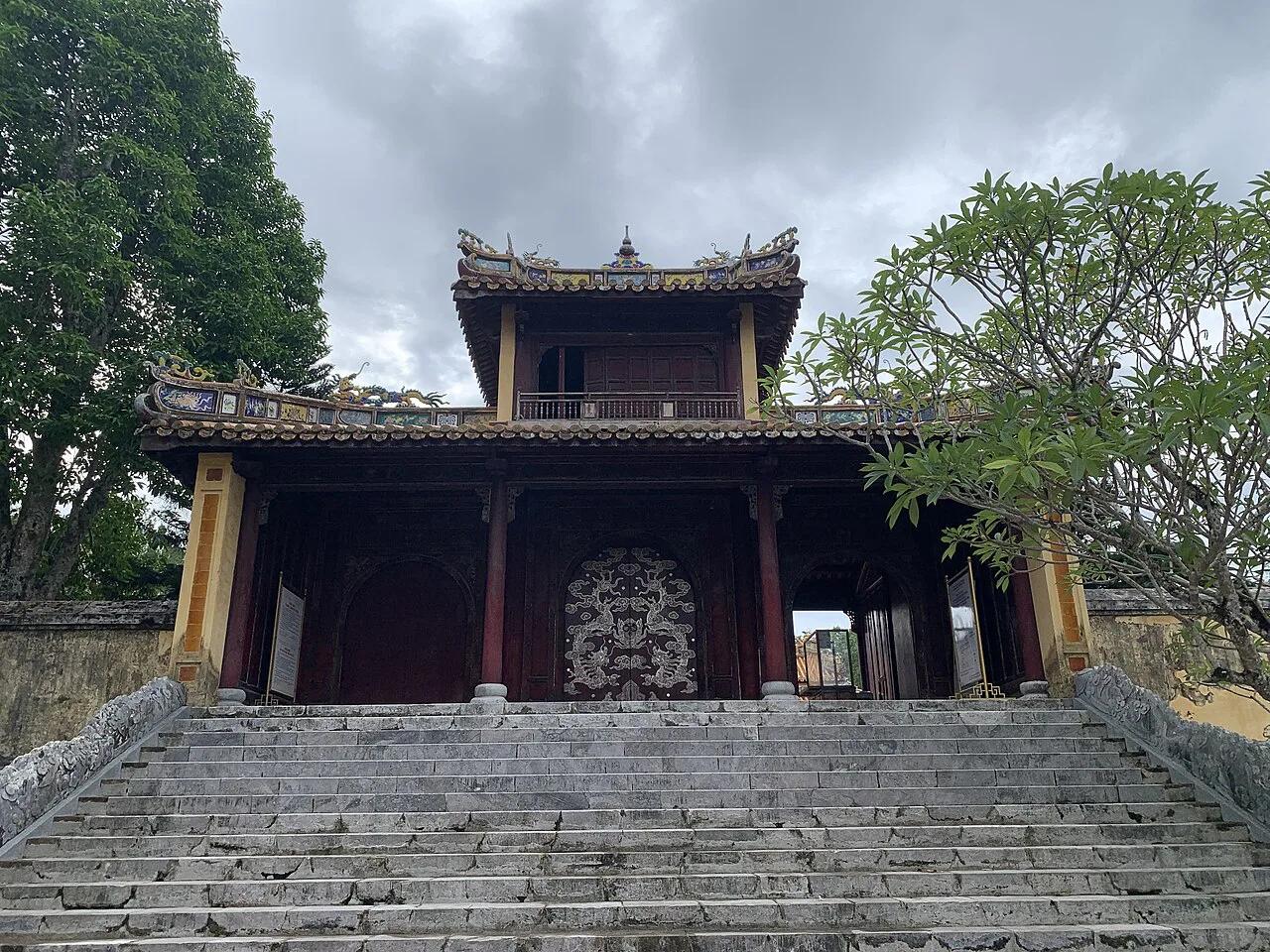
Dong Khanh Tomb in Hue: What to See at the Emperor's Mausoleum

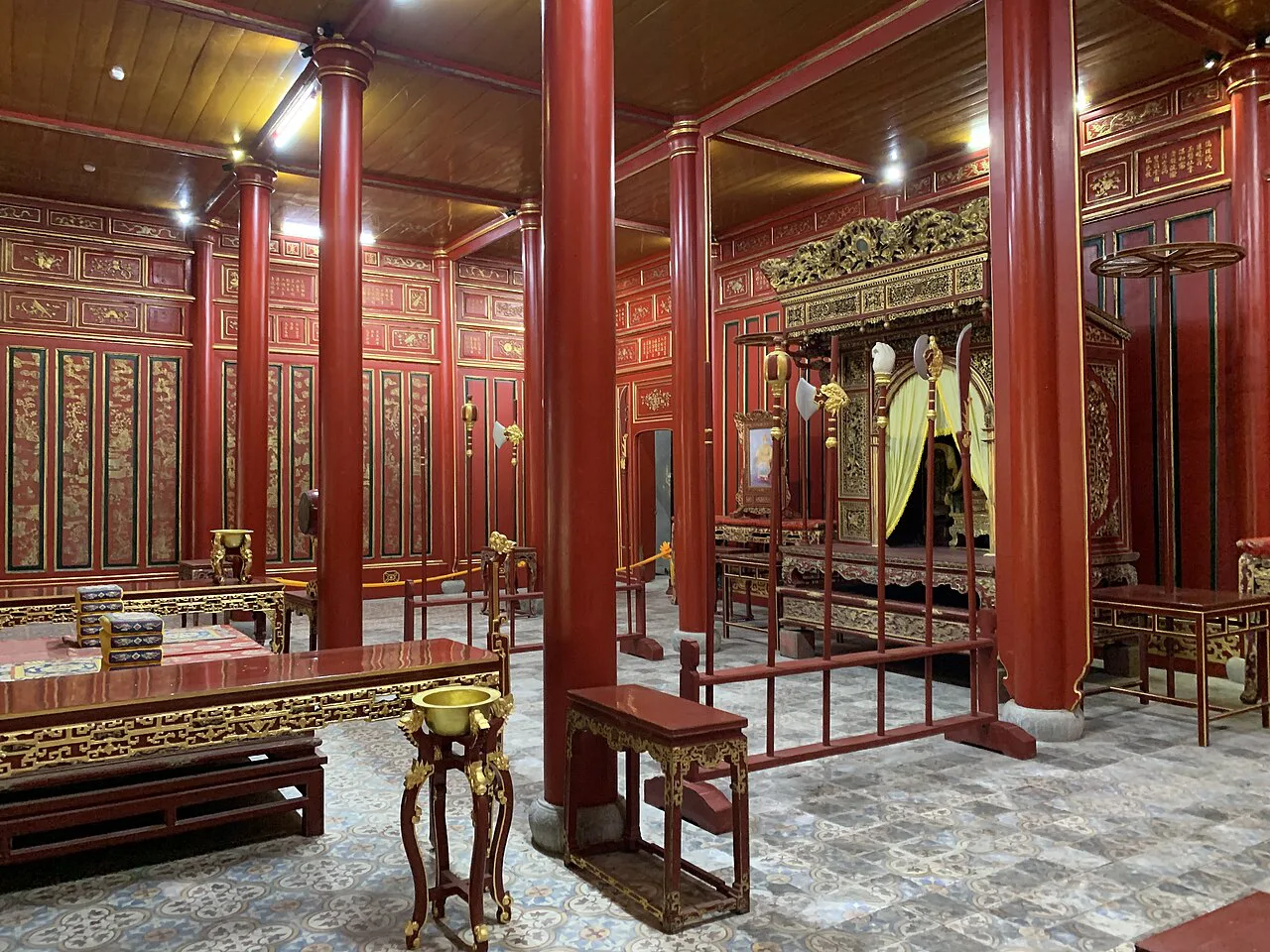
Dong Khanh Tomb is worth about an hour of your time in Hue, not a half day, and it slots naturally onto a Tu Duc Tomb visit because the two sit only about 200 meters apart according to VietnamOnline. It is the smallest and least crowded of Hue's well-known imperial tombs, and its appeal is architectural rather than monumental: a Nguyen-dynasty temple interior finished in red lacquer and gold, beside tomb structures built with concrete and brick in the French colonial period.
What Dong Khanh Tomb is, and why it looks different
This is the mausoleum of Emperor Dong Khanh, who was crowned in 1886 and died in 1889 at 25, as the Hue Monuments Conservation Centre's heritage page records. Because he died before planning his own tomb, work stretched across later reigns and was repaired, improved and completed in 1916, 1917, 1921 and 1923 under his son Khai Dinh, according to the same official page.
That long, interrupted build is why the site reads as a transition. The official heritage body describes a complex carrying the cross-cultural stamp of European and Asian civilizations of the late 19th and early 20th centuries, and counts 20 monuments, principal and secondary. If you have seen the symmetry of Minh Mang or the theatrical interior of Khai Dinh, come here for the in-between moment rather than for scale.
Traveler accounts make the same point: a widely shared Hue tombs roundup calls Dong Khanh less visited but worth seeing for exactly that blend of traditional Nguyen architecture with French colonial-era influence, and flags it as a good choice if you want to escape the biggest crowds.

Where the tomb is: Thuy Xuan, southwest of central Hue
Dong Khanh Tomb sits in the Thuy Xuan area of Hue, roughly 5 km from the city center according to VietnamOnline, in the same southwestern tomb belt as Tu Duc. The same source places it about 200 meters from Tu Duc Tomb, the single most useful fact for planning: you do not need a separate expedition to reach it.

How to get there from Hue
VietnamOnline lists bike, taxi and motorbike as the ways visitors reach the tomb, and its position just off the Tu Duc road makes any of them workable. A taxi or ride-hailing car from the center is simplest if you are visiting two tombs in one morning, because the driver can wait between stops instead of you hunting for a return ride on a country lane.
The layout: two areas about 100 meters apart
Dong Khanh Tomb is split into two zones, the tomb and the temple, about 100 meters apart, following the pattern of the three preceding emperors Thieu Tri, Tu Duc and Duc Duc, according to the Hue Monuments Conservation Centre.
VietnamOnline adds a useful detail for orienting yourself: the emperor's remains were buried on a hill known as Ho Thuan Son, about 30 meters west of Ngung Hy Temple, and the whole site is referred to as Tu Lang.
Ngung Hy Temple: the finest building on the site
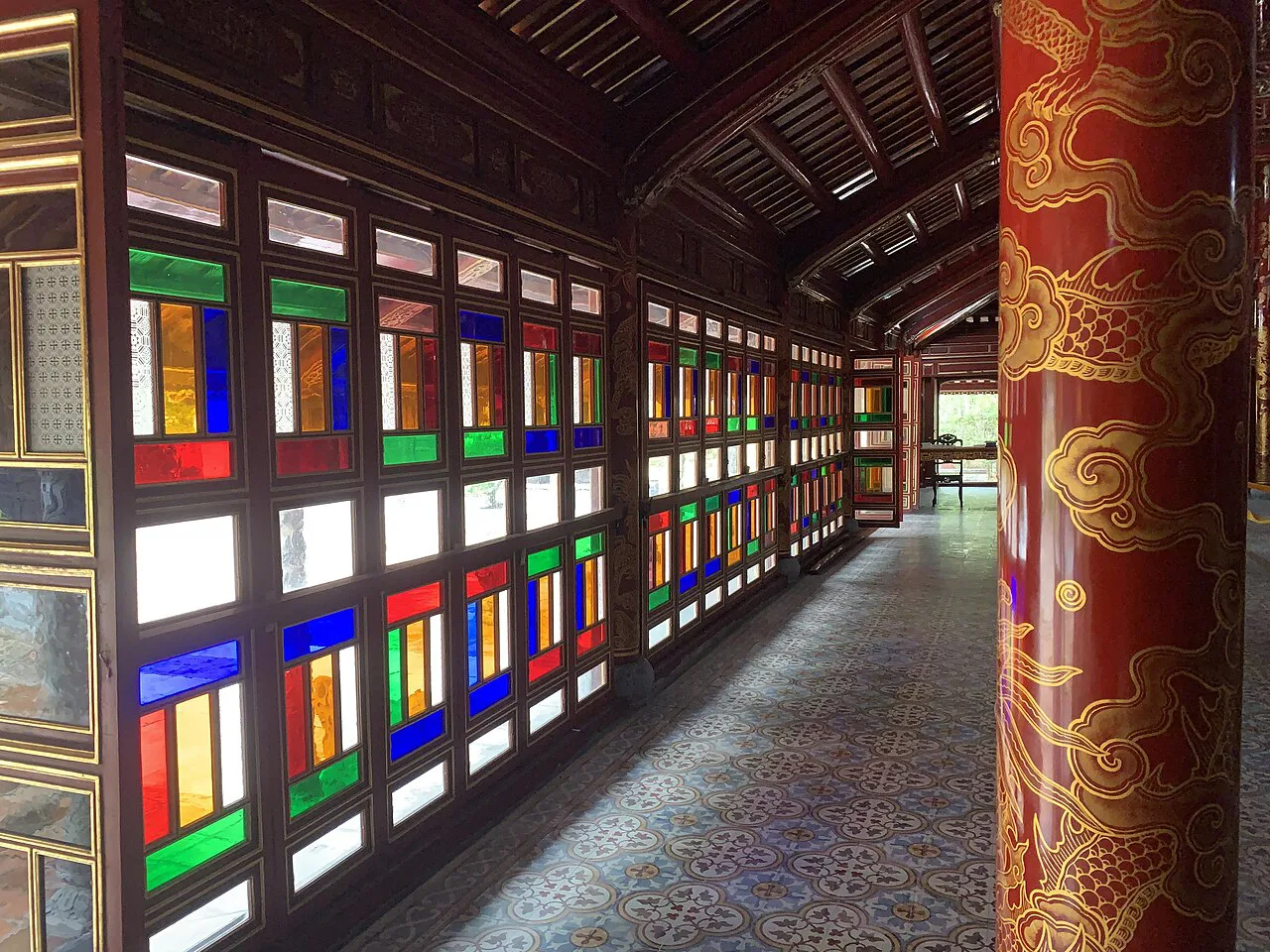
The official heritage body is unambiguous that Ngung Hy Temple, dedicated to Emperor Dong Khanh and his two consorts, is the monument of greatest artistic value here, and calls it the best conserved and most splendid monument of Hue. The draw is the fabric of the building: elaborate exterior decoration outside, and an interior lacquered red and gilded and richly adorned.
VietnamOnline notes that the temple holds 24 paintings illustrating the Chinese narrative Nhi Thap Tu Hieu, the 24 examples of filial piety, and describes a triplet layout with a central mansion and a smaller ancillary structure typical of the Hue Citadel's design.
The tomb area and stele pavilion: colonial-era materials
The tomb zone is where the European influence shows most clearly, and the stele pavilion is the example to examine. VietnamOnline points out that it was built using concrete, tile bricks and traditional bricks rather than stone, a material choice that marks the shift into a new artistic era at Hue.
The official heritage page frames the ensemble the same way, describing a complex that is pretty and delicate rather than vast.
Emperor Dong Khanh in brief
Dong Khanh was born in 1864, crowned in 1886 and died three years later at 25; he was a nephew and adopted son of Emperor Tu Duc, according to the Hue Monuments Conservation Centre.
How long to allow, and how to combine it with other tombs
Budget about 45 to 60 minutes on site: the temple interior, a short walk to the tomb and stele area, and time to read the panels. That is enough to see everything without rushing, and short enough that pairing it with Tu Duc Tomb in the same morning costs very little extra travel given the 200-meter separation.
If you have a third tomb in you, Khai Dinh is the natural companion because Dong Khanh's son built much of what you have just seen; check opening times for Khai Dinh before committing, as schedules at Hue monuments vary by season.
For a wider shortlist of the city's sights before you fix your days, the Lantern Cities guide to Hue Attractions: 5 Visitor Guides sets the imperial tombs and citadel against each other so you can see what Dong Khanh is being traded against.
Hours and admission: confirm before you go
VietnamOnline states the tomb is open year-round from 7:30 AM to 5:00 PM, the most specific hours figure available here, but it comes from a third-party travel site rather than the managing body, so treat it as provisional. Confirm the day's hours with the Hue Monuments Conservation Centre, which publishes visitor information and ticket details on its official site, before you build a morning around it.
On admission, VietnamOnline lists the entrance as free, but that claim is unverified and sits awkwardly with how Hue's imperial monuments are normally ticketed, including combined tickets across the tomb circuit. Do not budget on the assumption of free entry: check the published ticket options and whether Dong Khanh is included in a combo pass at the ticket counter or on the conservation centre's site, and carry cash in dong for whatever the current price is.
Nearby options after Dong Khanh Tomb
Tu Duc Tomb is the obvious pairing and the reason most people reach Dong Khanh at all, sitting a short walk or a minute's drive away. Beyond that, Khai Dinh Tomb is the other essential stop for anyone following the father-son story, and Thieu Tri Tomb is the quiet alternative if you want a fourth site without the tour buses that cluster at the famous three.
Further out, Gia Long Tomb (Thiên Thọ Lăng) is the most remote of the imperial mausoleums and rewards travelers with their own transport and a spare half day, while back in the city the Hue Museum of Royal Fine Arts (Long An Palace) shows Nguyen court objects in a museum setting after you have seen them in situ.
Closer to the center, Phu Cam Cathedral, Hue shows the French-era city on the other bank of the Perfume River, and a stop at Dong Ba Market in Hue is the practical way to end a tomb morning with lunch and fruit for the ride back. If you are still mapping your days, the broader list of things to do in Hue will help you slot the tombs next to the food and river walks.
Should you add Dong Khanh Tomb to your Tu Duc morning?
Yes, if you are already going to Tu Duc Tomb. The 200-meter gap means the extra cost is a little time and a small admission charge to confirm on the day, and in return you get the best-preserved temple interior in Hue and a clear lesson in how Nguyen architecture absorbed French materials.
No, if this is your only tomb day and you have not yet seen Minh Mang, Tu Duc or Khai Dinh. Whichever you choose, check the conservation centre's current hours and ticket rules the day before you ride out.