One Pillar Pagoda Hanoi: History, Hours & Visit Tips
Plan a visit to Hanoi's One Pillar Pagoda: its legend, what you will see, hours and entry caveats, and how to pair it with nearby Ba Đình sights.
On this page
Last updated November 2026: the one pillar pagoda (Chùa Một Cột) is a tiny wooden shrine on a single pillar in a Ba Đình pond, beside the Ho Chi Minh Mausoleum complex. Plan roughly 20–40 minutes for the pagoda alone, or 1–3 hours if you add the surrounding sights. This guide covers the legend, hours, entry caveats and how the stop fits with the other temples across Hanoi.
Featured image: thalling55, CC BY 2.0, via Wikimedia Commons.
What the One Pillar Pagoda is
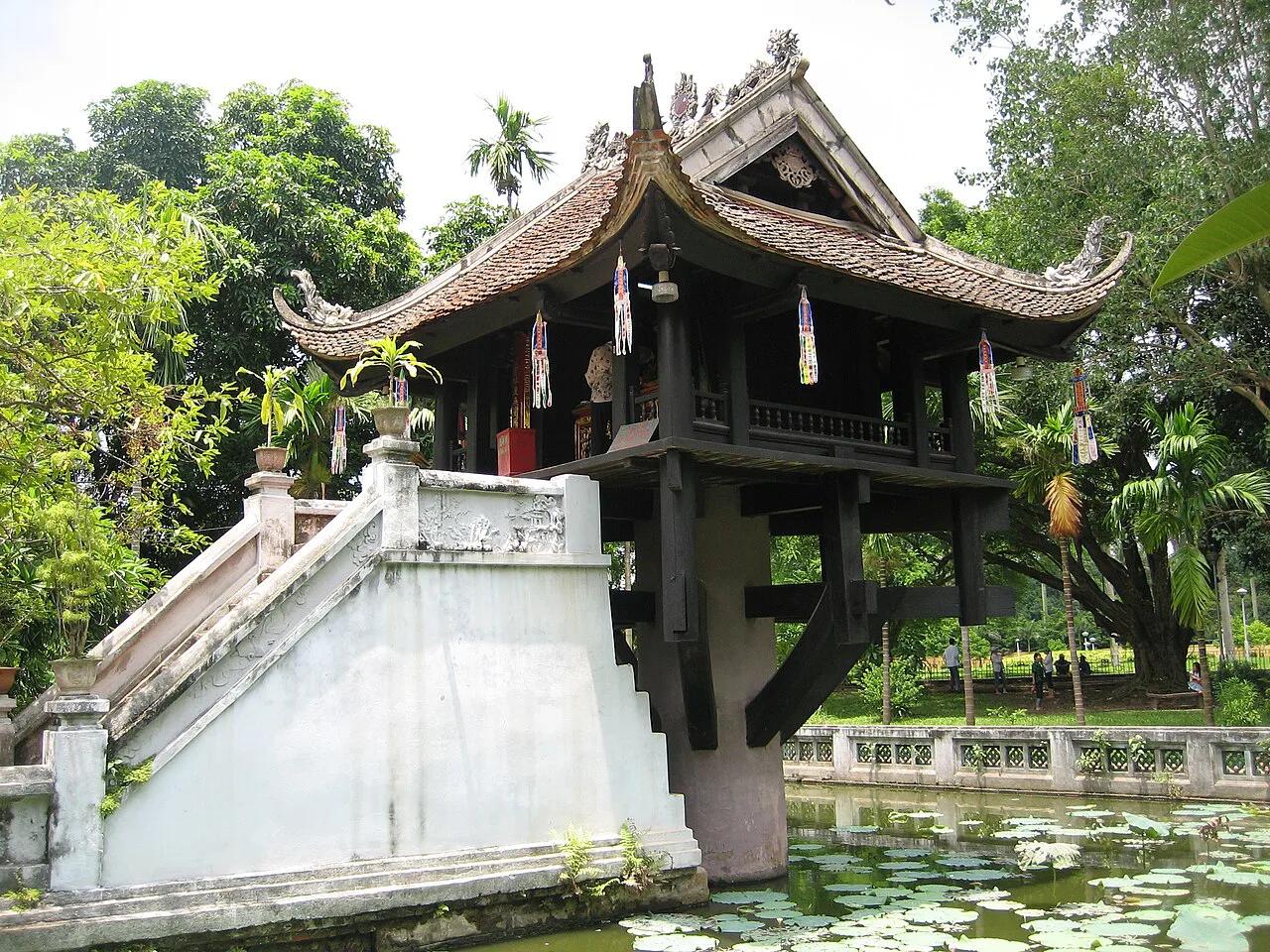
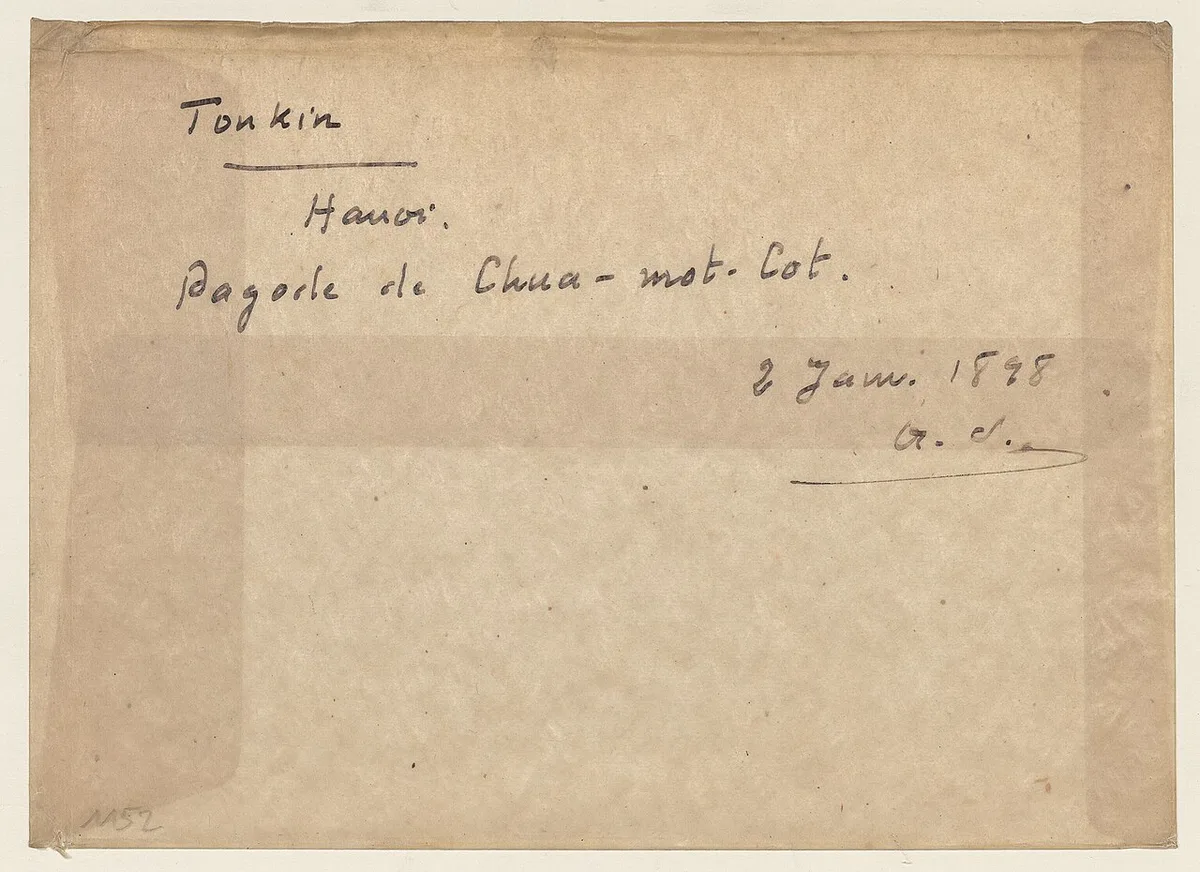
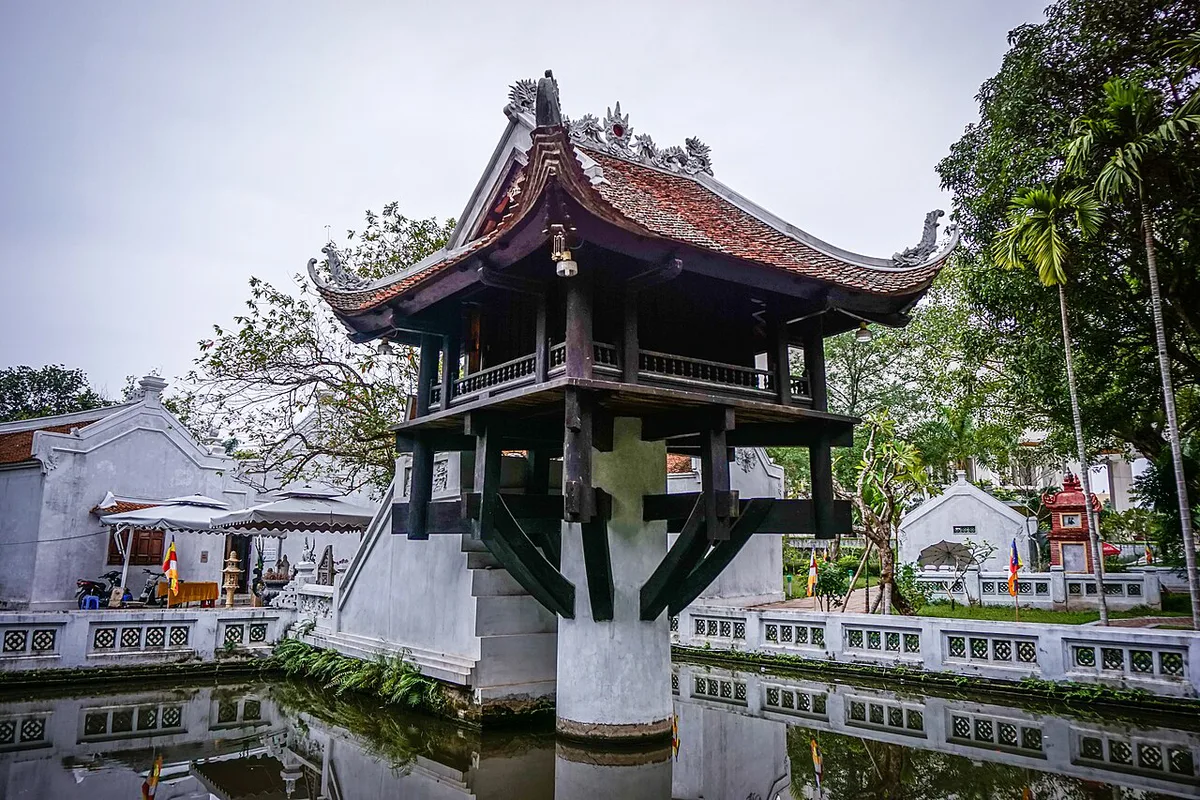
Chùa Một Cột is a small wooden shrine that stands on one pillar in the middle of Linh Chiếu pond. It sits in Ba Đình, on Chùa Một Cột Street, next to the Ho Chi Minh Mausoleum complex. Other names include Diên Hựu and Liên Hoa Đài, which means lotus terrace. Sources disagree on whether the pillar is stone or concrete, so treat that detail as unsettled.
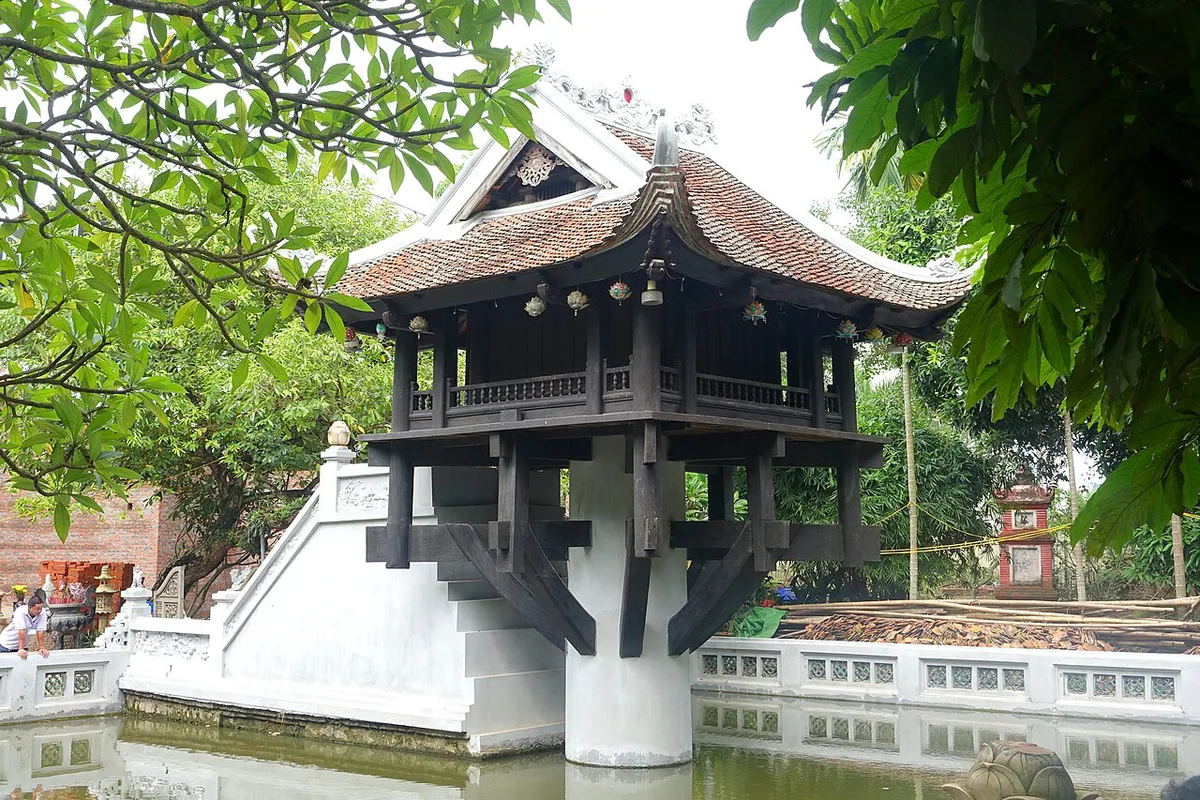
Think of it as a compact pavilion, not a temple compound. Most visitors look at it from the pond edge and move on. A separate site called Nhật Trụ at Hoa Lư in Ninh Bình is sometimes described under the same English name. Make sure your map pin says Ba Đình, Hanoi.
The legend and history of the pagoda
Tradition dates the founding to 1049, under Emperor Lý Thái Tông. The story says the childless emperor dreamed that Quan Âm, the Buddhist figure of mercy, sat on a lotus and handed him a son. Soon afterward a son was born. A monk named Thiền Tuệ advised him to build a pagoda on a pillar, echoing the lotus seat from the dream.
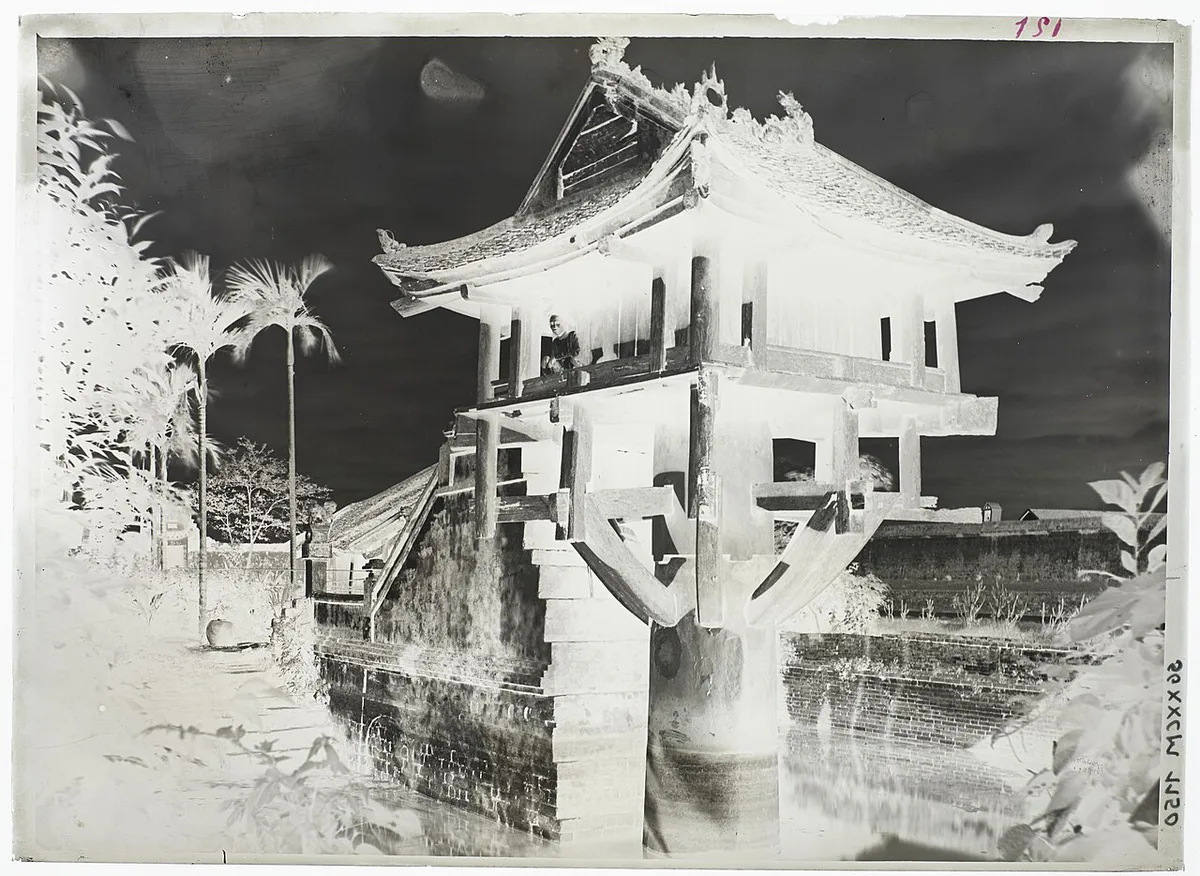
Treat that account as legend. Some sources give a wider founding window of 1028–1054. The pagoda was destroyed in 1954 by the departing French forces. It was rebuilt in 1955. How much of the original timber survives is unclear, so you are looking at a faithful rebuild of an old design rather than an untouched eleventh-century building.
What to look at: architecture and symbolism
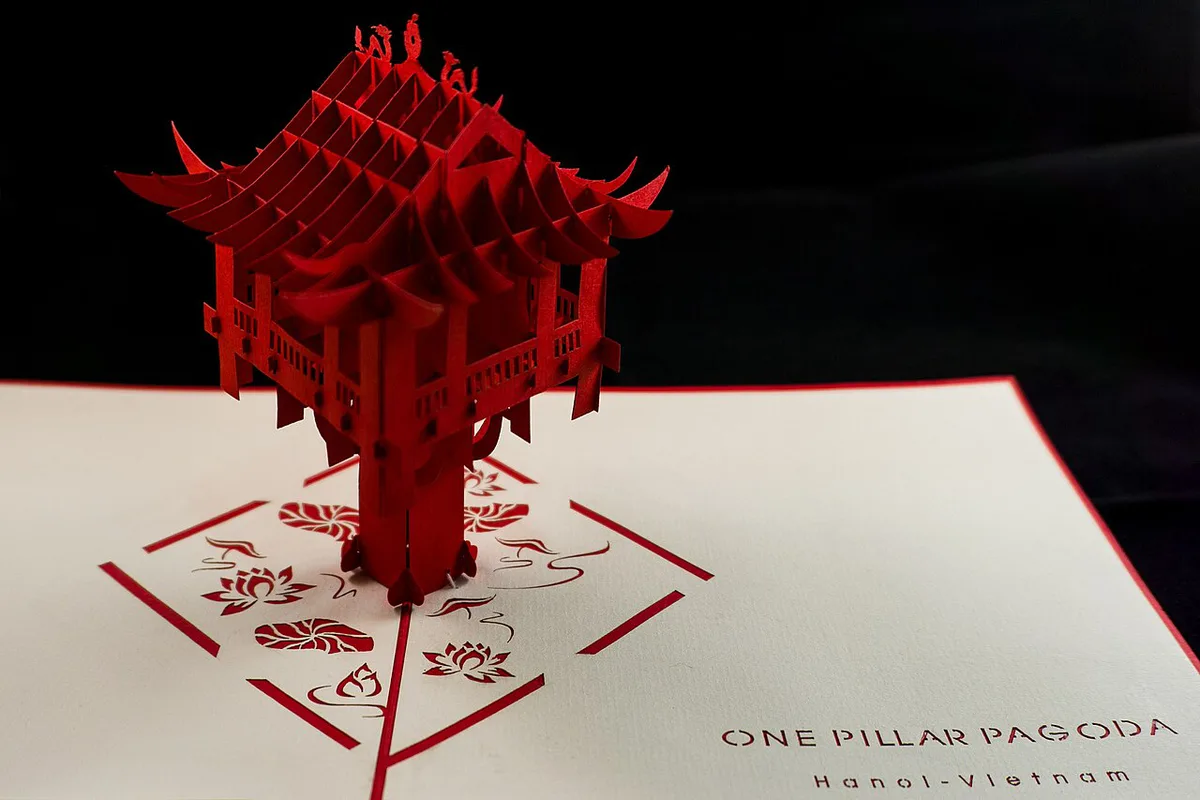
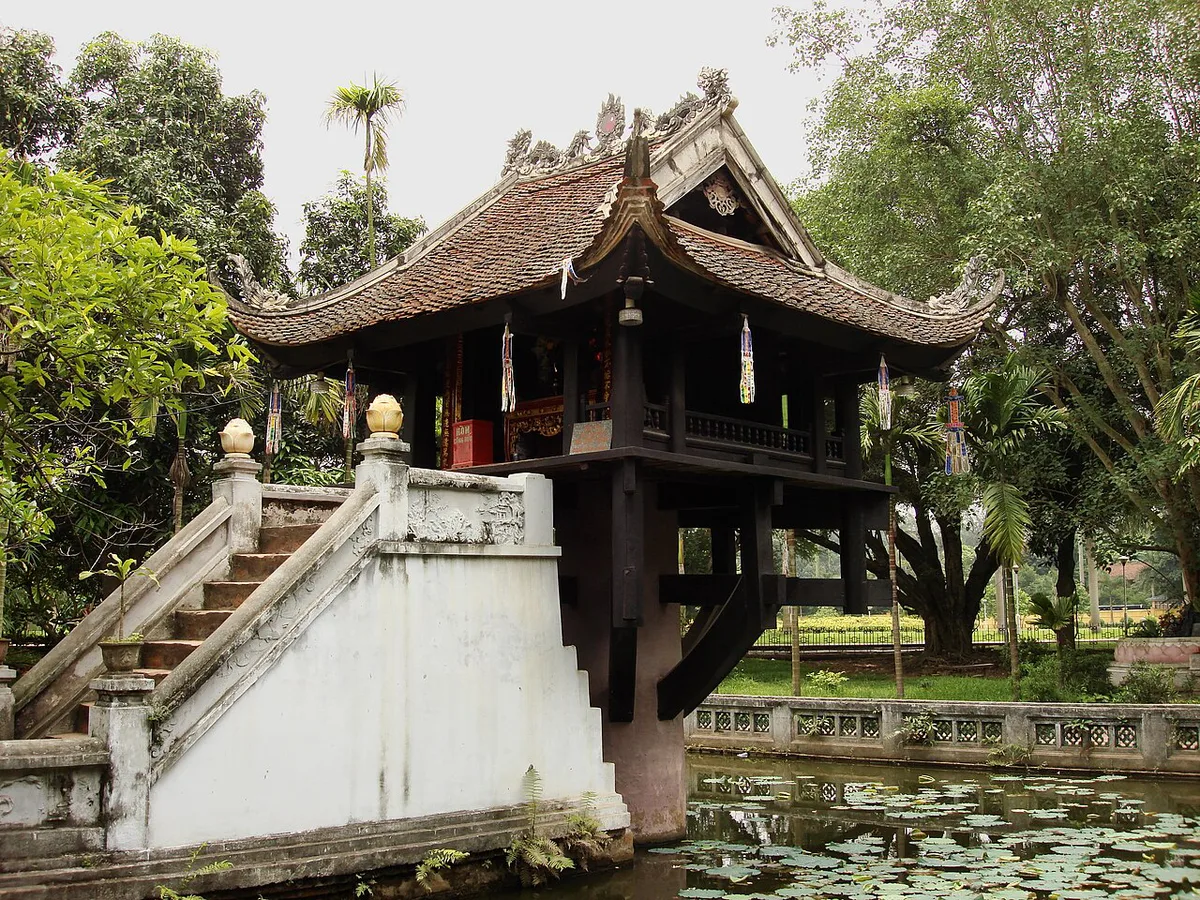
Start with the lotus idea. A lotus rises clean from mud, and Buddhists read that as purity and enlightenment. The shrine on its pillar is meant to be that flower floating above Linh Chiếu pond. The curved tiled roof carries dragon figures.
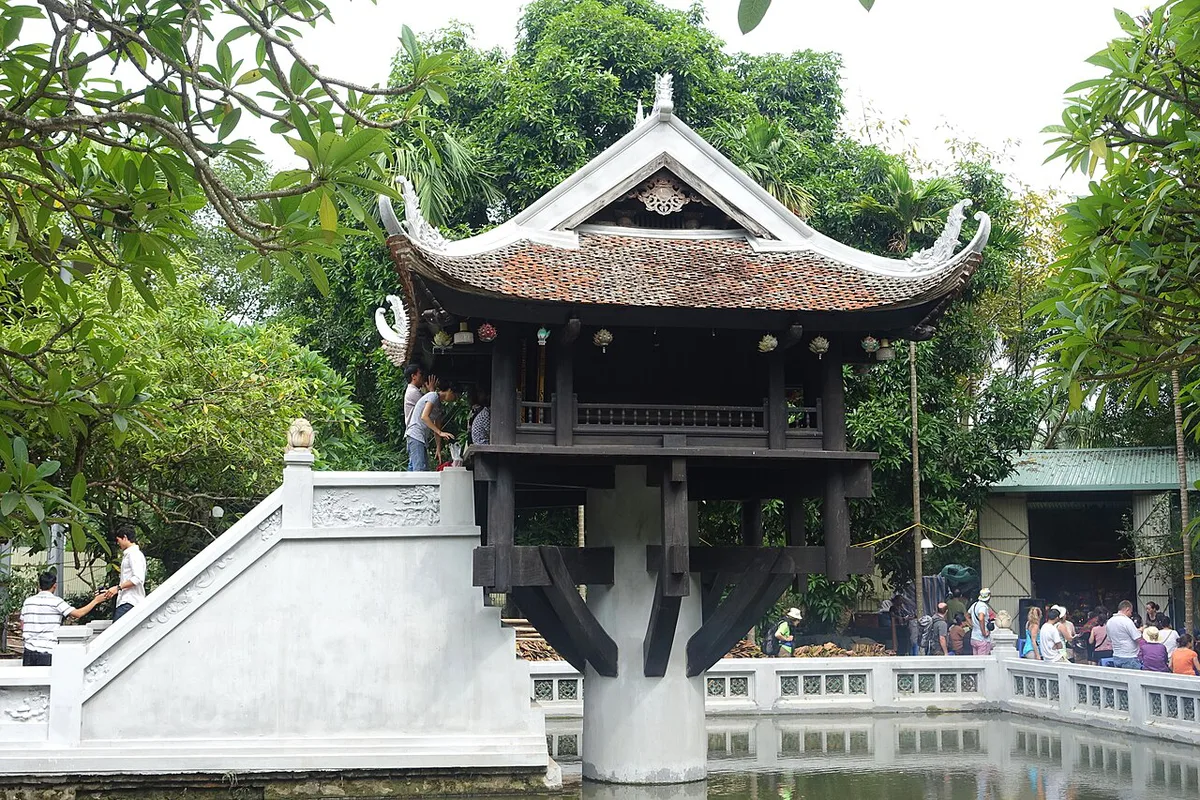
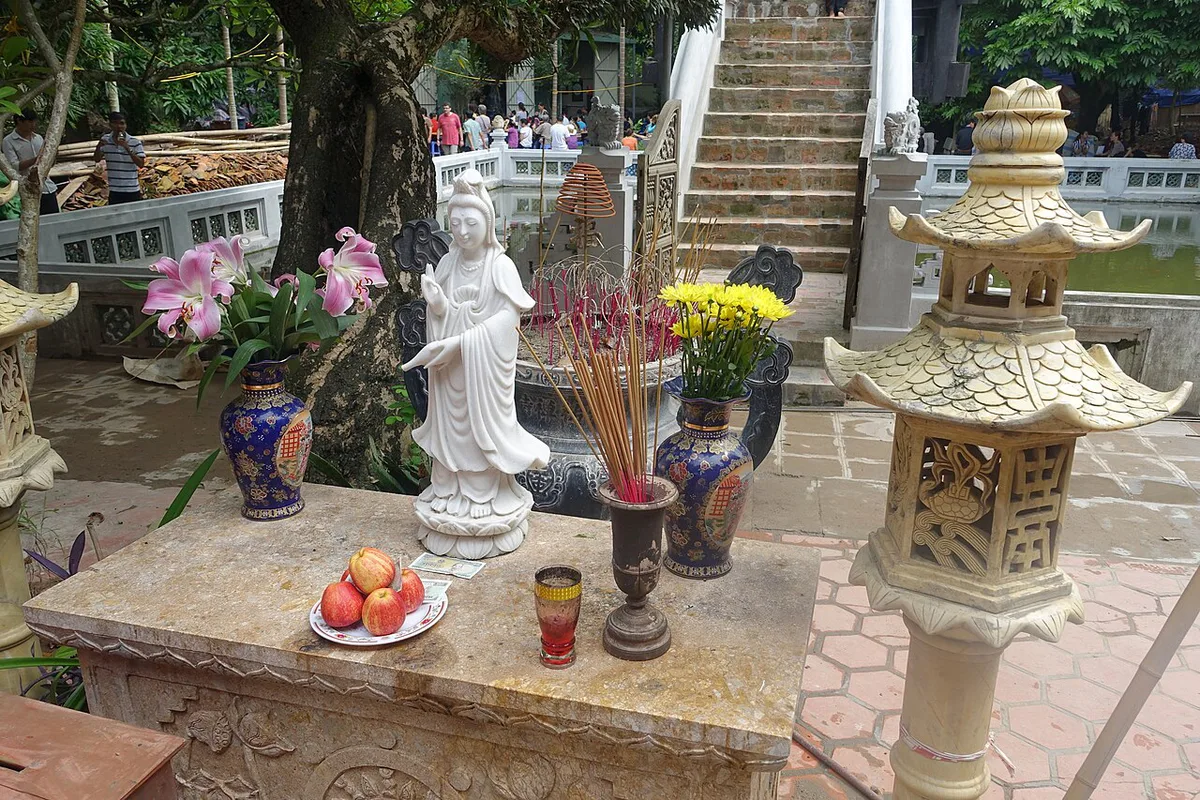
A stairway climbs to the shrine's entrance. Inside, a gilded Quan Âm figure is reported on the altar. Near the pavilion you will find a bodhi tree, described as a gift from an Indian leader to Hồ Chí Minh. A separate Diên Hựu hall with a three-entrance gate stands nearby and has been restored several times. Dimensions vary between sources, so rely on your eyes rather than a number.
- Lotus-on-a-pillar pavilion over Linh Chiếu pond
- Gilded Quan Âm figure and altar at the top of the stairs
- Bodhi tree near the pavilion
- Diên Hựu hall and gate beside the pond
- Dragon figures on the curved tiled roof
Opening hours, entry fee and how long to spend
Hours and entry details below were last checked in November 2026. Reported opening times conflict. Several sources give 7:00–18:00, while others say 8:00–17:00. Because the pagoda sits inside the Ba Đình complex, its access can follow the schedule of the Mausoleum area. Check the Ho Chi Minh Museum site for current complex information.
Fee reports also conflict. Some sources call entry free, and one lists a foreigner charge. Carry small cash in case a booth is staffed. Listings suggest 20–40 minutes for the pagoda alone. The 1–3 hour figure applies to the wider complex tour.
How to get there and fit it into a Ba Đình half-day
One source puts the walk from Hoàn Kiếm Lake at about 30 minutes. A taxi or ride-hail drop-off on Chùa Một Cột Street saves that time. Grab is reported as a usable app in Hanoi. Skip bus numbers unless you confirm them with the local transit operator.
Walking from Hoàn Kiếm Lake takes about 30 minutes, nearly as long as the 20–40 minutes the pagoda itself needs.
The pagoda pairs naturally with the Ho Chi Minh Mausoleum Hanoi: Hours, Rules & Tips complex. Closures, security screening and dress rules there can change what you can reach. Ba Đình Square and the Thăng Long Imperial Citadel are other stops in the same area. For a literary detour, the Temple of Literature Hanoi: Hours, Tickets & How Long to Spend is a separate trip, so check the map before you set the order.
| Plan | Stops | Time range | Best for |
|---|---|---|---|
| Pagoda only | One Pillar Pagoda | About 20–40 minutes | Short layovers, photo stop |
| Ba Đình half-day | Pagoda, Mausoleum complex, Ba Đình Square, citadel | About 1–3 hours for the complex | First-time visitors |
| Add a second temple | Ba Đình stops plus Temple of Literature | Leaves a half-day free | History and architecture fans |
Is the one pillar pagoda worth it?
Yes, if you are already in Ba Đình and want a distinctive piece of Vietnamese design. No, if you expect a large temple with halls to explore. Visitors are often not allowed inside the shrine itself, so you view it from the pond edge or the steps. Queues at the stairs can form because space is tight.
Touring the wider complex takes 1–3 hours, which makes a first-time Mausoleum visit a natural place to add the pagoda.
- Go if you are a first-time visitor already near the Mausoleum.
- Go if you like architecture, legends or photography.
- Skip it if you only have an hour for all of Hanoi.
- Skip it if you want an interior to walk through.
Etiquette and practical tips
This is an active place of worship. Locals light incense and pray here, often for children and family. Dress modestly, with shoulders and knees covered, and keep your voice low. Expect security checks because the site shares an area with government buildings. Ask before photographing worshippers at the altar.
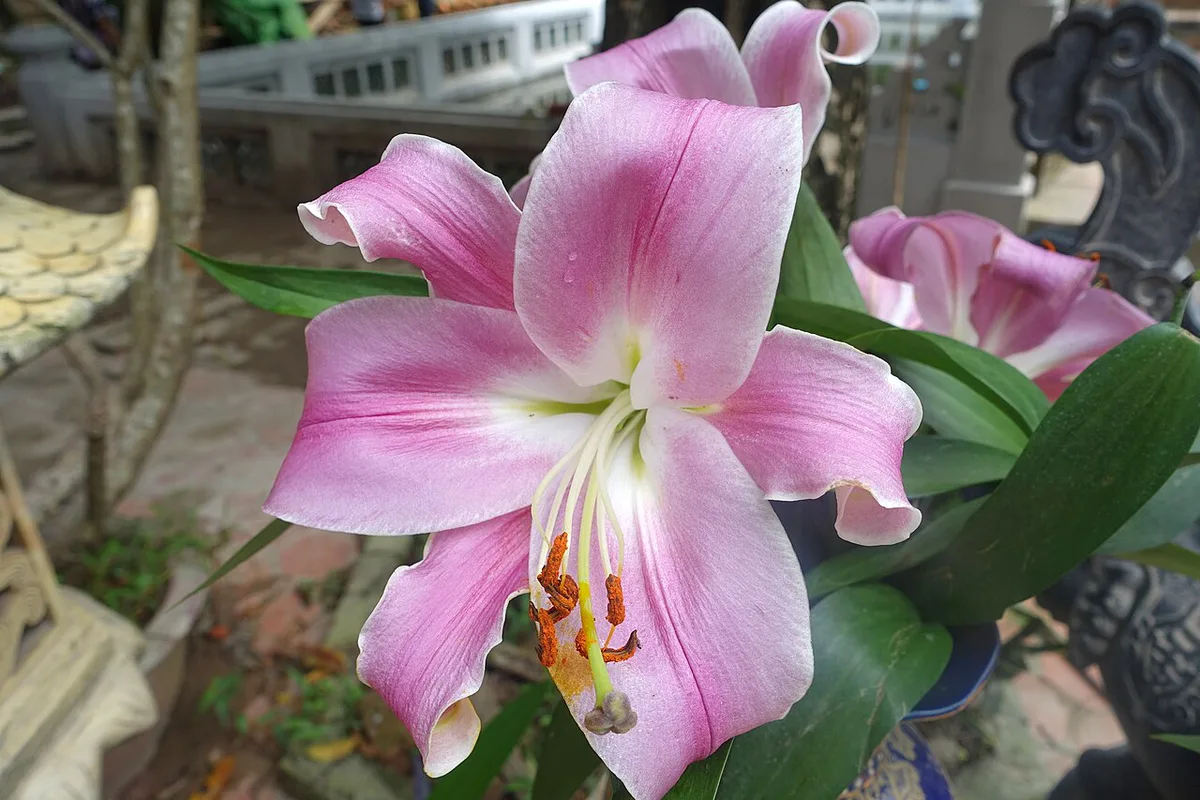
Lotuses bloom only in season, so a summer pond may look different from a winter one. Confirm bloom months locally before planning photos around flowers.
- Check hours on the day before you go.
- Do not expect to enter the shrine.
- Do not confuse it with the Ninh Bình site.
- Carry small cash for any fee or offering.
- Avoid days when the wider complex is closed.
How it compares with other Hanoi temples
Each temple in the cluster offers a different setting. Trấn Quốc Pagoda sits at the edge of West Lake. Ngọc Sơn Temple is on an island in Hoàn Kiếm Lake, reached by a bridge. That makes it an Old Quarter-side alternative. The Temple of Literature is known for its courtyards and for doctoral stelae listed by UNESCO's Memory of the World.
| Site | Setting | Atmosphere | Best for |
|---|---|---|---|
| One Pillar Pagoda | Pond beside the Mausoleum complex | Small and quiet, viewed from outside | Architecture and legend |
| Trấn Quốc Pagoda | Edge of West Lake | Lakeside temple grounds | A calm lake setting |
| Ngọc Sơn Temple | Island in Hoàn Kiếm Lake | Bridge approach, central | Old Quarter walkers |
| Temple of Literature | Courtyard complex | Scholarly, spacious | History fans |
Useful notes for your Vietnam trip
Optional updates to our guides.
You might also like

Continue reading
More guides you'll find useful