Tran Quoc Pagoda Hanoi: Hours, Entry & Dress Code
Visiting Tran Quoc Pagoda in Hanoi: free entry, hours to confirm, dress code, how to get there and when to go. Plan a 30-60 minute stop.
On this page
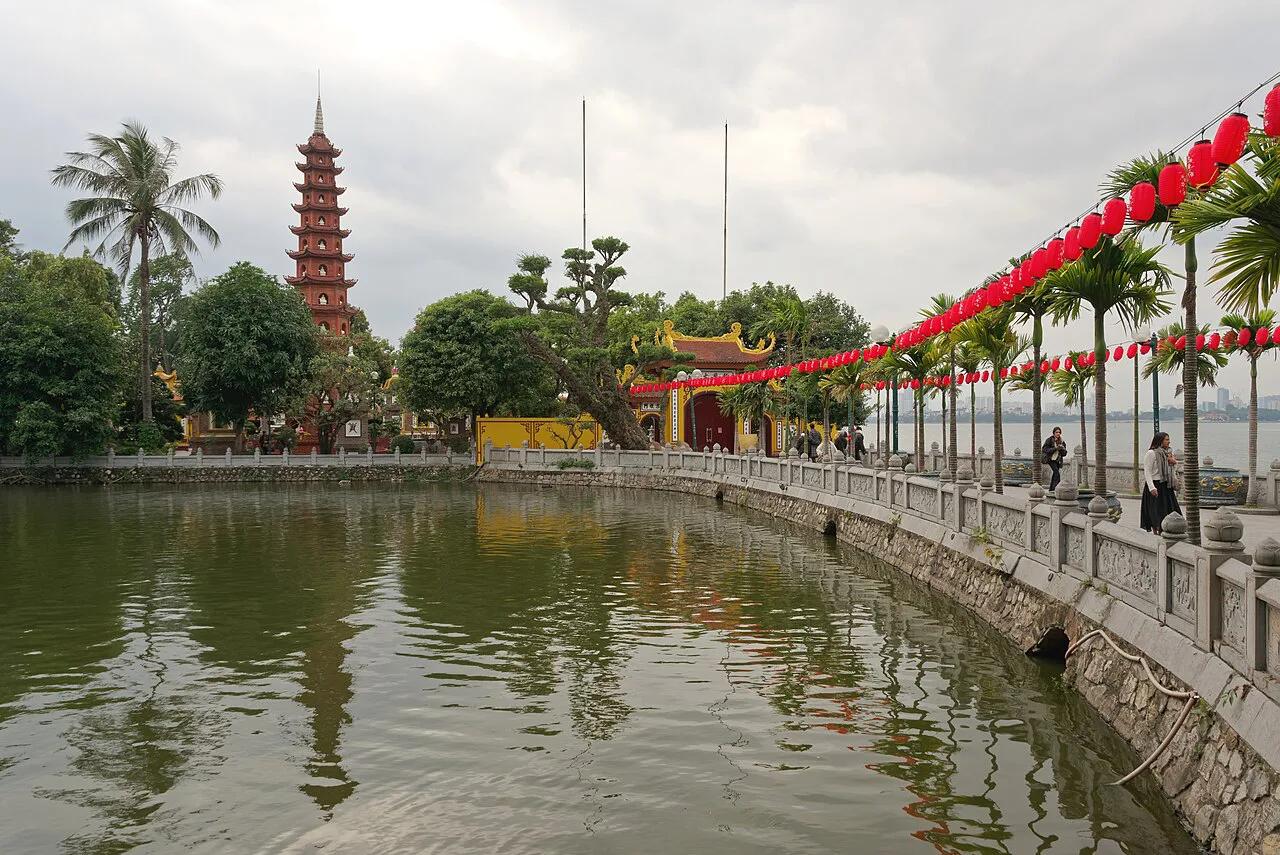
Last updated November 2026, this guide covers Tran Quoc Pagoda, a Buddhist temple on a small peninsula in West Lake off Thanh Nien Road. Many writers call it Hanoi's oldest Buddhist temple, with roots in the 6th century. Entry is free, a visit takes 30 to 60 minutes, and mid-morning is the safest arrival window. For other stops on the same theme, browse our guide to temples in Hanoi.
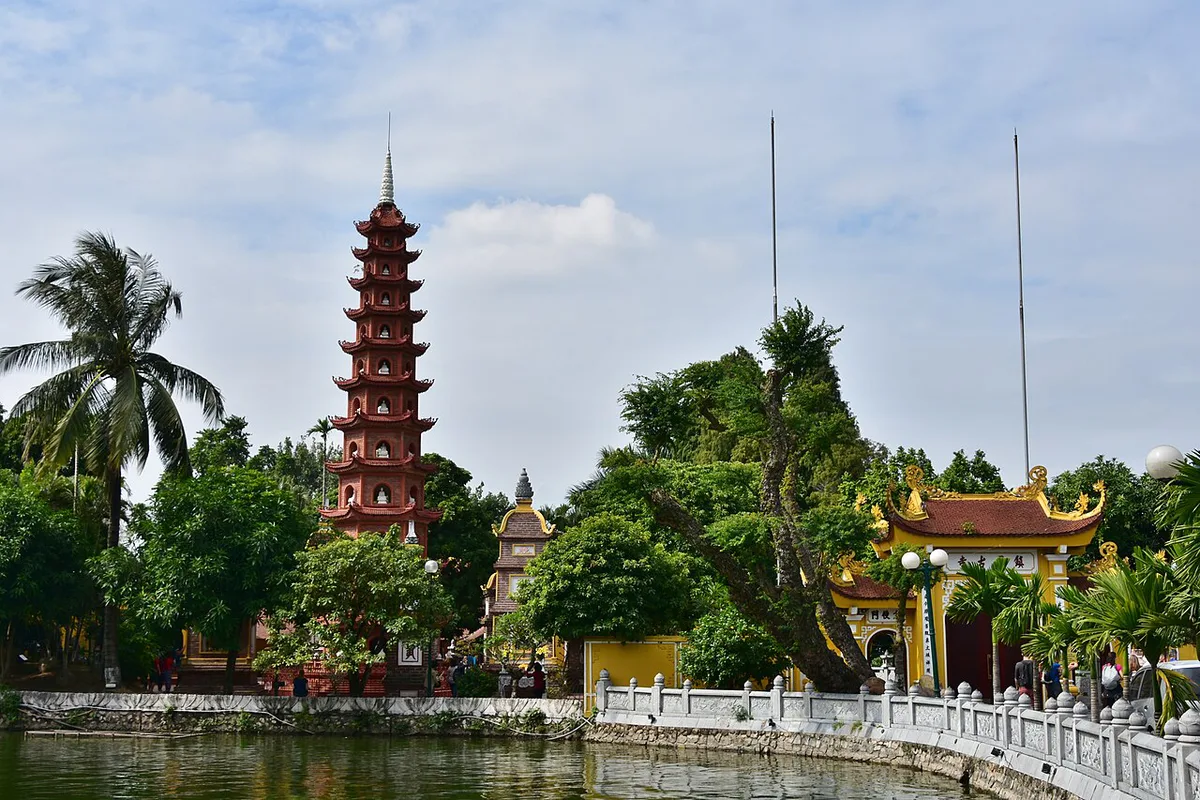
Featured image: Jakub Hałun, CC BY 4.0, via Wikimedia Commons.
Tran Quoc Pagoda at a Glance
Roots go back to the 6th century, yet the 11-storey stupa in the garden dates only from 1998 to 2003. Plan on 30 to 60 minutes inside the grounds. Add more time if you want to stroll the causeway along Thanh Nien Road. Published opening hours differ between sources, so the plan below uses a window that falls inside all of them.
- Location: gate at 46 Thanh Nien Road, on a small peninsula in West Lake
- Entry: free, with optional donations
- Time needed: 30 to 60 minutes
- Best arrival window: 8:30 to 11:00, or 13:45 to 15:30
- Dress: cover shoulders and knees, remove your hat
Tran Quoc Pagoda Location and How to Get There
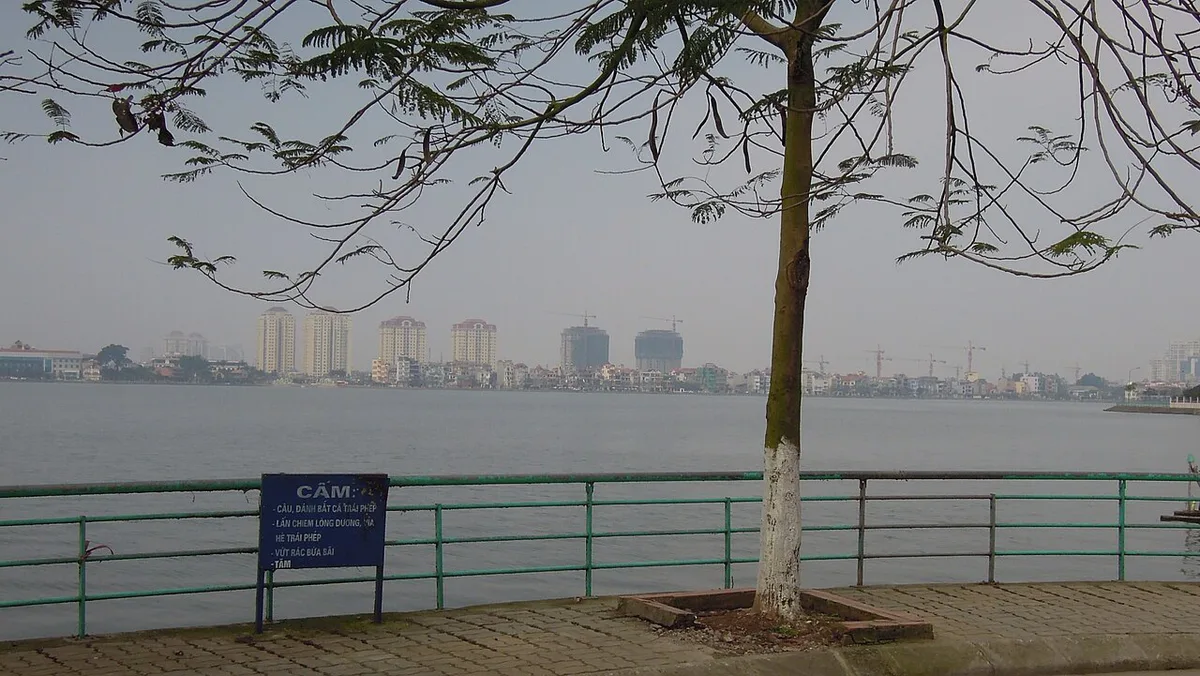
Address first: the gate is at 46 Thanh Nien Road. A short causeway leads from the road onto the islet. Thanh Nien Road itself follows a dyke built in the early 17th century, which cut Truc Bach Lake off from West Lake. From the Old Quarter, a taxi or ride-hailing car is the simplest option. Traffic around West Lake can be heavy at peak hours, so allow extra time. Ask the driver to stop at number 46 so you are not dropped at the wrong end of the road.
| Mode | Effort | Cost level | Best use |
|---|---|---|---|
| Taxi or ride-hailing | Low | Moderate | Direct trip from the Old Quarter, especially in heat or rain |
| Bicycle or walk | Medium to high | Lowest | Lakeside circuit via Thanh Nien Road, Thuy Khue Street and Tay Ho Street |
| Public bus | Medium | Low | Budget trips; check a current route map, because Hanoi's routes change |
Opening Hours, Entry and Donations
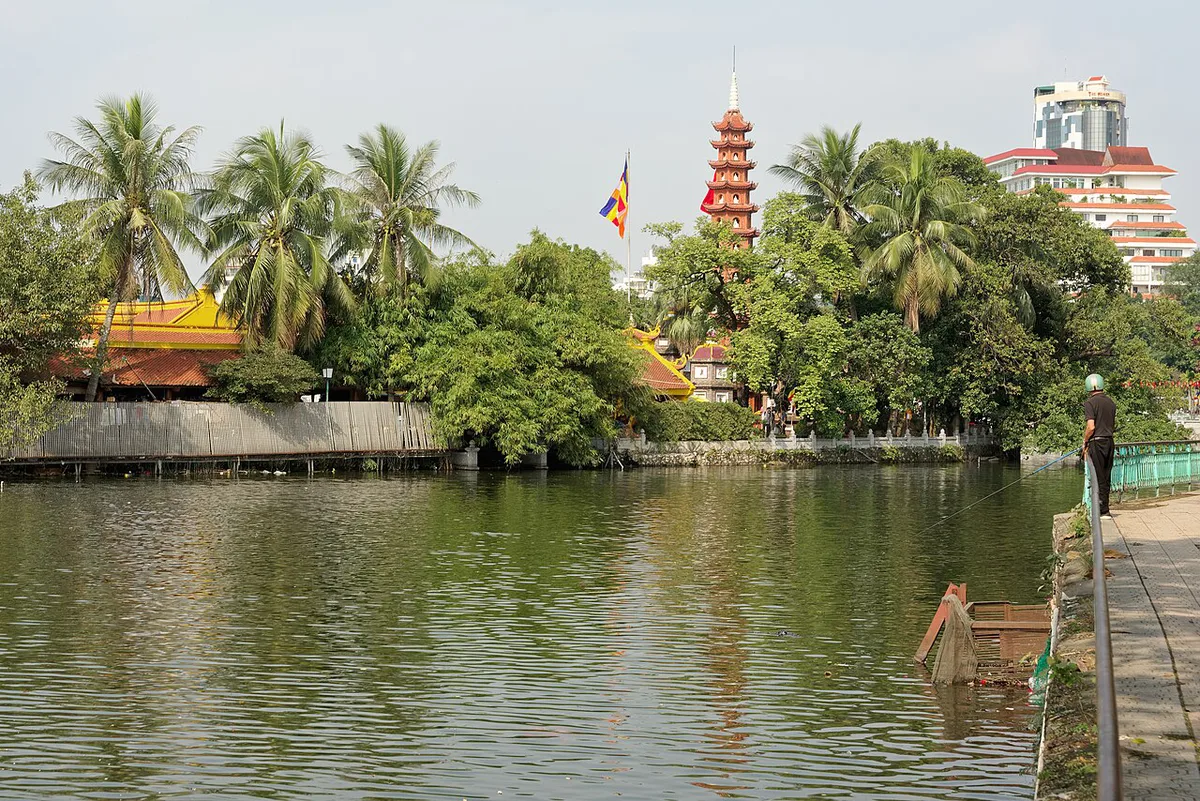
Published schedules for the pagoda disagree. Some guides list 8:00 to 16:00 daily. Others list 7:30 to 11:30 and 13:30 to 18:30. Guides that mention a midday break place it between roughly 11:30 and 13:30. To fall inside every schedule, arrive between 8:30 and 11:00, or between 13:45 and 15:30. Ask your hotel to confirm the day's times, since active pagodas can change hours at short notice. Some guides report longer hours on the 1st and 15th days of the lunar month, and an all-night opening on New Year's Eve. Entry costs nothing and parking is reported free too. Anyone who wants to give should use a donation box, not an altar or a statue's lap.
Best Time to Visit and Crowd Planning
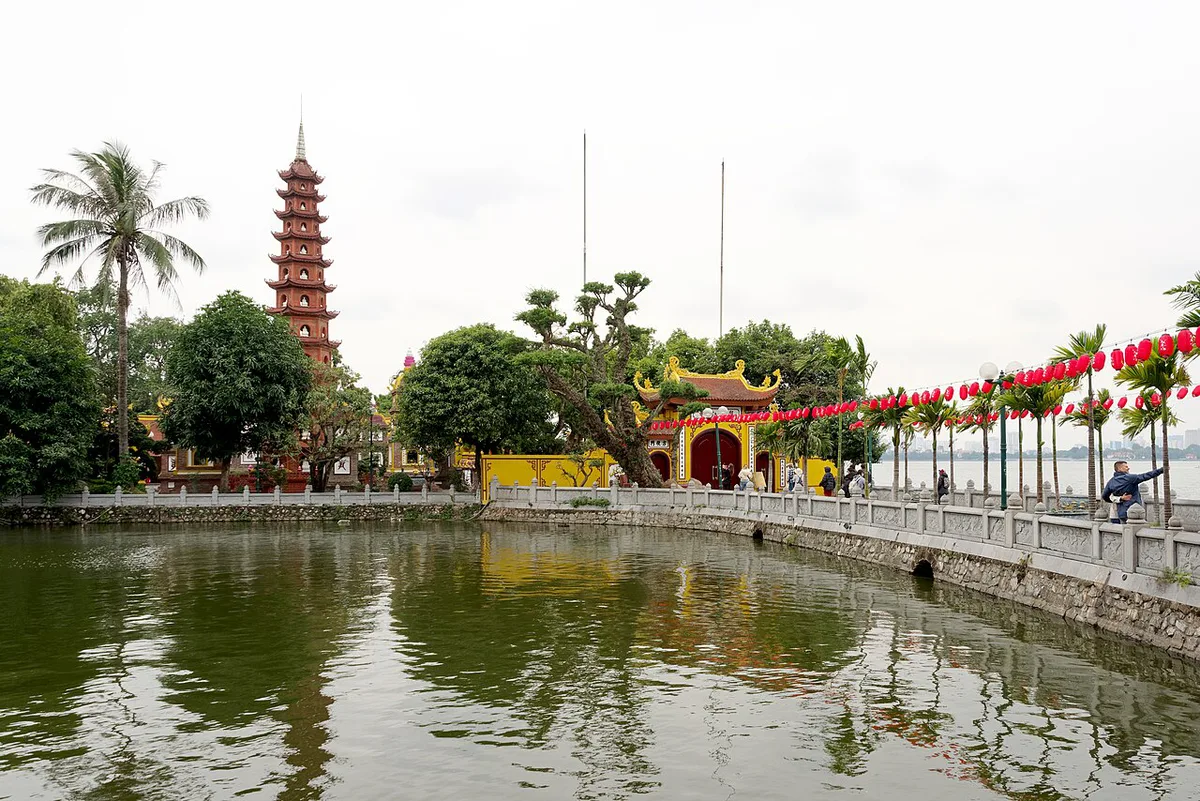
Weekday mornings shortly after the gate opens are the calmest. Late-day light over the water draws photographers, so check the closing time before you plan a sunset stop. On the 1st and 15th days of the lunar month, Hanoi families come to pray, and the courtyard fills. Those days give the strongest sense of local worship, but they suit people who tolerate crowds. During a ceremony, some halls may close to visitors. Festivals such as Buddha's Birthday (Vesak) and Vu Lan add more ceremonies and more visitors.
Some guides report longer hours on the 1st and 15th days of the lunar month, but that is also when the courtyard is busiest.
- Weekday, 8:30 to 11:00: quietest, best for first-timers
- Weekday, 13:45 to 15:30: second quiet window, softer light
- Lunar 1st and 15th: busiest, best for watching worship
- Festival days: expect ceremonies and closed halls; skip if you want photographs of empty courtyards
What to See Inside Tran Quoc Pagoda
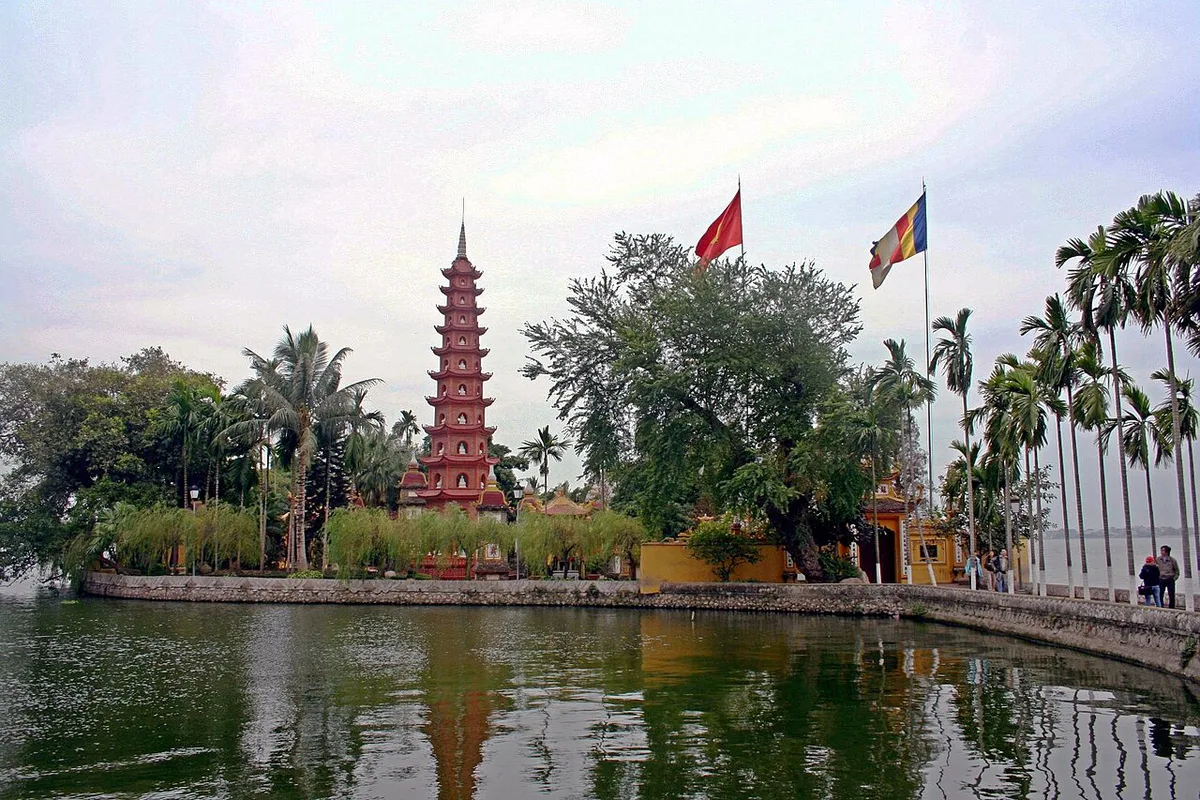
Everything sits within a few minutes' walk of the gate. Photographs make the stupa look ancient, but it is under 30 years old while the temple around it is close to 1,500. Stand near the Bodhi tree and look up for the best view of the garden. That tree is a cutting from the tree at Bodh Gaya, India, and arrived in 1959 as a gift from President Rajendra Prasad. A second Bodhi tree of Indian origin grows at One Pillar Pagoda Hanoi: History, Hours & Visit Tips, reportedly given in 1958. Inside the halls, the reclining Buddha entering nirvana is the figure most visitors remember. The stele house nearby holds 14 engraved stone slabs.
| What | Where on site | Why it matters | Dates |
|---|---|---|---|
| Lotus stupa | Tower garden, facing the Bodhi tree | 11 storeys, with an Amitabha Buddha statue on each level and a nine-tier stone lotus on top | Built 1998 to 2003 |
| Bodhi tree | Courtyard opposite the stupa | Cutting from the Bodh Gaya tree, a symbol of Vietnam-India ties | Gifted 1959 |
| Three linked halls | Main block, front to rear | Front House, Incense Burning House and Upper Hall form one line | Renovated several times |
| Reclining Buddha | Upper Hall | Statue of the Buddha entering nirvana | Not firmly dated |
| Stele house | Within the grounds | 14 engraved stelae recording the pagoda's history | Not firmly dated |
| Old stupa garden | Beside the lotus stupa | Weathered stupas from an earlier era | Reported 18th century |
Tran Quoc Pagoda History in Brief

Tradition places the founding in the 6th century under Emperor Ly Nam De. Sources give years between 541 and 548, so that range is safer than a single date. The first temple, called Khai Quoc, stood on the bank of the Red River. Erosion threatened it, and around 1615 it moved to Kim Ngu islet in West Lake. A few sources give 1616. Most accounts credit King Le Hy Tong, in the late 17th century, with the name Tran Quoc, usually translated as protecting the nation. Heritage accounts attribute the oldest-pagoda title to Hanoi specifically, not to all of Vietnam.
Dress Code and Etiquette
This is a working place of worship, and worshippers come first. Monks live on site, and local families pray there before work. A light scarf or long-sleeved layer in your bag solves most dress problems on a hot day. Slip-on sandals make shoe removal easy. Follow posted signs on footwear and photography, because rules vary by hall.
- Cover shoulders and knees; skip sleeveless tops, shorts and miniskirts
- Remove your hat before entering the halls
- Leave shoes where local worshippers do, or where signs direct
- Speak softly and keep your phone silent
- Never step between a worshipper and an altar
- Place donations in the box, not on a statue
- Mistake to avoid: photographing people mid-prayer or blocking a doorway during a ceremony
Making It a Half-Day: Nearby Stops
Thanh Nien Road puts several stops a short ride apart. A natural start is Quan Thanh Temple, a Taoist temple dedicated to the guardian Tran Vu. From there, walk the causeway with Truc Bach Lake on one side and West Lake on the other, and finish at the gate of Tran Quoc Pagoda. Then take a taxi to the One Pillar Pagoda and the Ho Chi Minh Mausoleum Hanoi: Hours, Rules & Tips. Check the Mausoleum's own page for its visiting rules before you plan around it. Close the loop at the Temple of Literature Hanoi: Hours, Tickets & How Long to Spend. Another temple stop worth adding is Ngoc Son Temple Hanoi: Tickets, Hours & Is It Worth It. Tran Quoc suits first-timers and photographers on short itineraries. Visitors who expect a ticketed attraction or a large interior may find it smaller than imagined.
Budget 30 to 60 minutes for the pagoda itself, and leave the rest of a half-day for the causeway walk and nearby stops.
Useful notes for your Vietnam trip
Optional updates to our guides.
You might also like
Continue reading
More guides you'll find useful