Han Market Da Nang: What to Buy, Eat and When to Go
Plan your visit to Han Market in Da Nang: hours, what to eat and buy, how it compares with Con Market, and a simple route through the aisles.
On this page
Last updated November 2026: Han Market (Cho Han) is a covered market at 119 Tran Phu Street in central Da Nang, reported open from about 6:00 AM to 7:00 PM daily. Come for dried seafood, fermented sauces, regional snacks and a quick bowl of noodles. It suits first-time visitors who want one compact stop before a sit-down meal from our Da Nang food guide.
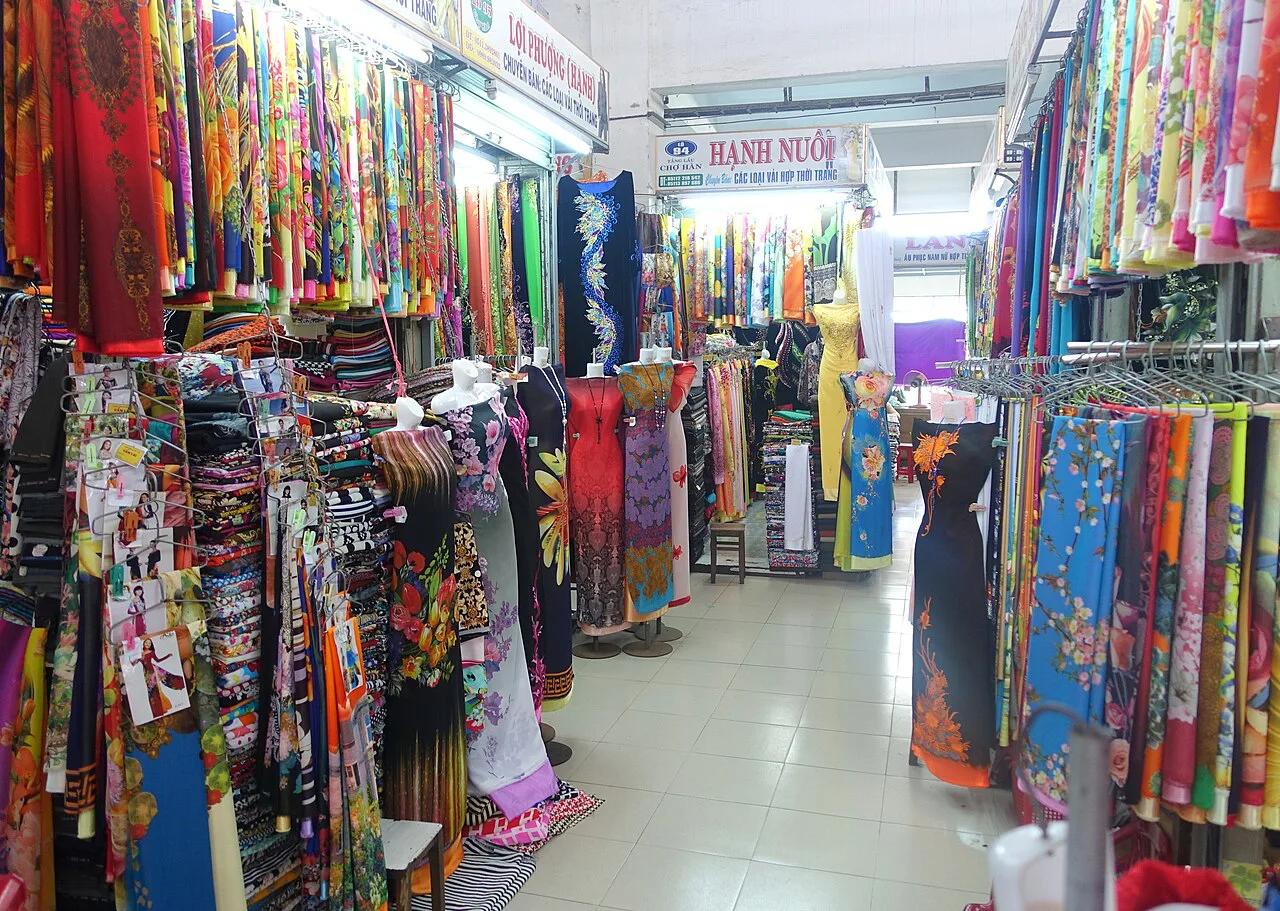
Featured image: Daderot, CC0, via Wikimedia Commons.
Han Market at a glance
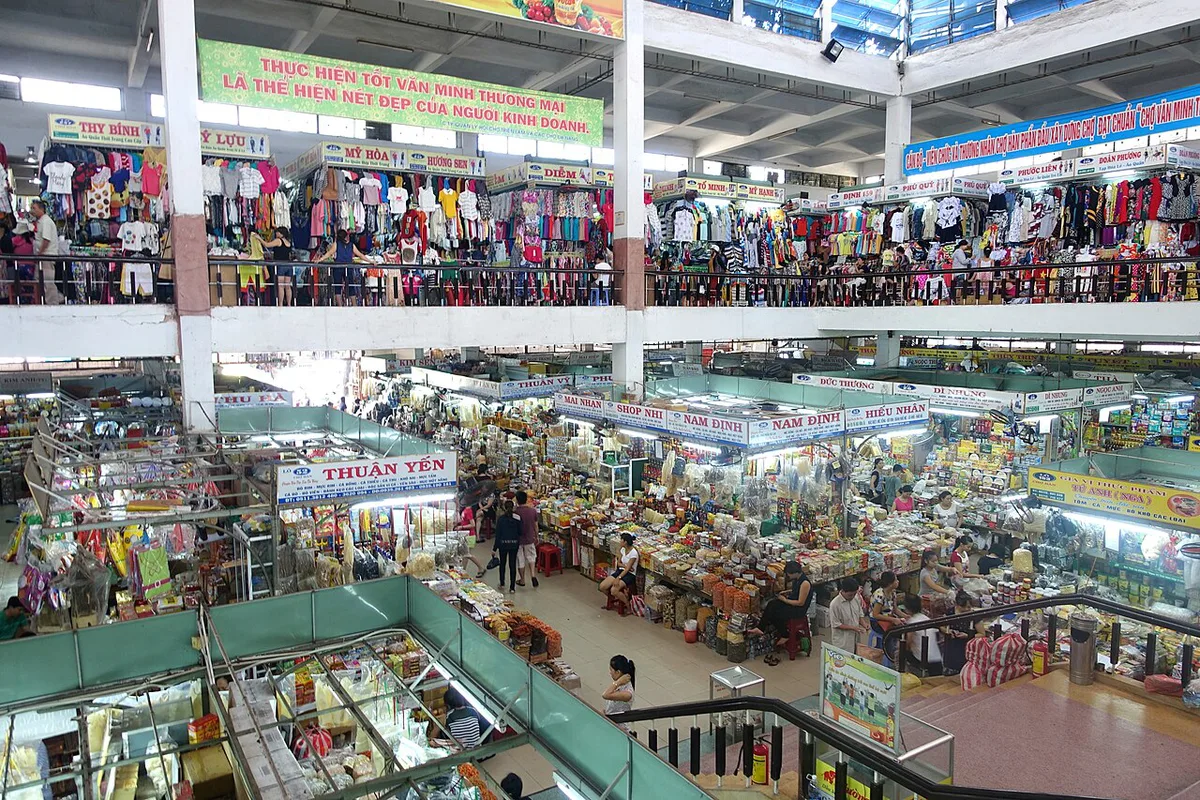
Han Market is a two-story market near the Han River in Hai Chau. Food counters, dried goods, fresh produce and clothing stalls share one building. In our editorial judgment, 60 to 90 minutes covers a first visit, and a second snack stop adds more time. History is short here: the current building was rebuilt around 1990–91, and sources differ on the exact year.
- Address: 119 Tran Phu Street, Hai Chau, Da Nang
- Reported hours: about 6:00 AM to 7:00 PM daily, with individual stalls opening and closing at their own pace
- Best for: dried seafood, fermented sauces, snacks, a quick noodle lunch
- Payment: carry small cash notes, since card acceptance varies by stall
- Skip if: you want a quiet, local-only market or a sit-down restaurant meal
Where Han Market is and how to get there
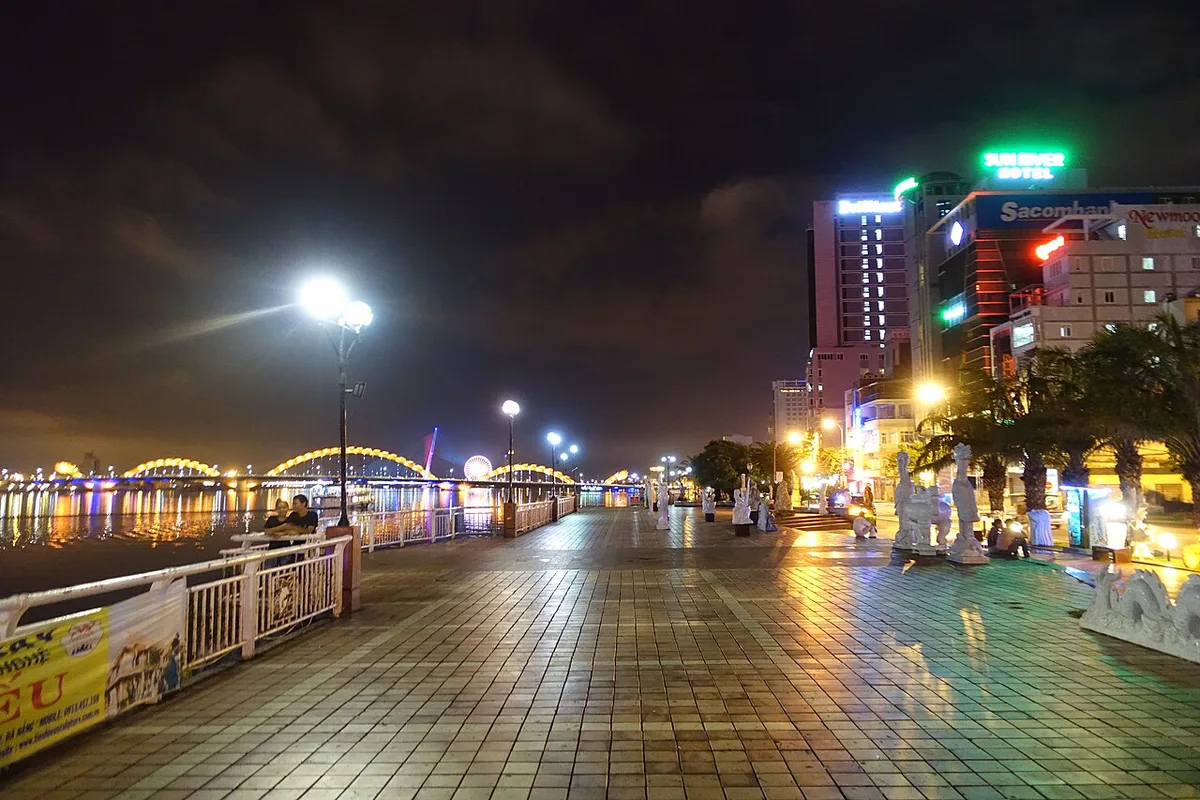
Han Market stands on Tran Phu Street, with Bach Dang Street running along the riverside nearby. Visitors walking the Han River promenade can cut inland and reach the market within minutes. A guide figure puts the river roughly 50 metres away, so treat that as approximate. From other parts of the city, a taxi or ride-hailing app drops you at the Tran Phu entrance. Coming from Hoi An, plan on roughly 30 km and about 1 hour, though traffic changes that. Tran Phu and Bach Dang are wide one-way streets, and motorbikes move fast. Cross where locals cross and keep a steady pace.
Opening hours and best time to go
Reported hours run from 6:00 AM to 7:00 PM daily. Stalls vary, so some food counters finish earlier than the souvenir rows. Mornings through mid-afternoon are usually the liveliest stretch. Match your arrival to your goal using the planner below. For current city visitor information, start with Da Nang's official tourism site.
Hours run 6:00 AM to 7:00 PM daily, but arriving after 5 pm means many stalls are already winding down.
| Time of day | Best for | Trade-off |
|---|---|---|
| Early morning | Fresh seafood and produce, cooler air | Some souvenir stalls are still setting up; bargaining can feel stiffer |
| Mid-morning to lunch | Food stalls and snack counters | Busiest aisles and seats at peak |
| Afternoon | Souvenirs, dried goods, ao dai browsing | Hotter inside, fewer fresh options left |
| After about 5 pm | A short look before closing | Stalls wind down; shift to the riverside or an evening market |
What to eat at Han Market
Food counters sit toward the river-side passage, so follow the smell of grilled pork and broth. Treat the market as a snack stop, then save a full meal for restaurants. Dishes to look for:
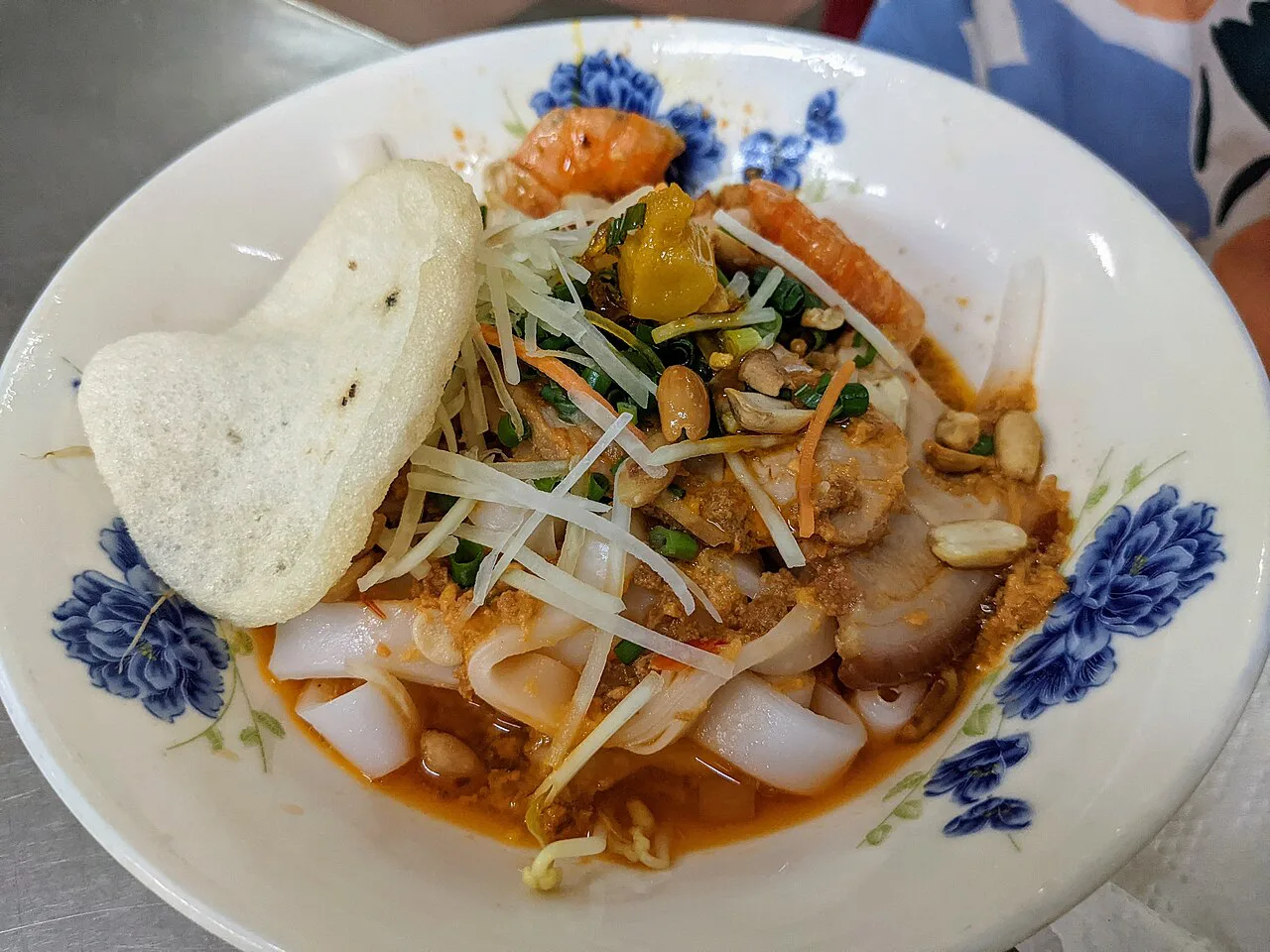
- Mi Quang: turmeric-yellow wide noodles with a small amount of broth, shrimp or pork, peanuts and herbs
- Banh xeo: a crisp rice-flour pancake wrapped in herbs and dipped in fish sauce
- Banh beo: small steamed rice cakes topped with dried shrimp and scallion oil
- Banh canh: thick, chewy noodle soup, often with pork, fish cake or crab
- Nem lui: lemongrass-skewered grilled pork served with rice paper and peanut sauce
What to buy at Han Market
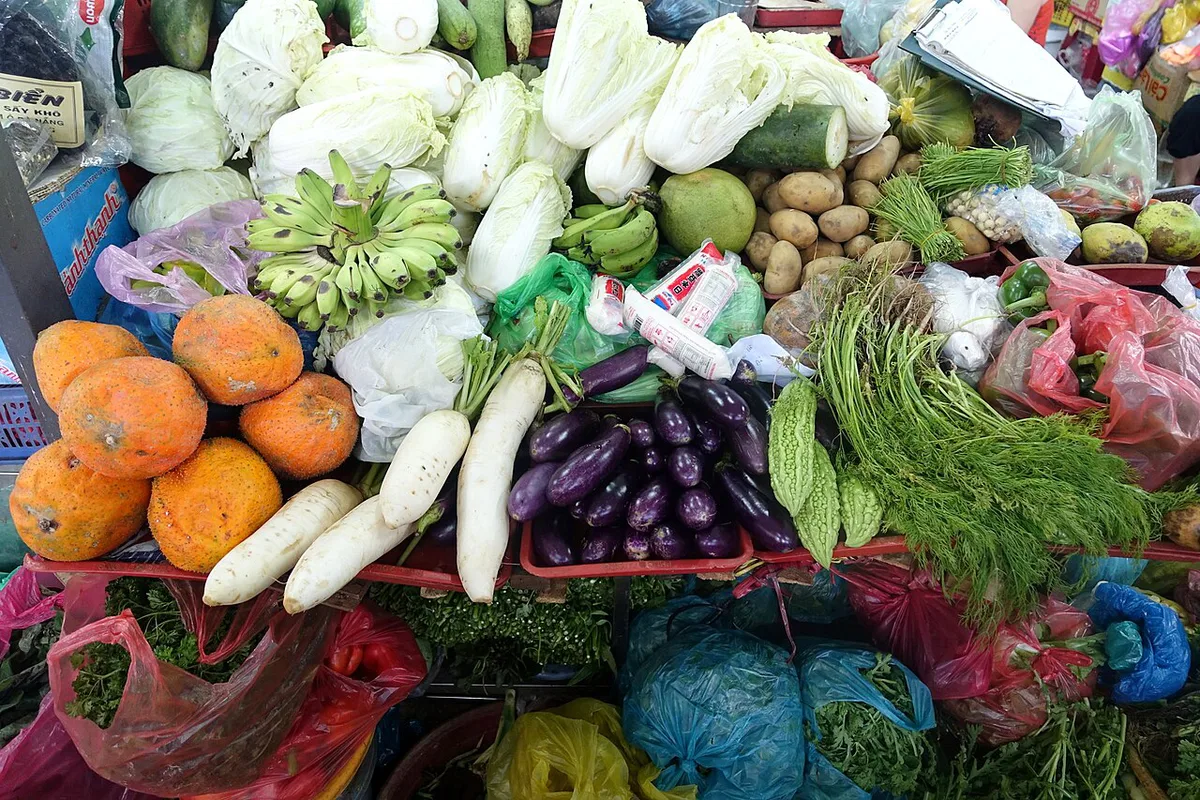
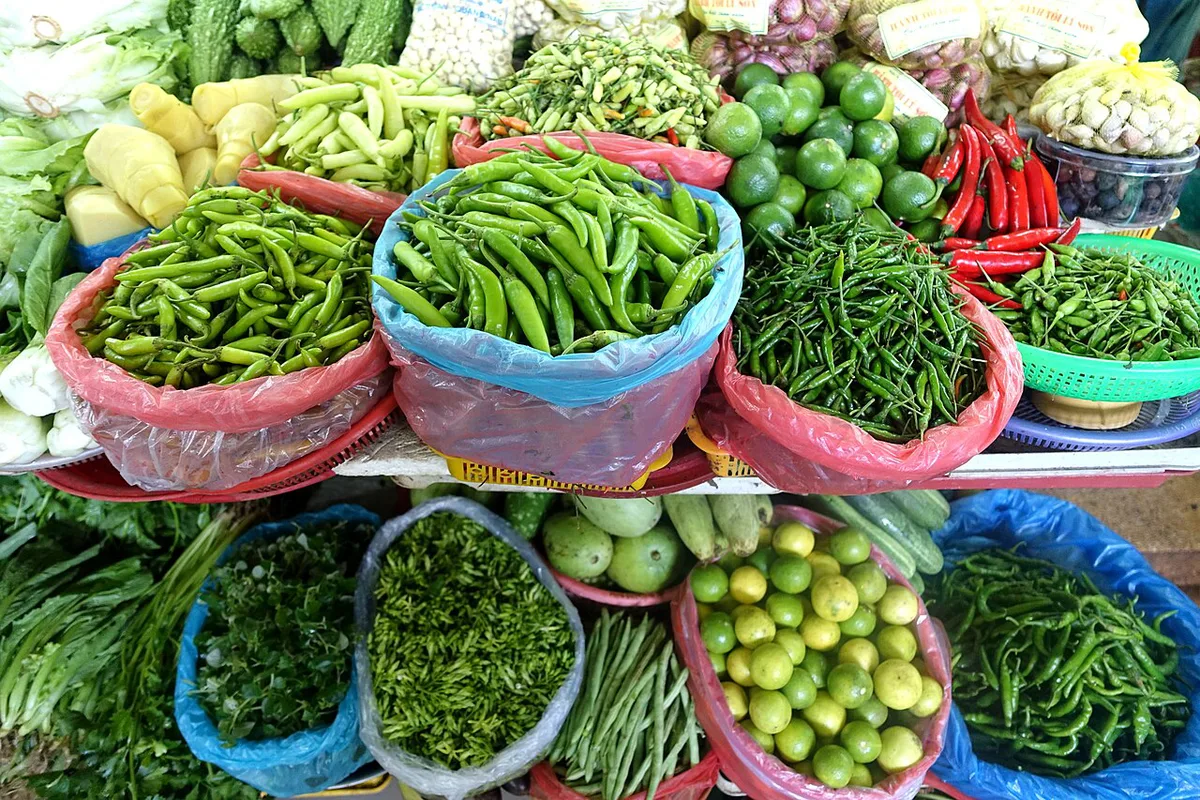
Dried goods are the strongest buy. Look for dried squid and shrimp, plus fermented sauces such as mam nem (anchovy) and mam ruoc (shrimp paste). Snack rows sell mung bean cakes, sesame candy and peanut brittle in compact packs. Upstairs and along the clothing rows, some tailors make ao dai to measure. Sedge and rattan baskets, placemats and conical hats cover the craft side. For luggage, dried seafood and sealed sauces travel better than fresh items. Airline and customs rules differ by country, so check your own customs authority before packing food. Fresh seafood only makes sense if you have a kitchen. Otherwise, book a proper meal using our Da Nang seafood guide.
Prices, bargaining and payments
Han Market has no entry fee. Posted prices are rare outside packaged goods. Ask the price first, then compare at two or three stalls before buying. Bargaining is reasonable for clothing and souvenirs, and much less so for packaged sauces. Carry small notes, because change for large bills can be slow. For current exchange and ATM information, use your bank's app, since rates move.
Han Market vs Con Market
Both markets sit in central Da Nang, about 1.3 km apart by an approximate guide measure. Han Market leans toward dried goods and souvenirs. Con Market has a reputation for local eating, which is worth confirming on arrival. Our Con Market guide covers that side in detail.
| Criteria | Han Market | Con Market |
|---|---|---|
| Location and feel | Tran Phu Street, covered two-story building | Separate central market; local-food reputation |
| Best time | Morning to mid-afternoon | Check locally before planning |
| Main draw | Dried goods, souvenirs, quick snacks | Local eating and street food |
| Tourist-friendliness | Easier for first-timers | Likely busier with local shoppers |
| Crowds | Tight aisles at lunch | Can feel crowded at peak |
| Pick it if | You want gifts and a short food stop | You want to focus on eating |
A simple route through Han Market
This is a suggested route, not an official one. Enter from Tran Phu and take the wider central aisle first, since one visitor described it as giving more breathing room. Browse dried goods and sauces on the way in. Stalls are packed tightly and stacked high, so decide what you want before you go deeper. Continue to the fresh produce and raw-meat zone only to see it, then keep walking. Finish in the narrower passage of food and drink stalls, which leads out toward the Han River side.
Nearby stops after Han Market
Distances below are approximate walking guidance. Check a map before committing on a hot day.
Son Tra Night Market, about 1.8 km away, picks up the evening once the liveliest stretch ends.
- Bach Dang walking street: about 1 km, riverside food and evening strolling
- Museum of Cham Sculpture: about 1 km, a calm indoor stop
- Con Market: about 1.3 km, for a second market comparison
- Son Tra Night Market: about 1.8 km, an evening option for snacks and souvenirs
- Love Lock Bridge: about 2 km, best later in the day
Safety, comfort and who should skip Han Market
Crowded aisles call for a front-facing bag. Raw meat stalls sit close to ready-to-eat stalls, so choose food counters that look clean and busy. Fruit juices and drinks often include sugar syrup, so ask for less sugar. Narrow aisles and stairs make the market hard for anyone with limited mobility. Skip it if you want a quiet visit or a restaurant meal. For wider trip planning, see Vietnam's national tourism site.
- Mistake: arriving after 5 pm, when stalls are closing
- Mistake: buying fresh seafood without a kitchen
- Mistake: paying the first quoted price
- Mistake: skipping a meal plan; see our Da Nang restaurant picks
- Mistake: wandering without a route
Useful notes for your Vietnam trip
Optional updates to our guides.
You might also like
Continue reading
More guides you'll find useful