Ninh Binh Weather by Month: When to Go, What to Pack
Ninh Binh weather month by month: temperatures, rain, grey-sky months, typhoon risk, and what it means for Tam Coc boats, rice and Mua Cave.
On this page
Last updated November 2026: Ninh Binh weather follows a humid subtropical monsoon pattern, with a cool, grey season from about November to April and a hot, wet season from about May to October. November, December and April are the easiest months, and our full month-by-month verdict covers the trade-offs. Typhoon risk peaks in August and September.
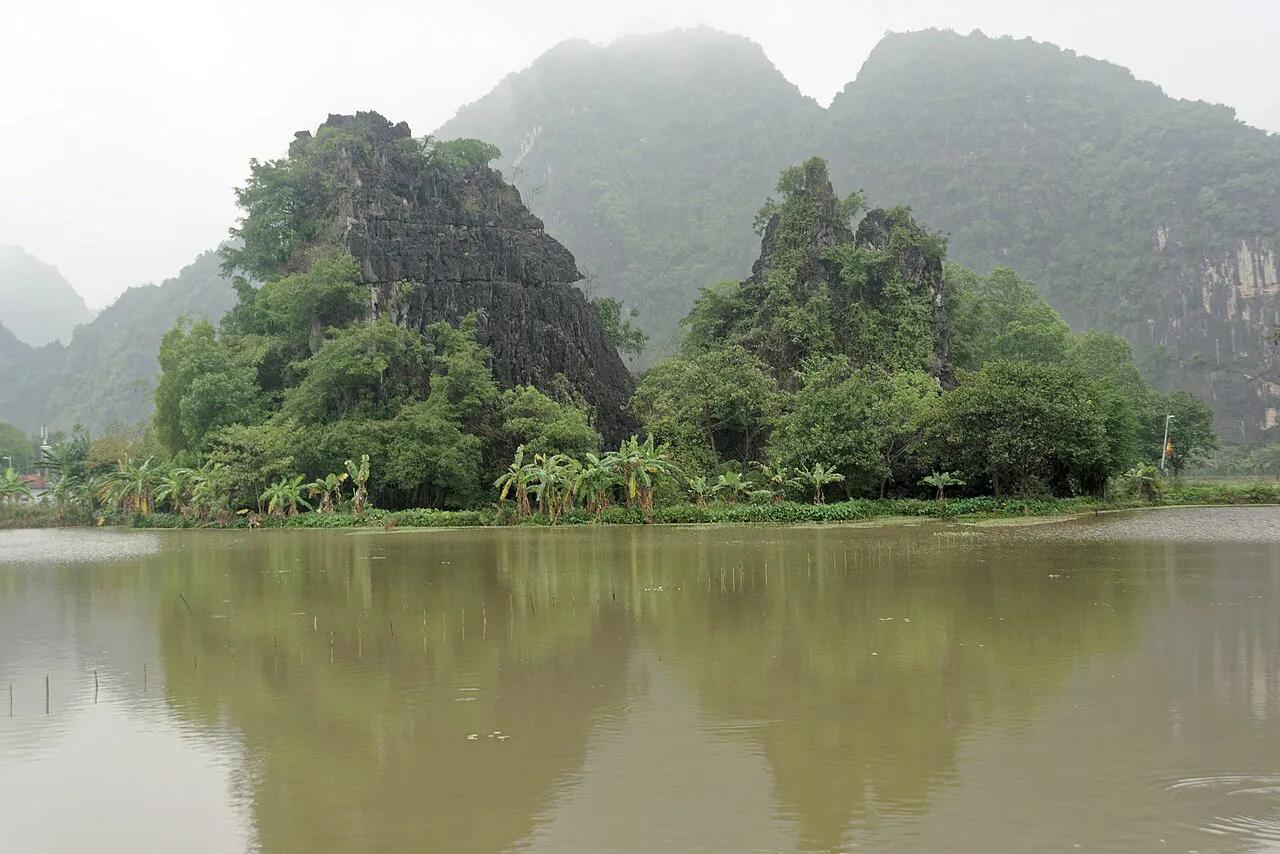
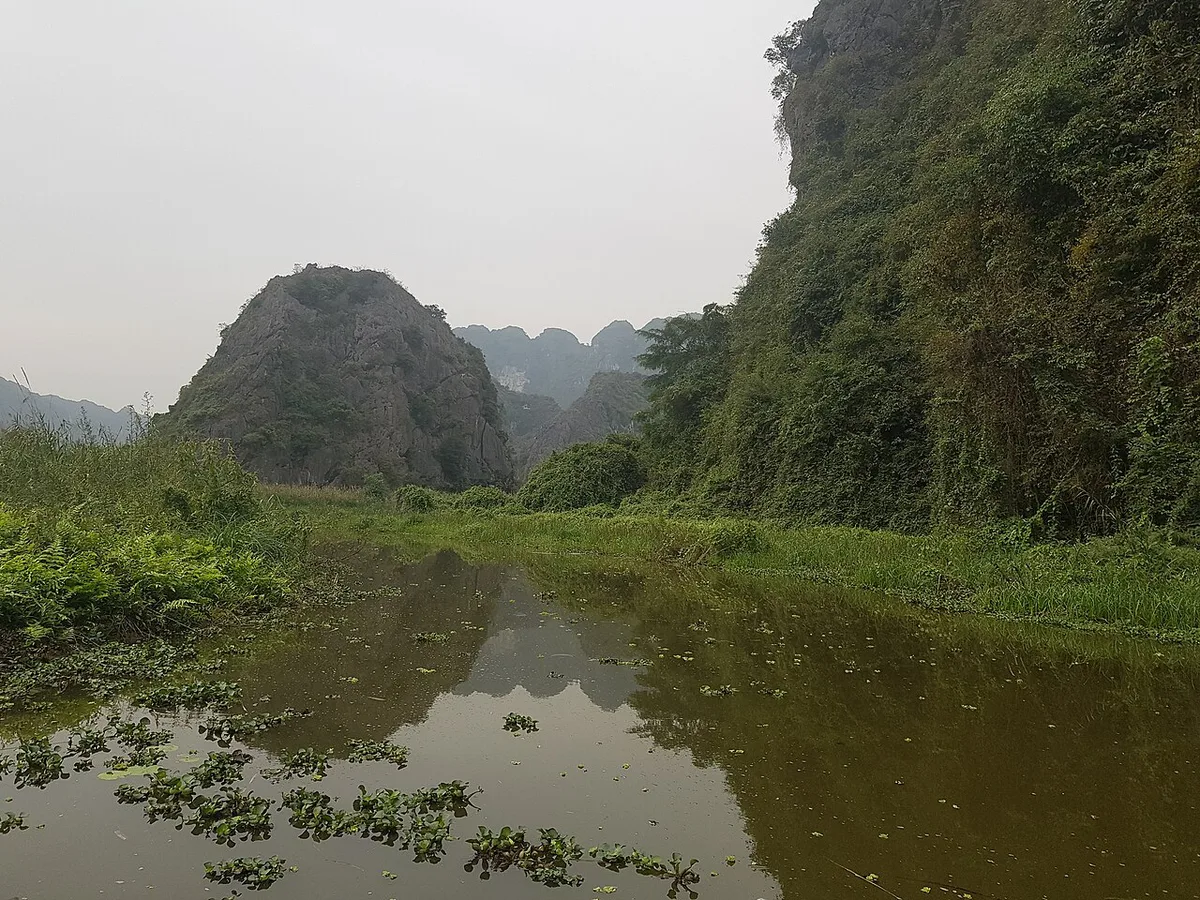
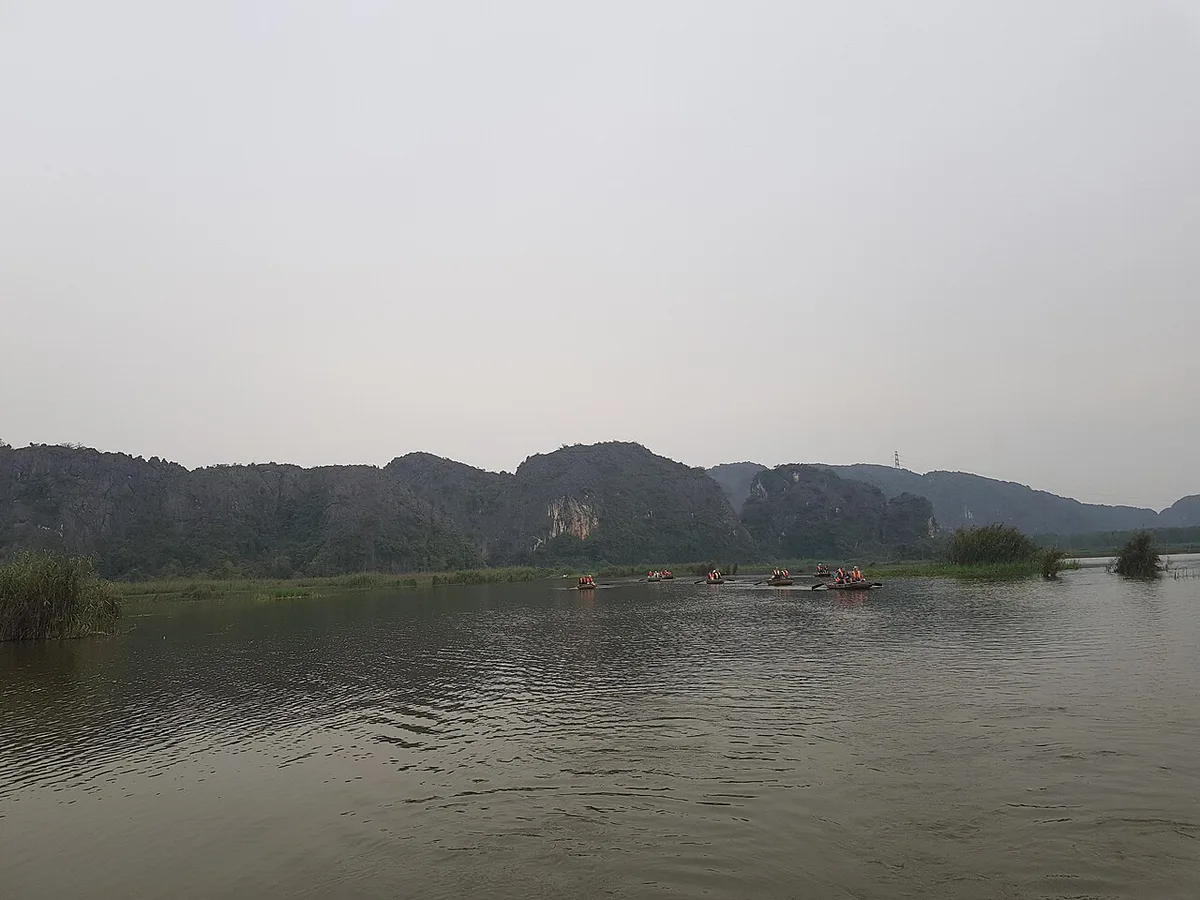
Featured image: Jakub Hałun, CC BY 4.0, via Wikimedia Commons.
Ninh Binh weather at a glance
Ninh Binh sits about 90 km south of Hanoi, so conditions track the capital's closely. Limestone karst tends to wring a little more rain out of the same clouds. Annual mean temperature is about 24°C (75°F), and annual rainfall is about 1,830 mm. Humidity stays high all year. Pick your month by what you want from the trip, not by the words "dry season".

- Best month: November, with 19–25°C (66–77°F), about 70 mm of rain and 8 rainy days.
- Wettest months: August and September, at roughly 315 mm and 370 mm. Climate sources disagree on which is wetter.
- Hottest: June to August, with daytime highs of 30–33°C (86–91°F) and heavy air.
- Coolest: December to February, with dawn lows near 15°C (59°F).
- Trap months: February and March are the greyest, with about 1.5 hours of sun a day. October still gets about 245 mm.
Ninh Binh weather month by month
Karst Ninh Binh sits inland, so sea temperature is irrelevant. Rivers and rice decide what you see. Figures below are rounded long-run averages from regional climate datasets. Vietnam's national met service publishes the official observations. Notice the cliff between October (245 mm) and November (70 mm). The dry spell starts in November, not October.
| Month | Night–day temperature | Rain | Rainy days | Sun per day | On the ground |
|---|---|---|---|---|---|
| January | 15–20°C (59–68°F) | 25 mm | 9 | 2.5 h | Stubble, low rivers |
| February | 15–20°C (59–68°F) | 30 mm | 13 | 1.5 h | Drizzle, seedbeds, grey |
| March | 18–22°C (64–72°F) | 50 mm | 16 | 1.5 h | Mist, white sky, flat light |
| April | 22–27°C (72–81°F) | 80 mm | 13 | 3.0 h | Green valley, calm rivers |
| May | 25–31°C (77–88°F) | 165 mm | 13 | 6.0 h | Gold at Tam Coc late in the month |
| June | 26–33°C (79–91°F) | 230 mm | 14 | 6.0 h | Harvest, lotus opens |
| July | 27–33°C (81–91°F) | 225 mm | 13 | 6.5 h | Lotus peak, rivers rising |
| August | 26–32°C (79–90°F) | 315 mm | 16 | 5.5 h | High water, tour closures |
| September | 25–30°C (77–86°F) | 370 mm | 15 | 5.5 h | Peak water and flood risk |
| October | 22–28°C (72–82°F) | 245 mm | 12 | 5.5 h | Water falling |
| November | 19–25°C (66–77°F) | 70 mm | 8 | 4.5 h | Dry, fields cut |
| December | 16–22°C (61–72°F) | 30 mm | 6 | 4.0 h | Low water, morning fog |
Season by season
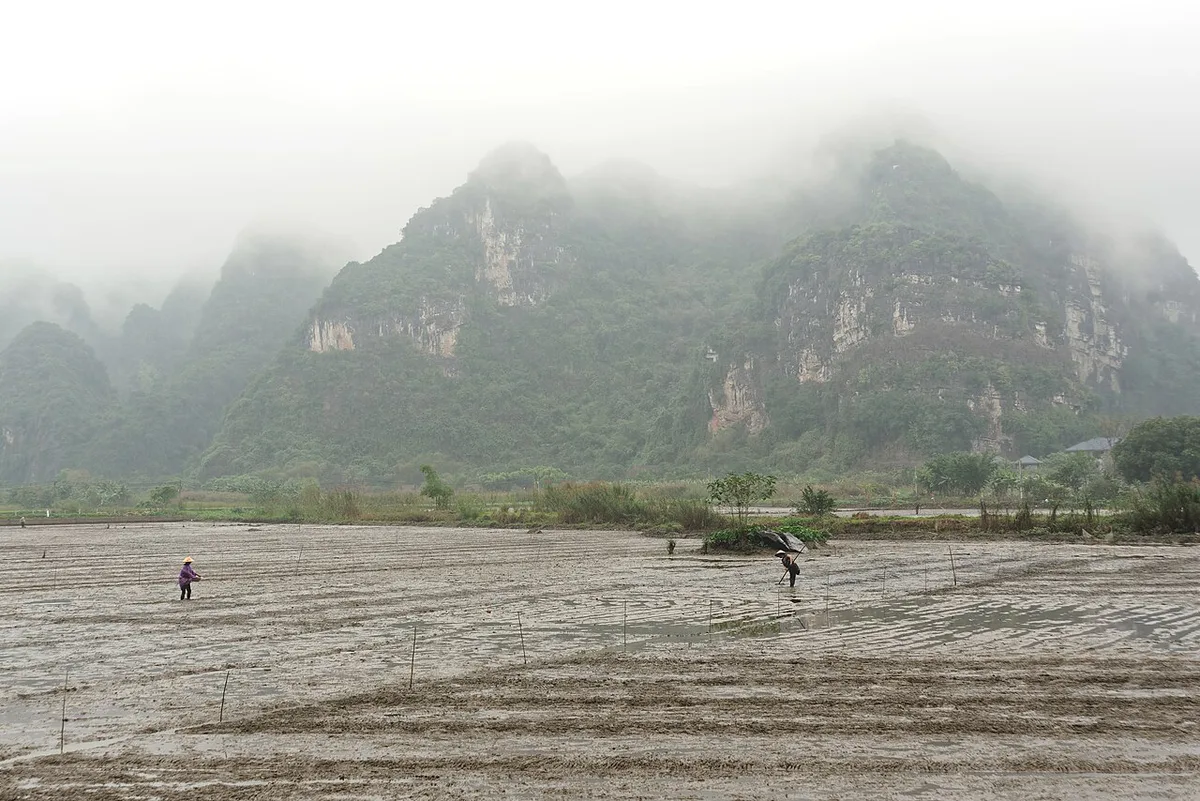
December to March is cool and grey. Days sit near 20–22°C (68–72°F), and dawn drops toward 15°C (59°F). Homestays rarely have heating, so layers matter. February and March bring mưa phùn, a fine drizzle that logs 13 and 16 rainy days but only 30 and 50 mm. Sunshine falls to about 1.5 hours a day, and sunsets mostly fail. Our December winter notes cover the clearer start of the cool season, with about 4 hours of sun. April turns the valley solid green, with 3 hours of sun and short afternoon showers. Rooms rise 20–30% around Easter and the 30 April and 1 May holidays. Prices and hours checked November 2026. May to August is hot, at 30–33°C (86–91°F), with storms building after 2 pm. Homestay rates drop 20–30% in July and August. Tam Coc boat admission was reported at 250,000 VND per adult, so the seasonal swing shows up in beds, not tickets. Confirm the current fare at the ticket desk.
- Cool and grey (Dec–Mar): bring a light jacket, expect flat photos.
- Spring (Apr): best legs-and-bikes weather, but book rooms a month ahead.
- Hot and wet (May–Aug): ride early, use air conditioning, carry DEET repellent.
- Typhoon and flood (Aug–Oct): keep a spare day in the plan.
- Autumn clear-up (Nov): the best balance of sun, rain and price.
Weather and Tam Coc rice and lotus timing
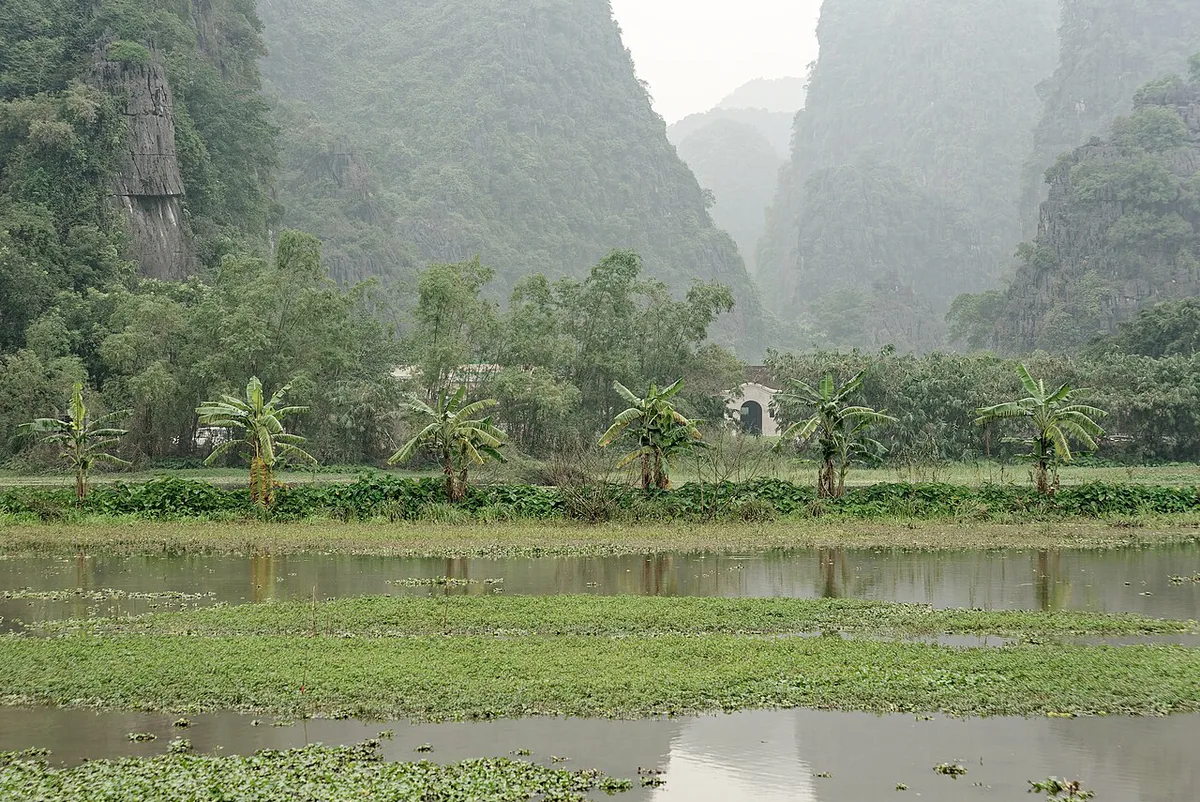
Golden rice is a 10–14 day window in the second half of May, and it shifts every year. In 2026 the harvest festival ran 22–24 May, with fields already gold on the 22nd. In 2025 it ran 23–31 May. By mid-June the paddies are cut. Our Tam Coc rice timing guide explains how to track the window. Lotus runs from early June to mid-July. Flowers open at dawn and fold by about 8:30 am, so shoot between 5:30 and 8:30. A second rice harvest comes in late September to early October elsewhere in the province, but Tam Coc grows one crop because the Ngo Dong river floods the riverside paddies.
Lotus flowers fold by 8:30 am, and boats run best before 9 am in summer, so one early start covers both.

Boats, Mua Cave and cycling: how weather changes each
Heat is the main limit in June to August, when 26–33°C (79–91°F) with 82–85% humidity feels far hotter. Take Tam Coc boats before 9 am or after 4 pm. Winter boats still run, but the river is low and slow. Mua Cave is a steep, unshaded climb with few handrails. Go at dawn or late afternoon, and skip it when the stone is wet. Cycling the valley is best in November, December and April. Storm closures are the real risk. Boat operations can be suspended by official order as a storm approaches, and reopening waits for water levels to fall. Plan for two or three lost days, not one.
Ninh Binh vs Hanoi, Ha Long and Sapa weather
Treat this as general guidance, not a forecast. Ninh Binh and Hanoi share one lowland climate. Ha Long adds coastal wind and storm-warning disruption to cruises. Sapa is higher, so nights run colder.
| Place | How it compares | Planning note |
|---|---|---|
| Hanoi | Close to identical, about 90 km north | Karst Ninh Binh tends to be slightly wetter |
| Ha Long | Same seasons, coastal exposure | Cruises follow storm warnings closely |
| Sapa | Highland, cooler | Pack warmer layers than for Ninh Binh |
What to pack by season
Packing follows the season. In winter, a light jacket handles dawn lows near 15°C (59°F). In summer, breathable clothes handle 30–33°C (86–91°F).
- Dec–Mar: layers, a light waterproof, closed shoes.
- Apr and Nov: a sweatshirt for dawn, sun protection by noon.
- May–Aug: light fabrics, hat, DEET repellent, rubber sandals for boats.
- Aug–Oct: rain jacket, dry bags for electronics, shoes with real grip.
Storm and rain Plan B
Rain usually arrives as a front and clears, but a named storm is different. When a typhoon is forecast, no boat in the province is likely to run. Our rainy-season planning notes cover flood timing in more detail. Since the July 2025 merger with Ha Nam and Nam Dinh, provincial bulletins can list coastal sites far from the karst. A coastal warning does not automatically mean the Tam Coc boats have stopped.
Homestay rates drop 20–30% in July and August, but typhoon risk peaks in August and September, so book flexible rooms.
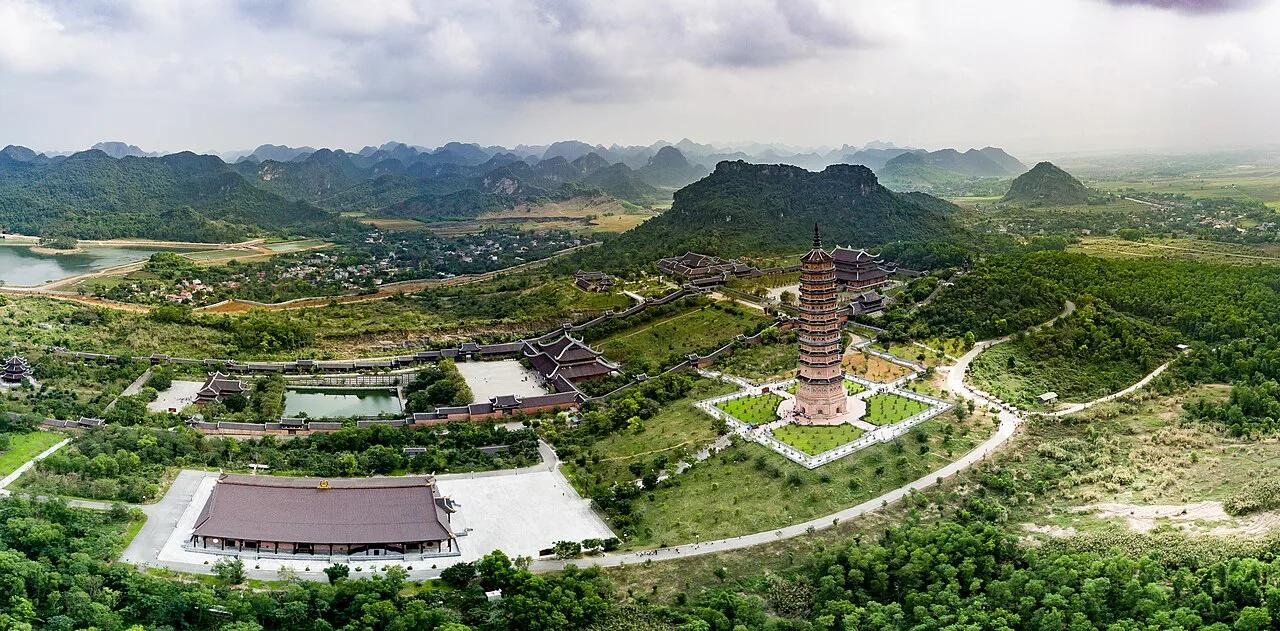
- Move Bai Dinh Pagoda, museums and long coffee stops into the storm day.
- Book accommodation with free cancellation from August to October.
- Keep two spare days, and avoid scheduling the final leg tight against a flight.
- Buy travel insurance that covers weather disruption, and read its storm terms.
Common weather mistakes
Most weather disappointments come from trusting a label instead of the monthly numbers.
- Trusting "dry season": October still logs about 245 mm.
- Expecting sunsets in February or March, with only about 1.5 hours of sun a day.
- Arriving in mid-June for golden rice after the fields are cut.
- Booking a midday boat in July or August.
- Climbing Mua Cave on wet steps.
- Skipping a spare day between August and October.
How to check the weather before you go
Check a live forecast in the 10 days before you travel. Yr, from the Norwegian Met Institute, gives hourly detail for Hoa Lư. Vietnam's national met service posts storm bulletins. The national tourism authority is a starting point for official travel notices. Look at rain amounts in millimetres, not only symbols. Showers under 1 mm per hour rarely stop a day trip from Hanoi, while a named storm should reshape the whole plan.
Useful notes for your Vietnam trip
Optional updates to our guides.
You might also like


Continue reading
More guides you'll find useful