Hue Imperial City: Tickets, Hours & Half-Day Walking Route
Plan your visit to Hue Imperial City: how long it takes, ticket and hours, a self-guided route, and whether a guide is worth it.
On this page
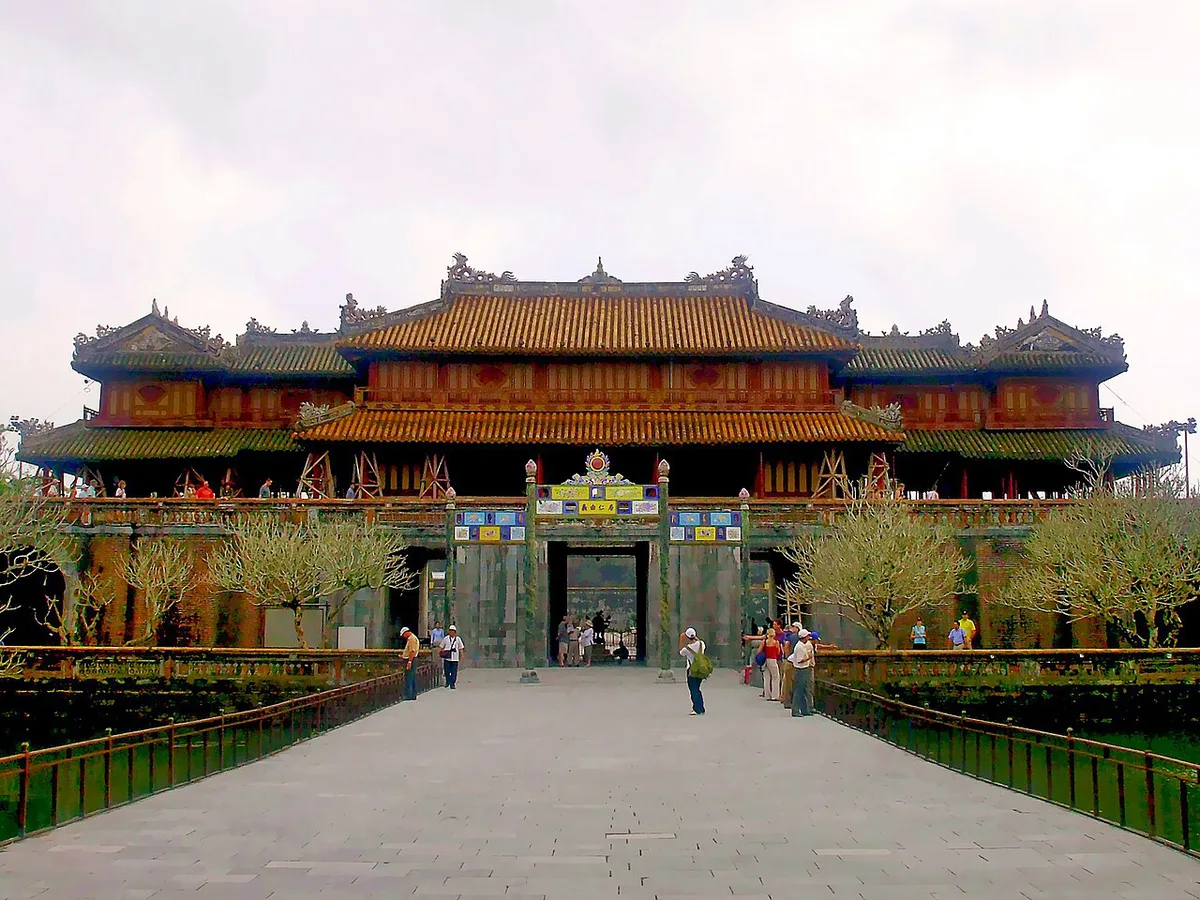
Last updated November 2026: Hue Imperial City is the walled royal enclosure inside the Citadel, the Nguyen dynasty seat from 1802 to 1945 and a UNESCO-listed site. Plan on roughly half a day. This guide covers tickets, a self-guided route, timing and onward travel.
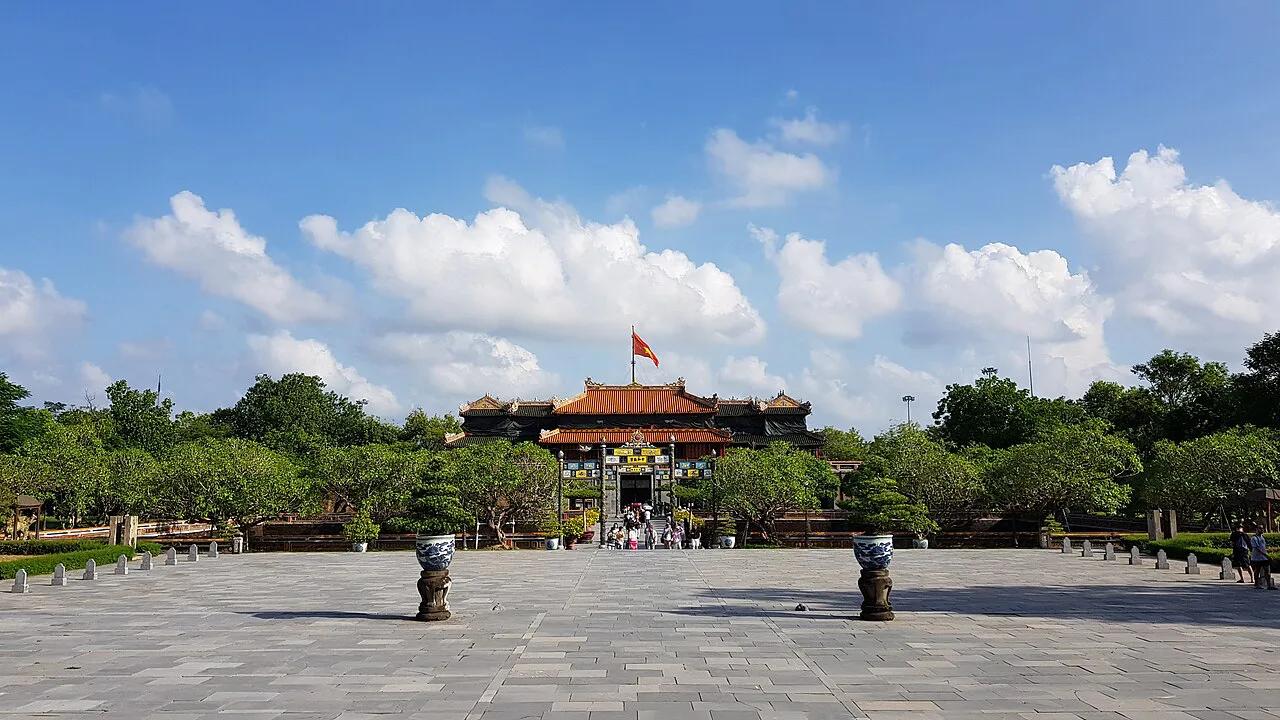
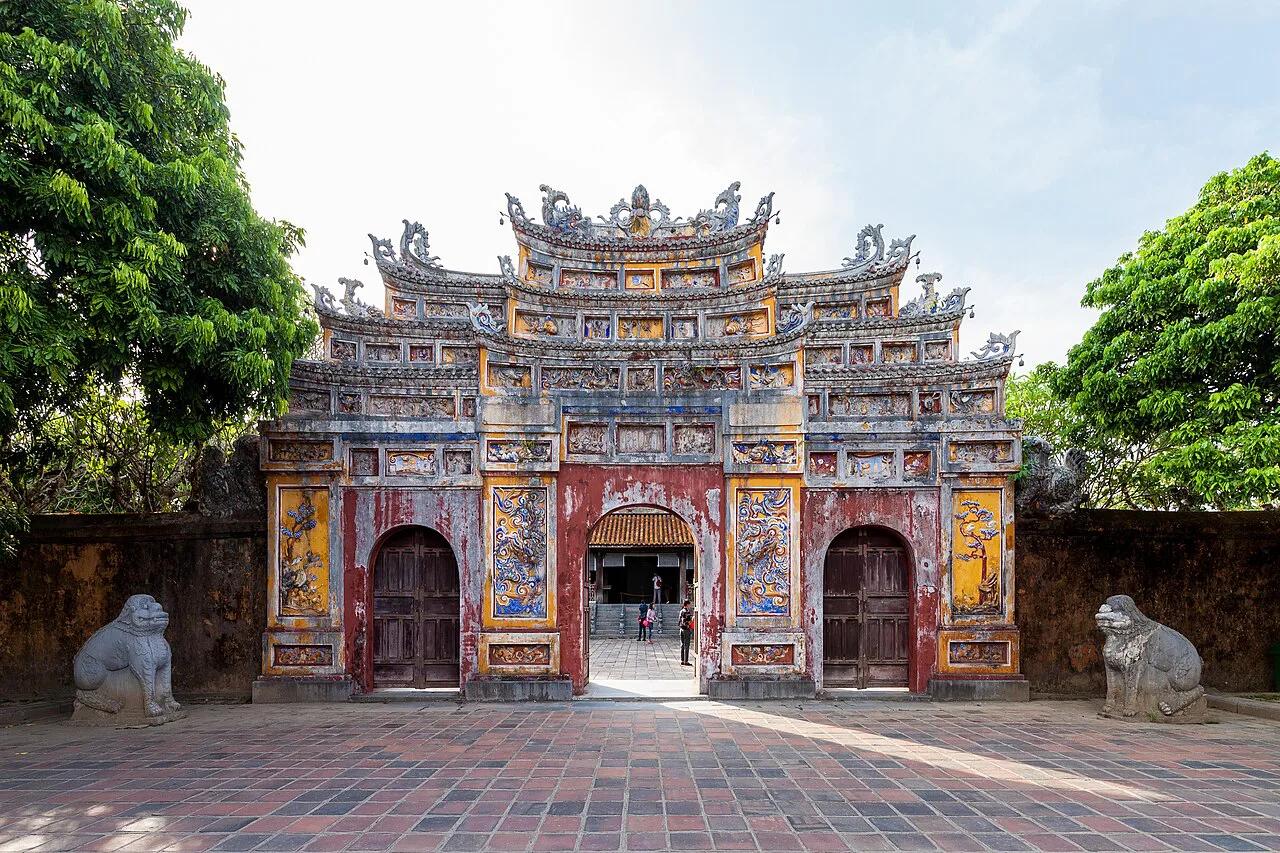
Featured image: Chainwit., CC BY 4.0, via Wikimedia Commons.
Hue Imperial City at a glance
Three names get mixed up, so here is the short version. Each one sits inside the next, like nesting boxes. Hue was the Nguyen capital from 1802 to 1945, and Thai Hoa Palace dates from 1803. This guide walks the middle layer, the Imperial City.
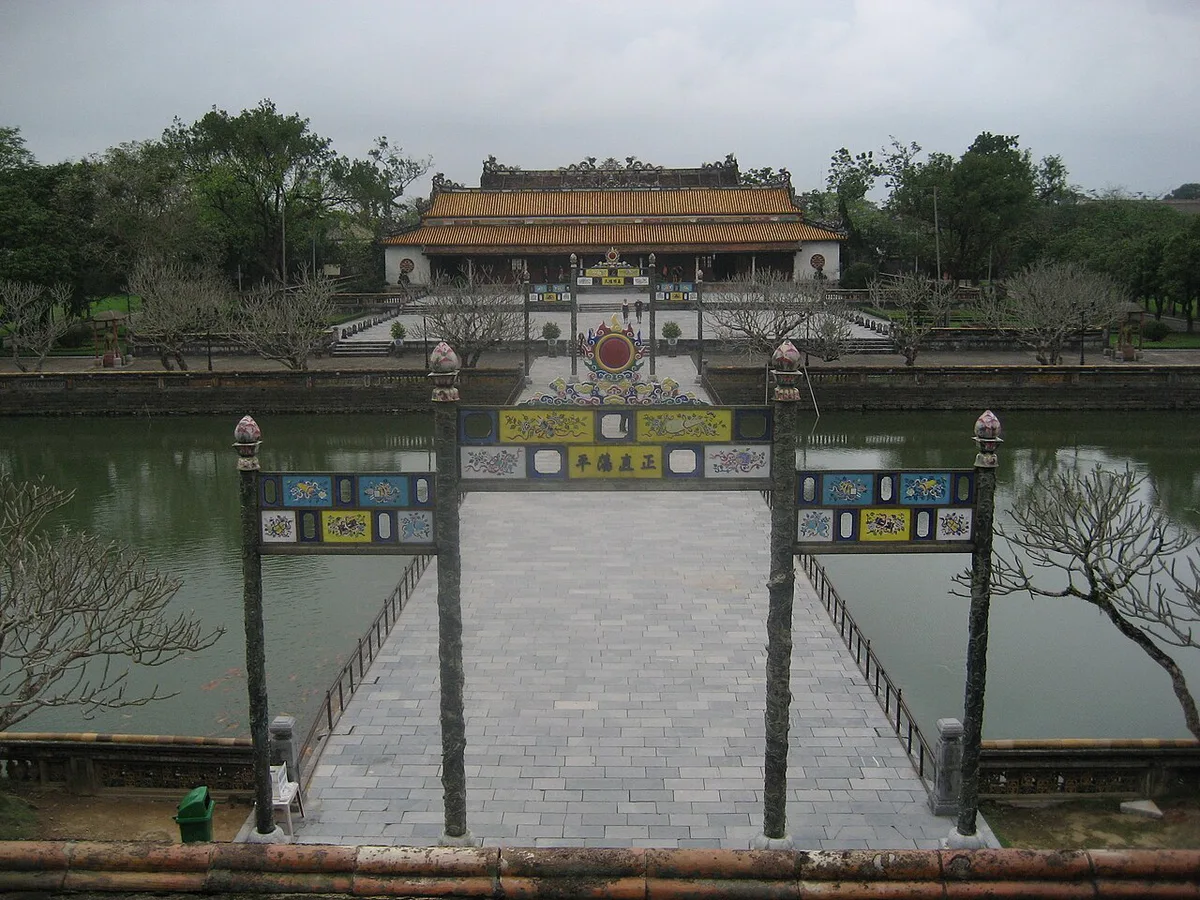
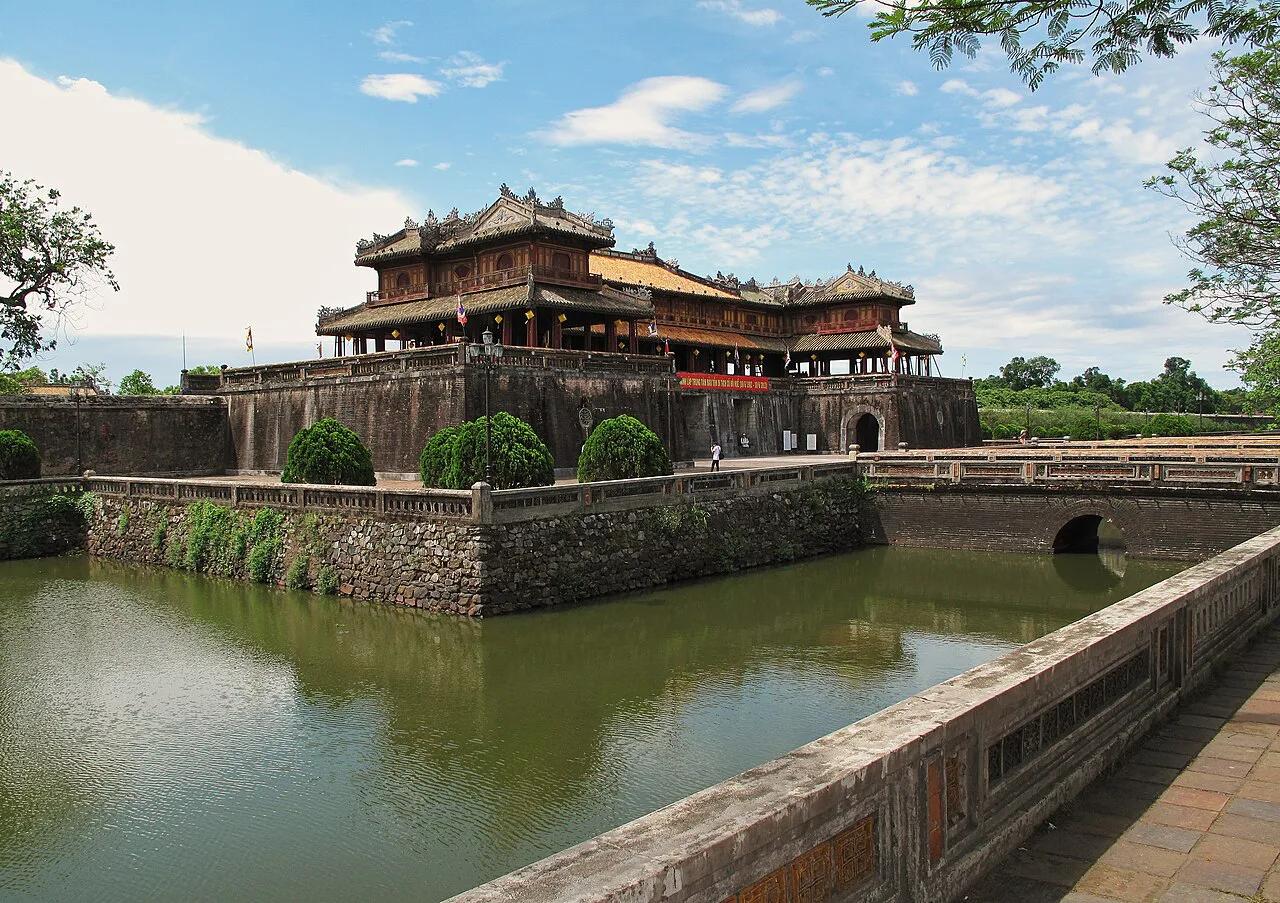
- Citadel: the whole walled historic area, roughly 2.5 x 2.5 km on the north bank of the Perfume River, ringed by moats and gateways.
- Imperial City (Imperial Enclosure): about 700 x 700 m in the Citadel's centre, where the royal family and senior officials lived and worshipped.
- Purple Forbidden City: the emperor's private residence inside the Imperial City. Little of it survives.
Is it worth it, and how long does it take?
Yes, if you can give it half a day. Our pick for most visitors is the full route. Thai Hoa Palace holds an exhibit that works as an introduction, and the Mieu Temple Complex is almost entirely restored. Expect ruins rather than intact palaces. French and American bombs destroyed much of the site, and some areas are being renovated. If you are short on time, cut the gardens and far corners first.
| Plan | Time | Stops | Best for | What to cut |
|---|---|---|---|---|
| Highlights | About 2 hours | Ngo Mon, Thai Hoa Palace, Long Galleries, Mieu Temple Complex | One-night stops, hot afternoons | Gardens, northwest corner, museum |
| Full route | About half a day | All twelve stops below | History fans, first-time visitors | Royal Treasury and Truong San Residence if tired |
| One day in Hue | Morning plus afternoon | Imperial City, then Royal Tombs | Travelers with one full day | Gardens and museum |
Tickets, opening hours and combination tickets
Prices and hours checked November 2026 against the official Hue Monuments Conservation Centre page and recent visitor reports. The official page lists 200,000 VND. Other recent guides quote 150,000 VND for adults and 30,000 VND for children. Budget for the higher figure and check the ticket window for the current rate. Opening hours are reported as 7 am to 6 pm daily, and they may shift by season. A combination ticket with the Royal Tombs exists, so ask at the ticket office before you pay twice. Royal Theatre performances run twice a day for an extra fee. Ask about them when you buy your entrance ticket.
Best time to visit
Go early or late. Shade is limited inside the walls, so midday heat and crowds are the main problems. Entering at 7 am gets you through Ngo Mon and Thai Hoa Palace before the heat builds. Late afternoon also works, but 6 pm closing leaves little margin for the full route. Tour groups tend to bunch along the central axis. We'd sequence the route so you reach the quieter eastern and western buildings while groups sit at the main halls. Local peak hours vary, so ask your hotel. A few cafes inside give you a cool break. Bring a sunhat.
Self-guided walking route
Start at the ticket office at the southern end, close to the river. Enter through Ngo Mon. This route follows the central axis, loops east, then heads west to Dien Tho and Mieu before the exit. Two extras see few visitors: Tu Vo Phuong Pavilion by Back Lake, and the Truong San Residence in the northwest corner. Add them only if you have energy left.
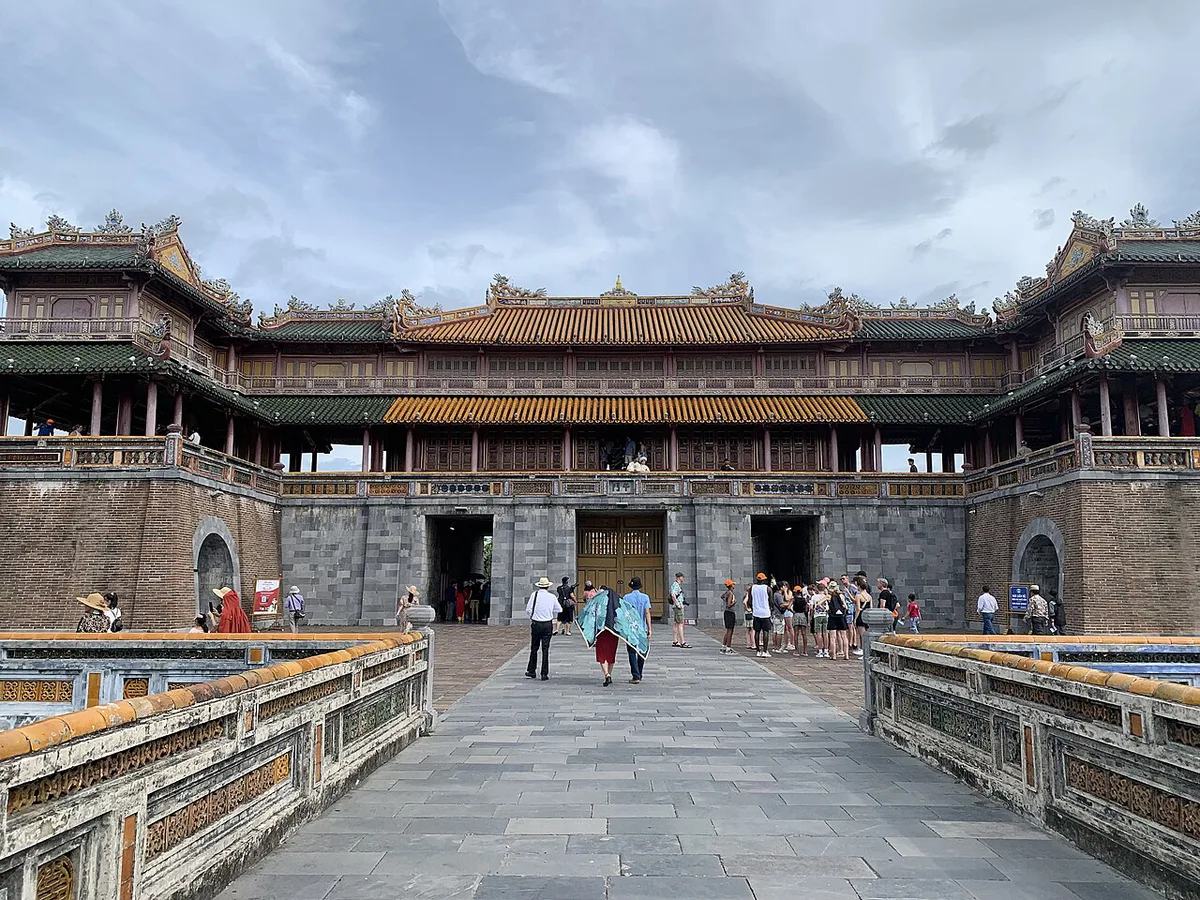
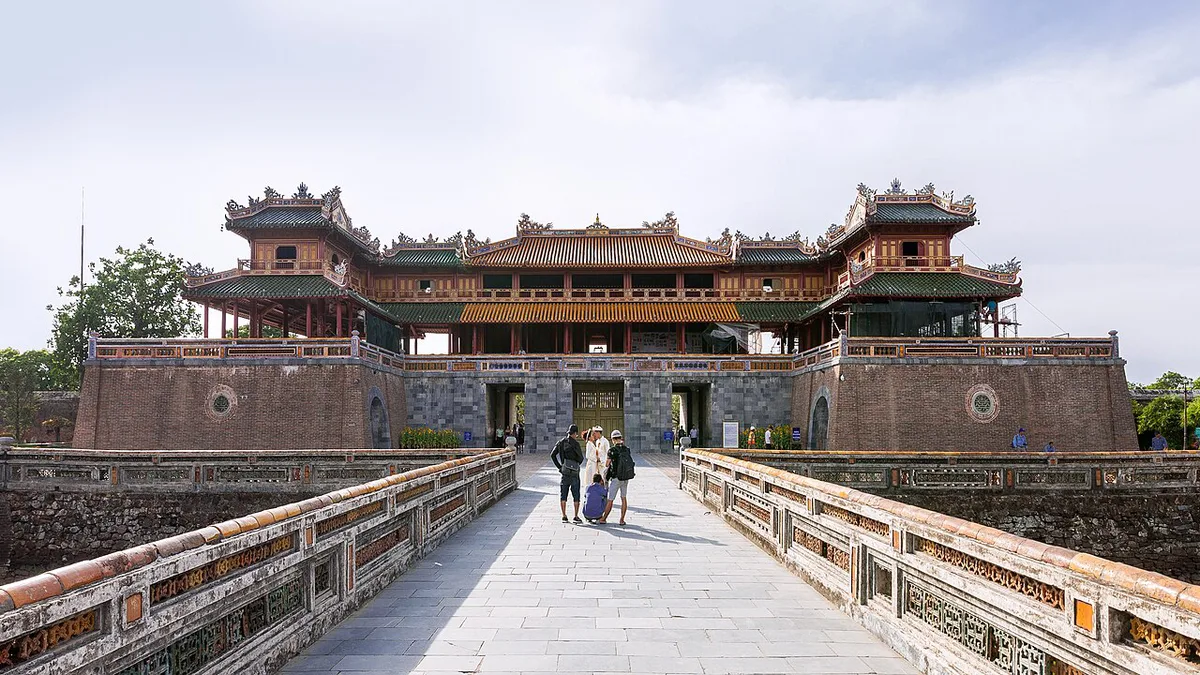
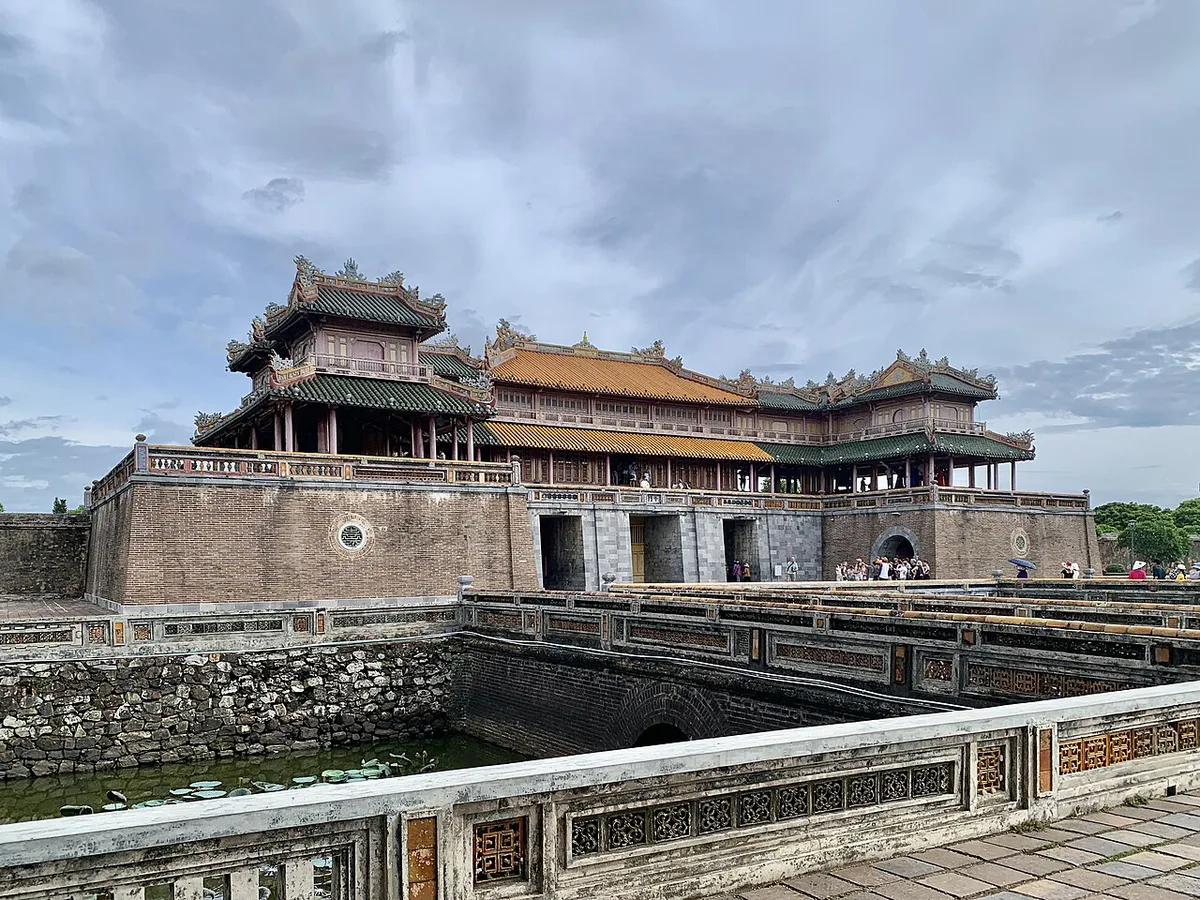
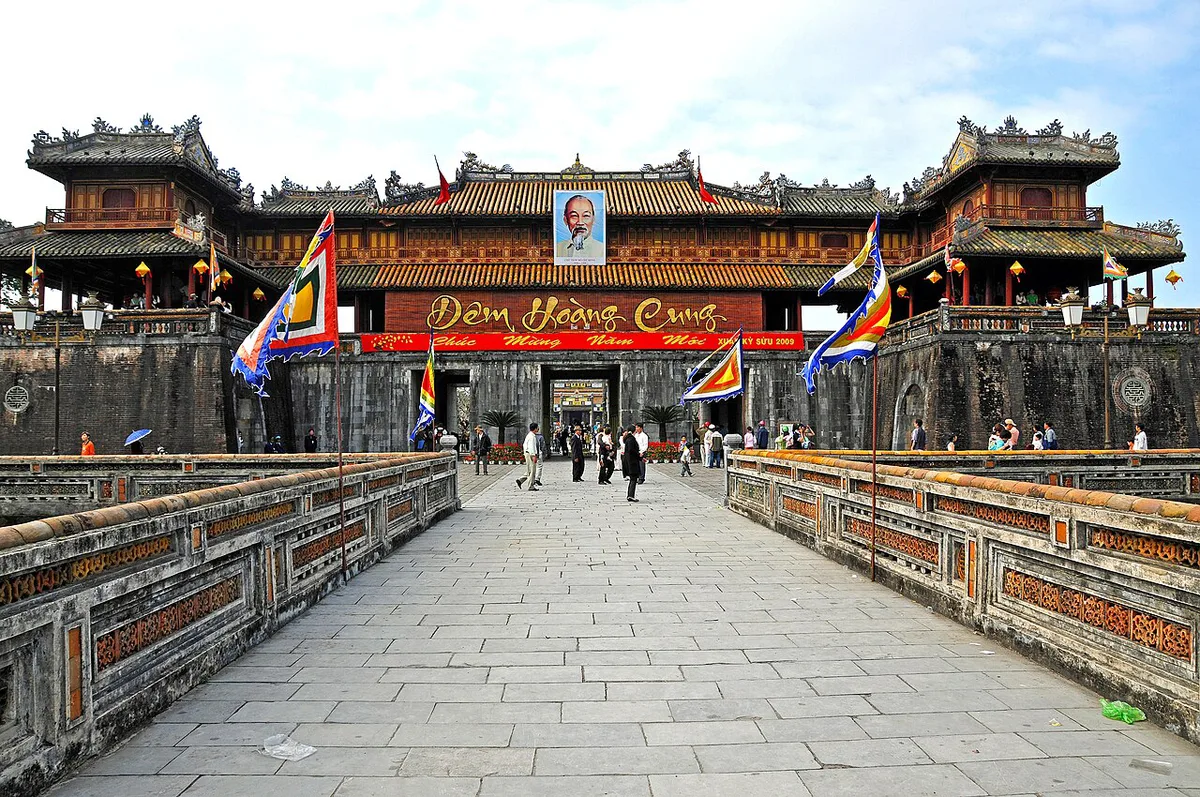
- Ngo Mon Gate: the main entrance. Only the emperor used the central archway. Climb up for a drum, a bell and a view over the grounds. Don't skip.
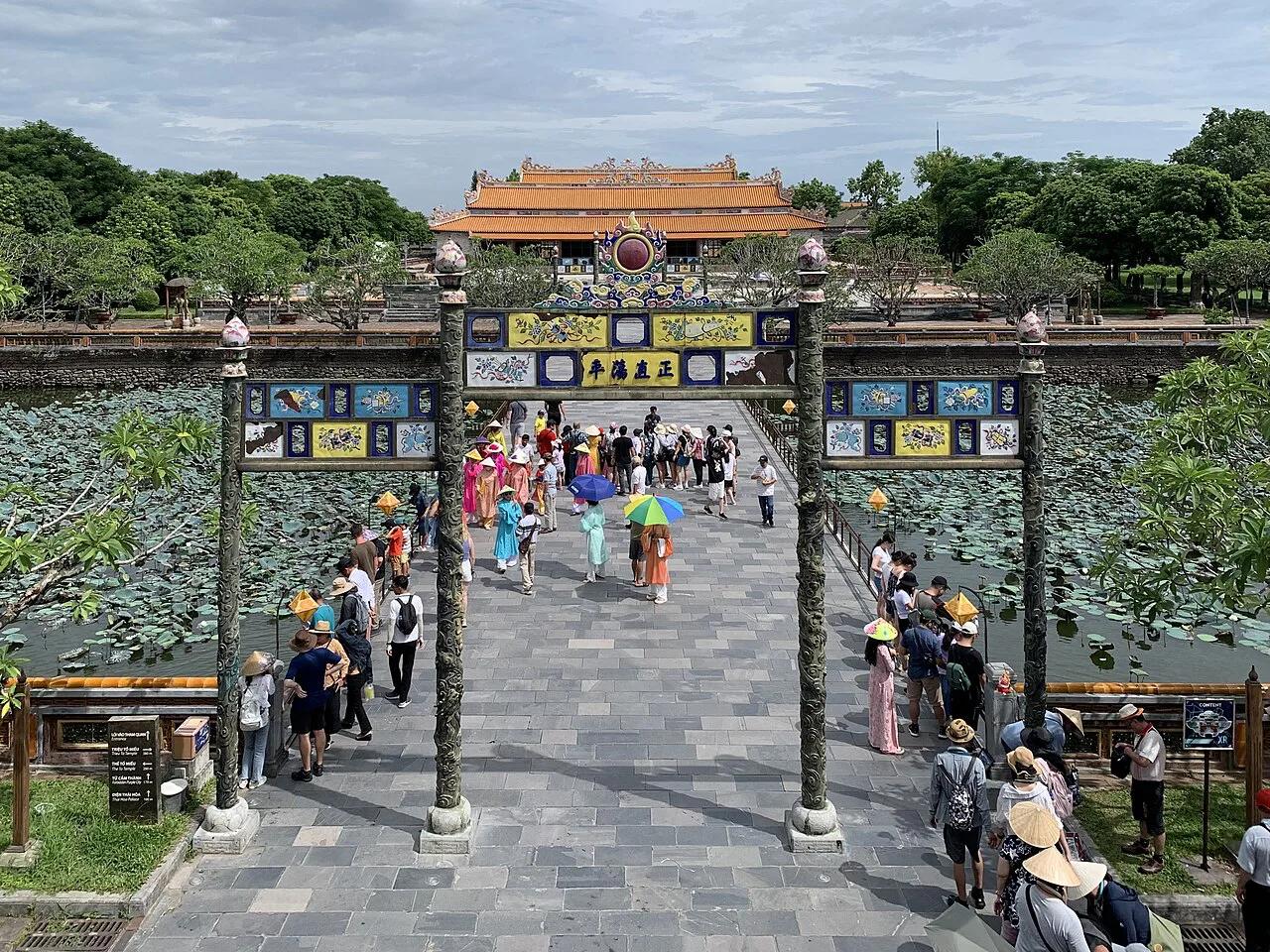
- Thai Hoa Palace: red columns and the throne, plus an exhibit on the site. Photos are not allowed inside. Don't skip.
- Mandarin Halls: two identical buildings flanking the courtyard, with photos and Buddha statues. Skip if short on time.
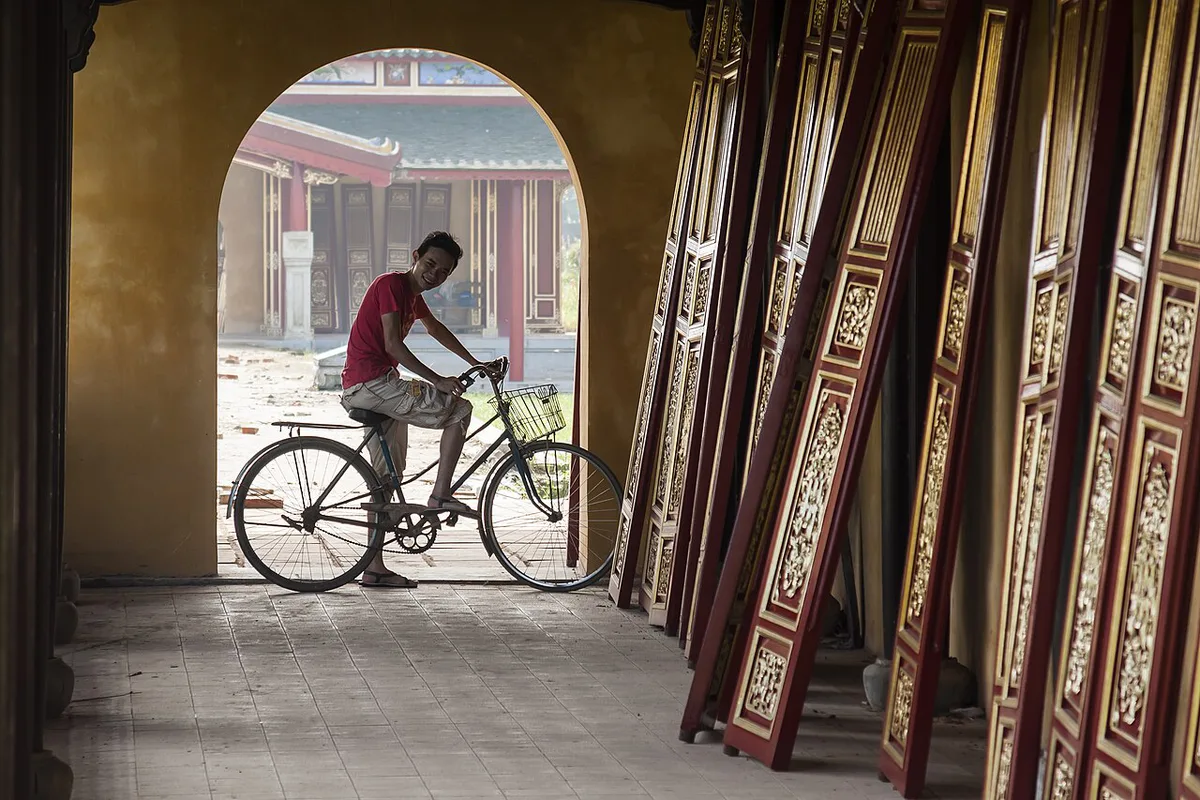
- Long Galleries of Can Chanh Palace: the palace is ruined, but the galleries are restored with red columns and gold carving. Walk one side.
- Purple Forbidden City: overgrown rubble and wall fragments. A short stop shows the scale of the loss.
- Emperor's Reading Room: a small building that survived largely intact. The exterior is the draw. Skip if short on time.
- Royal Theatre: displays of instruments and costumes. Skip the show unless music interests you.
- Co Ha Gardens: a lake pavilion and a viewpoint, with little shade. Skip in midday heat.
- Dien Tho Residence: the Queen Mother's home, mostly restored, with a cafe by a lily pond. A good rest stop.
- Mieu Temple Complex: in the southwest corner, almost entirely restored. Look for the nine bronze urns dating from 1835.
- Hien Nhon Gate: the eastern exit. You can leave here but not enter.
- Museum of Royal Antiquities: outside the moat, with chairs, clothing and jewellery. Skip if short on time.
Guided tour or go alone?
Signage inside is sparse, so a guide adds context you will not get from plaques. A private guide costs more than the entrance ticket, so ask for current rates before booking. We'd go self-guided if you like to set your own pace and can read ahead. We'd hire a guide if you have only one day, travel with children, or want the history explained. Guides can also shorten the route for hot days.
| Factor | Self-guided | Guided |
|---|---|---|
| Cost | Entrance ticket only | Ticket plus guide fee |
| Depth | Depends on your reading | Stories behind each hall |
| Flexibility | Full control of pace | Adjustable, but set meeting points |
| Heat and family fit | Rest when you like | Guide can plan shaded stops |
How to get there and where to stay
The ticket office is at the southern end of the complex, not far from the river. It sits about 2 km (roughly 1.2 miles) from the eastern central area where most hotels are. You can walk along the river and cross a bridge. A taxi or cyclo cuts the heat on the way back. Stay in that eastern central area for easy restaurants and short rides. Leaving through Hien Nhon Gate puts you near the Museum of Royal Antiquities. To return to the ticket office, follow the moat left.
Hotels in the eastern central area sit about 2 km (roughly 1.2 miles) from the ticket office, so an early 7 am walk avoids midday heat.
Combine it with the rest of Hue
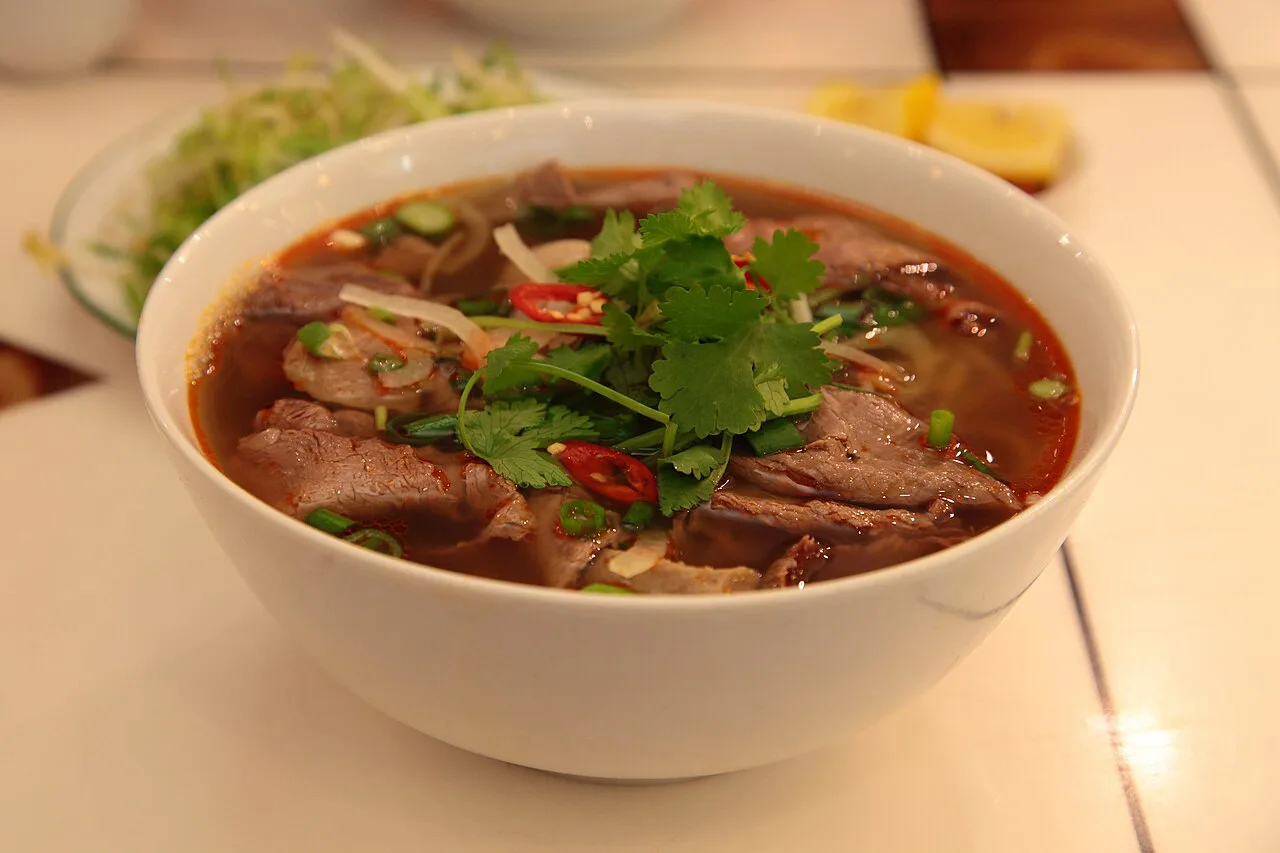
The Royal Tombs lie in the countryside south of the city and pair well with a second day. Use the combination ticket if you plan both. A Perfume River boat ride or a Thien Mu Pagoda stop fits an afternoon. Hue's court cuisine rewards a dinner, with bun bo Hue and banh khoai as starting orders. Court music has its own heritage status, and UNESCO's Nha Nhac entry explains it. For more ideas, see Hue's wider sightseeing list. After dark, try evening options along the river. To dodge crowds, explore quieter corners of Hue. A full-day DMZ trip is a different day entirely, so it competes with a tombs day for time. Quang Tri's tourism site lists what is open on that route.
Budget 200,000 VND for the Imperial City, and ask about the Royal Tombs combination ticket before paying twice.
Moving on from Hue
Hoi An is about 120 km (roughly 75 miles) and 3 hours by road. Public transport between the two is not convenient. Most travelers book a car with a driver and cross the Hai Van Pass. Heading north, trains take about 11 hours to Ninh Binh and 13 hours to Hanoi. Overnight sleepers save a hotel night. One booking agent reports that the official rail site needs a Vietnamese credit card, so check Vietnam Railways before you plan around it.
Common mistakes
A few errors cost visitors the most time and comfort.
- Arriving at midday: heat and tour groups peak together, and shade is scarce.
- Expecting the Purple Forbidden City to be intact: it is mostly overgrown ruins.
- Skipping the Thai Hoa Palace exhibit: it is the best orientation on site.
- Planning only for photos: Thai Hoa Palace bans them.
- Ignoring closures: renovations can block areas, so ask at the ticket office.
Frequently Asked Questions
What is Hue known for?
Hue is known for its Imperial City and the Royal Tombs in the surrounding countryside. It was Vietnam's capital under the Nguyen dynasty from 1802 to 1945. Its court cuisine, including bun bo Hue, is also a draw.
Useful notes for your Vietnam trip
Optional updates to our guides.
You might also like
Continue reading
More guides you'll find useful