Hoi An Leather Shops: How to Choose, What to Pay
Compare Hoi An leather shops, spot real leather, understand custom-bag prices and timelines, and avoid common tourist-shop traps.
On this page
Last updated November 2026. Hoi An leather shops fall into three groups: ready-made market stock, small custom workshops and fixed-price brand shops. Leather is a less-guarded category than tailoring here, so quality varies more from door to door. This guide shows how to tell the groups apart, what a custom bag costs in dong and how to get it home.
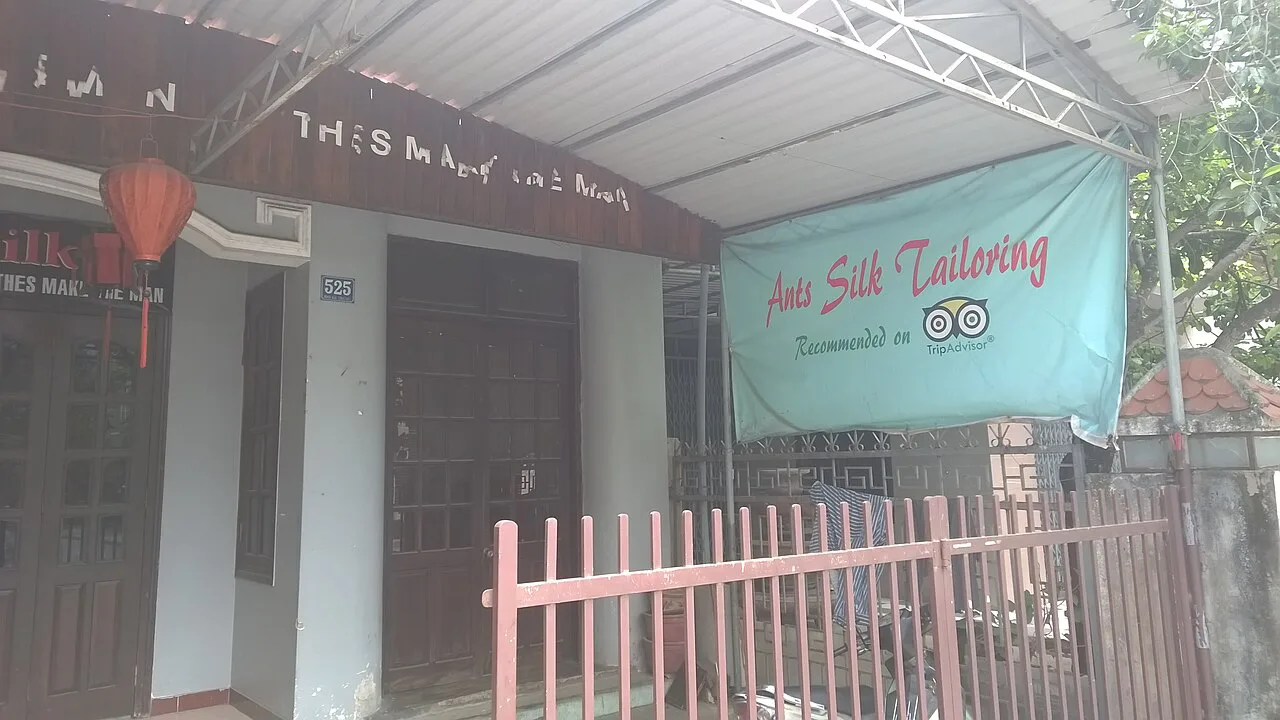
Featured image: Chainwit., CC BY 4.0, via Wikimedia Commons.
Hoi An Leather Shops at a Glance

Hoi An is known for tailors and shoemakers, and leather bags sit in the same shopping streets. Cobblers and leather stalls cluster along Tran Phu, Nguyen Thai Hoc and Le Loi streets and in the Ancient Town lanes. Short on time? Buy a ready-made piece from a fixed-price shop. Want a specific size, lining or pocket layout? Commission a workshop. Reading this while also planning clothes? Start with our tailor shop guide, then come back for bags. The table compares the four main options.
| Shop type | Customization | Price signal | Lead time | Risk | Best for |
|---|---|---|---|---|---|
| Market and tourist stalls | Very limited | Opening quotes run high; haggling expected | Same day | Thin leather, spray-painted finish | Quick souvenirs |
| Custom workshop | Size, leather, lining, pockets | Mid-range, quoted per design | Ask the shop | Glued seams, plastic zippers if you do not specify | Travelers who want one durable bag |
| Brand or e-commerce shop | Small | Fixed web prices | Ready to take or ship | Higher brand overhead | Buyers who dislike haggling |
| Make-your-own workshop | You build it with guidance | Class fee; ask the workshop | One session; ask the workshop | Simple designs only | Hands-on travelers |

Types of Leather Shops in Hoi An and How to Choose
Tourist shops are easy to spot. They have crowded displays, piles of ready-made bags and eager sales staff. One local guide reports that these shops mostly stock thin Chinese leather that ages poorly. Real artisan workshops are smaller and quieter. They usually work in small batches and talk through your design before quoting. Ask which leather they use. Vietnamese and Thai hides are described as solid choices for bags. Lao leather turns up less often. Commissions are the other filter. Local guides report that a guide or hotel referral can add 20–30% to the price. That figure is unverified, so treat it as a reported practice. Compare two or three shops on your own before accepting a referral. The Central Market stalls make a useful contrast, because their ready-made stock shows what a workshop's custom work should beat.
Local guides report a referral can add 20–30%, so test any quote against the 1,200,000–1,700,000 VND starting point for a small basic bag.
How to Tell Real Leather from Poor Quality
Three quick checks work in any shop. First, touch. Real leather has a slightly irregular surface. A perfectly uniform, plastic-smooth feel is a warning sign. Second, smell. Real hide smells distinctly of leather, while synthetics smell of plastic. Third, ask the seller to show you a cut edge or an unglued seam. Skip any flame test. Holding a lighter to a bag is unsafe, unnecessary and rude in a small shop. A seller who refuses to discuss the material at all is a stronger signal than any test. Some shops mix real leather with synthetic linings or small panels, so inspect the inside as well as the outside.
- Full-grain: keeps the natural surface, is thicker and develops a patina with age.
- Genuine leather: real hide but a step down, and it will not last as long.
- Corrected-grain: sanded and coated with a synthetic layer to hide flaws. Fine for an occasional bag, weak for daily use.
Custom Leather Bags in Hoi An: Cost, Timeline and Process

Prices and hours checked November 2026; the ranges below are reported by one local guide rather than posted by shops. A small basic custom bag starts around 1,200,000–1,700,000 VND. A good-quality bag from a reliable workshop runs about 1,700,000–3,000,000 VND. Large travel or laptop bags, or bags with many custom details, reach 2,500,000–3,500,000 VND and more in full-grain leather. Tourist shops sometimes open with a quote roughly double the fair price for a medium bag. Why do the numbers differ so much? Leather grade, how much you customize and brand overhead all change the quote. Lead times are not published. Ask each shop how many days it needs and whether a fitting or revision is included. Order early in your stay so a revision does not collide with your flight. Pay a deposit only against a written spec. Photograph the agreed design and ask about refunds before you pay.
Laptop bags can reach 2,500,000–3,500,000 VND, so insist on solid metal buckles, since cheap aluminum ones snap under that weight.
- Agree size, leather type, lining and hardware in writing.
- Take a photo of the sample or sketch you approved.
- Ask the refund and revision policy up front.
- Pay a deposit, not the full amount, until pickup.
- Inspect zippers, seams and lining before you hand over the balance.
Mistakes That Make a Bag Fall Apart
Five details decide whether a bag survives a year. Zippers break first, so specify metal ones. Buckles and fastenings come next. Cheap aluminum buckles snap under the weight of a laptop, so ask for solid metal hardware. Stitching matters because some shops glue seams instead of sewing them. Insist on stitched seams. Surface finish is another trap. Spray-painted leather chips and fades, so ask whether the color is natural or dyed through. Finally, open the bag and look at the lining. Thin fabric lining is where shops often cut corners. Strong canvas or leather holds up better.

- Walk away if the seller will not name the leather.
- Walk away if the zipper is plastic and the shop will not swap it.
- Walk away if seams look glued or the finish rubs off on a fingertip.
- Walk away if the quote drops sharply the moment you head for the door.
Shops Worth Checking
Treat any shortlist as a starting point, because Hoi An shops change address and owners. Da Bao lists a Tran Phu street address on its own site. Blue Lotus runs a leather shop plus a workshop-booking page, and its site shows ready-made bags and wallets with prices in US dollars. Friendly Leather Bags Hoi An appears in one local guide with a Phan Boi Chau address and a reported refund promise. Treat that promise as unconfirmed until the shop puts it in writing. Atelier Hoi An is a reported option for ordering from home. Whichever name you pick, confirm its current address and opening hours on its own site or map listing. Then apply the checklist above rather than trusting any single recommendation.
Make-Your-Own Leather Workshop Option

Blue Lotus is the one source in our research that points to a hands-on leather-making experience, through a Book Workshop link on its site. Beginner guides on that site focus on simple items such as a wallet. Class length, price and group size are not published in what we reviewed. Ask before booking, and choose a small piece you can pack easily. A workshop suits travelers who want a story attached to the souvenir. It does not suit anyone who needs a finished, structured bag in a specific size.
Planning Your Shopping Route and Getting It Home
A half-day works well. Start on Tran Phu street and browse the Ancient Town lanes for ready-made stock. Add Nguyen Thai Hoc and Le Loi streets for cobblers and workshops. Pair this with a tailor visit so fittings and bag pickup land on the same day. Our guide to vetted tailor options helps you sequence that. Finish at a stall of lantern shops for souvenirs that pack flat. Carry-on fit and weight limits depend on your airline, so check its baggage policy before you buy a large bag. Customs rules for leather vary by country. Read the national tourism site for travel basics and your home customs agency for import rules. Ask the shop about shipping if the bag is too big to carry. For current Ancient Town visiting information, see the Hoi An heritage portal. Back home, condition leather occasionally and let it dry fully, because Hoi An's humid climate encourages mold.
Useful notes for your Vietnam trip
Optional updates to our guides.
You might also like



Continue reading
More guides you'll find useful