Cu Chi Tunnels Guide: Ben Dinh vs Ben Duoc
Plan your Cu Chi Tunnels day trip from Ho Chi Minh City: Ben Dinh vs Ben Duoc, getting there, what the tunnel run is like and who should skip it.
On this page
Last updated November 2026: the Cu Chi Tunnels sit in Cu Chi District, northwest of Ho Chi Minh City, and most visitors see them on a half-day trip. Our advice is to go, choose between Ben Dinh and Ben Duoc before you book, and skip the tunnel run if tight spaces worry you. If you have more than one day, our more day-trip ideas show what else fits around it.
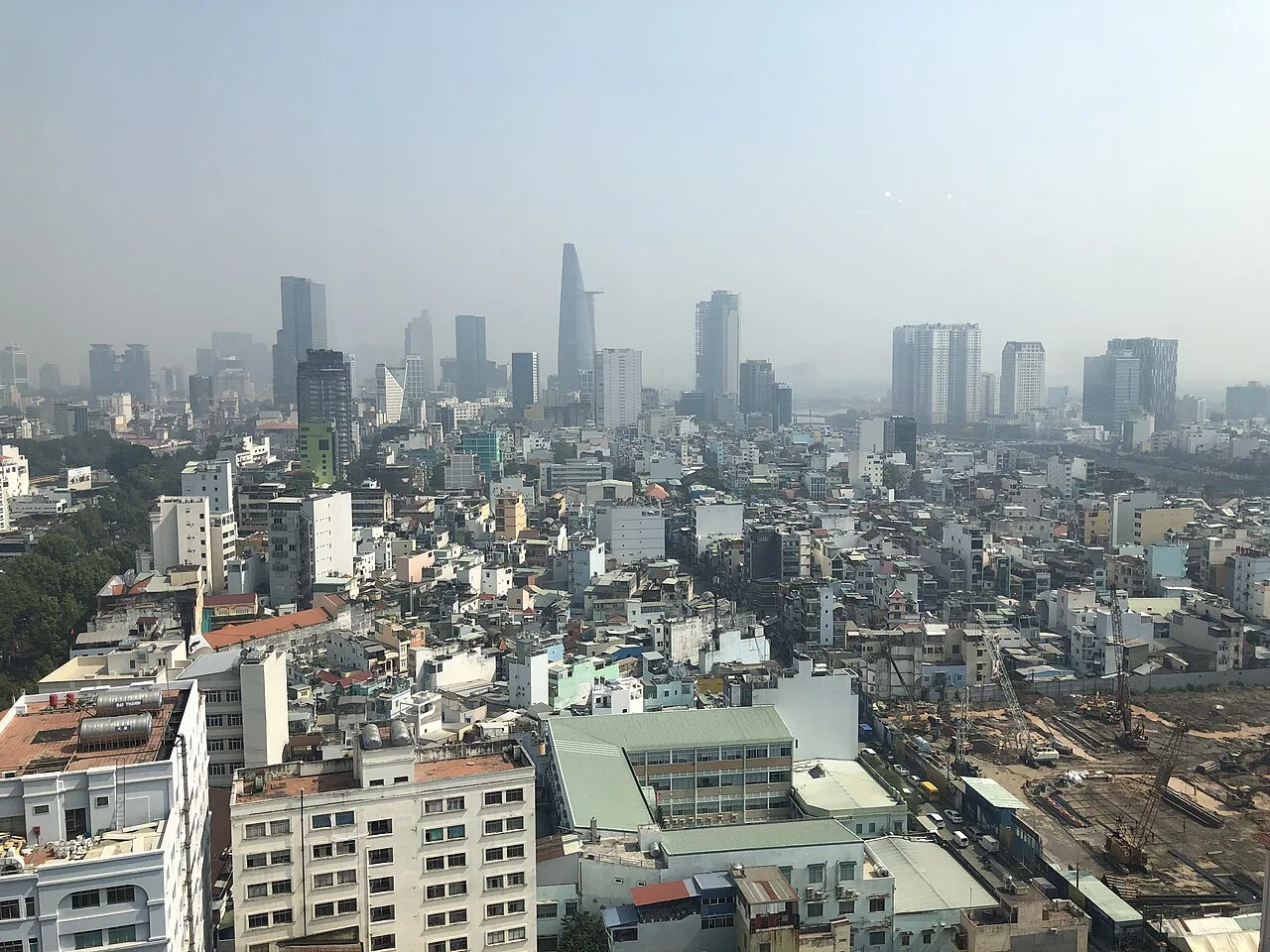
Featured image: dronepicr, CC BY 2.0, via Wikimedia Commons.
Cu Chi Tunnels at a Glance

Cu Chi District, northwest of Ho Chi Minh City, holds a wartime tunnel network that is now a memorial park. Two sections are open to visitors: Ben Dinh and Ben Duoc. Ben Dinh is closer to the city and draws most tours. One 2022 traveler account describes a 32.4 km drive that felt long in weekday-morning traffic. That trip was back in the city around 2 pm, so a half-day is a fair planning block. Our pick for a first visit is a guided half-day tour, because guides explain the traps and cross-section maps that signs skip. Independent travelers can manage it, but traffic decides the day. For official visitor information, start with Vietnam's national tourism site.
- Where: Cu Chi District, northwest of Ho Chi Minh City
- Open sections: Ben Dinh and Ben Duoc
- Time to budget: about half a day
- Best for: history-minded visitors who can handle heat and tight spaces

Ben Dinh vs Ben Duoc: Which Site to Visit
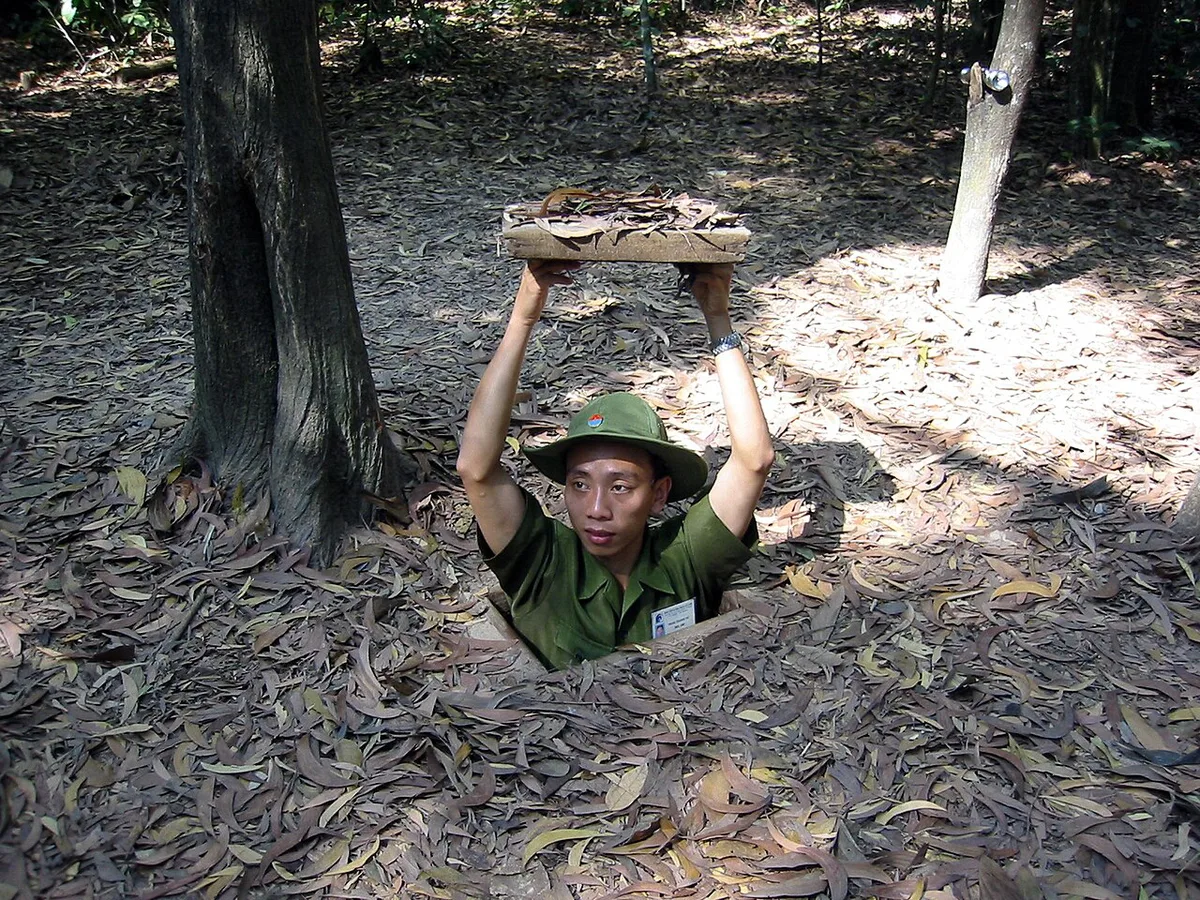
Both sites sit inside the memorial park network, and both show booby-trap displays. Low-power lights run through the tunnels at each. Ben Dinh has reconstructed tunnels, and some sections were made wider and taller for tourists. Ben Duoc is said to hold more of the original system. We'd choose Ben Dinh if you have one half-day and want the easiest transfer. We'd choose Ben Duoc if original tunnel matters more than convenience. Check which site a tour visits before you book.
| Factor | Ben Dinh | Ben Duoc |
|---|---|---|
| Distance from the city | Closer to Ho Chi Minh City | Farther out than Ben Dinh |
| Tunnels | Reconstructed, with some sections widened for visitors | Holds part of the original tunnel system |
| Displays | Booby traps, restored underground rooms, low-power lighting | Booby traps and low-power lighting |
| Best for | First-timers with one half-day | Visitors who value original tunnel over convenience |
| Access | Most tours stop here | Ask the operator whether it is included |
How to Get to the Cu Chi Tunnels From Ho Chi Minh City
Getting there is mostly a traffic question. One 2022 traveler account puts the drive at 32.4 km, yet it felt slow on a weekday morning. Leave early and plan to be back in the city by early afternoon. A guided tour handles the driving and the entry, and we'd book that first. Choose independent transport only if you want control over timing.
- Guided half-day tour: transport, entry and a guide's commentary in one booking. Best for first visits.
- Private car: you set the start time and can add a second stop. Agree the return time with the driver.
- Motorbike: wear a helmet and carry insurance. Heavy traffic on the way out makes this a confident-rider option.
- Public bus toward Cu Chi District: possible, but check the route number, the last return bus and the stop nearest your chosen site.
- Ride-hailing app: workable for the outbound leg. Work out how you will find a car for the return before you leave.
Costs, Tickets and Opening Hours
Prices and hours checked November 2026: we found no published ticket, tour or transfer price we can quote. Check ticket and opening-hour details on the Ho Chi Minh City tourism department site or with the park office.
What Happens on a Visit
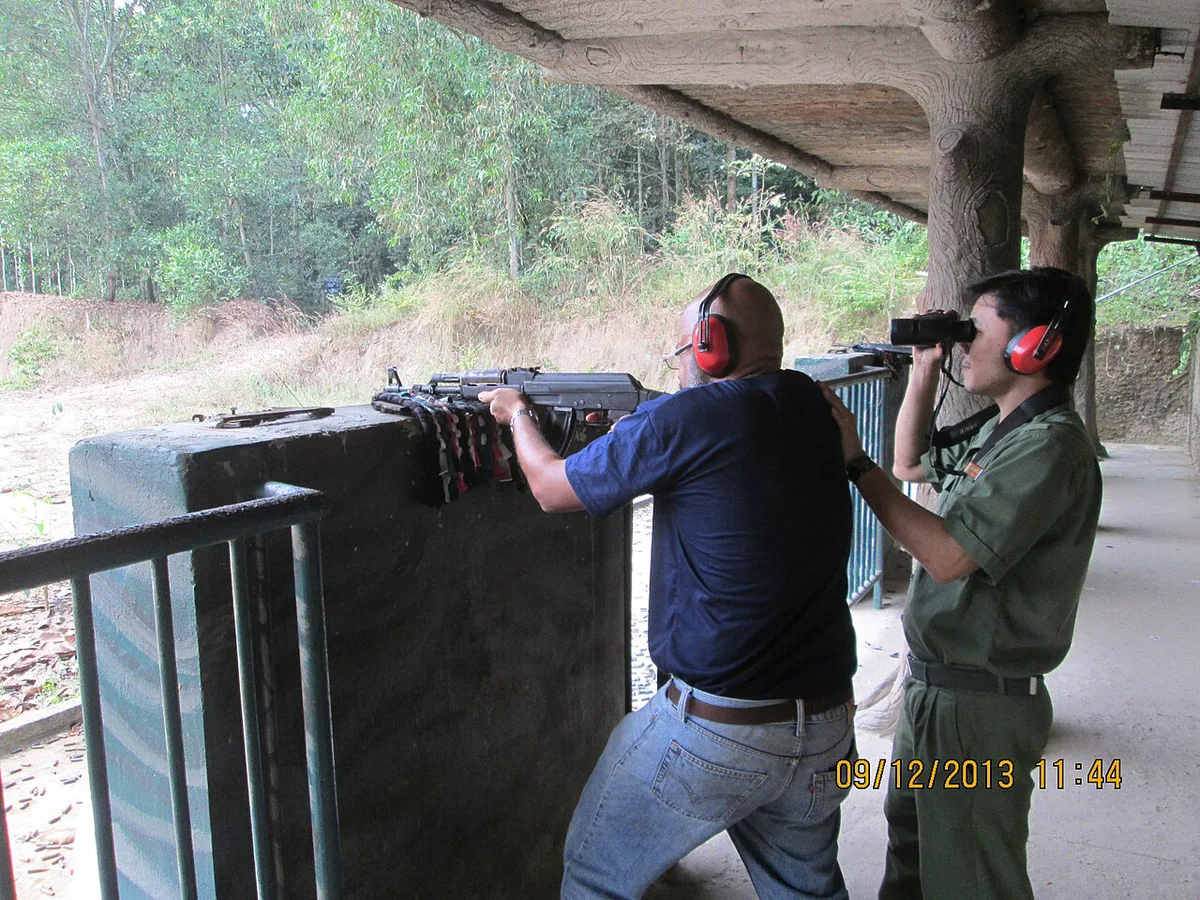
Tours open with maps and a guide's talk on life underground. Demonstrations follow: a trap-door pit with spikes, doors that swing into an intruder, and traps that pierce the foot. Breathing mounds with hollow bamboo show how air reached the tunnels. Dioramas in underground rooms show people cooking, resting and melting scrap into ammunition. The tunnel run comes next, covered in its own section below. A firing range sits beside a rest stop and cafe. A 2022 traveler report put live rounds at ₫55,000 to ₫60,000 each, with a minimum of 10. Treat that as a dated figure and ask for current rates. Some visitors find a shooting range beside a memorial uncomfortable. Others see it as part of the site's tourism reality. Our view is to keep the range short or skip it. Give your attention to the maps and trap demonstrations instead. One tour ended with steamed tapioca and pandan tea, a food soldiers relied on.
The Tunnels in the War: A Short History
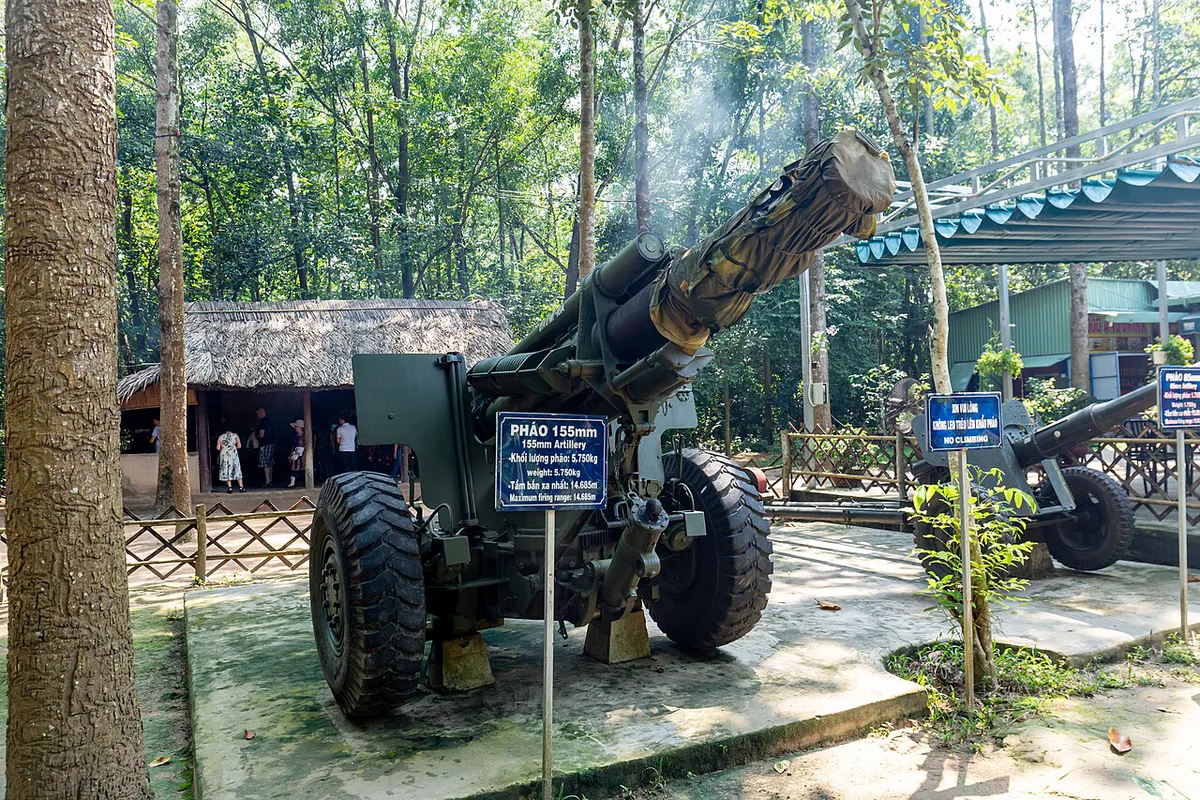
Digging began in the late 1940s during the war against French rule. Crews worked by hand, a short distance at a time. Expansion followed in the 1960s as US forces built up in Vietnam. Sources differ on size. Some accounts cite about 250 km at the network's peak, while others describe a 121 km complex. Treat both as estimates. Life underground was hard. Air, food and water were scarce, and malaria was rampant. Operation Crimp began on 7 January 1966, with B-52 bombing and about 8,000 troops. Allied troops found it hard to clear the tunnels. US command then trained volunteers, known as tunnel rats, to search alone with a handgun, a knife and a flashlight. Operation Cedar Falls in 1967 used about 30,000 troops. In early 1968 the tunnels served as a base for the Tet Offensive. At least 45,000 Vietnamese are said to have died defending them.
Is the Tunnel Crawl for You?
Visitors can take on a 150 m tunnel section. One traveler account describes a crouch-walk at about table height rather than a true crawl. Sections open to tourists have dim lighting, modern ventilation and concrete-lined walls. Openings along the route let people leave if they stop. Entrance holes are narrow, and a traveler with wider hips needed help getting out. Wear closed shoes and light clothing, and carry water. Ask whether the run is still offered when you book.
- Skip it if you are claustrophobic.
- Skip it if you have claudication or limited mobility.
- Skip it if you have a larger frame and worry about narrow entrance holes.
- Skip it with small children.
- You can still enjoy the maps, demonstrations and displays above ground.
Combining Cu Chi With Other Day Trips
Cu Chi plus the Mekong Delta in a single day looks tight. One traveler visited My Tho, 70.5 km out, the day before Cu Chi, 32.4 km out, and called a same-day combination impractical. Some operators sell a full-day combo. Our advice is to give each trip its own day, starting with a separate Mekong Delta outing. Cu Chi with the Cao Dai Temple stop is a more realistic pairing, though it still makes a long day. After a heavy history visit, Can Gio's mangroves make a lighter nature day. In the city, the War Remnants Museum is a natural afternoon follow-up.
Practical Tips and Common Mistakes
Bring water and cash for snacks and souvenirs. Wear closed shoes and modest clothing, since this is a memorial site. Follow your guide in group demonstrations, and keep voices down in the displays. Avoid these common mistakes.
Mekong Delta outings reach My Tho at 70.5 km out, more than twice the 32.4 km to Cu Chi, which is why same-day pairing is tight.
- Starting late and driving into traffic.
- Wearing sandals on uneven ground and in the tunnel.
- Booking an over-ambitious combo day.
- Assuming every tour visits Ben Duoc.
- Treating the firing range price as current.
Frequently Asked Questions
Are the Cu Chi Tunnels real?
Yes. They are a real wartime network that Vietnam preserved as a memorial park after reunification. Some Ben Dinh sections are reconstructed or widened for visitors.
Is it worth going to Cu Chi Tunnels?
For most history-minded visitors, yes. A guided half-day gives context that signs do not. Skip it if you only have one day and want several stops.
Useful notes for your Vietnam trip
Optional updates to our guides.
You might also like


Continue reading
More guides you'll find useful