Cao Dai Temple Tay Ninh: Day Trip from Ho Chi Minh City
Visiting the Cao Dai temple in Tay Ninh from HCMC? Compare getting there, pick a ceremony time, and learn the dress rules. Plus the Cholon alternative.
On this page
Last updated November 2026: the Cao Dai temple most visitors mean is the Holy See (Toa Thanh Tay Ninh), roughly 90 to 95 km northwest of Ho Chi Minh City. Cholon in District 5 has a far smaller Cao Dai temple that works as a short in-city stop. If you are still choosing a destination, compare nearby day-trip options first, then use this guide to plan the Tay Ninh run.
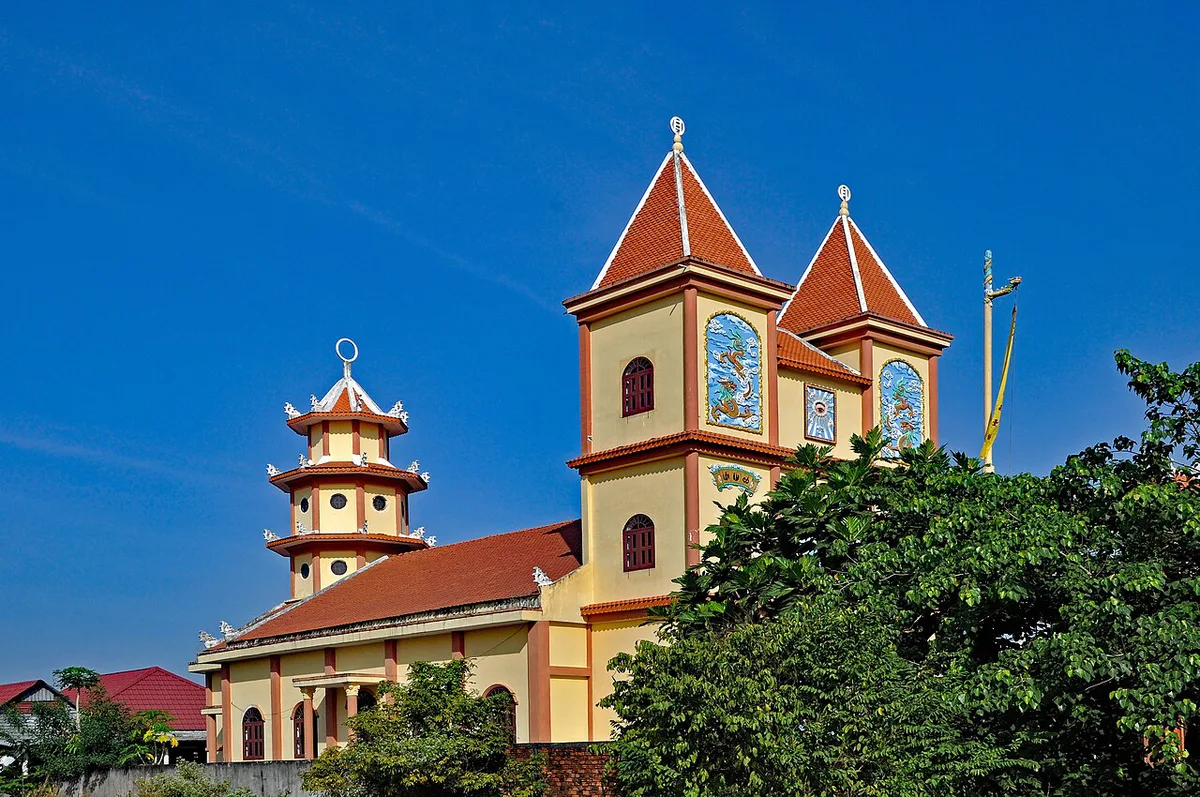
Featured image: Welsh-anni, CC BY-SA 3.0, via Wikimedia Commons.
Cao Dai Temple at a Glance: Holy See in Tay Ninh vs Cholon
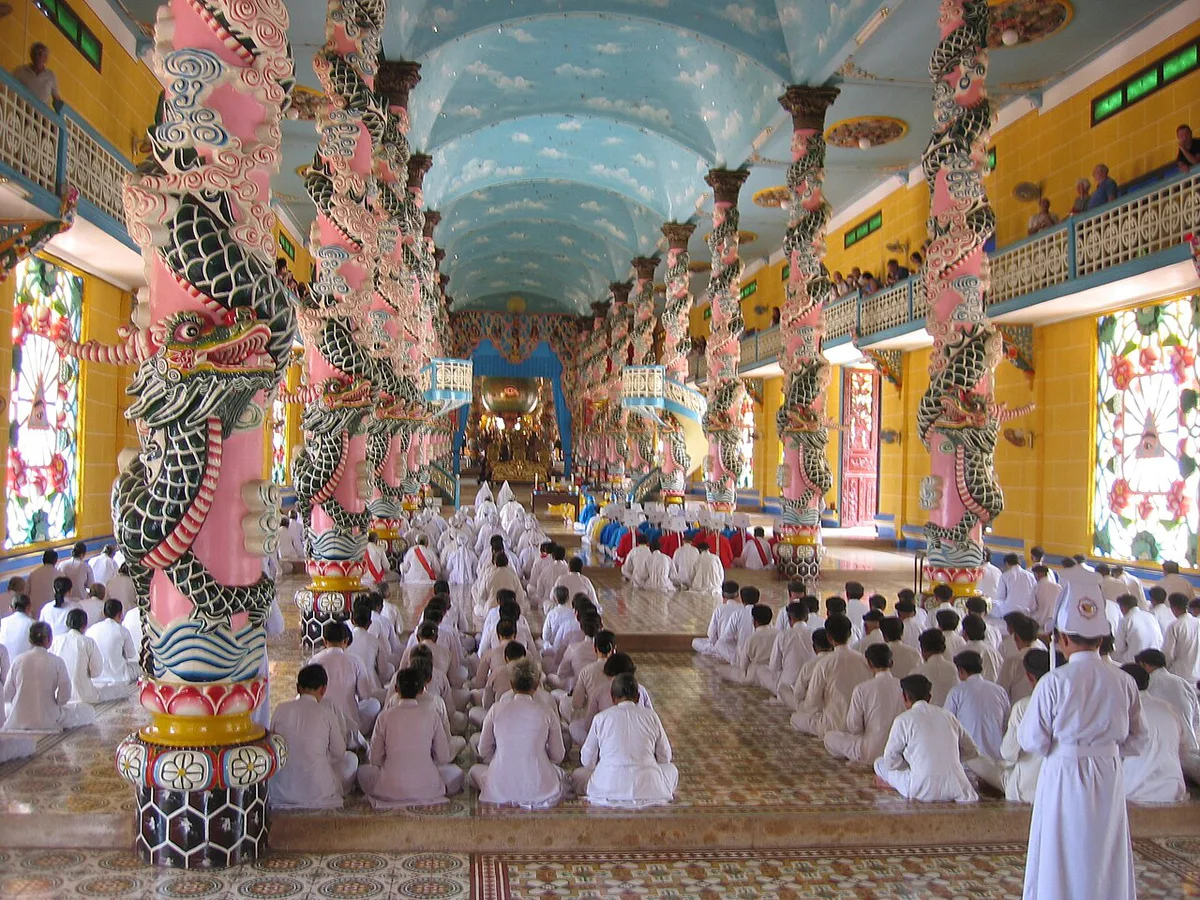
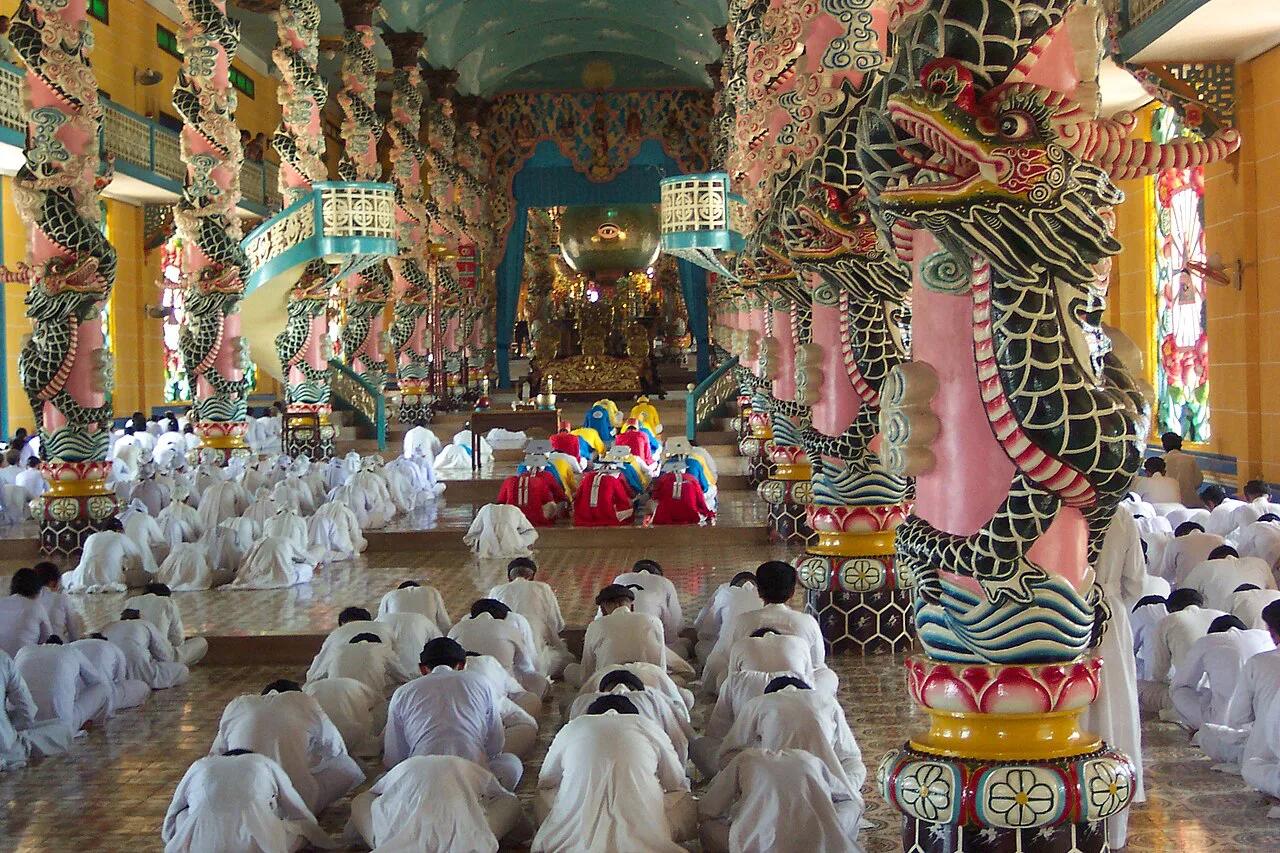
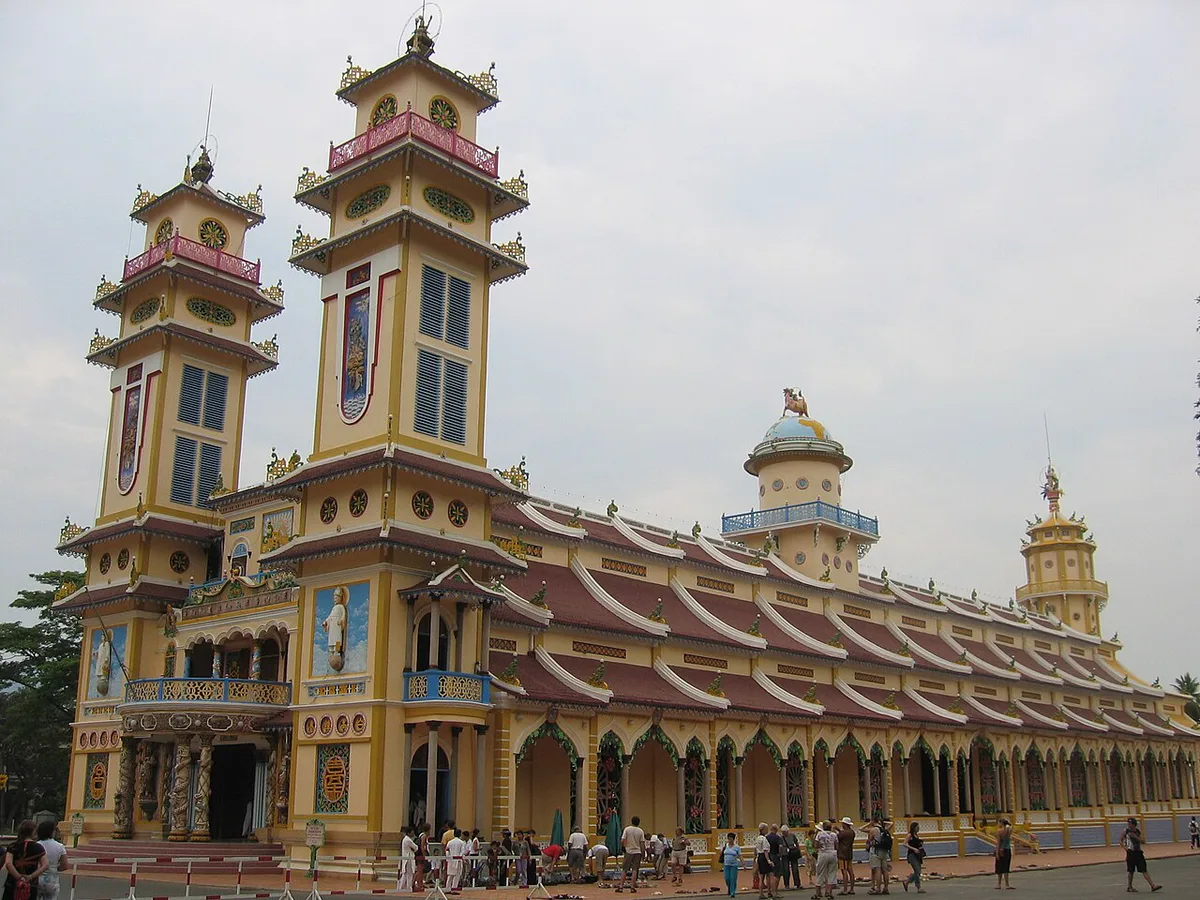
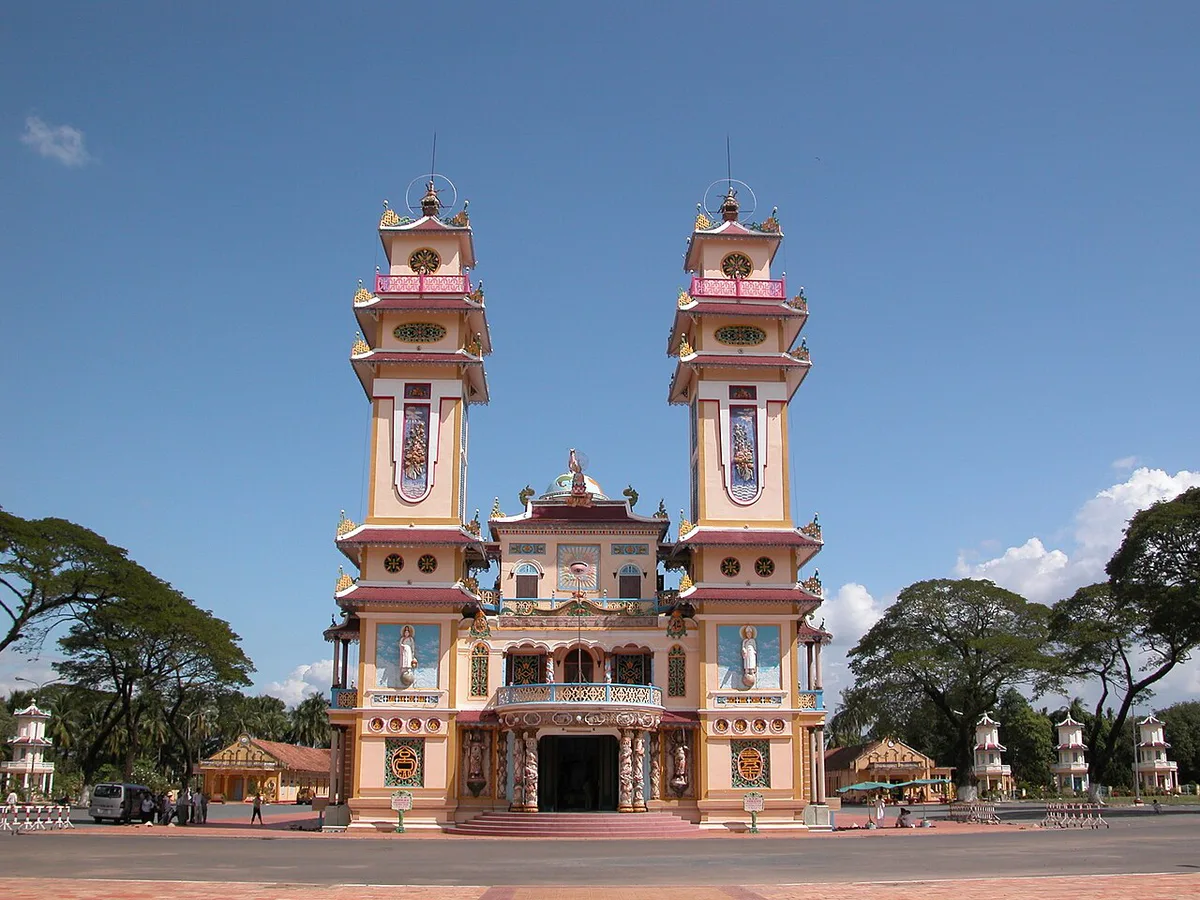
Caodaism is a Vietnamese religion founded in 1926. It draws on Buddhism, Taoism, Confucianism and Christianity, and its symbol is the Divine Eye. Ngo Van Chieu, a French-era civil servant in Cochinchina, reported his first visions of that eye in 1921. Builders worked on the Holy See from 1933 to 1955. Pastel towers, dragon-wrapped columns and a painted sky ceiling make it one of the most distinctive religious sites near Ho Chi Minh City. Pick the Holy See if you have a full day and want to watch a ceremony. Pick the Cholon temple if you only have an hour or two inside the city.
| Holy See, Tay Ninh | Cholon temple, District 5 | |
|---|---|---|
| Distance from the city | About 90 to 95 km northwest | Inside Ho Chi Minh City |
| Scale | Largest Cao Dai site, full ceremony hall | Much smaller prayer hall |
| Ceremony access | Four daily ceremonies, balcony viewing | Not a ceremony destination |
| Time needed | Most of a day | One to two hours |
| Cost | Tour or transport cost; own entry fee unconfirmed | Free, donations welcome |
How to Get From Ho Chi Minh City to the Cao Dai Holy See
A limousine van to Tay Ninh City takes about 2.5 to 3 hours. From there a taxi covers the last 10 to 15 minutes to the temple gates. A private car skips the transfer but follows the same road. A combined Cu Chi and Cao Dai group tour is the cheapest packaged option, with the trade-offs covered below. Riding a motorbike yourself is possible but carries the highest road risk of the four, so treat it as an option for experienced riders only. Work backwards from your chosen ceremony and leave generous buffer for city traffic on the way out.
| Option | Door-to-door time | Cost | Flexibility | Ceremony timing |
|---|---|---|---|---|
| Limousine Van plus taxi | About 2.5 to 3 hours, plus a 10 to 15 minute taxi | Two separate fares | Medium; fixed van departures | You control arrival |
| Private car | Same road, no transfer | Highest of the four | High | You control arrival |
| Cu Chi and Cao Dai group tour | Full-day schedule | From 150,000₫ per person, per a published listing | Low | Set by the operator |
| Self-ride motorbike | Depends on traffic and rider | Fuel and rental | High | You control arrival, but higher risk |
- Choose the van if you want a cheap, flexible day.
- Choose a private car if you travel as a family or want a firm noon arrival.
- Choose the group tour only if it includes the ceremony.
Ceremony Times and the Best Time to Go
Cao Dai worshippers hold four daily ceremonies at 6 AM, 12 PM, 6 PM and midnight. Noon is the most popular slot and the easiest to reach on a day trip. Aim to be at the temple 15 to 20 minutes before it starts. That gives you time to remove your shoes, climb to the upper balcony and find a spot. Visitors watch from that balcony, which looks over the whole hall. For a noon start, count back from the arrival time: about 3 hours by van, then 10 to 15 minutes by taxi, then the 15 to 20 minute buffer. Departures from the city therefore need to be early morning. The 6 AM ceremony needs a very early start or a night in Tay Ninh. Photographers sometimes prefer it for the soft morning light on the pastel towers.
Dress Code and Etiquette for First-Time Visitors
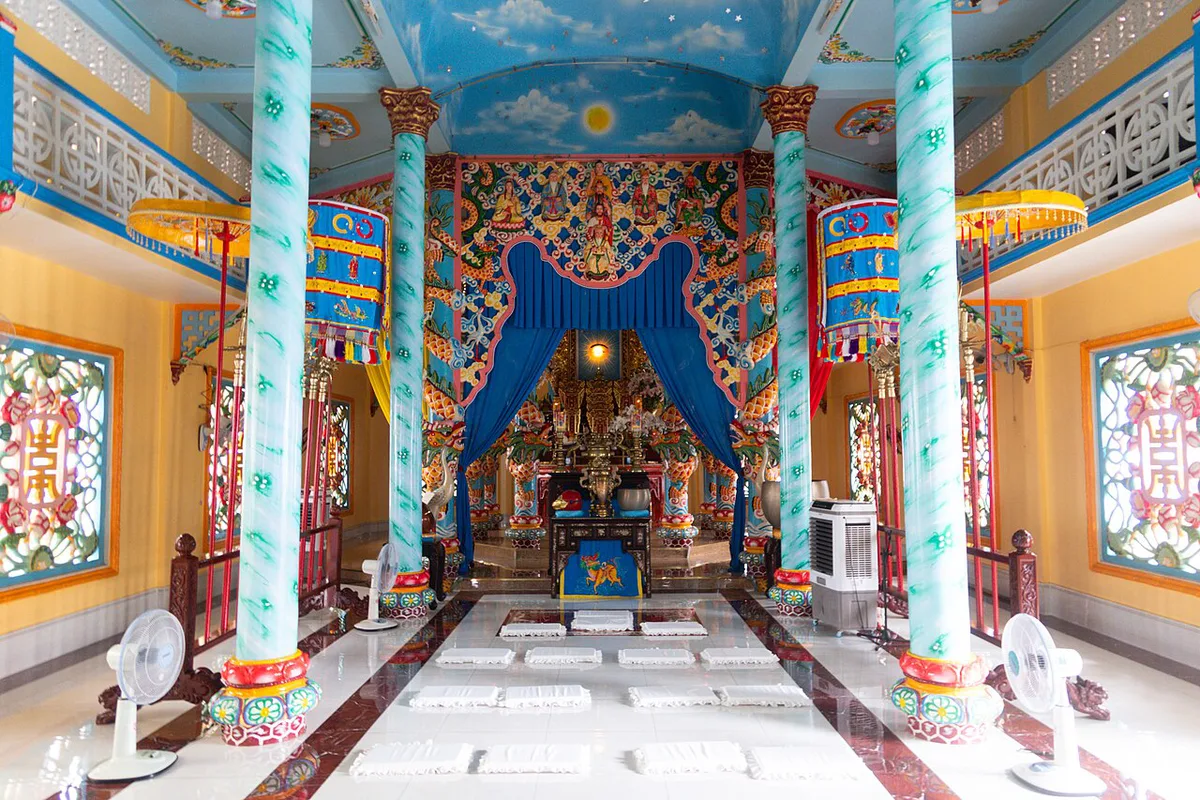
This is an active place of worship, not a show staged for tourists. Cover your shoulders and knees, and remove your shoes before entering the hall. Men enter on the right and women on the left. Walk along the side aisles, because the central path is kept for clergy. Skip flash photography and keep your voice low. If you are unsure what to do, copy what the worshippers in white robes do. Photographs from the balcony are the least intrusive option, and long lenses are better than walking into the hall.
What to See Inside: Design and Symbolism
The Divine Eye sits above the altar and also marks the main gate. Worshippers wear white for purity, and sashes in yellow, blue and red stand for Buddhism, Taoism and Confucianism. Nine steps lead toward the altar and represent a spiritual journey. Dragon-wrapped columns line the hall under a ceiling painted as a cloudy sky. Published counts of those columns conflict, so do not rely on a number. Look for the mix of influences in the architecture: church-style arches, pagoda curves and a Vietnamese temple layout. Saints honoured here include figures from several traditions, among them Victor Hugo and Sun Yat-sen.
Costs and Tickets
A published Cu Chi plus Cao Dai combined tour listing gives an admission-inclusive price from 150,000₫. That is a tour price, not a ticket price. The Holy See's own entry fee is not confirmed in available listings, so ask your driver or tour operator what is included. Vans and taxis are priced separately by each operator, and fares change by season. Prices and hours checked November 2026. For official visitor information on Vietnam, start with the national tourism authority. Local listings are on the Ho Chi Minh City tourism department site. The Cholon temple is free, with donations welcome.
Ticket prices at the Holy See remain unconfirmed in listings. Cholon's temple is open 7:00 AM to 5:00 PM and is free.
Combining Cao Dai With Cu Chi Tunnels or Making It a Standalone Trip
The common tour format pairs the Holy See with the Cu Chi Tunnels Guide: Ben Dinh vs Ben Duoc in one day. It saves money on transport and removes planning. It costs you time on site, and the schedule may hit the temple after the noon ceremony has started or ended. Ask any operator whether the stop is timed for the ceremony before you book, because a tour that skips it misses the main reason to go. A standalone trip gives you control over the 12 PM slot and more time on the balcony. Travelers with only one free day should weigh this against the Mekong Delta Day Trip from Saigon: Best Routes & Tips. If you prefer nature over temples, Can Gio Mangrove Forest: Day Trip Guide from HCMC is a different kind of outing.
- Photographers: take the early or noon slot and shoot from the balcony.
- Culture and religion curious travelers: go standalone for more time.
- Families with kids: choose a private car and noon arrival.
- One free day: pick the combined tour or the standalone trip, not both.
The Cholon Cao Dai Temple: A Short In-City Alternative
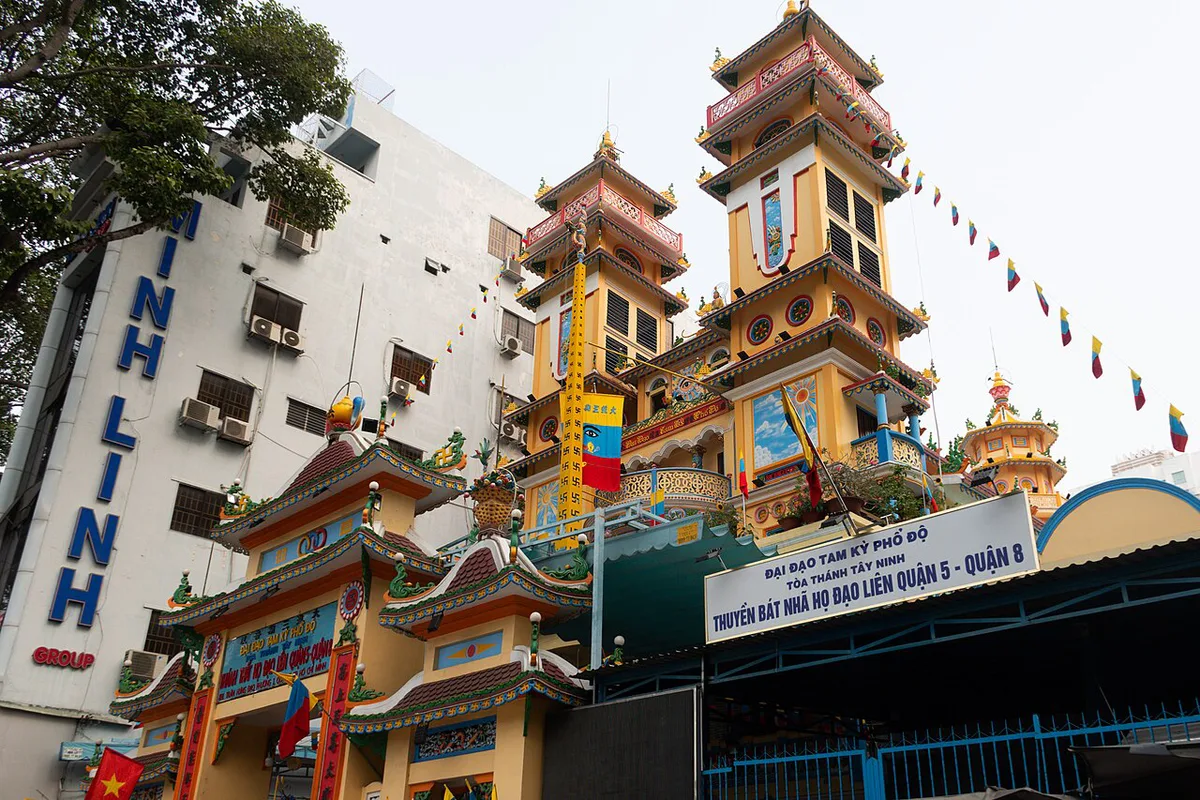
The Cholon temple (Thanh That Sai Gon) sits in District 5, Ho Chi Minh City's Chinatown. It is open about 7:00 AM to 5:00 PM and free, with donations welcome. Remove your shoes at the interior. It has the same pastel front, Divine Eye and dragon columns, only on a small scale. It is a good pick when time is short or the Tay Ninh trip does not fit. Do not expect the large ceremony hall of the Holy See.
Cholon sits inside District 5, while the Holy See lies 90 to 95 km northwest, so distance decides which one fits.
Common Mistakes to Avoid
Most problems come from timing and assumptions rather than the road. Use this list when you plan.
- Arriving after the ceremony starts, when you cannot move into the balcony quietly.
- Wearing shorts or sleeveless tops, which are not allowed in the hall.
- Assuming there is only one Cao Dai temple, when Cholon is also an option.
- Booking a tour that skips the ceremony.
- Treating the balcony as optional, because it is the visitor viewing point.
Frequently Asked Questions
What religion is Caodaism?
Caodaism is a Vietnamese religion founded in 1926. It combines elements of Buddhism, Taoism, Confucianism and Christianity, and its symbol is the Divine Eye. Its main center is the Holy See in Tay Ninh.
Useful notes for your Vietnam trip
Optional updates to our guides.
You might also like


Continue reading
More guides you'll find useful