
War Remnants Museum: What to See and How to Visit

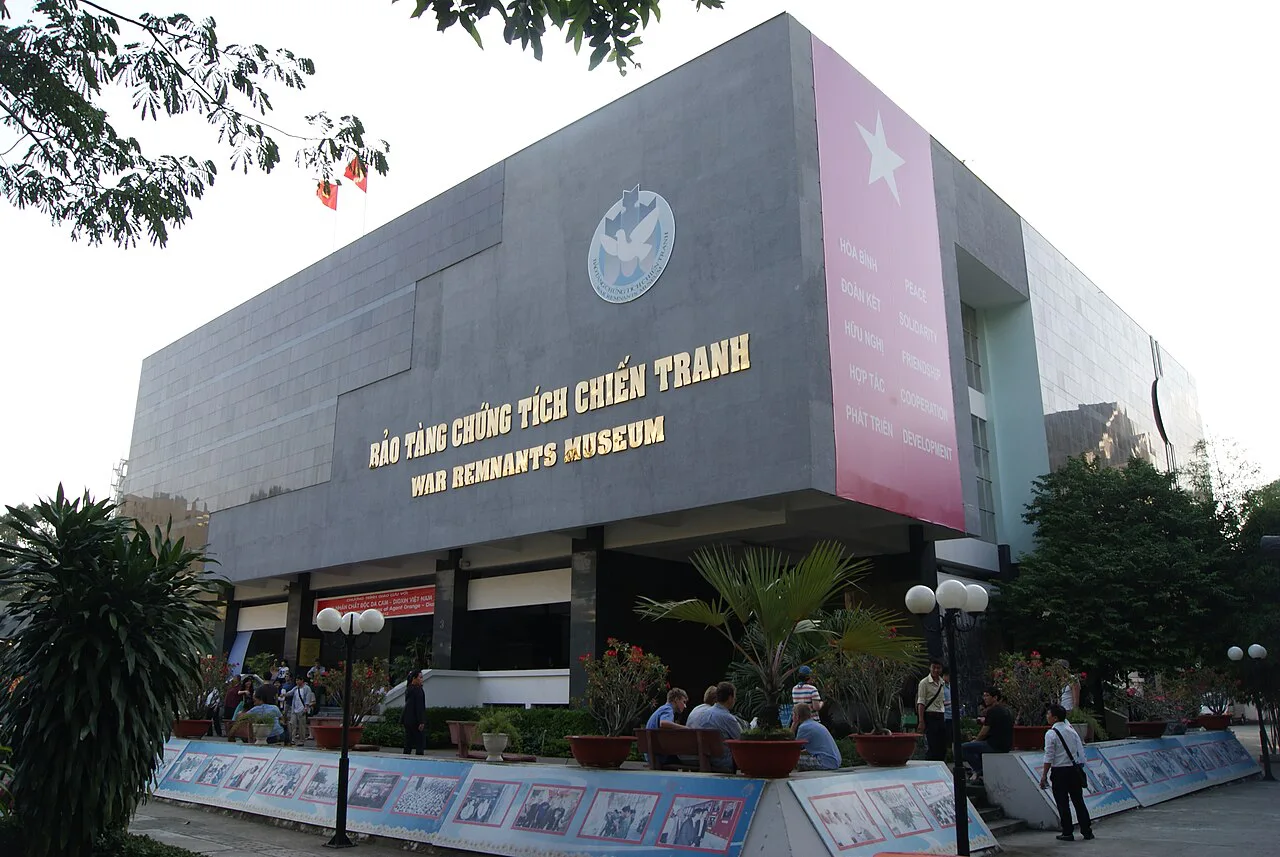
The War Remnants Museum is worth visiting if you want to understand how Vietnam remembers the war, but arrive ready for graphic imagery and a clearly Vietnamese point of view. It is not a neutral overview, and it does not pretend to be: its official site describes its work as collecting and displaying evidence of the crimes and consequences of the war of aggression against Vietnam. This guide covers where it sits in Ho Chi Minh City, how to reach it, what the galleries contain, how much time and emotional energy to budget, and where to confirm tickets and hours.
What the War Remnants Museum Is and Why It Draws Visitors
The museum is devoted to the First Indochina War and the Vietnam War and ranks among the city's most visited historical sites. Its purpose, as the museum frames it, is to research, collect, preserve and display evidence of war crimes and their consequences. That framing explains the emphasis on victims, damage and aftermath rather than battlefield tactics or the politics that drew the United States in.
Visitors expecting a balanced treatment of the war often leave frustrated, while others find the material powerful precisely because it is raw. A published review describes the collection as visually intense, with hundreds of photographs and little explanation of the American or South Vietnamese perspective. Treat that criticism as preparation rather than a reason to skip: knowing the limits of the narrative lets you read the exhibits critically.
The museum's former name, the Exhibition House for U.S. and Puppet Crimes, signals the stance it was built on. If you are traveling with someone who wants context before entering, brief them on that background first, because it makes the opening gallery easier to absorb.

Where It Is and How to Get There
The museum stands at 28 Võ Văn Tần Street in District 3, a short hop from the District 1 hotel and backpacker zones. From the Ben Thanh Market area it is walkable for most travelers, and the route passes ordinary city streets rather than a tourist strip. Check the address on a map app before setting out, since several streets here change names along their length.
On foot, allow roughly twenty to thirty minutes from the central District 1 sights, depending on where you start and how confidently you cross the wide roads. A metered taxi or ride-hailing app is easier in the midday heat or the afternoon downpours. Enter the destination in the app rather than relying on pronunciation of the Vietnamese name.
The museum sits within easy reach of the cluster around Paris Commune Square, so you can plan a half-day on foot that ends at the cathedral and post office. Build in a rest stop between them; the museum is draining and the walk back is not scenic enough to count as recovery.

How the Exhibits Are Laid Out
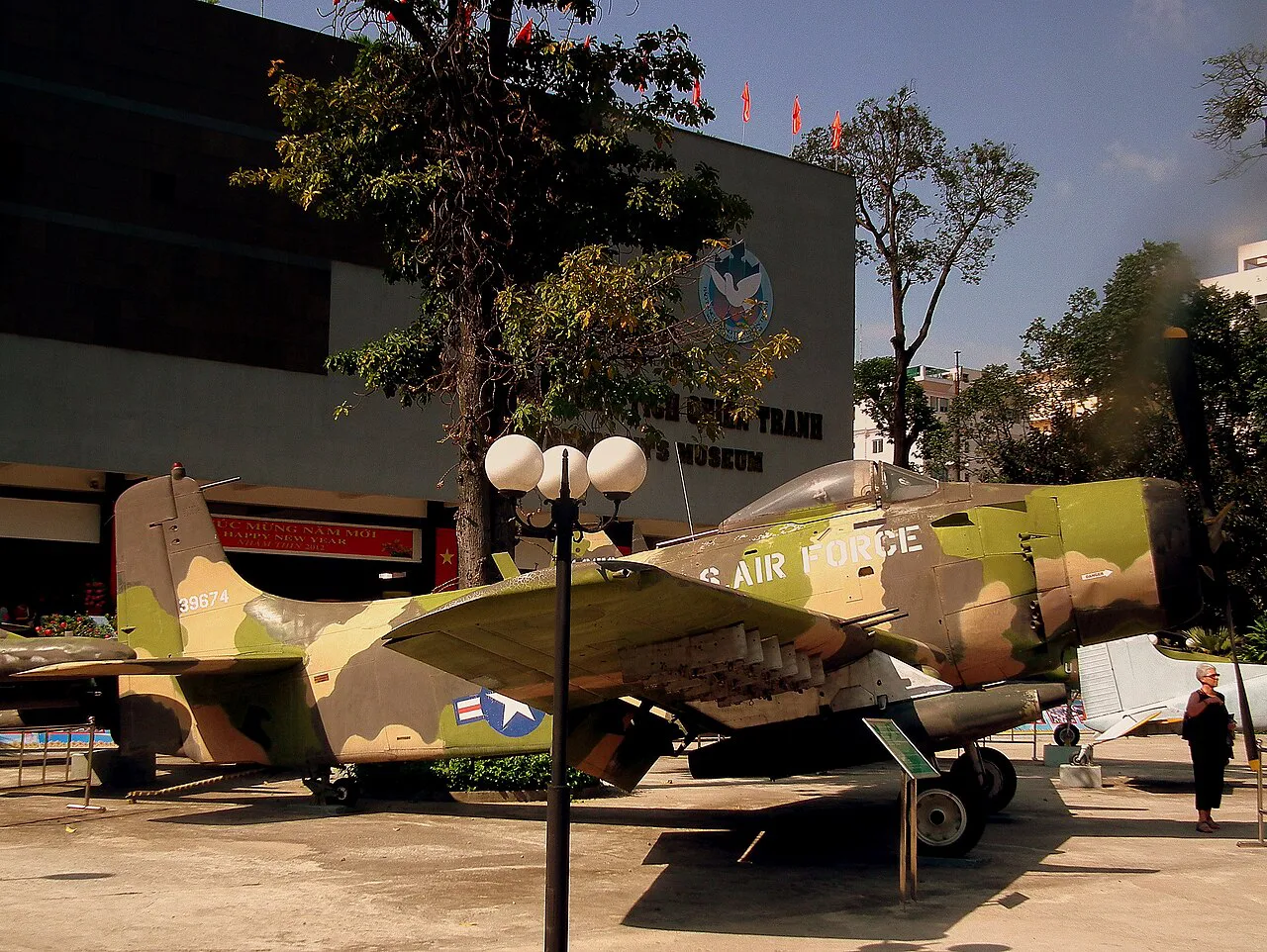
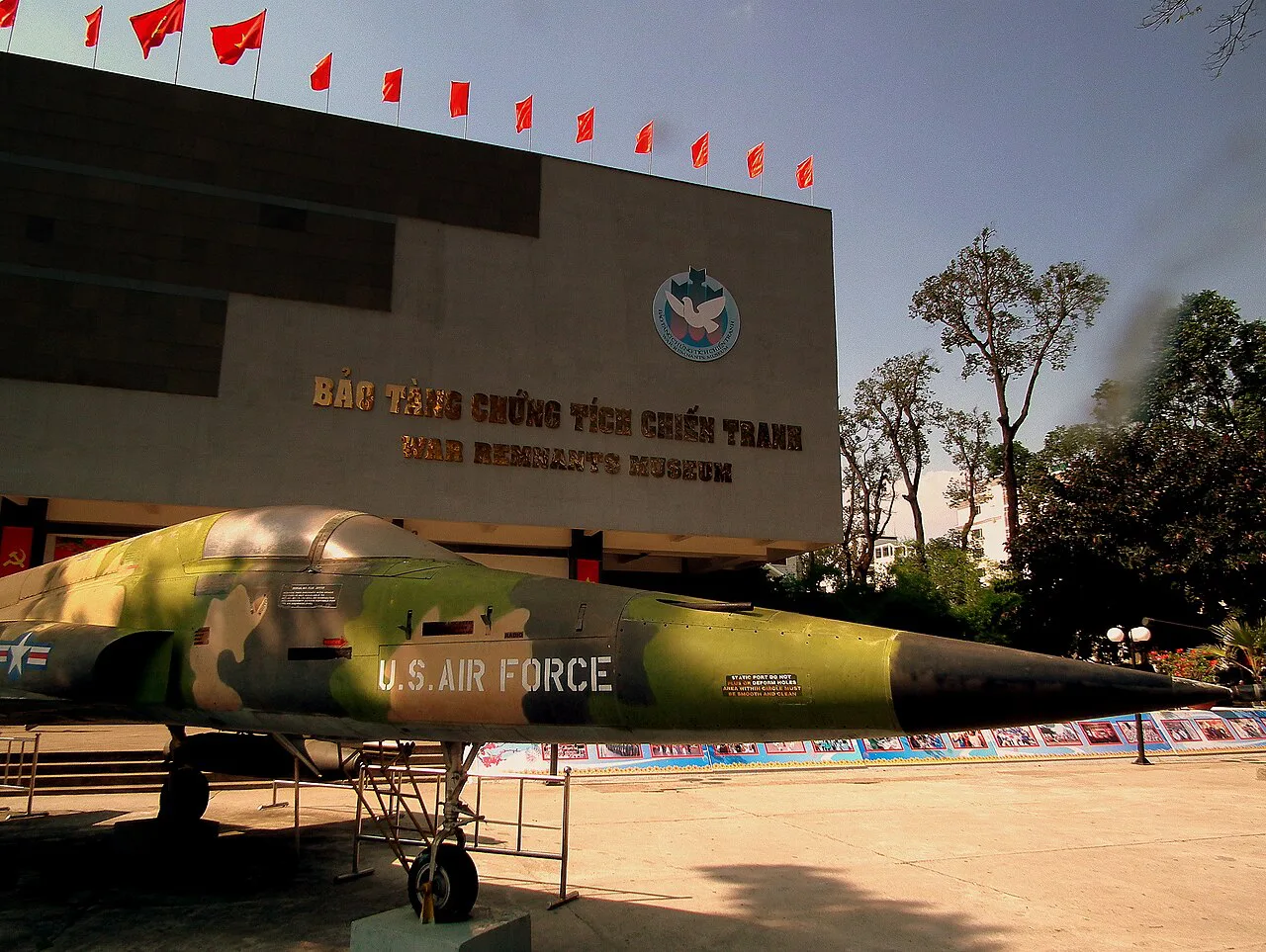
The collection spreads across several building levels plus an outdoor yard, so you move between air-conditioned galleries and open-air displays. Indoors, rooms are organized thematically, with dense photo panels, some maps and statistics, and artifacts. Outdoors, aircraft, tanks and artillery pieces stand where visitors can walk around and photograph them.
The photographic galleries carry the emotional weight. The Vietnam War was one of the first conflicts in which photojournalism shaped public opinion, and the museum leans heavily on that visual record, including images of torture, chemical damage and civilian suffering. Some rooms are confronting enough that reviewers report skipping displays entirely.
Plan your route so the heaviest material does not come last, when your attention is gone. Start with the outdoor hardware for orientation, move to the maps and statistics for context, then take the photo galleries in short bursts with breaks. If a room overwhelms you, step into the yard and return when you are ready, or simply move on.
What to Expect Emotionally, Including the Agent Orange Displays
The chemical warfare section is the part most visitors remember, and the hardest. Displays cover Agent Orange, napalm and other chemical weapons, including their long-term effects on people and landscapes, shown through photographs and personal accounts. Reviewers describe the material as deeply confronting and note that you can grasp the scale of the damage without viewing every image.
Children and sensitive teenagers need a considered decision rather than a default yes, because the images are explicit and you cannot curate them inside a room. If you travel as a family, one adult can walk ahead to gauge a gallery before bringing the group in. Give yourself permission to leave early as well; the outdoor yard offers a lighter way to finish.
Many travelers pair a museum morning with something entirely different in the afternoon rather than stacking a second historical site onto the same day. That spacing matters more than seeing every exhibit.
The Con Dao Prison Recreation and How It Compares
One section recreates the prison conditions on Con Dao, the island archipelago where the French and later the South Vietnamese held political prisoners. The reconstruction uses cells, restraints and mannequins to convey what detention there involved. It is an effective introduction, but it is a model, not the site itself.
Travelers who have been to the real prisons on Con Dao describe the museum version as a compressed impression rather than a substitute. If your itinerary includes the islands, see this section first for context and treat the actual site as the fuller experience. If you are not going to Con Dao, the recreation is the closest most city visitors will get.
How Long to Allow
Budget about two hours for a focused visit and up to half a day if you read most panels and linger in the yard. Guided city tours typically allow around one and a half hours inside, enough for the main galleries but not for reading everything. Two hours is a sensible minimum for independent visitors.
Heat and crowds change the math: the outdoor yard is exposed, and rainy-season downpours push everyone inside at once. Arriving near opening time tends to give you calmer rooms, so check the museum's published schedule before fixing that plan.
Tickets, Opening Hours and Where to Confirm Them
Confirm ticket prices and opening hours directly with the museum before you go. Its official site is the authoritative place to check current entry fees in Vietnamese dong, any reduced rates, and the daily schedule, including whether it pauses at lunchtime. Rates and hours can change, so verify a day or two ahead rather than trusting older guidebooks.
Your entry fee funds more than your own visit: the museum describes research, collection and preservation as its core work. If you are weighing the ticket against other paid sights, note that few places in the city present this history at this scale. Buy at the entrance unless the official site lists an online option.
Third-party listings and traveler reviews give a rough sense of what others paid or when they found the doors open, but they lag behind official changes. Use them for orientation only and treat the museum's own pages as the final word. If the hours on arrival differ from the website, ask the ticket desk for the printed schedule.
Practical Points: Dress, Crowds and Photography
No written dress code is confirmed, so dress as you would for any city museum: light clothing covering shoulders and knees is a safe default in Vietnam and shields you from sun in the yard. Shorts are commonly worn in practice, but err conservative if modesty matters to your group. Check any posted rules at the entrance.
Photography is widely practiced, including outdoors, but be thoughtful in the graphic galleries: photographing images of victims is common yet many visitors find it jarring. Follow signage restricting particular rooms and ask staff if rules matter to your plans. Audio guide availability is not confirmed in current sources, so ask at the ticket counter or check the official site if you prefer narration.
Crowds build through the morning as tour groups arrive, and the narrow galleries slow to a crawl. An early start, or the quieter stretch after lunch if the museum is open then, gives you more room to read.
Is the Museum Worth Visiting?
Yes, for most travelers interested in history, and especially for anyone who wants to see how the war is remembered in Vietnam rather than only how it is taught at home. The museum is honest about its perspective, and the material lands harder than a balanced textbook display. Go expecting a point of view, not a debate.
Skip it if you are traveling with young children, have limited time and low tolerance for distressing images, or want a light sightseeing day; those are legitimate reasons. Travelers who go often pair it with the Independence Palace for a fuller picture of the war years in the city.
What Is Nearby to Combine With Your Visit
The Independence Palace (Reunification Palace) is the natural companion, a short walk away, covering the political and diplomatic side of the same period. Doing both in one day sets the government's war next to the victims' war, which teaches more than either alone. Check each site's hours separately, since they do not share a schedule.
A little further on, the Saigon Central Post Office and Saigon Notre Dame cathedral anchor Paris Commune Square, a natural end to a walking loop. The cathedral has been under restoration for years, so check its current status before planning to go inside; the post office still operates as a working building worth a look for its architecture.
For a different kind of history, Thien Hau Temple in Cholon shows the Chinese community's role in the city and offers a calmer atmosphere after the museum's intensity. It is a short ride away and fits neatly into an afternoon. For a broader set of options, browse the Ho Chi Minh City Attractions guides before committing your days.
Should You Put the War Remnants Museum on Your Schedule?
Put it on your schedule if you can give it two focused hours and you are ready for difficult images and a one-sided narrative. The museum's value lies in showing how Vietnam presents the war to its own visitors, and the photographs and outdoor hardware make that case vividly. Confirm current hours and ticket prices in dong on the official site, then order your route so the heaviest rooms do not land at the end of your energy.
Explore more Ho Chi Minh City guides
Frequently Asked Questions
Can I wear shorts to the War Remnants Museum?
The museum does not publish a written dress code, so there is no posted rule to follow. In practice visitors commonly wear casual clothing including shorts, and the outdoor yard gets hot. If you prefer to be conservative, choose light clothing that covers shoulders and knees, and check any rules posted at the entrance.
Is the War Remnants Museum free?
No, entry is ticketed. The museum's official site is the place to confirm the current adult fee in Vietnamese dong and any reduced rates, so check shortly before your visit rather than relying on older listings.