
Thien Hau Temple (Chùa Bà Thiên Hậu), Ho Chi Minh City: What to See and How to Visit

Thien Hau Temple is worth about 30 to 45 minutes of your day, and it rewards that time most in the early morning before the tour groups and weekend crowds arrive. It is a Chinese-style temple in Cholon, the old Chinese quarter of District 5, dedicated to Thien Hau (Chùa Bà Thiên Hậu in Vietnamese), the Lady of the Sea. This guide covers where the temple sits, how to get there from the center, what to look for inside, how to behave around worshippers, and what to pair with it nearby.
What Thien Hau Temple is and what you are looking at
Thien Hau is a deity from traditional Chinese religion, worshipped in the maritime provinces of southern China and in overseas Chinese communities. Wherever Chinese traders and fishermen settled, they built temples to her, asking protection over voyages and those waiting at home. According to Viet Fun Travel, this temple was built in 1760 and restored in 1800, 1842, 1882, 1890 and 1916, and was listed as a National Architectural Heritage Site in 1993.
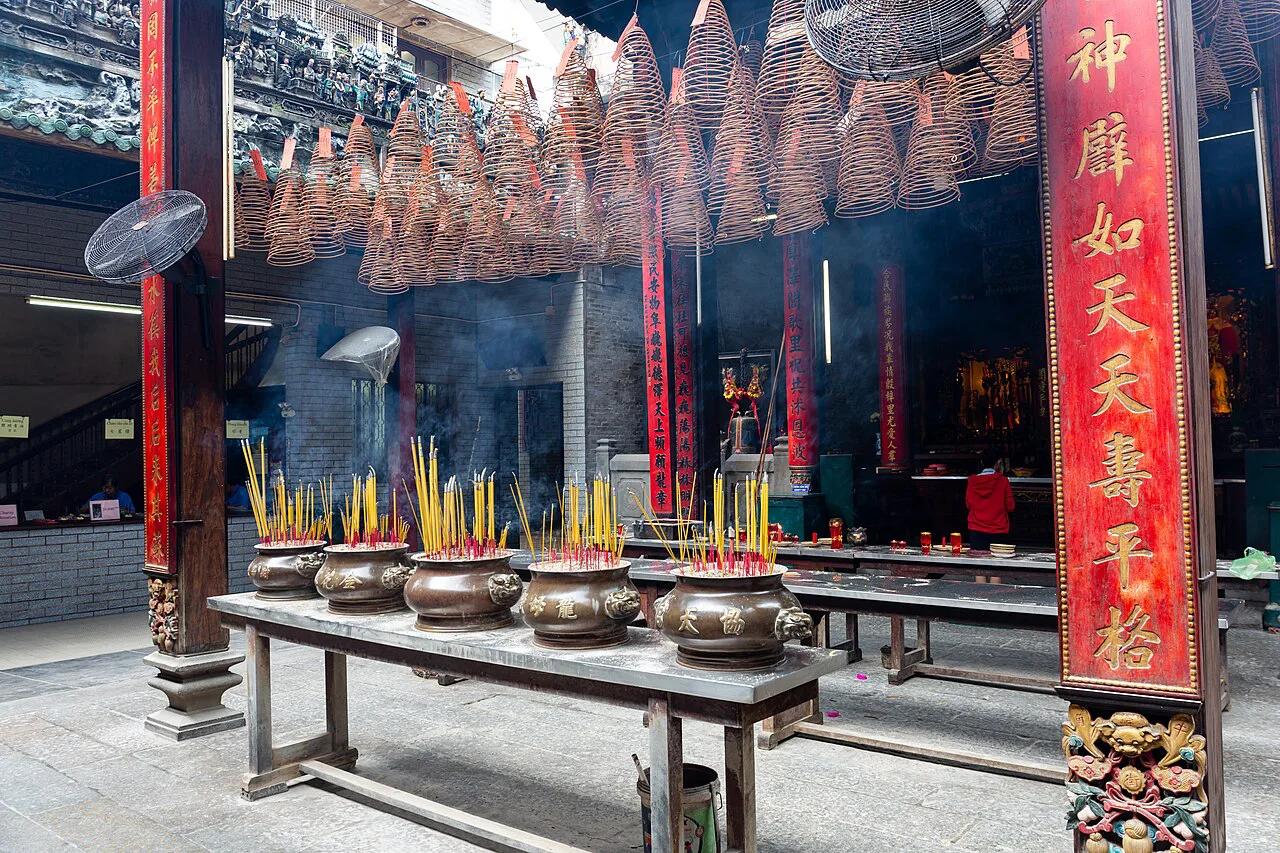
The building shows why it earned that listing: tiles, bricks and ceramics were reportedly carried from China, and ceramic bas-reliefs decorate the walls, eaves, roof and altars. Look up as well as forward. The roof carries small ceramic figures, and the closer you look, the more of them you find.

Where the temple is and how to orient yourself
The temple sits on Nguyen Trai Street in District 5, the district that holds most of Ho Chi Minh City's Chinatown. District 5 is west of District 1, the city center where most visitors stay, so plan a one-way ride rather than a stroll. Read the neighborhood as a destination in itself: Cholon is a trading quarter of markets, Chinese assembly halls and temples, not a single sight. If you are mapping out several days, the wider Ho Chi Minh City Attractions collection is the place to start.
Addresses can vary between listings for the same temple, so treat any street number as a rough marker and confirm the exact one before you go. Vietnamese diacritics help: writing Chùa Bà Thiên Hậu or Nguyen Trai on a phone screen makes the destination unambiguous. Rather than turning this into a citywide checklist, think of the temple as the anchor for a half-day in Cholon.
How to get there from District 1
A metered taxi or ride-hailing car from District 1 is the simplest option, and ride-hailing apps show the fare before you book, which avoids haggling. Tell the driver Thien Hau temple on Nguyen Trai, District 5, or show the Vietnamese name on your phone. Two-wheel riders will weave through the traffic faster than cars, but the car is more comfortable in the heat. For a broader look at how these sights fit together, browse the things to do in Ho Chi Minh City pages before you commit a morning to Cholon.
What to see inside
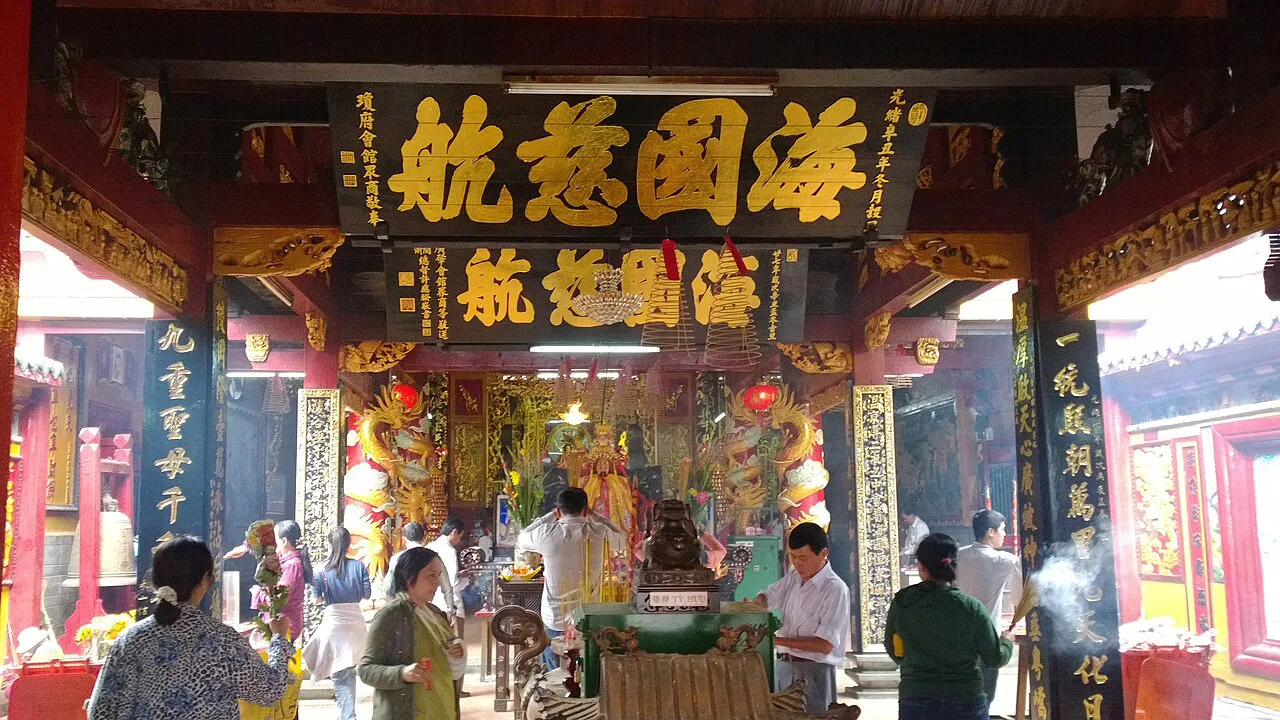
The temple is entered through a three-door gateway that Viet Fun Travel says offers a clear, open feeling even on crowded days. Inside, the main shrine holds a statue of Lady Thien Hau described as roughly one meter tall. The light and the stone make this a quieter, more solemn space than the street outside.
Walk slowly and look at the ceramics rather than rushing to the altar. On walls, eaves, roofs and altars, the glazed bas-reliefs mix figures, ships and dragons; the roof statuettes come in many sizes. None of it is decorative filler. Each element tells the story of a sea goddess whose worshippers depended on the water.
The incense coils, and how to move around them
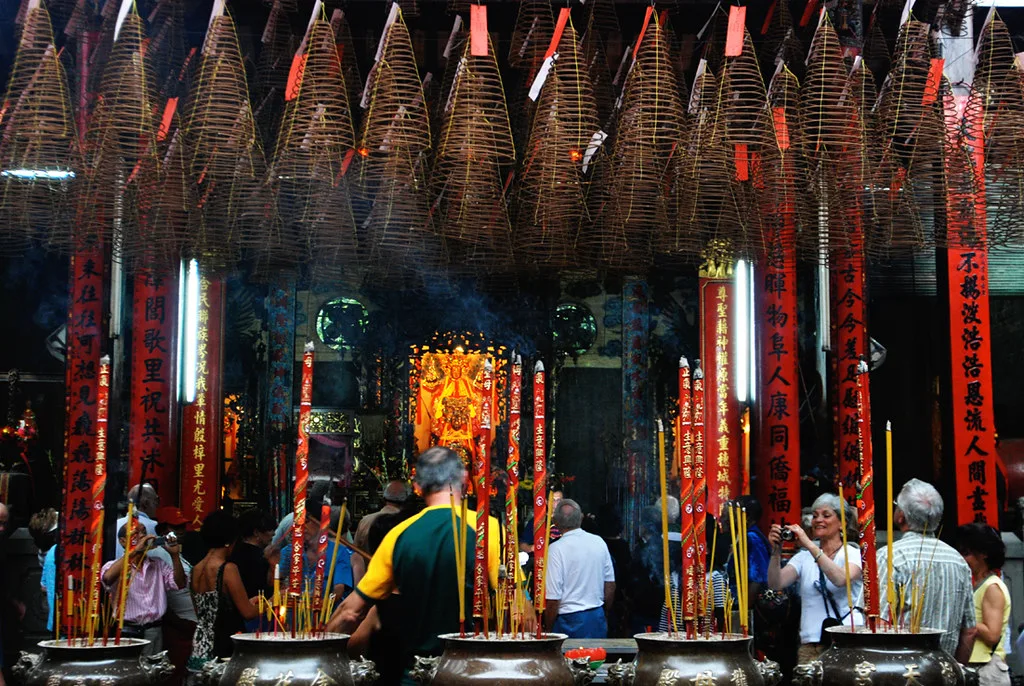
Large spiral incense coils hang from the ceiling above the main worship area. According to Viet Fun Travel, worshippers buy the coils, attach names to them, and hang them so the rising smoke carries their prayers upward, and the biggest can burn for several weeks. That means the coils are active worship, not decor: step around them rather than under them, and keep your voice low while people pray.
When to go, and the crowd trade-off
Early morning gives you the calmest visit and the best chance of seeing prayers without a crowd at your shoulder. Viet Fun Travel notes that the temple gets busy, especially on weekends, and recommends early visits for the quiet atmosphere. Chinese New Year brings the largest crowds, when the temple fills with people praying for peace, prosperity and longevity. For anyone hoping to photograph an empty hall, come early, but accept that an active temple will rarely be empty.
Visitor etiquette: dress, noise and photography
Dress politely, meaning covered shoulders and knees, and keep silent while prayers are underway, as Viet Fun Travel advises. Photography is generally fine when the temple is quiet, but pause when someone is praying or lighting incense, and never step into a shrine to get a shot. A small act of respect, such as leaving a donation or simply stepping aside, goes further than a longer lens. If you are unsure, watch what local worshippers do and follow their lead.
How long to allow, and what to pair with it
Give the temple 30 to 45 minutes if you read the shrine details, and an hour if you linger over the ceramics and watch the incense. Pair it with the Cholon markets and the Chinese assembly halls, which are within walking distance and make up the rest of a half-day. If you want a contrast, ride east toward the center for the Independence Palace (Reunification Palace) and its 1970s state rooms.
Two more central sights sit near each other and near the Independence Palace (Reunification Palace): the Saigon Notre Dame cathedral and the Saigon central post office, both best visited outside the hot middle of the day. A third central museum, the War Remnants Museum, is a short ride away if you want to add it. Allow a full morning for the District 1 trio if you combine them with the palace.
Opening hours and entry cost: how to confirm before you go
No operator-published hours or ticket price appeared in the sources reviewed, so plan to confirm them at the temple entrance or with your hotel before you travel out to District 5. If you book a city tour that includes the temple, such as those listed for this temple on GetYourGuide, the operator is the right party to ask about access and any entry rules; check the tour page or message the operator before booking.
Arriving without a confirmed time is a risk worth avoiding, especially in the middle of the day and around festivals. Confirm the current opening window the day before, then plan your ride around it, not the reverse.
Thien Hau versus Thean Hou and Tin Hau temples elsewhere
Several unrelated temples share similar names, and search results blur them together. Thean Hou Temple in Kuala Lumpur and Tin Hau temples in Hong Kong are different buildings in different countries. The homophone confusion is common because Tin Hau is a Cantonese rendering of the same sea goddess, but the temples are not the same. There is also a Thien Hau Temple in Los Angeles's Chinatown, a different temple with its own congregation and no relation to this one.
A short temple visit that pays off if you time it right
Go early, go to District 5 deliberately, and give Thien Hau 45 minutes of attention rather than treating it as a photo stop. Confirm the hours before you ride out, dress accordingly, and pair it with the Cholon markets; that grouping turns a short visit into a coherent half-day. If you want the central sights too, keep them for a separate morning.
Frequently Asked Questions
Is Thean Hou Temple in Kuala Lumpur the same temple?
No. Thean Hou Temple is in Kuala Lumpur, while this Thien Hau Temple is on Nguyen Trai Street in District 5 of Ho Chi Minh City. The names sound alike because both honour the same sea goddess under different regional spellings.
Do I need to book tickets for Thien Hau Temple in Ho Chi Minh City?
No booking requirement is published for the temple. Confirm the current hours and any entry rules at the entrance or through your tour operator before you travel out to District 5.
How do I reach Thien Hau Temple from District 1?
Take a metered taxi or ride-hailing car westward to District 5, and tell the driver Thien Hau temple on Nguyen Trai Street, or show the Vietnamese name Chùa Bà Thiên Hậu. It is a ride, not a walk.