
Saigon Notre Dame Cathedral: What to See, Where It Is & How to Visit

Saigon Notre Dame Cathedral, known in Vietnamese as Nhà thờ Đức Bà Sài Gòn, is a working Catholic basilica on Paris Commune Square in District 1, Ho Chi Minh City, and it costs nothing to visit — according to Asia King Travel, entrance is free for adults and children alike. It is not a museum with a ticket desk, so how much of it you see depends on worship schedules and a long-running restoration. This guide covers its address, how to arrive, what the exterior gives you, and what to confirm before you build a morning around it. For other stops in the same district, see Ho Chi Minh City Attractions: 5 Visitor Guides.
What and where Saigon Notre Dame Cathedral is
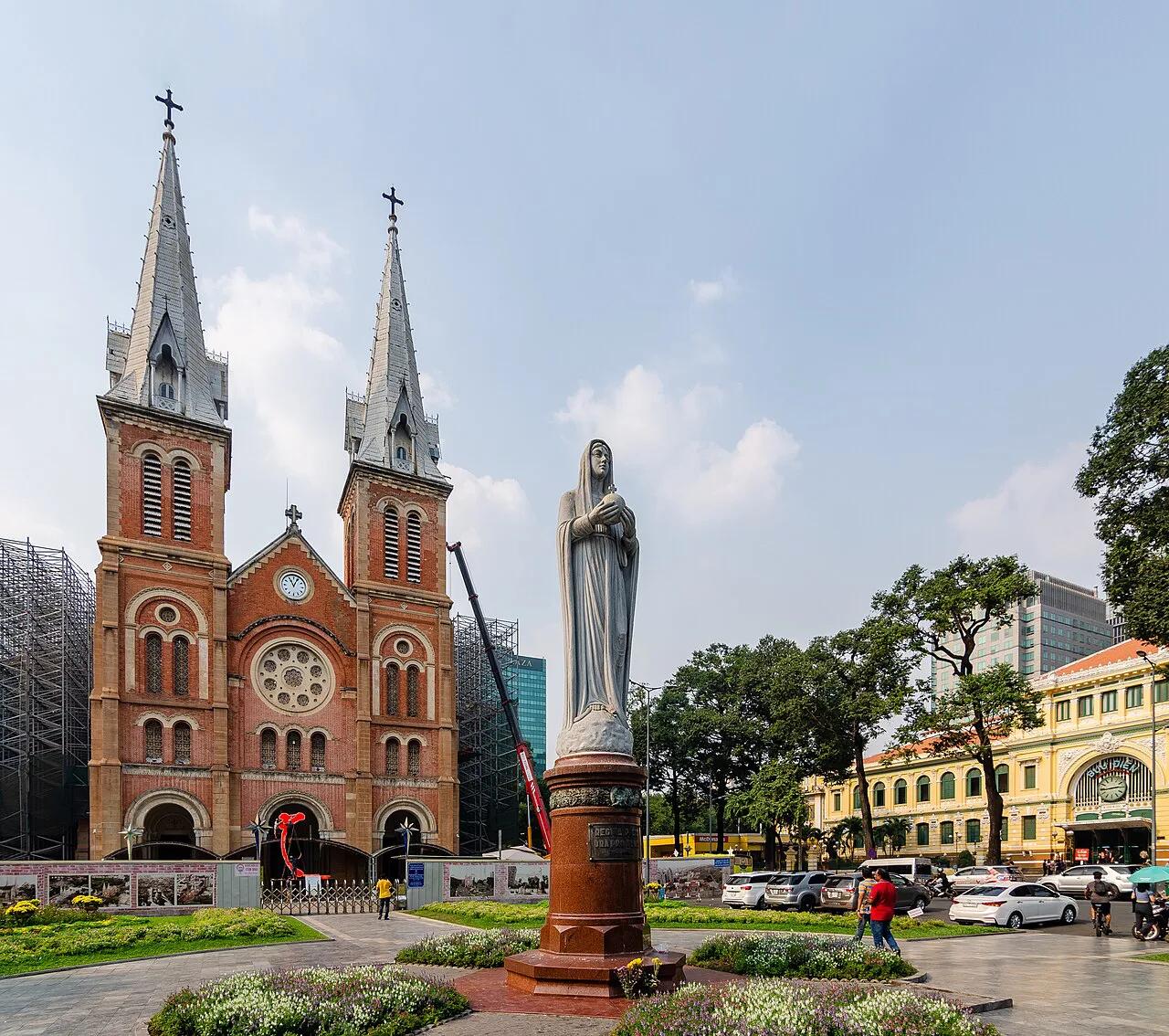
The cathedral faces Paris Commune Square in Ben Nghe Ward, District 1, at No. 1 Công xã Paris Street, according to Eco Travel. Its red-brick facade and twin towers are the reference point most locals use for directions, so the Vietnamese name on signs and maps is worth knowing. The building's full title is the Cathedral Basilica of Our Lady of the Immaculate Conception, which is why official material may use a different name than your guidebook.
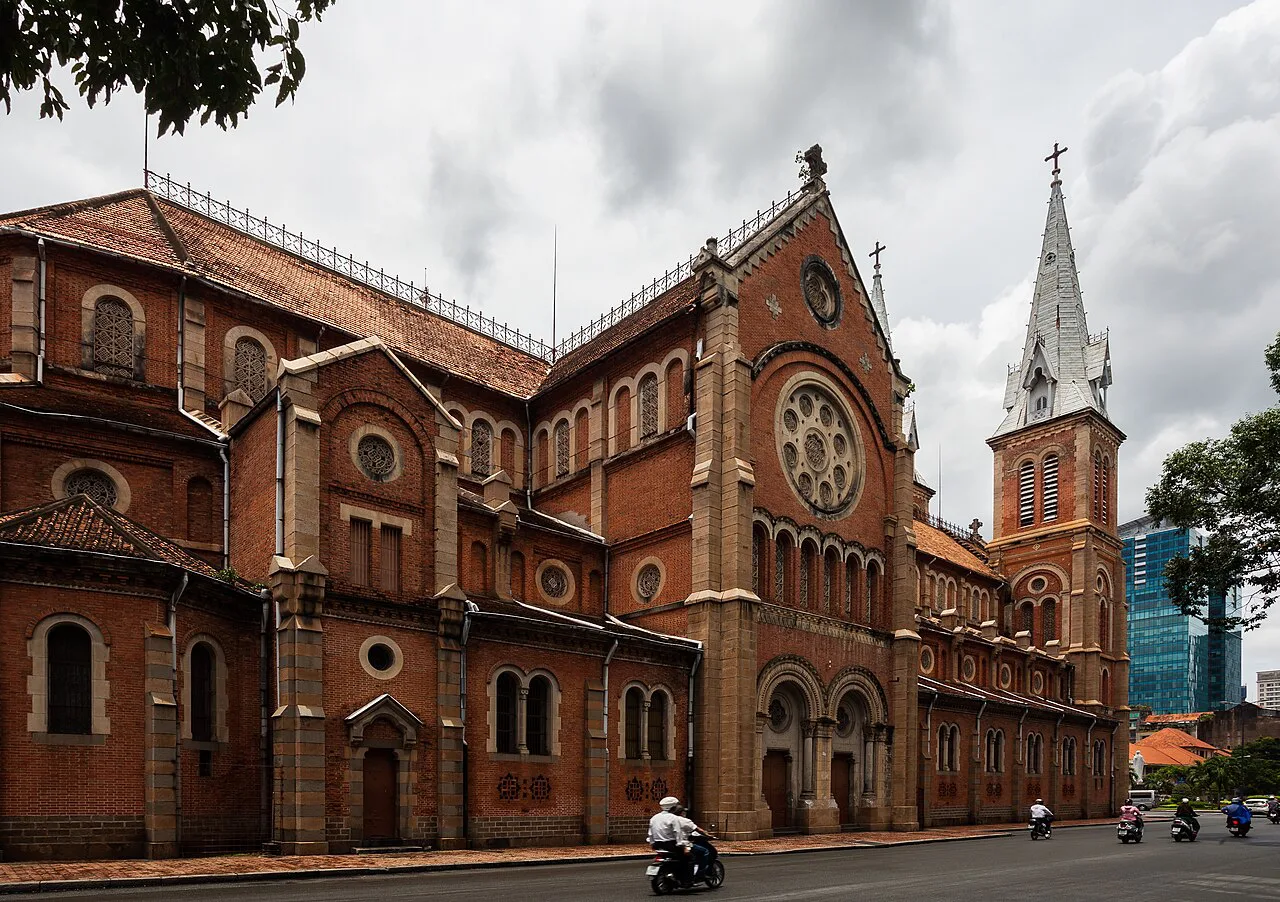
Construction ran from 1863 to 1880, and the materials were shipped from France, including the bricks that still hold their color. Eco Travel reports the nave measures about 93 meters long and 35 meters wide, and the structure seats roughly 1,200 people. Southeast Asia travel publisher Asia King Travel puts the twin bell towers at about 60 meters.
Two details most visitors miss are the pair of bell towers, each topped with a cross and housing six bronze bells, and the statue of the Virgin Mary installed on the square in 1959. Asia King Travel notes that the statue is said to have shed tears in 2005, which drew large crowds. Whatever your view on that, the statue is the natural focal point of any photo taken from the square.

How to get there from District 1
You do not need a tour to reach the cathedral — it sits within walking distance of the Central Post Office on the same square, so any District 1 hotel near Đồng Khởi Street or the Saigon River puts you about fifteen to twenty minutes away on foot. Ride-hailing apps and metered taxis handle the trip comfortably if the heat is against you, and the ride from most District 1 addresses is short. Arrange your return through the same app rather than hailing a passing motorbike in the square.
Motorbike taxis — Grab Bike and similar — drop you on the square or the nearest curb, and they are the fastest option in afternoon traffic. If you arrive by car, expect a short walk from where the driver can legally stop, because the square itself is not a drop-off zone. Either way, plan to arrive by late afternoon, since the facade faces west and the light softens as the sun drops.

What you can see from the square
The exterior alone justifies the stop. You get the full red-brick frontage, both bell towers, the rose-window detail, and the Virgin Mary statue on its pedestal, all from the pavement without entering. Because the cathedral has no surrounding fence, Eco Travel points out that pedestrians can study the architecture directly from the street — unusual among Saigon's churches. Ten to fifteen minutes covers the classic photos; twenty to thirty lets you read the facade properly and cross to the post office.
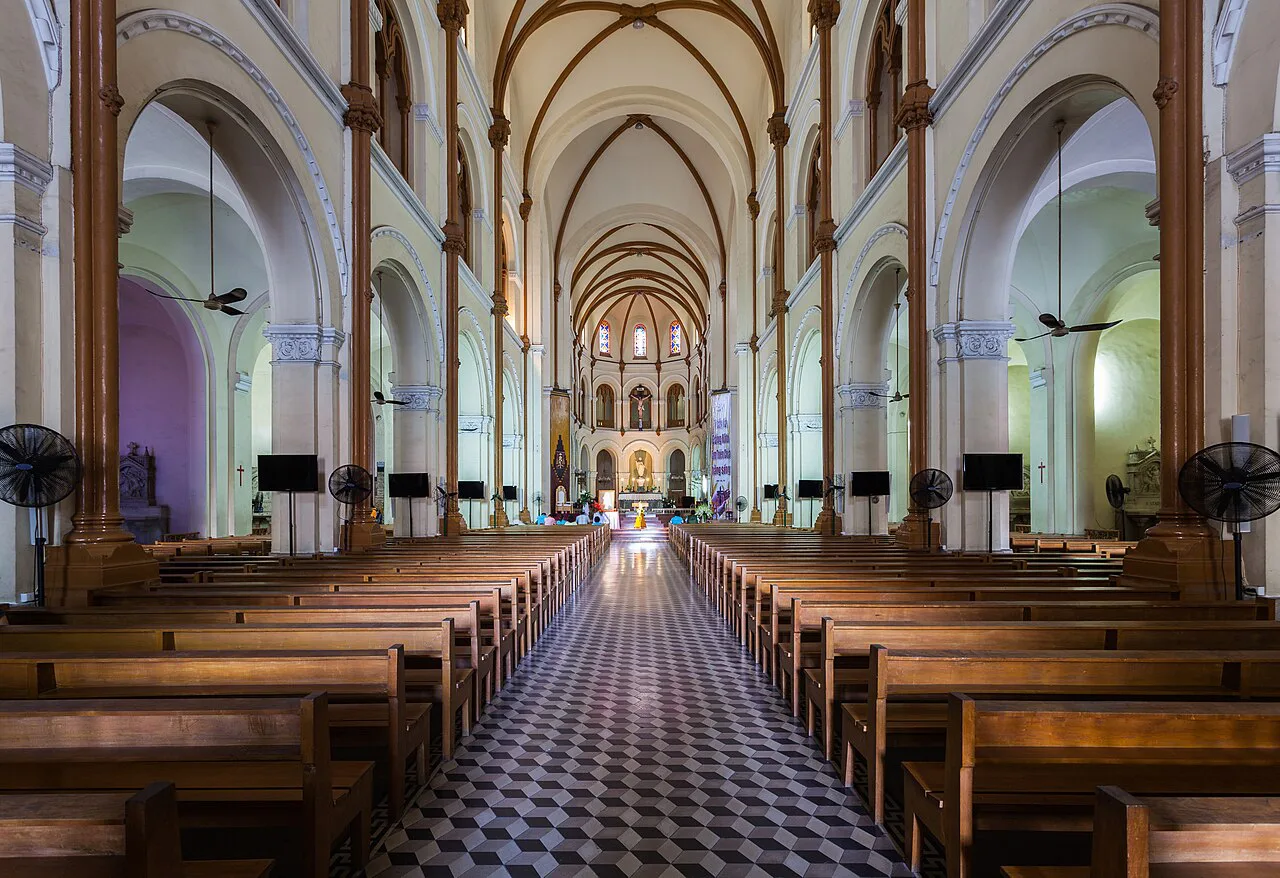
Inside, the draw is the stained glass and the long nave with two rows of pillars flanking the central aisle, plus the marble carvings around the main altar. Eco Travel describes these interior features, but a description of the interior is not evidence that it is open to visitors on any given day. Treat seeing them as a bonus rather than the reason for your trip.
Can you go inside? Entry, Mass and renovation status
Treat interior access as a bonus rather than the plan. The cathedral is an active church serving a large Catholic community, and Eco Travel reports a major restoration running from 2017 to 2027 — which means scaffolding or restricted entry is entirely plausible during your trip. One travel video lists daily hours of 08:00 to 17:00, but that is a third-party blogger's listing, not an official notice.
Mass times are not something to guess at. No official schedule is included in the sources available here, so check the notice board at the entrance or the cathedral's own channels on the week you travel. If you attend a service, dress modestly and sit toward the back rather than walking the aisles with a camera.
Entry itself is free according to Asia King Travel, so budget nothing for a ticket and plan your spend around coffee and lunch nearby instead. Confirm the current access situation the morning of your visit rather than days ahead, since restoration work can change from one week to the next.
How much time to allow and when to go
Budget thirty minutes for the square including photos, or an hour if you add the Central Post Office next door. Asia King Travel names December to April as the dry season and the most comfortable window for admiring the architecture, which matches the general pattern for southern Vietnam. Mornings are cooler and quieter; late afternoon gives better light on the facade.
Avoid the midday hours if you can — the square has little shade and the stone throws heat back at you. Weekend evenings bring local families and couples to the square, which is lively but harder for clean photographs. If you want the facade to yourself, go early on a weekday.
What's nearby within walking distance
The Saigon Central Post Office stands directly across the square and is the obvious pairing — a French colonial building with a vaulted interior that takes another twenty minutes. From there, a walk down Đồng Khởi brings you toward Nguyen Hue Walking Street and the riverfront, which makes a natural half-day loop. For a wider menu of what else fills a day in the same area, see Ho Chi Minh City Attractions: 5 Visitor Guides.
History-minded visitors can walk fifteen to twenty minutes to the War Remnants Museum, though most people take a short car ride in the heat. The Reunification Palace, known as Independence Palace, is closer and easily combined with the cathedral on the same morning. Both reward a couple of hours each, so pick one rather than crowding all three into a single outing.
If you want a different kind of religious architecture, the Thien Hau Temple (Chùa Bà Thiên Hậu), Ho Chi Minh City in Cholon is a ride west of District 1 and shows the Chinese community's side of the city. Its incense coils and courtyard make a strong contrast with the cathedral's European lines. That comparison alone is worth the trip if you have a spare afternoon.
Is the cathedral worth a stop on your District 1 walk?
Yes — as a thirty-minute stop folded into a District 1 morning, not as a destination in itself. The facade, towers, and statue deliver on their own, and the free entry means the only cost is your time. Pair it with the post office and either the palace or the museum, and you have a solid half day.
Before you go, check the current restoration status and any Mass schedule through the cathedral or archdiocese, and treat interior access as a bonus. Arrive early or late in the day, dress respectfully if you do go in, and keep your expectations on the exterior — which is reliably excellent.