
Vietnam Museum of Ethnology: A Visitor's Guide to Hanoi's Museum of Vietnam's 54 Ethnic Groups

Allow about half a day at the Vietnam Museum of Ethnology (Bảo tàng Dân tộc học Việt Nam): roughly two hours in the indoor galleries and another hour or more walking the open-air architecture garden. It is the Hanoi museum that explains who Vietnam's 54 officially recognised ethnic groups are, rather than displaying royal bronzes or war relics. This guide covers where it sits in Cau Giay, how to reach it from the center, what to see inside and out, and how to split your time.
What the Vietnam Museum of Ethnology actually is
An ethnology museum studies peoples and cultures, and this one does it for Vietnam specifically: the museum focuses on the country's 54 officially recognised ethnic groups, as described on its English-language Wikipedia entry, and it operates as both a research centre and a public museum. That double role is why the displays tend toward everyday life, housing, clothing and craft rather than imperial treasure. It sits in Cau Giay, a western Hanoi district, which places it well outside the Hoan Kiem Lake tourist core.
The payoff for a traveler is context: after a few days of markets and temples you get a structured explanation of the country's ethnic diversity, from the majority Kinh to highland groups in the north and central provinces. Because the building has no single blockbuster object, the visit rewards readers who like reading panels and walking through reconstructed houses. If you want a single dramatic artifact instead, this is the wrong stop.

Where it is and how to get there from central Hanoi
The museum stands in Cau Giay district, west of the city center and roughly a 20- to 30-minute taxi or ride-hail trip from Hoan Kiem Lake when traffic behaves. Riders using ride-hailing apps should enter the museum's English name plus Cau Giay as the destination rather than a street number typed from memory, and taxis from the Old Quarter are metered. Public buses run along the main arteries toward Cau Giay, but route numbers and stops change, so check a current Hanoi bus map or ask your hotel to write the destination in Vietnamese.
Plan the trip as a westward loop rather than a there-and-back errand: the museum's Cau Giay setting pairs naturally with the Ba Dinh sights to its east, so you can do the museum in the morning and Ba Dinh Square or the Imperial Citadel later the same day. Travelers who prefer to stay on foot in the Old Quarter can still slot the museum in, but should book the ride and go early.
Inside: the permanent galleries on Vietnam's ethnic groups
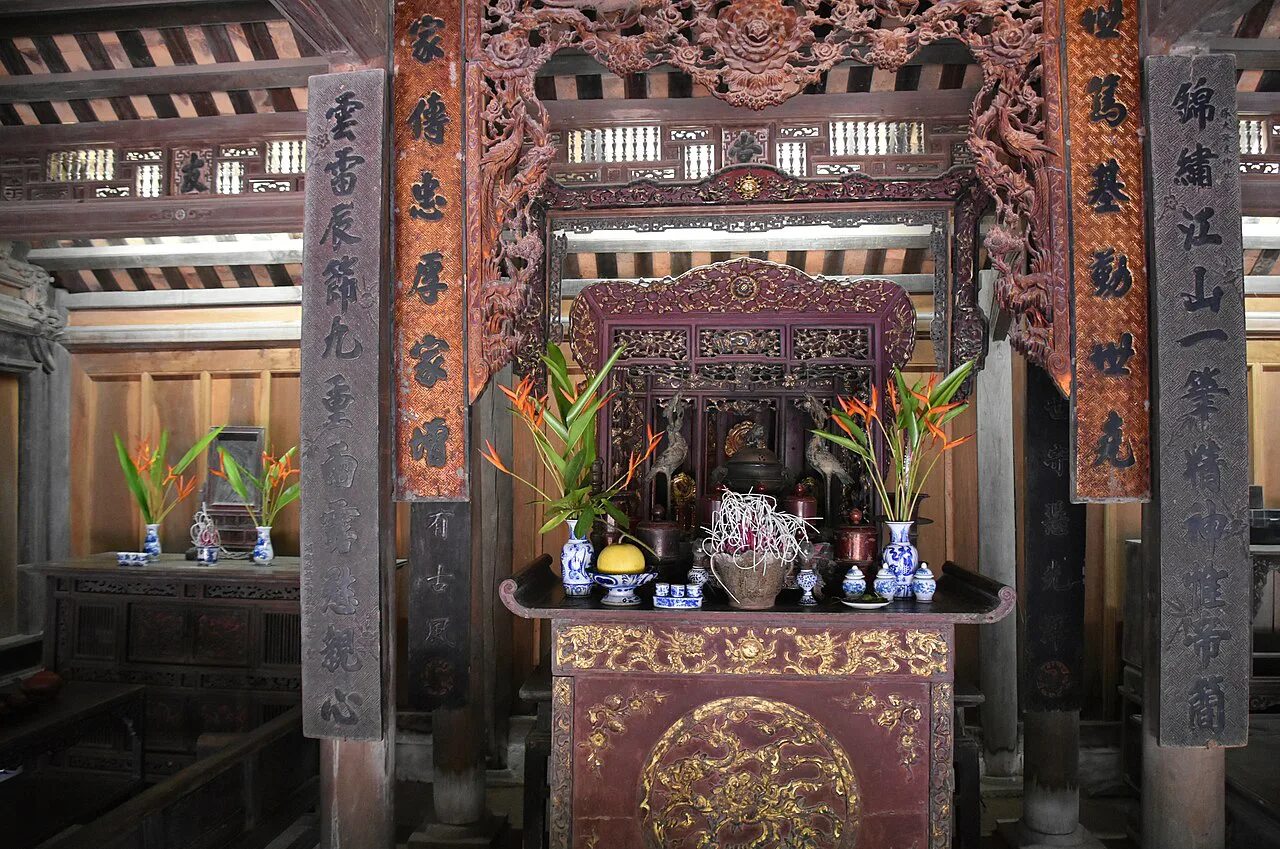
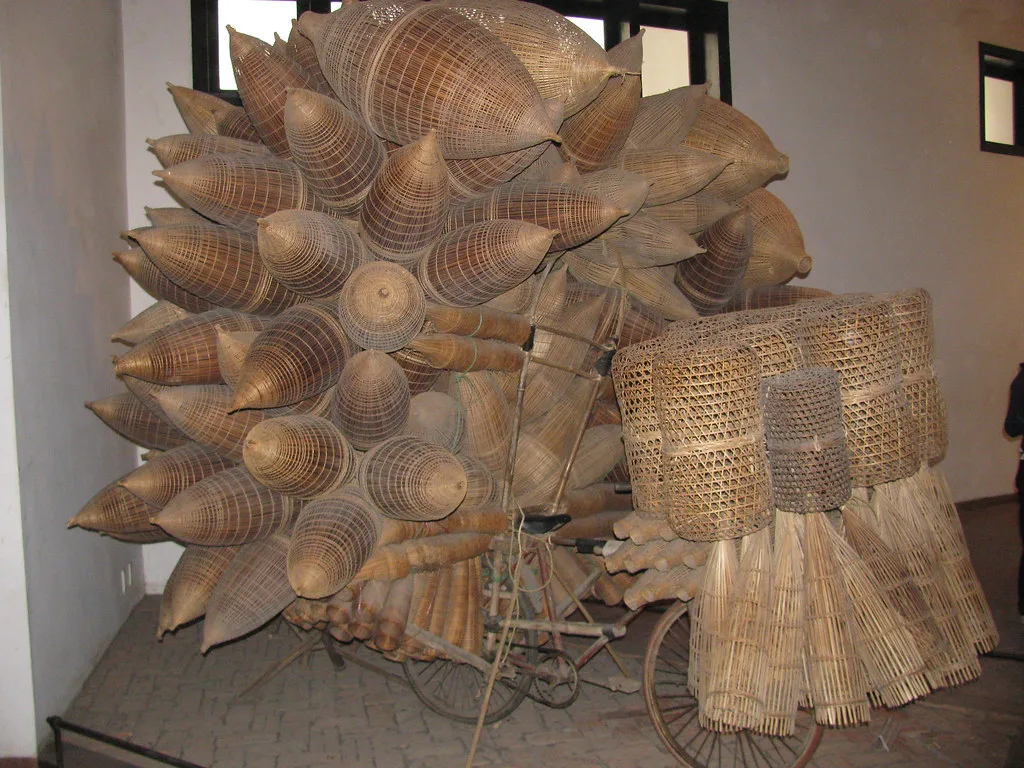
The indoor building is where you build your framework. Galleries group the country's ethnic communities by region and theme, with clothing, tools, musical instruments and household objects, and English panels and labels run alongside the Vietnamese. Give this building your first hour and a half, moving slowly through one region at a time rather than trying to cover everything with equal attention; the diversity is the point, not memorizing 54 names.
If you plan to walk the outdoor garden afterward, photograph or note the panels on house-building and village layout before you go outside, because the outdoor houses carry less interpretive text. Travelers with a guide usually get this connection explained on the spot. Anyone arriving without one should not skip the indoor section on architecture and settlement.
Outside: the open-air architecture garden
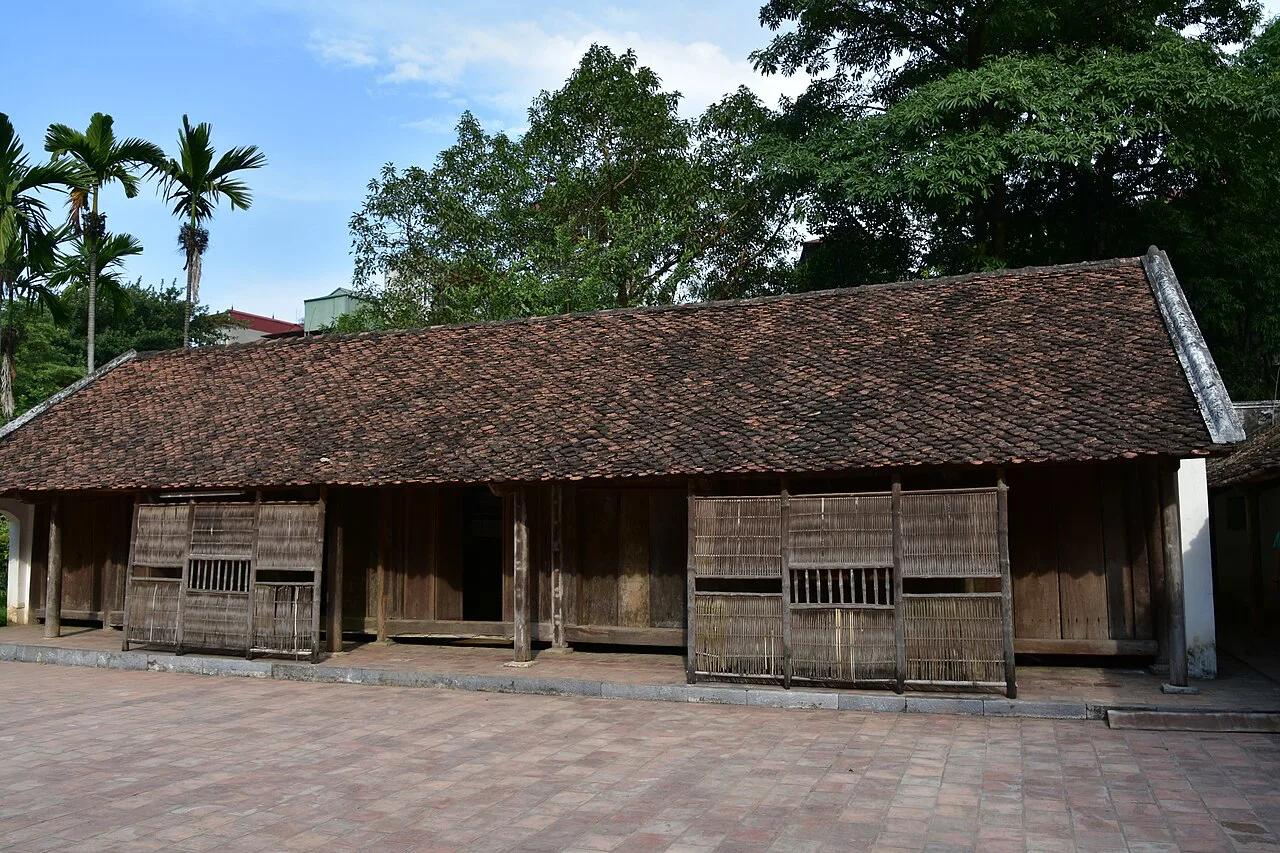
The second half of the visit is outdoors, in a garden holding full-scale traditional houses and structures associated with Vietnam's ethnic groups, from stilt houses to communal buildings, set among trees and paths. This is the part that makes the museum memorable for many visitors, and it is also the part that is hardest on legs and lungs in Hanoi's hot, humid months. Bring water, wear shoes that handle uneven ground, and aim for the outdoor section in the morning or late afternoon.
The museum is not only its indoor galleries and outdoor houses — temporary exhibitions rotate through the complex — but specific programmes are not fixed year-round and are not covered by the sources consulted here, so ask at the ticket desk on arrival what is scheduled during your slot. Even without a special exhibition, the architecture garden alone still justifies the trip.
Readers who want more than a museum on their western Hanoi day can pair the garden visit with a stop at the Hoàng thành Thăng Long, where the layered palace foundations and the D67 bunker add a different century to the same story of Vietnamese statehood, with the central sector open to visitors since its 2010 UNESCO inscription.
How long to allow: a realistic half-day plan
The honest answer to how long to spend is a half day, roughly three to four hours including arrival and a drink, not a quick hour. Split it as ninety minutes indoors, sixty to ninety minutes in the garden, and the remainder for lingering over a section that catches your interest. Add fifteen minutes each way for the ride if you are coming from the Old Quarter.
If you only have an hour or two, choose one half and do it properly: the indoor galleries for context on a first Hanoi trip, or the open-air houses if you have already read up on the ethnic groups and want to see architecture up close. Do not try to rush both in ninety minutes; the outdoor path is uneven underfoot and the gallery labels reward reading. Families with young children often find the garden a better use of a short window, since stilt houses and paths let kids move rather than stand at vitrines.
Opening hours: what the museum states and where to confirm
The museum's website lists its hours of operation as 8.30 to 17.30, according to the Vietnam Museum of Ethnology's own site. Treat that as the planning baseline and re-check the museum's site before your visit, because holiday periods and private events can alter the day. Confirm on the official site rather than relying on tour-booking pages, which often repeat older dates.
Because the museum is a research institution as well as a public building, some rooms or the garden may be closed for maintenance without appearing on third-party listings. If your Hanoi days are tight, email the museum or ask your hotel to call ahead the morning you plan to go. Arriving near opening gives you the coolest outdoor hours and the quietest galleries.
Tickets and entrance fee: confirm the dong price at the source
Ticket prices for the museum are set locally and reviewed periodically, so the reliable move is to check the entrance fee in Vietnamese dong on the museum's official website or at the ticket desk when you arrive, rather than budgeting from an old blog post. Bring cash in dong; card acceptance at small attractions in Hanoi cannot be assumed. Concessions for students, children or larger groups are worth asking about at the window.
Guided tours versus self-exploration
The indoor galleries carry English labels and panels, so a confident English-speaking visitor can self-guide without missing the main thread. A guide earns their fee in two places: explaining how the ethnic groups relate to regions you may have visited, such as the northern highlands, and decoding the outdoor houses, which are less heavily captioned. Travelers going on to Sapa or Ha Giang after Hanoi often find the indoor context a good warm-up.
Book a licensed guide through your hotel or a tour operator rather than accepting an informal offer at the gate, and agree on whether the guide's fee includes your museum tickets. A small group of four or more usually makes the per-person cost of a guide reasonable. If you go alone and are unsure, a short audio or guidebook section on the ethnic groups of Vietnam covers the essentials.
Nearby options: what pairs with a Cau Giay museum visit
The museum sits west of the Old Quarter, so the cleanest pairing is with the Ba Dinh cluster: Ba Dinh Square, the Ho Chi Minh Mausoleum area and the Imperial Citadel are all a short ride east, while Hoan Kiem Lake and its evening streets are further again. Build the day as a loop: the museum in the morning, lunch in Ba Dinh, then a historic sight in the afternoon.
If your taste runs to colonial architecture, the Hanoi Opera House near the lake offers another kind of Hanoi afternoon, and the St. Joseph's Cathedral area gives you cafés and photogenic streets to finish. Neither is close to Cau Giay, so save them for a separate day rather than cramming them with the museum.
Who this museum suits, and when to choose another
This is the strongest Hanoi museum choice for travelers who want to understand Vietnam's people rather than its wars or dynasties, and it is unusually good for families because of the outdoor houses. First-time visitors with three or more Hanoi days can comfortably fit it in; those on a single day should weigh it against the Imperial Citadel, which they can see in the center without the ride west. Readers comparing options can see the wider lineup in our Hanoi Attractions: 5 Visitor Guides.
Travelers who prefer confrontation with 20th-century history should choose the Hoa lo prison instead, while architecture lovers might prefer the opera house area. Do not treat the ranking as fixed; pick the museum that answers the question you came with. If your question is who lives in Vietnam and how, this museum answers it.
Should you book the museum into your Hanoi days?
Book it if you have half a day, want context on Vietnam's ethnic diversity, and are happy to ride west for it; skip it if your schedule leaves no room beyond the Old Quarter and the citadel. Go in the morning for cooler outdoor walking and confirm the current hours and dong ticket price with the museum before you travel.
Explore more Hanoi guides
Frequently Asked Questions
Is the Vietnam Museum of Ethnology worth visiting?
It is worth it if you want to understand Vietnam's 54 officially recognised ethnic groups and enjoy walking through full-scale traditional houses. Plan a half day, and confirm the current hours and ticket price with the museum before you go. Travelers who only want royal treasures or war history should choose a different Hanoi museum.
What is an ethnology museum?
An ethnology museum displays the everyday cultures, housing, crafts and customs of peoples, in this case the 54 officially recognised ethnic groups of Vietnam. The Hanoi museum combines indoor galleries with an open-air garden of traditional buildings.
How do I get to the Vietnam Museum of Ethnology from the Old Quarter?
Take a metered taxi or ride-hailing car west to Cau Giay district, which usually takes about 20 to 30 minutes depending on traffic. Buses also run toward Cau Giay, but check a current map for routes and stops.