
Imperial Citadel of Thang Long: What to See and How to Visit

The Imperial Citadel of Thang Long is worth two to three hours of your Hanoi trip, and it is the single best place to see the city's history stacked in layers rather than read on a plaque. This guide covers where the site sits in Ba Dinh District, which gate you enter, what to see inside, a walking order that avoids backtracking, and where to confirm hours and tickets before you go.
What the Imperial Citadel of Thang Long is
The Imperial Citadel of Thang Long, or Hoàng thành Thăng Long in Vietnamese, preserves the core of the imperial capital for roughly thirteen centuries, from the Lý dynasty founder Lý Thái Tổ's move of the court to the site in 1010 until the Nguyễn dynasty shifted the capital to Hue in 1802. The central sector was inscribed on the UNESCO World Heritage list in 2010, citing the archaeological evidence of successive dynasties whose palaces were built one on top of another, according to Cultural Heritage Online.
That layered character is what separates this site from a single monument. You are not looking at one restored palace but at a compound where Lê dynasty gates and terraces, a nineteenth-century tower, a twentieth-century bunker, and an open excavation of earlier foundations sit within a few minutes' walk of each other. Go expecting fragments, foundations, and archaeology rather than gilded halls.

Where it is and which gate you use
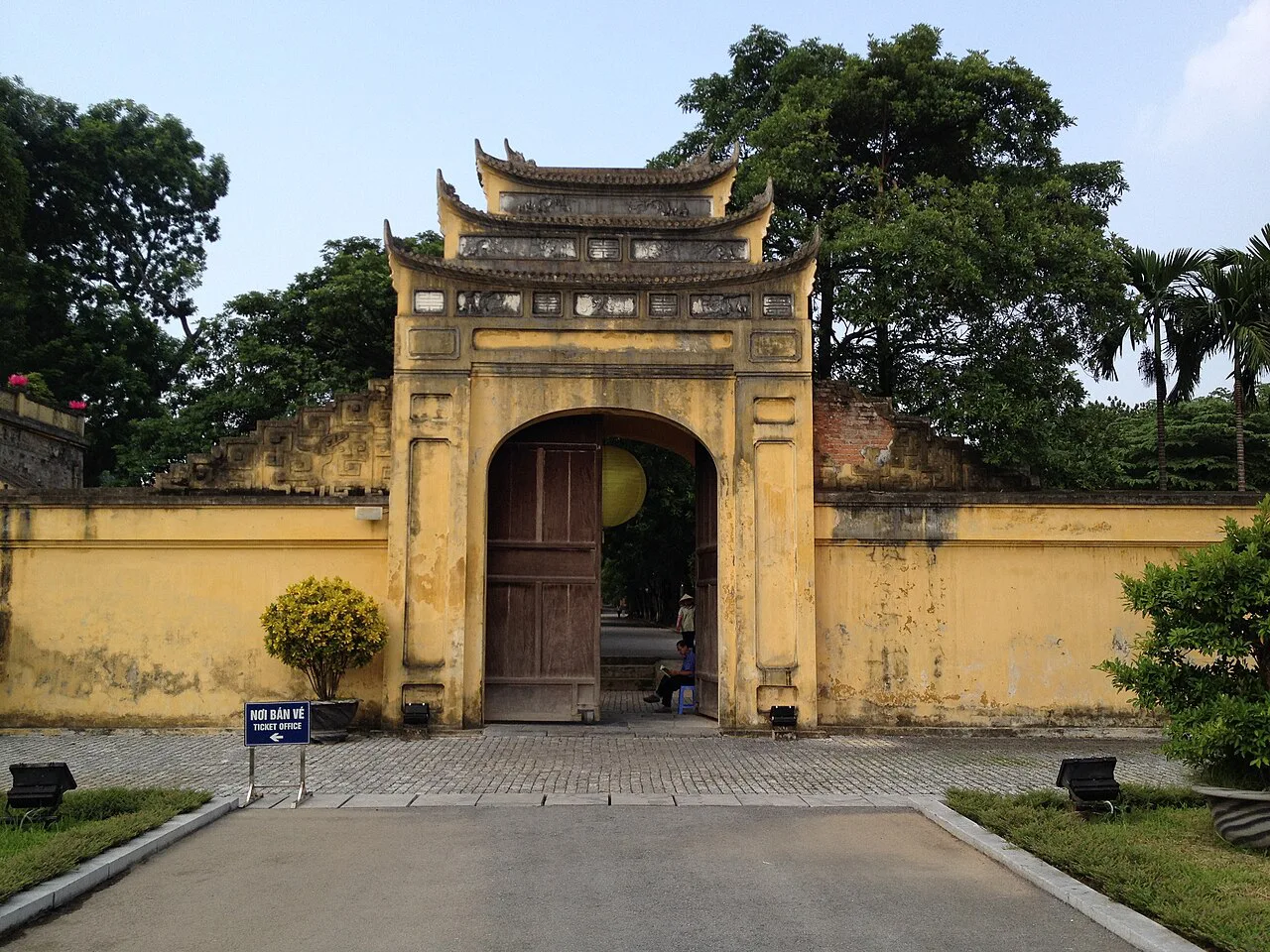
The citadel occupies the center of Ba Dinh District, bordered by Hoang Dieu Street to the west, Dien Bien Phu Street to the south, Nguyen Tri Phuong to the east, and Phan Dinh Phung to the north. The visitor entrance most guides name is at 19C Hoang Dieu Street, which is the address to give a taxi driver or pin in your maps app.
Because it sits next to Ba Dinh Square, the Ho Chi Minh Mausoleum, and the Presidential Palace, it slots naturally into a morning when you are already in that part of the city. It is also about a kilometer south of the Temple of Literature, so the two can be paired if you start early and keep moving.

How to get there from the Old Quarter and Hoan Kiem
From the Hoan Kiem Lake area the citadel is roughly 2.5 kilometers west, a walk of a bit over half an hour or a short Grab or taxi ride. The ride-hailing apps and metered taxis are widely available downtown, and a car or scooter is the simplest option if you are carrying bags or visiting in the heat of the day.
Public buses run along the streets bordering the compound, and local guides name route 22 as stopping near the Hoang Dieu entrance. Bus numbers and stops can change, so check the route in a maps app on the day rather than relying on a years-old listing before you set out.
Đoan Môn Gate: the southern ceremonial entrance
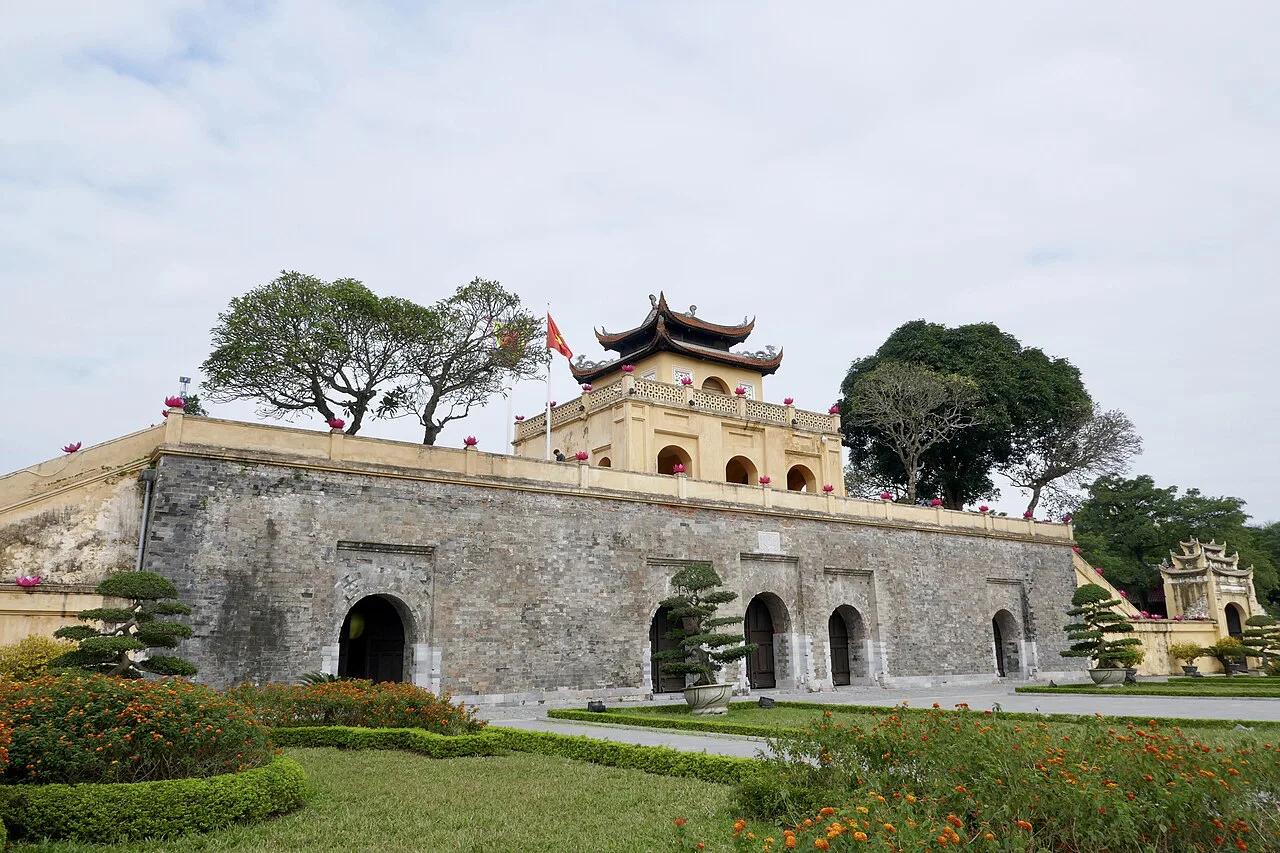
Đoan Môn is the ceremonial southern gateway to the imperial city, built in the fifteenth century and the only substantially intact above-ground architecture from the Lê dynasty citadel. Its three passages were ranked: the central one was reserved for the emperor, while the side passages served the imperial guard.
In practice this is where the scale of the site first lands, because the gate frames the long approach to the palace terrace. Pause here for photographs before the crowd moves on, then walk the axis toward Kính Thiên rather than drifting sideways into the grounds.
Kính Thiên Palace terrace and the dragon steps
Kính Thiên, the Palace of Reverence for Heaven, was the primary ceremonial audience hall of the Lê dynasty, and only its stone approach terrace with dragon-carved balustrades survives today. The palace building itself was destroyed by the French colonial army in 1886, which is why you arrive at an open platform rather than a hall.
Knowing that date changes what you look at. Instead of searching for a missing building, study the dragon steps and the terrace edges as the ceremonial stage that emperors once climbed, and give yourself a few minutes to read the panels before moving on.
Hậu Lâu and the Vietnamese-French mix
Hậu Lâu, the Princess Tower, is a nineteenth-century Nguyễn dynasty structure and the most intact standing building on the site, later used during the French colonial period as a barracks and water tower. Its fabric shows the layering plainly, with Vietnamese construction overlaid by French military alterations.
It is a short climb and a good place to take in the compound's layout from above, which helps you orient before the archaeological zone. Treat it as an orientation stop of ten minutes rather than a destination in itself.
House D67 and the underground bunker
House D67 and its bunker are a reinforced concrete command complex built in 1967 about two meters below the citadel courtyard, used by the North Vietnamese military leadership including General Võ Nguyên Giáp during the war. Original military maps, communications equipment, and the conference table remain in place, including the room where the 1968 Tết Offensive and the 1975 Ho Chi Minh Campaign were planned.
This is the section most visitors underestimate, because the imperial and wartime stories sit within a few meters of each other. If you have an interest in twentieth-century history, budget extra time here and go through it after the palace terrace so the chronology lands in order.
The 18 Hoàng Diệu archaeological site
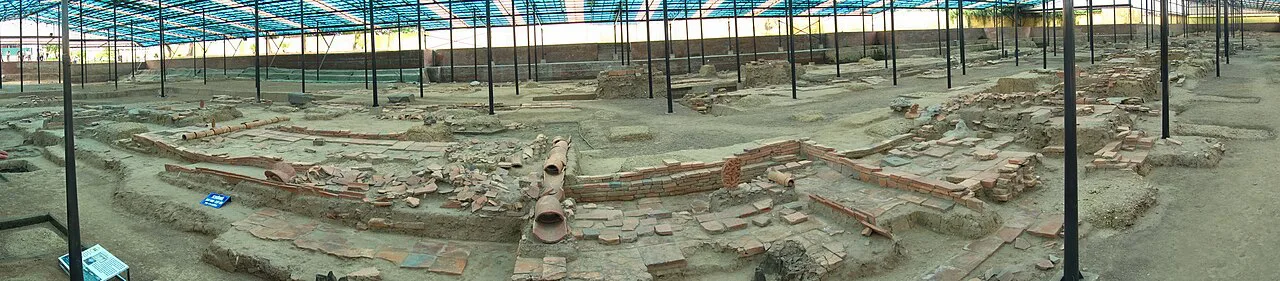
The excavation at 18 Hoàng Diệu Street is a 4.5-hectare open site adjacent to the main compound, partially covered for visitors, where stratigraphic profiles expose occupation layers from the seventh to ninth centuries through the eighteenth. The 2004 excavations of the adjacent National Assembly site revealed roughly 40,000 square meters of multi-period imperial architecture, including ceramic roof tiles, dragon-decorated elements, and palace foundations stacked on one another.
Come here last if you are tiring, because it rewards slow reading more than quick looking. Walk the edge of the trenches, then pick two or three information panels that interest you instead of trying to absorb every layer.
The Hanoi Flag Tower and whether it is on your ticket
The Flag Tower, Cột cờ Hà Nội, was built in 1812 under the Nguyễn dynasty Emperor Gia Long and stands 33 meters tall at the southern approach to the citadel compound. It is the site's most photographed landmark and the natural first or last image of a visit.
Admission arrangements for the tower and the central sector are not something the sources here settle in a way you should bank on. Ask at the ticket office when you buy your entrance ticket whether the tower is included on the day, rather than assuming it is a separate paid sight.
How long to allow and the best walking order
Plan two to three hours for a focused visit and up to half a day if you want to read panels and sit with the D67 rooms. The site is large enough that backtracking costs real time, so commit to one loop instead of darting between highlights.
A sensible order starts at Đoan Môn and follows the ceremonial axis to the Kính Thiên terrace, climbs Hậu Lâu for the overview, drops into House D67, and finishes at the 18 Hoàng Diệu excavation. Visit the Flag Tower on the way in or out, since it sits at the southern approach rather than in the middle of the route.
Mornings are cooler and quieter, and Hanoi's hot, humid summers make an early start more comfortable. Afternoon light is better for photographs of the gate and terrace, so trade off comfort against pictures depending on the season you visit.
Guided tour or self-exploration
Self-exploration works well if you read English display panels comfortably, because the site explains itself panel by panel and you can move at your own pace. A guide pays off if you want the dynastic sequence and the wartime use connected into one story, since the compound mixes seven centuries of building with a twentieth-century bunker.
Tour operators elsewhere in the city package the citadel into city day tours, but the sources reviewed here do not give a reliable stand-alone guide fee. Ask the ticket office about on-site guides or audio options and compare against a private city tour quote before committing.
Hours and tickets: confirm before you go
The sources reviewed here do not give current opening hours or adult ticket prices, and travel listings go stale quickly at a state-run heritage site where hours can shift for holidays and events. Confirm both with the operator through the citadel's own website or at the ticket window before your visit, and reconfirm on the morning you go.
Check the citadel's own official website or the ticket window before you travel, and reconfirm on the morning of your visit. If you are buying a city tour that includes the citadel, ask whether the entrance ticket is included in the tour price so you are not paying twice.
What is within walking distance when you finish
Ba Dinh Square, the Ho Chi Minh Mausoleum, and the Presidential Palace are minutes away, and the Temple of Literature is about a kilometer south. Hoan Kiem Lake and the Old Quarter are roughly 2.5 kilometers east, an easy taxi ride or a longer walk through the French Quarter.
If you want a contrasting Hanoi afternoon, the Hanoi Opera house and the St Joseph Cathedral Hanoi sit in that eastern quarter and pair well with a lake walk. For a wider menu of options by neighborhood and time of day, work through our things To do in Hanoi guide before you lock in the rest of the day.
Travelers with more time and an interest in Vietnam's ethnic diversity should consider the Vietnam museum of ethnology, a short ride west of Ba Dinh. It is a different kind of museum, so slot it on another day rather than trying to add it to a citadel morning.
Closer in, and a sharp change of mood, the Hoa lo prison museum tells the colonial and wartime story from the inside of a city prison rather than a royal compound. It suits an afternoon after a citadel morning, when the contrast between imperial grandeur and incarceration makes both visits land harder.
Is the citadel worth your Hanoi morning?
Yes, if you want to understand how Hanoi's imperial, colonial, and wartime histories physically overlap rather than reading them separately. Two to three hours with the walking order above covers the essential stops without exhausting you, and an early start keeps the heat and crowds manageable.
Before you go, confirm hours and ticket prices through the operator's own channels, ask at the ticket office about Flag Tower access and on-site guides, and keep the rest of your day flexible around Ba Dinh. For more Hanoi planning by area and interest, browse the Hanoi Attractions: 5 Visitor Guides collection and build the day outward from there.
Frequently Asked Questions
Does Vietnam have Ancient ruins like this one?
Vietnam has several archaeological and imperial sites, and the Imperial Citadel of Thang Long is unusual because its excavated layers run from early occupation through the Lê dynasty within one compound. Other imperial remains are concentrated in Hue, the Nguyễn dynasty capital from 1802, and at earlier capital sites such as Hoa Lu in Ninh Binh province.
Is the Imperial Citadel of Thang Long the same as the Hue Citadel?
No. The Thang Long citadel is the imperial core of Hanoi and was inscribed by UNESCO in 2010, while the Hue monuments belong to the later Nguyễn dynasty capital in central Vietnam. The Hue complex is often described with separate terms for the citadel walls and the imperial city inside them, so read Hue listings carefully if you are comparing the two.