
Hanoi Opera House: A Practical Guide to Visiting and Catching a Show

The Hanoi Opera House is a working theater, not a museum, so the most reliable way to see the inside is to buy a ticket to a performance. Built in the French colonial era and modeled on Paris's Palais Garnier, it anchors the eastern edge of the Hoan Kiem district and is one of the city's most photographed facades. This guide covers where it sits, how to reach it on foot, what the Vietnam National Opera & Ballet stages there, how ticket tiers are priced in dong, and how to pair a show with nearby Hanoi sights.
What Hanoi Opera House Is: A Working Theater, Not a Museum
Treat the Opera House as an active performance venue rather than a heritage site with a turnstile. Its auditorium hosts opera, ballet and orchestra programs, and the building's day-to-day life revolves around rehearsals and evening shows. That shapes your planning: instead of asking when the building opens, ask what is playing during your dates and whether seats remain. The Vietnam National Opera & Ballet, the resident company, publishes its program and ticket notices on its own site.
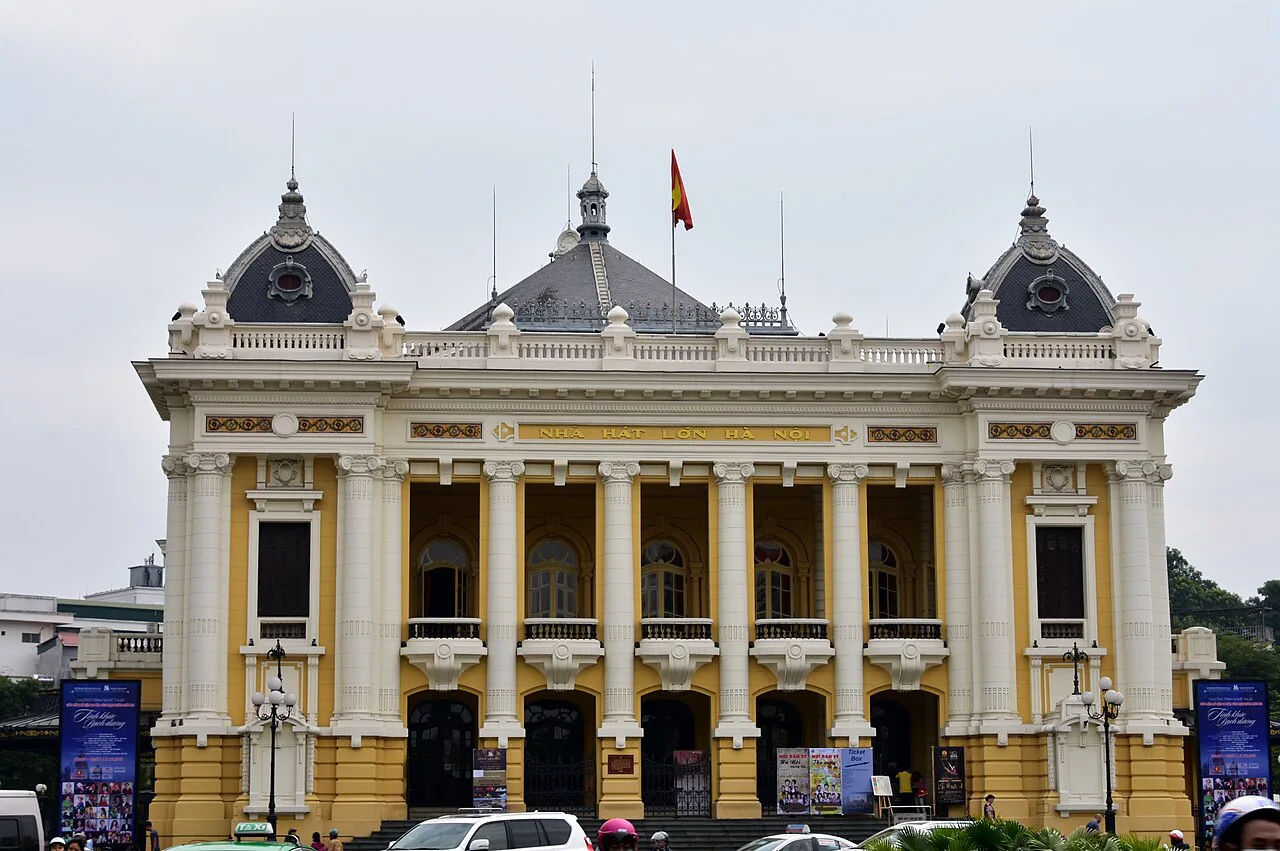
Architecturally, the building is a Hanoi landmark in its own right, with a colonnaded facade, a grand staircase and three interior levels. Wikipedia notes it was modeled on the Palais Garnier in Paris, which explains the heavy European look in the middle of a Vietnamese streetscape. You can appreciate that from the sidewalk in a few minutes, but the interior only reveals itself to ticket holders.

Where It Is and How to Get There
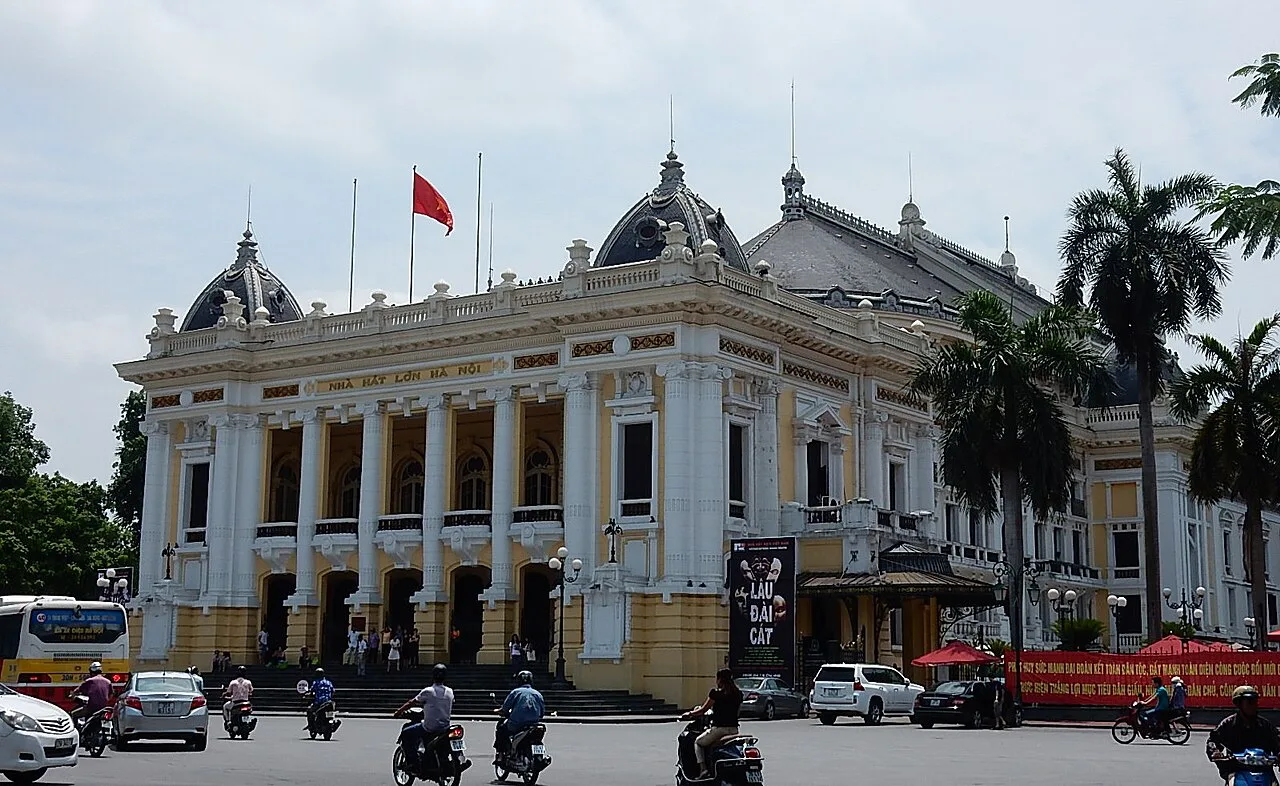
The Opera House stands at the eastern end of the Hoan Kiem district, roughly a five- to ten-minute walk from the northern tip of Hoan Kiem Lake along Trang Tien Street. If you are staying in the Old Quarter, it is a comfortable walk of about fifteen to twenty minutes from the lake's north shore, and the route passes cafes and shops that make the stroll part of the outing.
Ride-hailing apps and metered taxis are the simplest option after dark, when the walk back through the Old Quarter is busier but still manageable. Vietnam Airlines' city guide lists the Opera House among central Hanoi landmarks and covers transport options and nearby sights in more detail. Because one-way streets and evening traffic can stretch a short drive, leave a buffer if you are heading straight to a curtain time.
Can You Go Inside? Performances Versus Seeing the Building
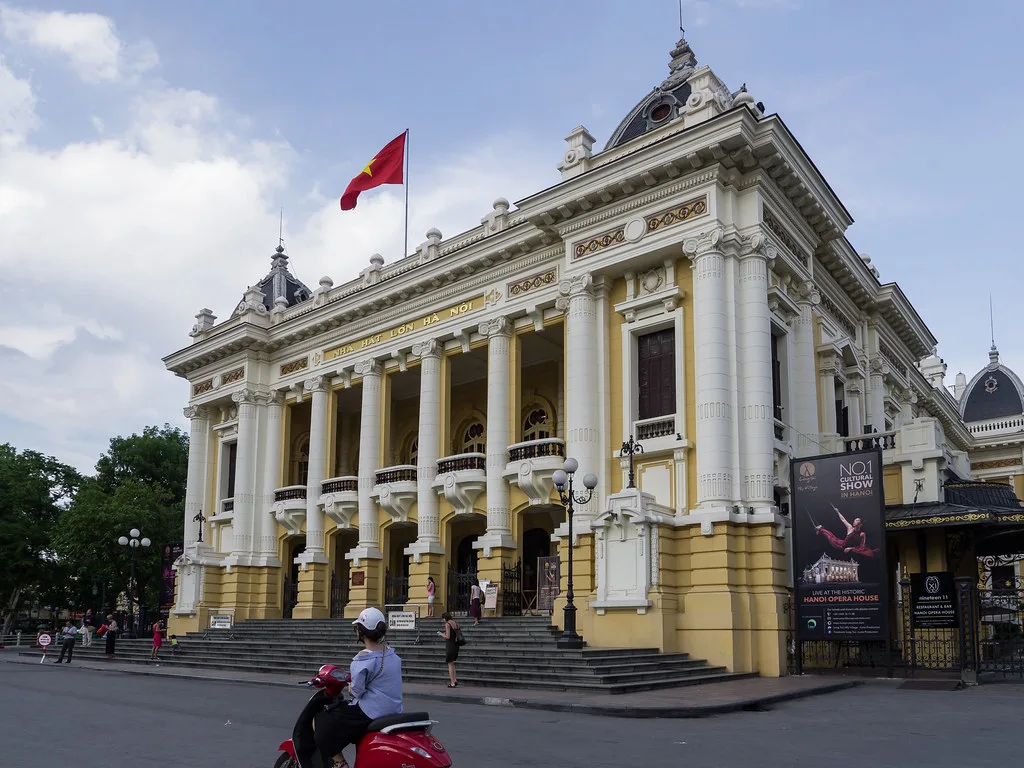
Casual daytime entry is not something you should count on. The practical route inside is a performance ticket, which is why the program matters more than opening hours for most travelers. If you only want the architecture, plan an exterior stop and photograph the facade from the plaza in front or from the broad approach along Trang Tien.
The official Opera House website, hanoioperahouse.org.vn, was showing an under-construction placeholder when last checked, so do not rely on it for schedules or visitor rules. Use the resident company's site or ask your hotel to call the box office instead. That also settles the recurring question of whether the building is closed: it is a venue with a program, and access depends on what is being staged.
What a Show Is Like: Opera, Ballet and More
The Vietnam National Opera & Ballet stages a mix of full operas, ballet evenings and orchestral concerts, and its site has advertised productions such as Swan Lake and Les Misérables alongside opera programs. Productions are announced in batches rather than as a fixed year-round calendar, so the season you find will depend on when you travel. Check the events calendar on the company site before locking your Hanoi dates around a specific title.
Expect a formal evening out rather than a casual concert: the auditorium is a historic hall, and audiences tend to dress smartly. There is no published dress code you need to chase, but collared shirts and closed shoes fit the setting, and a light layer helps with air conditioning. Photography rules vary by production, so follow the announcement for your show rather than assuming.
Ticket Prices in Dong and How to Book
Ticket prices are set per production, and the Vietnam National Opera & Ballet lists them in tiers in Vietnamese dong. One archived listing for a ballet run shows seats at 1,000,000, 800,000, 700,000, 600,000 and 500,000 VND, according to the company's own site, which also posted hotline numbers for booking. Treat those figures as an example of the tier structure rather than a promise for your dates, and confirm the current price when you book.
Booking usually runs through the company's published channels rather than a walk-up counter on the night, and popular titles can sell out. Save a screenshot of your confirmation and the price tier you paid, since seat allocation and any collection instructions are usually explained at purchase. If you are buying through a hotel or tour desk, ask which tier and row you are being sold before paying.
Opening Hours and When the Building Is Open
The resident company's site does not publish a simple daily window when the Opera House is open to walk-in visitors. Vietnam Airlines' guide has a section on opening hours and entrance fees and is useful for orientation, location and history, but treat any hours or fees there, and on third-party listings, as unverified against the current program. The reliable check is the program page for your dates plus a call to the box office.
Performance start times are the one schedule you can plan around, and evening curtains are the norm for opera and ballet. Arrive at least twenty to thirty minutes before the start to find your seat and settle in, and confirm the door-opening time when you book. If you are only viewing the exterior, daylight is best for photographs of the yellow facade.
How Much Time to Allow
For a show, budget a full evening: roughly two hours of performance plus an interval and the time to get in and out. Add dinner before or a drink after, since the surrounding streets have plenty of options, and you have a four-hour block. For the exterior alone, ten to fifteen minutes covers photos and a walk around the plaza.
If you are squeezing the Opera House into a packed Hanoi day, pair the exterior stop with the lake rather than treating it as a separate trip. Travelers building a wider sightseeing plan can look at the best things to do in Hanoi for route ideas that put the Opera House on a logical walking line.
Seating and What to Expect Inside
The interior is arranged over three levels, which matters when you choose a tier. Higher-priced seats sit closer to the stage and at the more central positions, while the cheaper tiers put you farther back or to the sides. For ballet, a central seat with a full view of the stage floor is worth the upgrade; for a vocal program, being closer helps.
The hall is historic, so legroom and sightlines vary more than in a modern auditorium. If you are tall or prefer an unobstructed view, ask about aisle or front-of-tier seats when booking rather than choosing purely on price. Vietnam Airlines' architectural walkthrough of the floors gives a sense of the layout before you commit.
Practical Tips: Dress, Language and Arriving Early
Dress neatly and arrive early; the building's stairs and lobby get busy close to curtain. Programs and announcements are often in Vietnamese with some English, and music needs no translation, so a language gap should not put you off. Keep phones silenced and check the production's photography policy before the lights go down.
Hanoi's evening heat and sudden rain are worth planning for: carry a light layer for the air-conditioned hall and allow extra time if traffic is heavy. If you are combining culture across the city, the Vietnam Museum of Ethnology offers a very different, daytime museum experience to balance an evening at the theater.
What's Nearby: Lake, Temple, Cathedral and Old Quarter
Hoan Kiem Lake is the obvious pre-show walk, and Ngoc Son Temple sits on its small island reached by the red Huc Bridge. The lake circuit takes about thirty minutes at an easy pace and gives you a natural route back toward the Opera House along Trang Tien. Vietnam Airlines lists the lake, the temple, St. Joseph's Cathedral and the Old Quarter as the main sights near the theater.
St. Joseph's Cathedral, a few blocks northwest of the lake, is a neo-Gothic landmark worth a short detour, and the surrounding streets are full of cafes. If you want a single page covering the cathedral's visiting details, see the guide to St. Joseph's Cathedral, Hanoi before you go.
History-minded travelers can build a full day around two heavier sights: Hoa Lo Prison in the French Quarter and the Imperial Citadel of Thang Long, both a short ride from the Opera House. Neither is a substitute for a performance, but together they give context to the colonial city the theater was built for.
Where to Confirm Schedules and Ticket Availability
Start with the Vietnam National Opera & Ballet site for the events calendar, ticket tiers and hotline numbers, then confirm by phone or through your hotel if you are booking close to the date. The official Opera House domain is not currently serving visitor information, so skip it until it is rebuilt. Cross-check any third-party listing against the company's own announcement before paying.
For a wider view of what to see in the city around your theater night, the Hanoi Attractions: 5 Visitor Guides collection maps the main sights by area. That helps you decide whether the Opera House fits an evening slot or a quick architectural stop on a longer walk.
Should You Book a Seat or Just Walk Past?
Book a seat if you want to see the interior, experience a Vietnamese opera or ballet company on its home stage, and do not mind an evening indoors. Skip the ticket and walk past if your priorities are street food, markets and temples, since the facade and plaza deliver the architecture in fifteen minutes. Either way, confirm the program and price tier on the company's site before you commit.
Build the rest of your Hanoi days around the lake and Old Quarter, and use the attraction guides to slot in a prison museum or citadel morning. That way the Opera House becomes one well-chosen evening rather than a detour across town.
Frequently Asked Questions
Is the Hanoi Opera House closed to visitors?
It is a working theater, so it is not a museum with regular walk-in hours. Access is normally through a performance ticket, and the program changes by production. Check the Vietnam National Opera & Ballet events calendar or call the box office for what is on during your dates.
Do I need to book in advance?
Booking ahead is the safer choice, especially for ballet and opera titles that draw local audiences. The company publishes ticket tiers and hotline numbers with each production. If you are buying through a hotel or tour desk, confirm the seat tier and row before paying.
How long is a performance?
Plan on roughly two hours plus an interval, and arrive twenty to thirty minutes early to find your seat. Add time for dinner or a drink nearby if you are making an evening of it. Confirm the running time and door-opening time when you book.