Bún Bò Huế in Hue: What It Is and How to Eat It
What bún bò Huế is, what is in the bowl, when to eat it in Hue, and how it differs from phở and the Saigon and Hanoi versions. Practical tips.
On this page
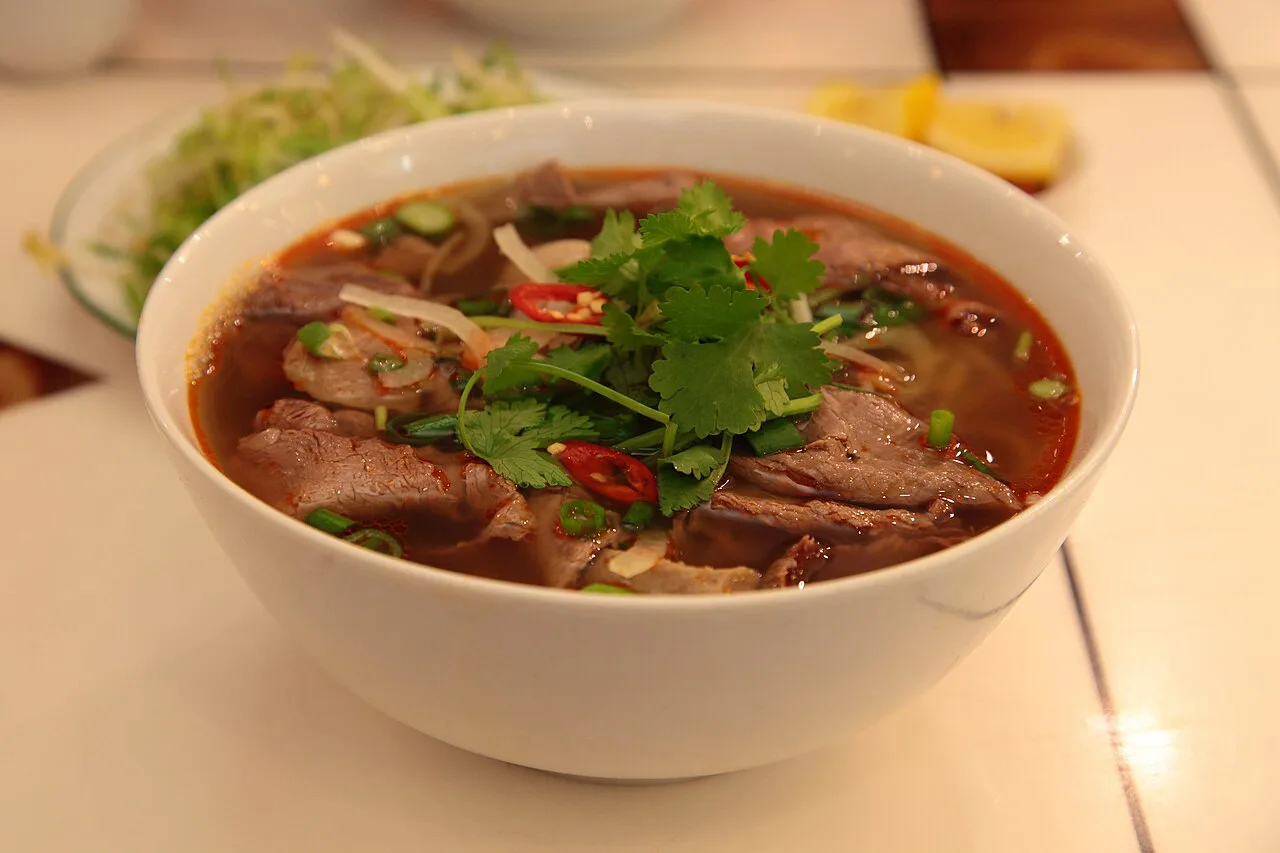
Last updated November 2026: bun bo Hue, written bún bò Huế in Vietnamese, is a spicy lemongrass beef-and-pork rice-noodle soup from Hue. Locals eat it mainly in the morning, as a full meal rather than a light breakfast. Our guide covers the bowl, the history, the heat, and where to go next in the Hue food guide.
Featured image: Vinnie Cartabiano, CC BY 2.0, via Wikimedia Commons.
What Is Bun Bo Hue? A Quick Answer
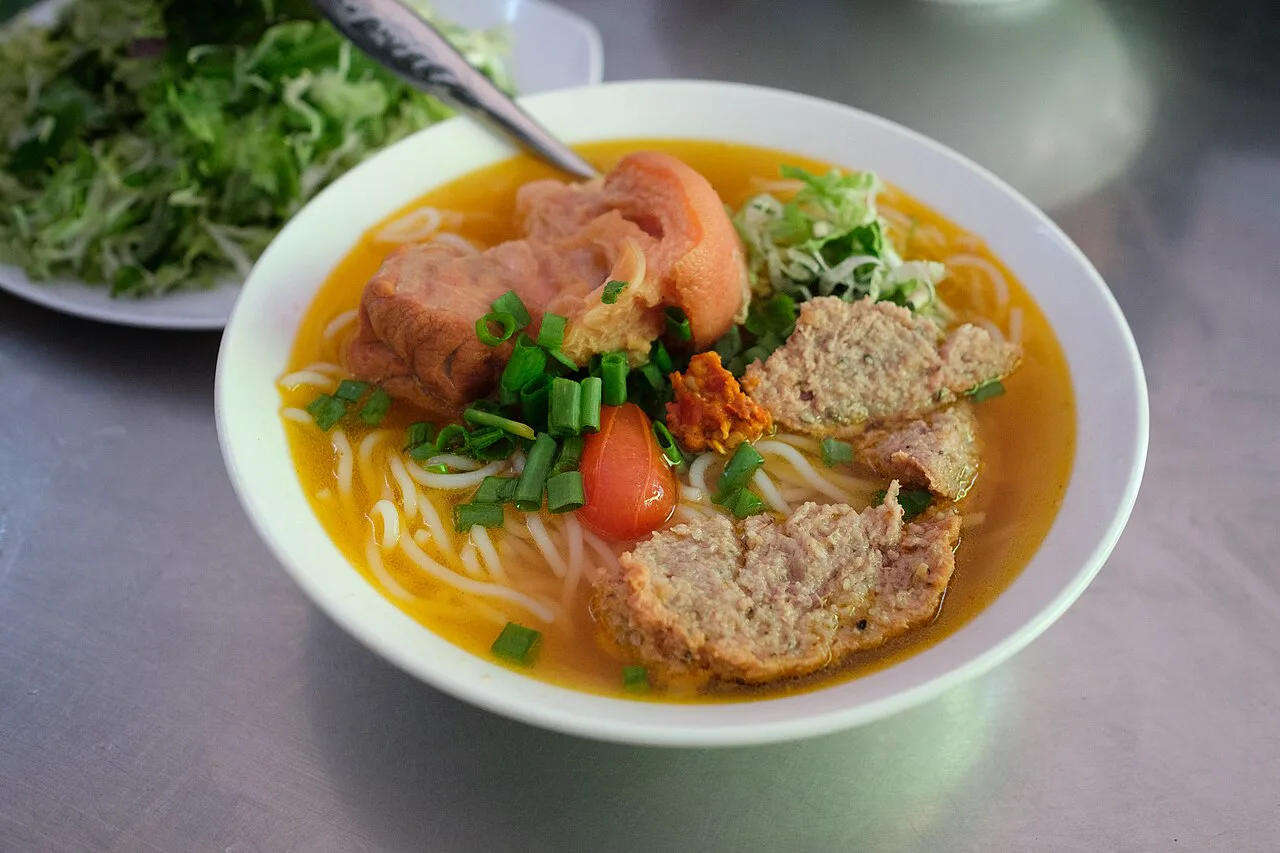
Bún bò Huế is a rice-noodle soup built on a beef-bone broth scented with lemongrass and seasoned with fermented shrimp paste. Slices of beef shank, pork knuckle and Huế-style pork sausage sit on thick, round noodles. Spicy, salty, sour, sweet and savory notes all land in one spoonful. Order it by the right name. Outside Hue the dish carries the city's name, while in Hue and nearby cities people simply say bún bò. We would not call it spicy phở, because the noodles, the pork and the shrimp paste make it a separate dish.
What's in the Bowl
Every bowl is assembled from a handful of parts. Use the table below to decide what you want in yours. Pork, pork blood and shrimp paste appear in the standard version, so flag them early if any of them worry you.
Tradition says Vân Cù village has made the noodles for over 400 years, so each bowl's round noodles carry that craft.
| Component | What it is | Who might skip it |
|---|---|---|
| Noodles | Thick, round rice vermicelli with a chewy, cylindrical shape | Few diners skip these |
| Broth | Beef-bone base flavored with lemongrass, fermented shrimp paste and chili | Shellfish-allergic diners and anyone avoiding heat |
| Beef shank or brisket | Thin slices of marinated, boiled beef | Beef avoiders |
| Pork knuckle | Soft, collagen-rich pork on the bone | Halal and pork-free diners |
| Chả | Huế-style pork sausage, sliced into the bowl | Halal and pork-free diners |
| Pork blood cubes | Congealed blood, dense and slightly chewy, with a strong iron taste | Anyone who dislikes iron flavors, plus halal and pork-free diners |
| Banana blossom | Thinly sliced for crunch; red or purple cabbage often stands in | Nobody in particular |
| Herbs and lime | Mint, basil, cilantro, sawtooth herb, sliced onion and lime wedges | Nobody in particular |
| Satế | A chili-and-lemongrass paste, often served on the side | Diners who want a mild bowl |
Why It Belongs to Hue
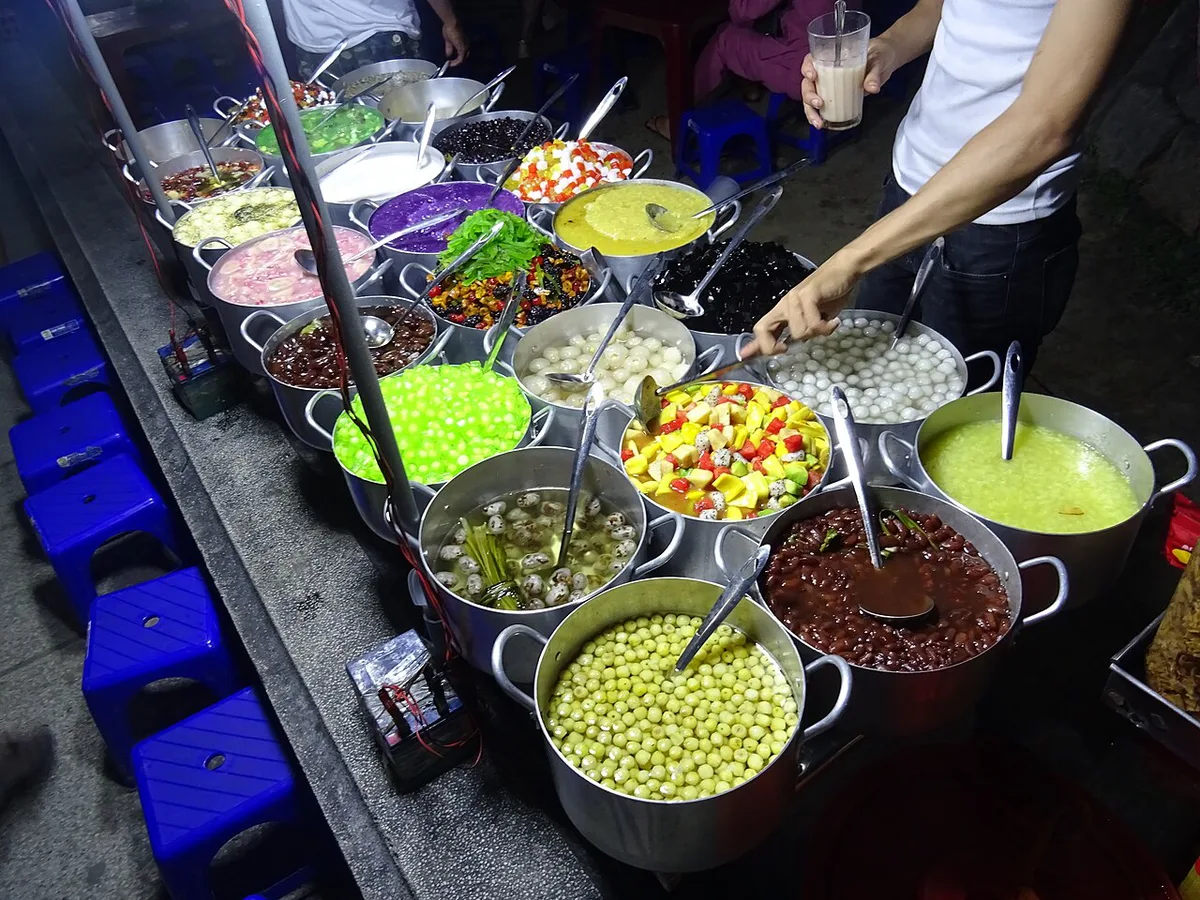
Hue became Vietnam's capital in 1802, when the Nguyễn dynasty ruled from the city. The Hue Monuments Conservation Centre looks after the imperial sites from that era. Food writers link bún bò to the royal-court cooking tradition. One account places the dish in Hue under the Nguyễn lords in the late 1500s and early 1600s. Another tells of a young woman nicknamed Cô Bún, who perfected noodle-making and passed the skill to Vân Cù village. Vân Cù noodles are described as white and springy, and the village is said to have made them for over 400 years. We treat both stories as tradition rather than settled history.
Bún Bò Huế vs. Phở and the Saigon and Hanoi Versions
Phở takes its name from flat noodles, while bún bò Huế uses round ones. A phở broth is typically all beef or all chicken. Bún bò Huế mixes beef and pork in one pot and pushes harder with shrimp paste and chili. Cooks in the south and north adjust the recipe again, as the table shows.
| Version | Noodles and broth | Meat and extras |
|---|---|---|
| Bún bò Huế in Hue | Thick, round noodles; lemongrass and shrimp paste dominate | Beef shank, pork knuckle, chả, pork blood cubes |
| Phở | Flat noodles; broth usually all beef or all chicken | Cuts from a single animal |
| Saigon version | Orange tint from annatto oil | Chả lụa replaces crab cakes and blood cakes |
| Hanoi version | Sweeter broth from beef legs and tendons | Meatballs replace crab cakes |
How to Eat Bún Bò Huế in Hue
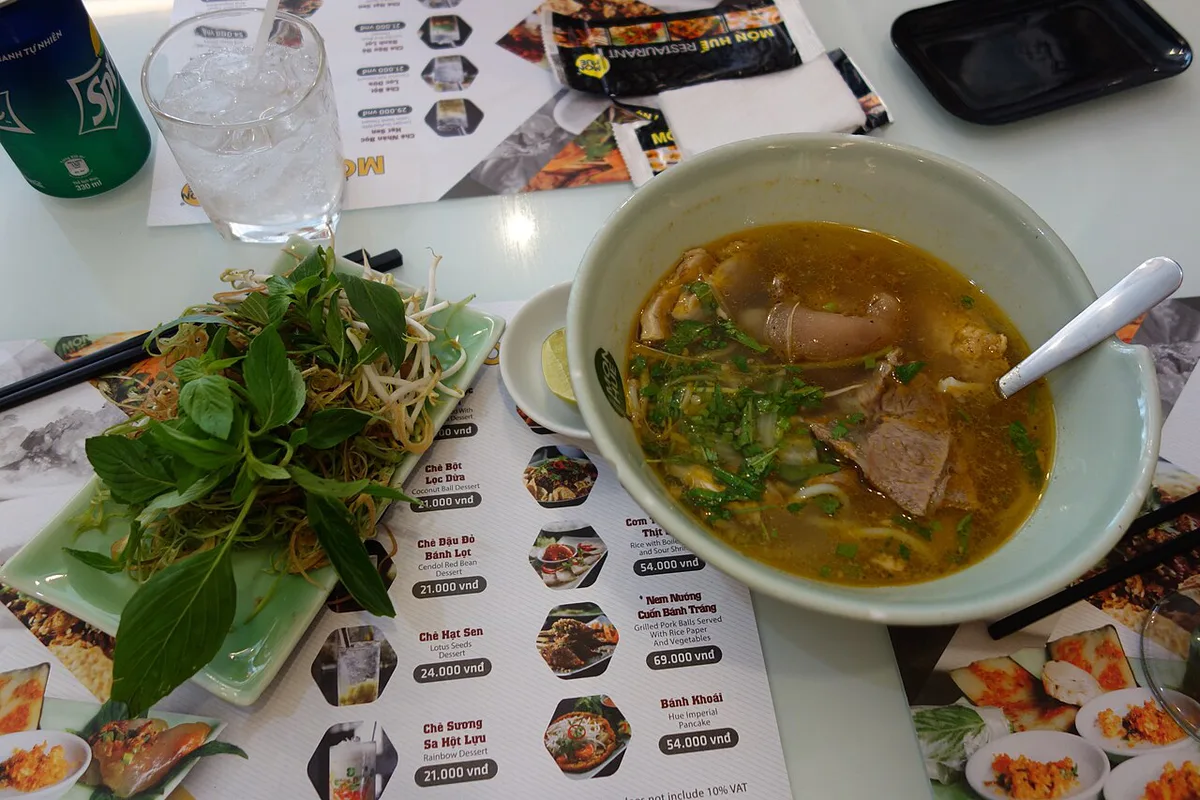
Go in the morning. Hue eats bún bò mainly as a morning meal, and stalls elsewhere in Vietnam serve it at other hours. Ask for bún bò and point at what you want in the bowl. Heat usually arrives as satế on the side, so add it a spoonful at a time after tasting the broth. Street and market stalls are the quickest and sit at the cheaper end of the scale. Dong Ba Market appears in photographs of bowls being served, which makes it a sensible place to start looking. Our Hue street food guide covers where to find stalls. Sit-down kitchens give you a menu and a table, and our restaurant picks for Hue list the options. For current events and listings, Thua Thien Hue's tourism site is the official starting point.
- Mistake to avoid: arriving late in the day, when the best pot may be finished.
- Mistake to avoid: assuming the broth is mild, since chili and shrimp paste are central.
- Mistake to avoid: missing the pork blood cubes and shrimp paste until you see them in the bowl.
- Mistake to avoid: pouring in all the satế at once, which is hard to undo.
Dietary and Allergy Notes
Standard bún bò Huế contains pork, pork blood and shrimp paste. Vegetarians, halal diners and shellfish-allergic readers should treat it as off the menu. The name misleads, since bò means beef, yet pork can outweigh beef in some bowls. Fish sauce and extra shrimp paste are also added at the table according to taste. Vegetarians will find better choices in our Hue Vegetarian Restaurants: Where to Eat Chay Food guide. Spice-averse diners can leave the satế aside and lean on herbs and lime.
Where to Go Next
Hue gave Vietnam more than one famous bowl. Bánh nậm, bánh bột lọc and cơm hến also trace back to the city. Browse them all in the full Hue food guide, then pick your stall.
Useful notes for your Vietnam trip
Optional updates to our guides.
You might also like
Continue reading
More guides you'll find useful