
Sapa Lake (Hồ Sapa): Your Guide to the Lake at the Center of Sapa Town
Sapa Lake is a man-made lake in the middle of Sapa town, free to walk around and best treated as the town's public living room rather than a ticketed attraction. There is no entrance gate, no street number and no fixed route to follow, so you can fold a loop of the shoreline into any morning or evening in town. This guide covers where the lake sits, how to reach it on foot, roughly how long a circuit takes, what you actually see around the water, and which nearby sights pair well with it.
What Sapa Lake is, and why it exists
Vietnamese signs and maps call it Hồ Sapa, which simply means Sapa Lake. It is artificial: the town deliberately shaped a body of water in the center to give a fast-growing mountain town some open, calm space. The construction story locals tell is that early attempts to dam the water failed because concrete drained into caves beneath the valley floor; alluvial soil from the Red River, with its sticky clay, was needed to retain the water according to a Sapa Lake history write-up by Halosa Sapa.
That origin explains what you get: an orderly embankment, paved roads around the rim, willow trees planted to hang over the water, flower beds and stone benches. Set your expectations accordingly. This is a calm town-center lake for strolling and sitting, not a swimming spot and not a trekking destination, so plan your mountain effort elsewhere and use the water as downtime.
Where Sapa Lake sits in town
The lake has no street address because it is a public landmark rather than a building. It is bordered by Ngu Chi Son, Xuan Vien, Pham Kim Dong and Pham Xuan Huan streets, which is useful when fog wipes out the mountain views and you need a fixed reference point instead. Practically, treat the lake as Sapa's compass: whatever corner of the center you end up in, walk toward the water and you can reorient from there.
Two fixed landmarks anchor the lake for visitors. The Sapa Stone Church, the town's dark-stone Gothic church, stands a short downhill walk from the shore, and Sapa Square sits close by as well. One visitor post on Instagram describes the lake as roughly 200 to 300 meters from Sapa Square and the church; read that as a rough walk, not a surveyed distance, and simply head downhill until the water opens up.
How to get to the lake
If you are staying anywhere in central Sapa, you walk. The lake is a few minutes on foot from the Stone Church and the main square, and the roads around the rim are flat compared with the town's steeper lanes. No source describes a ticket booth, opening time or admission fee, so treat the shoreline as open public space you can use at any hour, and if you want to join an organized lakeside activity, confirm the details and cost with your hotel first.
Anyone arriving from further out, whether by sleeper train to Lao Cai or by limousine bus from Hanoi, ends up in the same town center, so the lake usually becomes the first and last thing you see in Sapa. For the wider set of sights around town, including ones that do charge admission, work from the Sapa Attractions: 5 Visitor Guides hub before you build a day around the water.
Walking the loop: how long to allow
A relaxed circuit of the shoreline takes about 30 to 45 minutes according to Asiamystika, depending on how often you stop for photos. Trip.com's traveler listing suggests setting aside two to three hours for the lake, which reflects a visit with cafés, benches and a slow pace rather than the distance itself. Pick your number honestly: if you want one lap before dinner, the shorter figure holds; if the lake is your afternoon, the longer one does too.
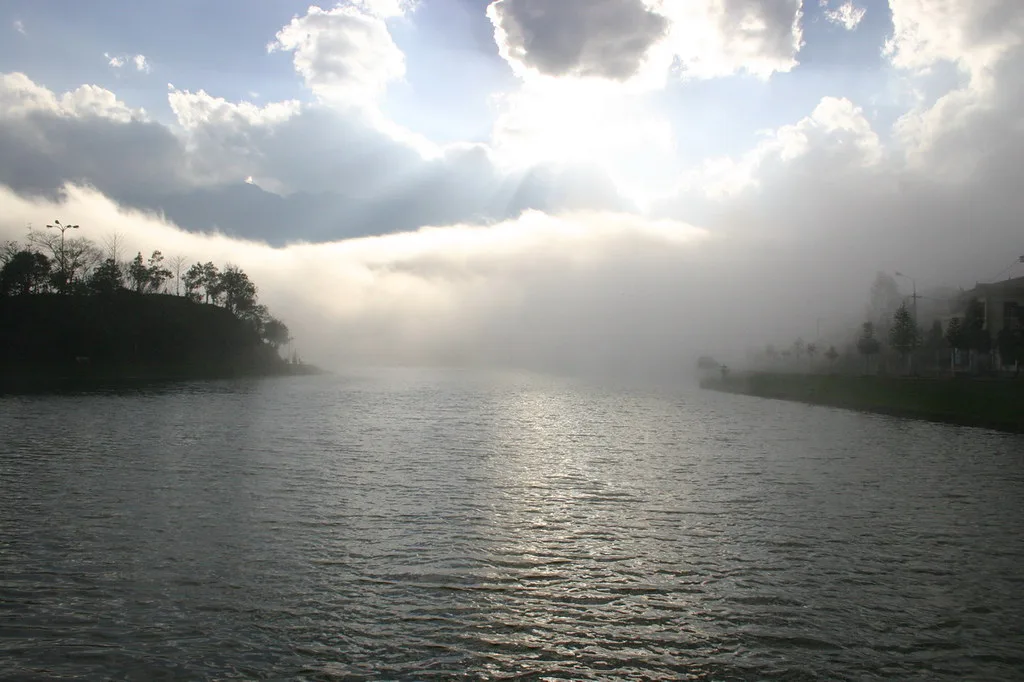
Stone benches are placed around the rim specifically so you can sit and rest while looking at the water, so there is no need to complete the full circuit in one push. Plan your direction by the light: early morning and late afternoon are when thin mist tends to sit on the surface, and those are the hours when a slow lap pays off most.
What you actually see around the water
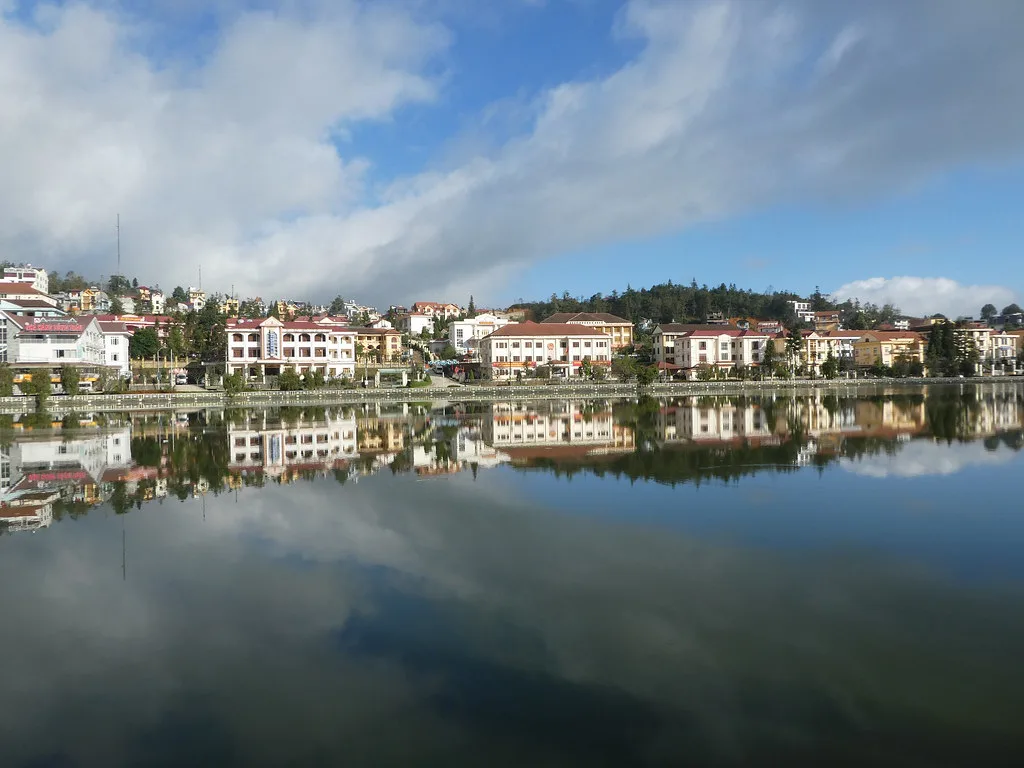
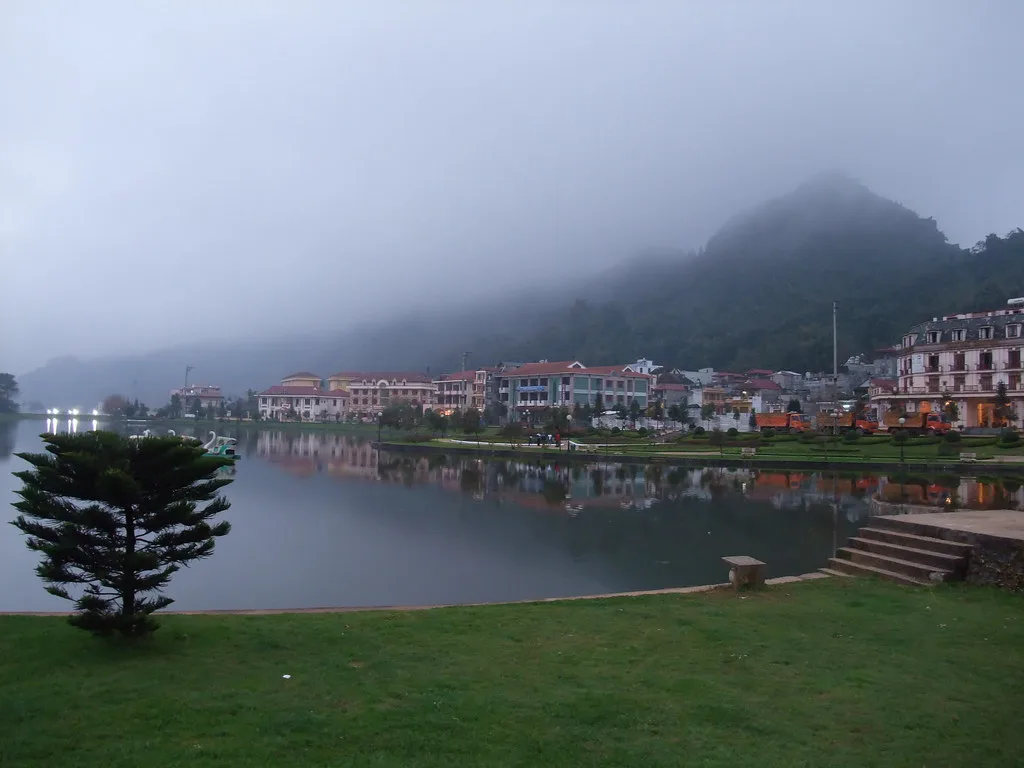
The immediate scenery is willows trailing into the lake, flower gardens along the embankment and the reflections of the town on the surface. Trip.com's listing notes a small island in the middle of the lake that draws birds and other animals, which is a fair description of what keeps photographers on the shore. In fog, the town and the far shore disappear entirely, which is atmospheric rather than disappointing as long as you have not come only for a mountain view.
As rated by travelers rather than an official body, the lake holds a 4.9 out of 5 from 16 reviews on Trip.com as of November 2026, which tells you it is consistently liked rather than spectacular. Judge it as a pleasant, free half-hour in the middle of town and it will deliver. Judge it as a headline sight and you may wonder what the fuss was about.
Best times of day to walk Sapa Lake
Morning is the quietest and most photogenic slot: thin mist over the blue surface, few people on the paths, and the town still waking up. Late afternoon gives you the same mist effect plus the chance to sit on a bench with a coffee and watch the light change. Both windows reward a slow walk rather than a brisk one.
After dark the lake changes character: lights reflect on the water and the smell of grilled street food, roasted sweet potatoes, corn and chestnuts, drifts over the shore. Bring a layer whatever the season, because Sapa sits at about 1,650 meters above sea level according to Halosa Sapa, and evenings cool quickly. One Trip.com traveler logged temperatures of 11 to 13 degrees Celsius around the lake in mid-November, which gives you a sense of what an evening walk actually feels like.
What's around the lake: Sun Plaza, cafés and the church
Sun Plaza Sapa, the emerald-and-gold shopping building with a clock tower modeled on Big Ben, stands out against the mountains and works as your second landmark when finding the lake from the upper town. Cafés and restaurants ring the water, which is why the loop stretches so easily, and the shoreline paths are paved enough to walk comfortably in ordinary shoes.
Sapa Market is within walking distance of the lake and makes a natural pairing, whether you loop the water first thing and shop afterward or reverse the order. The Sapa Market (Chợ Sapa) guide covers what is sold there and when it is busiest, so you can decide how much of your afternoon the market deserves.
Sights near the lake that are not on it
The lake is the calm center, not the whole day. Cat Cat Village, the Fansipan cable car and the Moana Sapa photo park are the usual big-ticket draws, and Silver Waterfall sits about 15 km from Sapa town according to Asiamystika, which makes it a half-day add-on rather than a quick stop. Slot the lake between those outings as a reset, especially on a day when cloud has cancelled the views you came for.
If you would rather stay on foot, Ham Rong Mountain rises close to the town center and gives you a viewpoint without a cable car ticket, which suits travelers who want one climb and one easy afternoon by the water. Neither Ham Rong nor the lake charges at the gate in any source here, but check current access and any fees on site rather than assuming.
Practical points before you go
Do not plan to swim. Sources describe walking paths, benches, gardens and cafés, and nothing describes the lake as a swimming spot, so treat it as a place to walk and sit. Weather decides the view: clear mornings show the mountains, foggy ones show nothing, and Trip.com's live listing for the lake is a sensible check before you decide whether to hurry there for sunrise.
There is no official lake operator page to consult, so for anything beyond a plain walk, ask your hotel or a town information point about lakeside events and access on the day you plan to go. A ten-second question at reception settles what a website cannot.
Should the lake be in your Sapa plan?
Yes, but as a free hour rather than a destination. Sapa Lake gives you a walkable, central place to start the morning, pause between outings and end the evening, and it costs nothing to use. Build your day around the town center, use the water as your compass point, and let the surrounding sights carry the rest.
Explore more Sapa guides
Frequently Asked Questions
Is Sapa Lake natural or man-made?
It is man-made. Sapa town created the lake deliberately as open public space in the center of town, and one local account of the construction says clay-rich alluvial soil from the Red River was needed to hold water in the karst valley.
Do you need tickets for Sapa Lake?
No source describes a ticket booth, gate or admission fee, and the shoreline functions as open public space you can walk at any hour. If you plan to join an organized lakeside activity, confirm details and cost with your hotel before you go.
How long does it take to walk around Sapa Lake?
A relaxed lap takes roughly 30 to 45 minutes according to Asiamystika, though traveler listings suggest two to three hours if you stop for coffee and photos. The distance is short; the time depends on how often you sit down.
Can you swim in Sapa Lake?
Sources describe walking paths, stone benches, willow trees and cafés, not swimming. Treat the lake as a place to stroll and sit rather than a swimming spot, and ask locally if you see anyone using the water.