
Phu Quoc Prison (Coconut Tree Prison): A Visitor's Guide

Phu Quoc Prison, better known as Coconut Tree Prison, is a free national historical relic in An Thoi, at the southern end of Phu Quoc, and it deserves two to three hours of your trip rather than a quick photo stop. The site preserves a former prisoner-of-war camp, with reconstructed cells, an exhibition house and a memorial area. This guide covers where it sits, how to reach it from the island's main beach areas, what you will actually walk through, and how to decide whether it suits your group.
What Phu Quoc Prison Is, and Why It Has Several Names
Four names circulate for the same site, which is why searches for one often miss the others. Phu Quoc Prison is written Nhà tù Phú Quốc in Vietnamese; it is also called Coconut Tree Prison, or Cây Dừa, after the village that once stood in An Thoi commune. Pullman Phu Quoc's guide notes the site is additionally known as the An Thoi POW Camp and the Phu Quoc Prison History Museum, and that all of these refer to one place.
The history is compressed into a short arc: French colonial authorities built the camp around 1949–1950, it was revived during the Vietnam War and became the largest POW facility in the south, and it was decommissioned in 1975. Pullman's account places peak occupancy above 40,000 prisoners across 12 main areas, with roughly 4,000 deaths between 1967 and 1973. Treat those figures as the source's summary and keep your attention on the buildings in front of you.
Vietnam Airlines describes the site as a special historical relic that bears witness to one of the darkest chapters in Vietnam's wartime past, which is a fair frame for what you will see. It is a place of remembrance first and a tourist attraction second, and the exhibits are arranged to make that clear.

Where the Site Sits: An Thoi, South Phu Quoc
The prison stands on Nguyen Van Cu Street in An Thoi, on the southern coast of Phu Quoc, near the port and the cable car terminus rather than the island's northern beaches. Pullman's guide puts it 29 kilometers south of Duong Dong, the island's main town, and gives the street address as 350 Nguyen Van Cu Street, An Thoi Ward. Novotel Phu Quoc Resort, which is in the Duong Bao area, describes the site as about a 12-kilometer drive south of the resort.
In practice, that means the prison is a natural stop on a south-island day that also takes in An Thoi town and the beaches around it, not something you tack onto a northern beach morning. If you are staying in the Long Beach or Duong Dong areas, plan the visit around a vehicle, because the return leg is long and rides back are easier to arrange in advance than to count on at the gate.

Opening Hours and Admission: What the Sources State
Admission is free. Novotel Phu Quoc Resort lists an entrance fee of no charge, and Pullman's visitor guide states admission is free for all visitors, so budget nothing for tickets and bring small notes only for parking tips or drinks. Confirm current conditions with your hotel or the site on arrival, since a free site can still change its access rules without much notice.
Opening hours differ between the two published versions, so plan around the narrower window. Novotel gives 7:30 AM to 11:00 AM and 1:30 PM to 5:00 PM daily, which implies a lunch closure, while Pullman gives 7 AM to 5 PM daily with no lunch break. If you want to be certain before you commit a morning, call your hotel's front desk or ask the driver to confirm on the way, and aim to arrive by late morning either way.
How to Get There from Duong Dong, the Beach Areas and An Thoi Port
Most visitors arrive by private car, taxi or a ride-hailing app, and that is the simplest choice given the distance from the main hotel strips. VinWonders' guide to the prison covers the transport options in more detail, including what to expect from a hired car. Journey times vary with your starting point and with island traffic, so treat any single figure as an estimate rather than a schedule.
If you are staying in An Thoi itself, near the port or the southern resort cluster, the prison is a short ride and you can slot it into a morning without giving up a beach afternoon. From Duong Dong or the Long Beach strip, allow a half day for the round trip and the visit together. A scooter works for confident riders, but the route is exposed and you will want the shade of a car on the return.
What to See: The B2 Section and the Tiger Cages
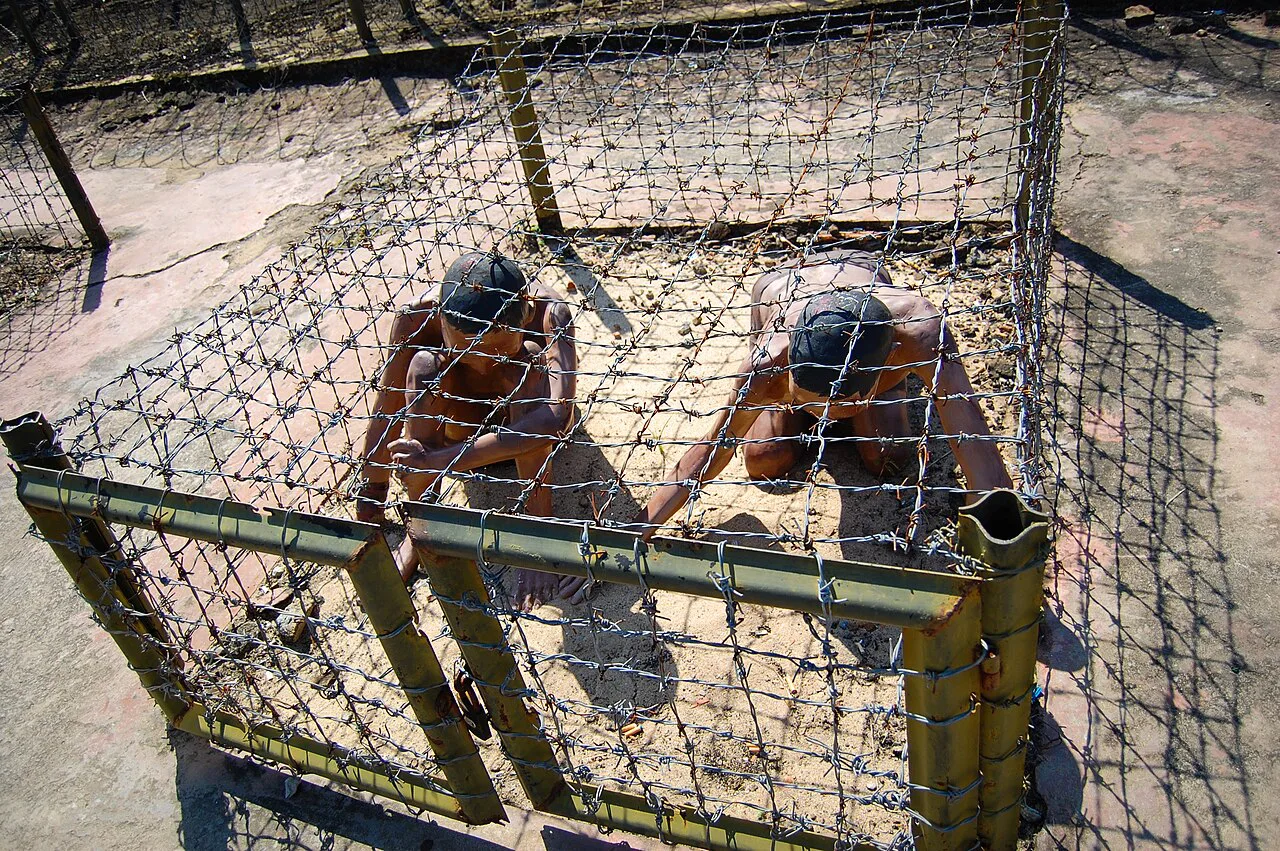
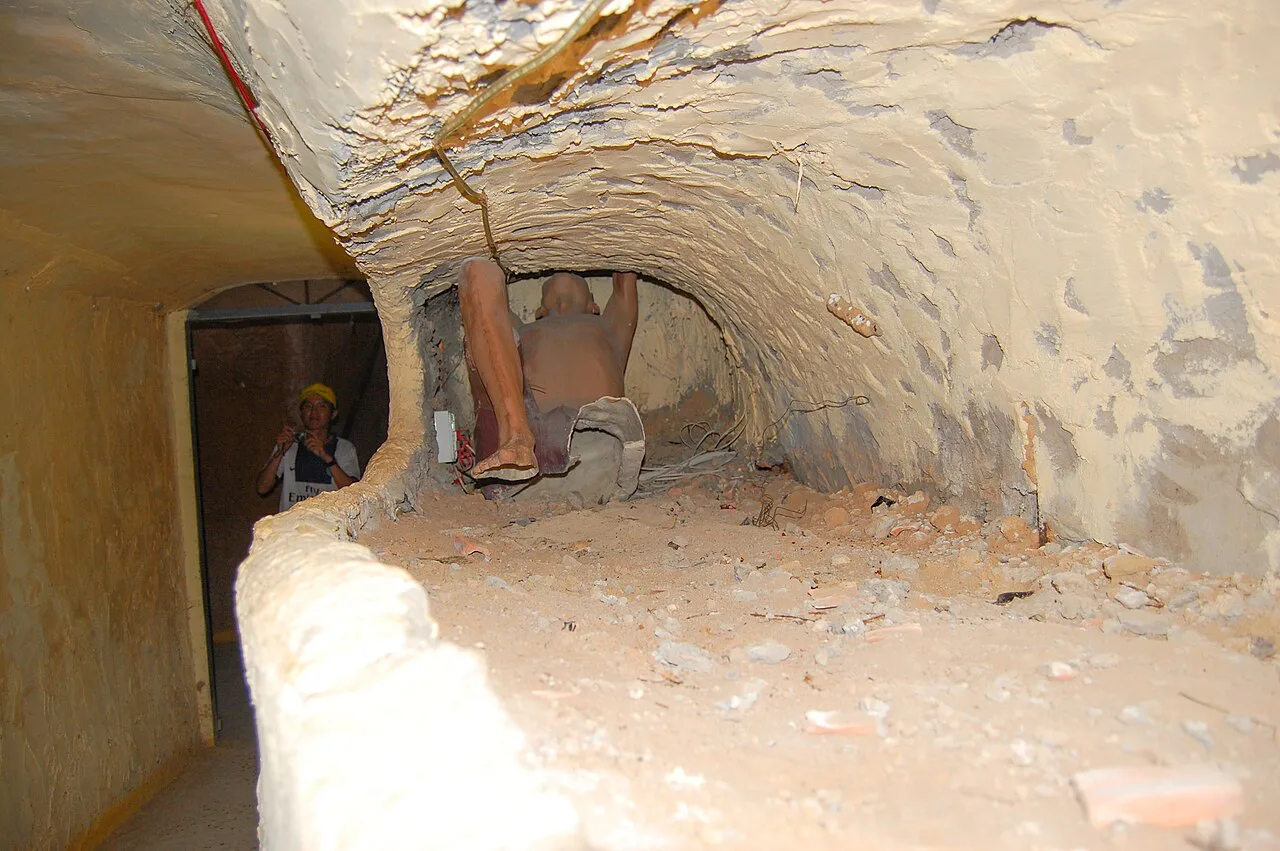
The B2 section is the emotional core of the site and the part most visitors remember. Life-sized reconstructions show the tiger cages, solitary confinement cells and interrogation rooms, using mannequins to recreate conditions that are deliberately unsparing. Pullman notes that the section documents escape attempts, including tunnels dug with spoons and food containers, and that reviewer feedback repeatedly describes the experience as confronting.
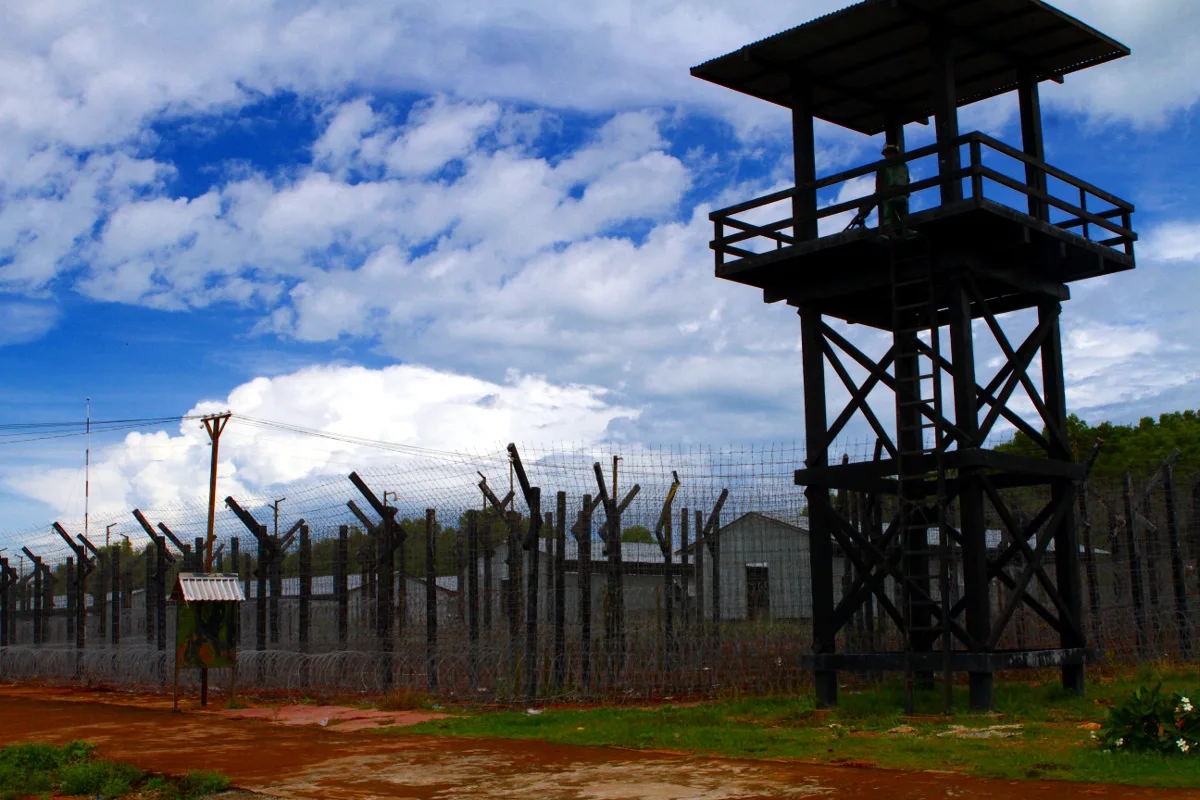
Walk the outdoor compounds before or after B2 rather than in the middle, so the reconstructed interiors land as a single experience. The guard structures and the perimeter of the old camp give you a sense of scale that the indoor rooms cannot, and they photograph better in the morning light.
The Exhibition House and Photographic Displays
The Exhibition House holds two rooms: one traces the development of the prison through artefacts and information panels, with English-language boards throughout, and the other holds more than 100 photographs and documents showing how prisoners were treated and how they organized resistance. Reading the panels first makes the reconstructions easier to interpret, so start here if you have the patience.
Novotel's description adds that the displays include personal belongings and images illustrating both the harsh conditions and the prisoners' resistance, alongside models of torture methods and a memorial monument. Photography is generally permitted in most areas, though some reconstructions carry signage asking you not to use flash.
The POW Cemetery and Memorial Area
The POW Cemetery sits roughly a kilometer from the main site, so it is a separate stop rather than a corner of the same compound. The grounds cover about 2,000 square meters and center on a raised-fist monument, and Pullman suggests 30 to 45 minutes there on top of the main site. Drive or ride between the two unless you are comfortable walking in the heat.
Treat the cemetery as the quiet close to the visit. It is a more contemplative space than the reconstruction areas, and ending there gives you room to process what you have seen before getting back in a car.
How Much Time to Allow, and a Sensible Order
Budget 1.5 to 2 hours for the main site, per Pullman's recommendation, plus the cemetery time if you make that stop. That puts a realistic visit at two to three hours including arrival and parking, which fits neatly into a morning.
A workable order is straightforward: start with the Exhibition House to build context, move through the B2 cells and tiger cages while you are still fresh, then walk the outdoor grounds and guard structures, and finish at the memorial or cemetery. Carry water, wear a hat and use sunscreen, because much of the site is open to the sun and shade is limited between buildings.
Visiting Respectfully: Dress, Behavior and Emotional Weight
This is a memorial as much as a museum, so dress modestly and keep your voice low in the exhibition rooms. VinWonders' visitor tips emphasize modest clothing and respectful conduct alongside sun protection, which is reasonable guidance for a site of this kind. Follow any posted instructions in the reconstructed sections.
Allow yourself to be affected. Several guides describe the displays as graphic and confronting, and that is intentional; if you need to step outside for air midway through B2, do so.
Who Should Skip It: Families and Sensitive Travelers
Pullman's guide does not recommend the site for children under 12, and the mannequin reconstructions of torture are the reason. If you are traveling with younger children, split the group or choose a different south-island stop for that morning. Travelers who find graphic displays difficult, including those affected by wartime imagery, should read the exhibition panels with care and skip the more explicit reconstructions.
There is no obligation to see everything. The outdoor grounds and memorial alone give you a sense of the place without the most disturbing interiors.
Practical Notes: Heat, Parking and Accessibility
Parking is free onsite, with street parking also available, and Pullman reports wheelchair-accessible parking and restrooms. The site is largely outdoors, so plan around the middle of the day heat rather than fighting it. Bring water, a hat and cash for small purchases.
Because sources describe different closing times, the safest approach is to arrive in the morning and confirm the afternoon window with staff when you enter. If you build the visit into a wider day on Phu Quoc, our Phu Quoc Attractions: 5 Visitor Guides covers the island's other major stops and how they fit together.
Nearby Options in An Thoi and Across the Island
An Thoi town, the port and the southern beaches are close enough to pair with the prison in one outing, and the ride back north passes several other stops worth considering on a different day. Dinh Cau Temple, Phu Quoc sits in Duong Dong near the night market and makes an easy evening add-on rather than a same-morning pairing.
If you want a quieter, more contemplative stop on another day, Su Muon Pagoda, Phu Quoc offers a contrast to the prison's weight, and Tranh Stream Phu Quoc suits a half day inland when the water is running. Ganh Dau Cape Phu Quoc anchors the northwest for travelers staying at that end of the island.
Should Phu Quoc Prison Be on Your Itinerary?
Yes, if you have a spare morning and any interest in Vietnam's wartime history, and especially if you are already heading to An Thoi for the port or southern beaches. The visit is free, fits in two to three hours and pairs naturally with the south end of the island. Families with children under 12 and travelers who find graphic displays hard should skip the B2 reconstructions or the site entirely.
Before you go, confirm the day's opening hours with your hotel, since published times differ, and plan to arrive in the morning. Bring water, dress modestly and leave time for the cemetery if you can.