
Dinh Cau Temple, Phu Quoc (Dinh Cậu): A Visitor's Guide

Dinh Cau Temple is a small shrine built on a rocky point at the mouth of the Duong Dong River, and it is one of Phu Quoc's most recognisable spiritual landmarks. Most visitors need 30 to 60 minutes here, so treat it as a short, scenic stop rather than a half-day sight. This guide covers where the temple sits, how to reach it from Duong Dong, the 29 stone steps up to the shrine, the altars inside, and how to combine the visit with the sunset and the nearby night market. For more on the island, see Phu Quoc Attractions: 5 Visitor Guides.
What Dinh Cau Temple is and why fishermen revere it
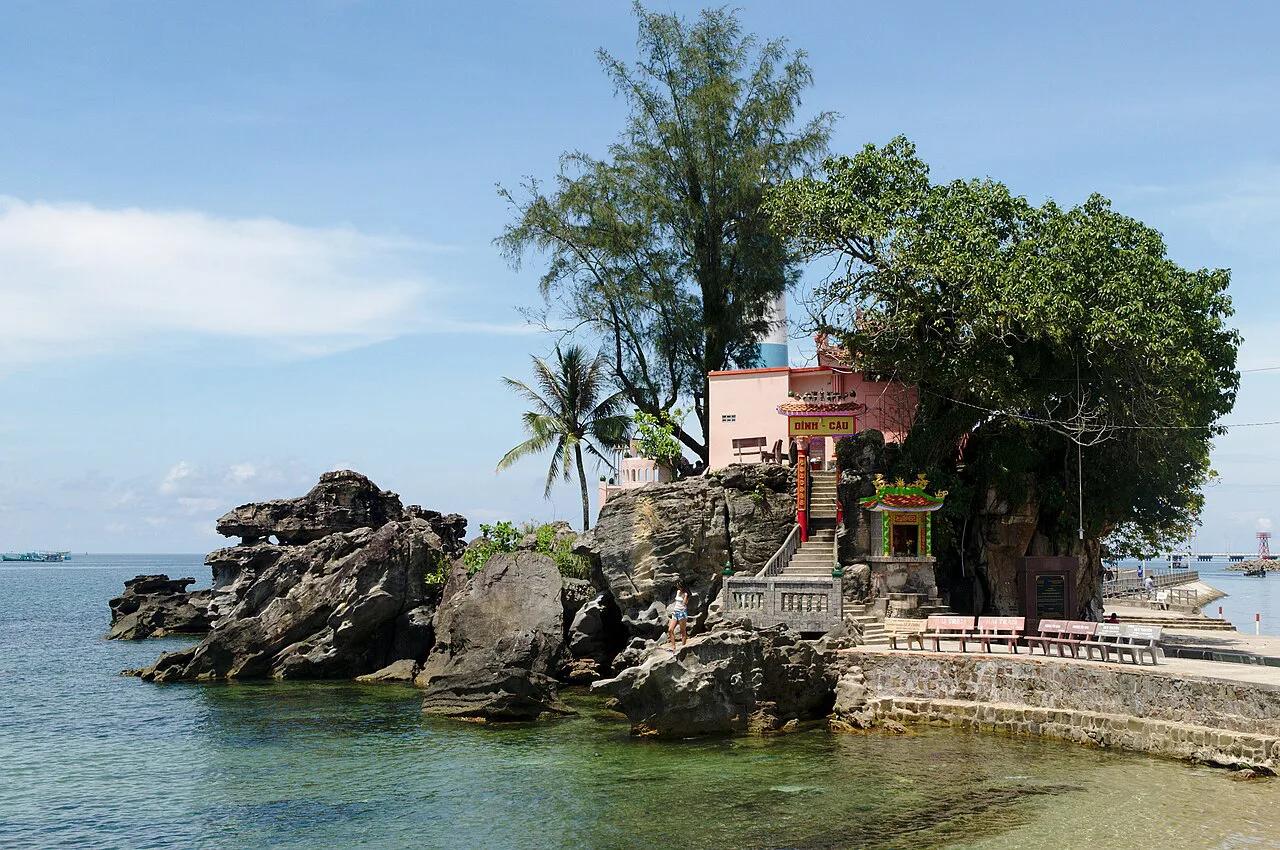
Dinh Cau is the local name for a shrine complex that sits on an outcrop where the Duong Dong River meets the sea, in the heart of Duong Dong town. For generations, fishing families have come here before a voyage to offer incense and prayers for a safe return. The site blends natural scenery, local legend and everyday spiritual practice, which is why it feels more like a working shrine than a museum piece.
The temple grounds include a small shrine at the top of the rock, a main hall with several altars, and a terrace looking out over the fishing harbour and the Gulf of Thailand. The Vietnamese name is Dinh Cậu, and locals sometimes call it the Rock Temple or Cau Temple. It honours sea deities and protective spirits — the main hall houses altars to Thien Hau (the Sea Goddess), Ngoc Lan, the Five Elements, and, in some accounts, the two Cau brothers, Cau Tai and Cau Quy.

Where Dinh Cau is in Duong Dong
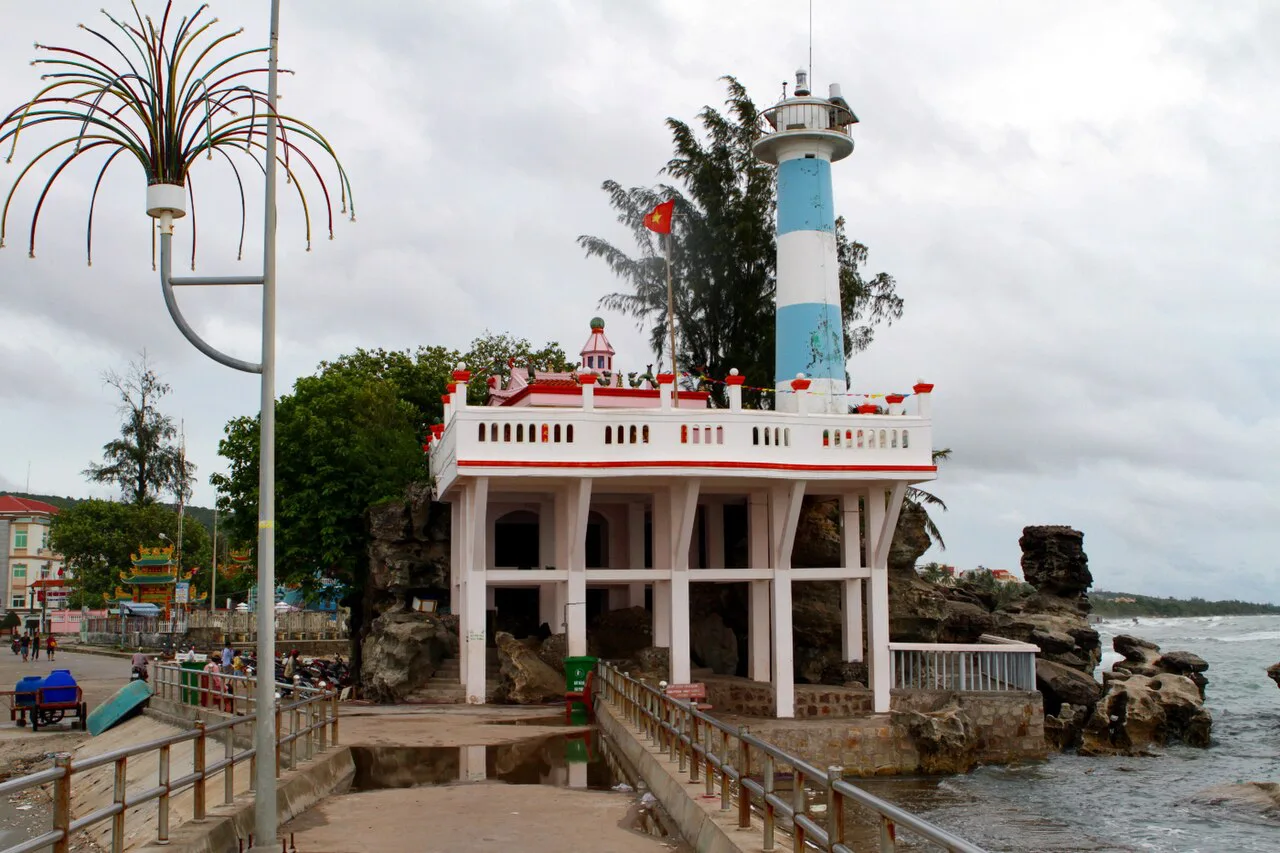
Dinh Cau sits in Quarter 2 of Duong Dong ward, on the western edge of the town centre, roughly 200 metres west of the main commercial strip. The rock juts out beside the fishing harbour at the mouth of the Duong Dong River, so you approach it on foot from the harbour side. The night market, Dinh Cau beach and several seafood restaurants are all within easy walking distance, which makes the temple an easy add-on to an evening in town. To plan a stay nearby, see our guide to hotels in Duong Dong.

How to get to Dinh Cau from Duong Dong and elsewhere on the island
If you are staying in Duong Dong, the simplest approach is to walk: from the night market area, head west along Bach Dang Street toward the harbour and follow the waterfront to the temple steps. From elsewhere on the island, a taxi or a ride-hailing app is straightforward because the driver can drop you at the base of the rock. Self-drivers on scooters can follow DT 45 or Cach Mang Thang Tam Street and then turn onto Nguyen Trung Truc Street, which leads to the temple area.
Parking near the temple is limited, so if you ride a scooter, expect to leave it on the street nearby and walk the last stretch. The temple is close enough to the night market that you can combine the two on foot without moving your transport. If you are coming from a resort further north or south, plan the temple as a stop on the way into Duong Dong for dinner rather than a separate round trip.
Visiting hours and entry: what the sources say
Travel sources differ on opening hours. One guide states the temple is open daily from 7:00 AM to 6:00 PM, while another lists it as open all day. Entry is described as free by several travel sources, but because no official operator listing or heritage-body notice appears in the available sources, confirm the current hours at the temple gate or through the Phu Quoc tourism authority before you build a tight schedule around them.
The practical takeaway is that the temple is generally accessible during daylight hours, which suits the sunset visit most travellers want. If you plan to arrive early in the morning for quiet worship, check locally the day before, because published times vary. Sunset itself arrives in the late afternoon, so plan to be on the terrace well before the light fades; a local almanac or weather app will give you the exact time for your date.
What you climb and see: the 29 steps, the shrines and the altars
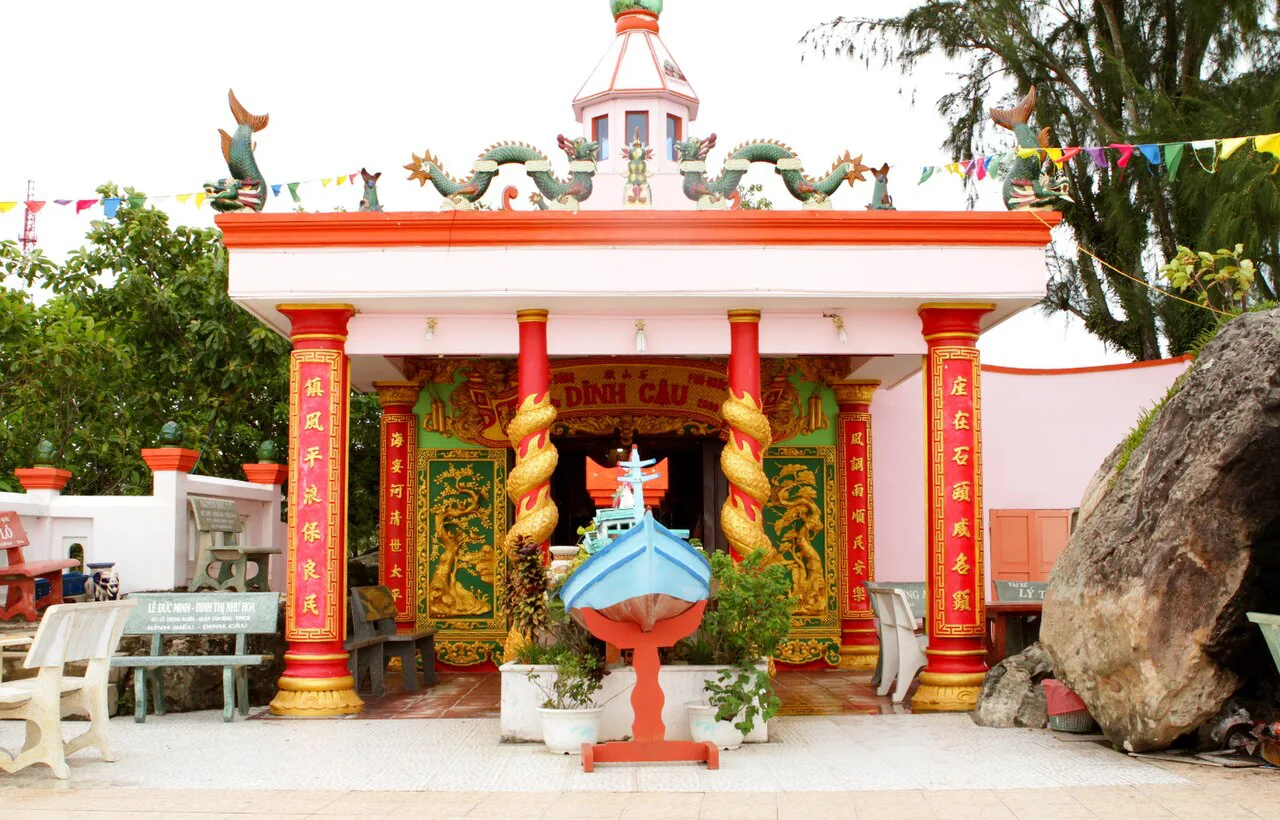
To reach the shrine, you climb 29 stone steps that curve up the rock face, a short ascent that most people manage comfortably in a few minutes. At the top, a small shrine and a terrace open out over the harbour and the sea. The main hall is modest in size but rich in detail, with a red-tiled roof, dragon carvings on the pillars, and altars dedicated to Thien Hau, Ngoc Lan and the Five Elements. According to local tradition, the temple was first built in the 17th century and the current structure was built in 1937, then restored in 1997.
Inside, you will see the altars to the Cau brothers, Cau Tai and Cau Quy, who are associated in local folklore with luck and gambling, which is why some visitors leave offerings hoping for good fortune. The atmosphere is often smoky with incense and busy with local worshippers, so move quietly and keep to the edges when services are underway. The terrace outside is the best spot for photographs of the harbour, the fishing boats and the open sea.
Dress code and behaviour in an active shrine
This is a working shrine, not a tourist attraction with a turnstile, so dress respectfully: shoulders and knees covered is the usual standard, and travel sources cite a decent-clothes rule. Remove your shoes before entering the main hall if you see shoes left at the threshold. If you want to offer incense, buy a small bundle from the vendors near the steps rather than bringing your own, and follow the example of local worshippers. Photography is generally acceptable on the terrace and outer areas, but avoid photographing people mid-prayer and check for any signs restricting photography inside the main hall.
How much time to allow and the best slot for sunset
For most visitors, 30 to 60 minutes is enough to climb the steps, look around the main hall and take in the view. If you want to watch the sunset, arrive about an hour before the sun goes down so you can explore the shrine first and then find a spot on the terrace or the rocks near the harbour. The view faces west over the Gulf of Thailand, so late afternoon is the natural slot; mornings are quieter for worship but lack the sunset.
Because the site is small, it never needs a half-day. Pair it with the night market or a seafood dinner in Duong Dong rather than making a separate trip. If you are visiting in the rainy season, check the weather before committing to a sunset visit, as cloud can obscure the view.
The Dinh Cau Festival and how it changes a visit
The temple's biggest event is the Dinh Cau Festival, held on the 15th and 16th of the 10th lunar month according to multiple travel sources. During the festival, the temple and harbour area fill with processions, offerings and visitors from across the island, so expect crowds and a very different atmosphere from a normal evening. If you want to see the festival, plan your trip around the lunar date and confirm the exact Gregorian dates with a local calendar or the Phu Quoc tourism office closer to the time.
Nearby afterwards: night market, beach and fishing harbour
The Dinh Cau night market is about 100 metres away, making it the obvious next stop after a sunset visit. The market is known for seafood, local snacks and souvenir stalls, and it is busiest in the evening. Dinh Cau beach and the fishing harbour are also right there, so you can walk along the waterfront and watch the boats unload. For a longer cultural stop, Sung Hung Pagoda is a short drive away in Duong Dong.
If you are building a day of sightseeing, other Phu Quoc attractions such as Su Muon Pagoda (Chùa Sư Muôn), Phu Quoc and Phu Quoc Prison (Coconut Tree Prison) are further afield and suit a half-day or full-day outing rather than an add-on to Dinh Cau. The temple works best as a standalone 30-to-60-minute stop combined with dinner in Duong Dong.
Who Dinh Cau suits and who should skip it
Dinh Cau suits travellers who want a short, atmospheric cultural stop with a sea view, especially those staying in Duong Dong or planning an evening at the night market. It also suits photographers chasing a sunset shot over the Gulf of Thailand. It is less suited to travellers expecting a large pagoda complex or a museum-style visit, because the shrine is small and the main hall can be seen in a few minutes. If you are short on time and have already seen several Vietnamese temples, this one is optional rather than essential.
Should you add Dinh Cau to your Phu Quoc evening?
If you are staying in or near Duong Dong, Dinh Cau is an easy and worthwhile addition to an evening: climb the 29 steps, look inside the main hall, and time your visit for sunset before walking to the night market. Allow 30 to 60 minutes and check the current hours at the temple or through local tourism information on the day. If you are based far from town, combine it with a dinner in Duong Dong rather than making a dedicated trip.
Explore more Phu Quoc guides
Frequently Asked Questions
Is Dinh Cau Temple free to enter?
Several travel sources describe entry to Dinh Cau Temple as free. Because no official operator listing appears in the available sources, confirm at the temple gate or with the Phu Quoc tourism authority before your visit.
How many steps are there up to Dinh Cau Temple?
Travel sources report 29 stone steps from the street level up to the shrine. The climb is short but uneven, so wear shoes with good grip and take it slowly in wet weather.
What time does Dinh Cau Temple open and close?
Sources vary: one lists 7:00 AM to 6:00 PM daily, another says open all day. Check locally on the day you plan to visit, especially if you are travelling early in the morning or after dark.
Is Dinh Cau Temple worth visiting?
It is worth visiting if you are already in Duong Dong or want a sunset spot with a sea view and a glimpse of local fishing culture. It is a small shrine, so do not expect a large temple complex; allow 30 to 60 minutes.
What is the Dinh Cau Festival and when is it held?
The Dinh Cau Festival celebrates the temple's sea deities and is held on the 15th and 16th of the 10th lunar month, according to travel sources. The lunar dates shift each year in the Gregorian calendar, so check a local calendar or ask the Phu Quoc tourism office for the exact dates.