
Bich Dong Pagoda: A Visitor’s Guide to Ninh Binh’s Cave Temple

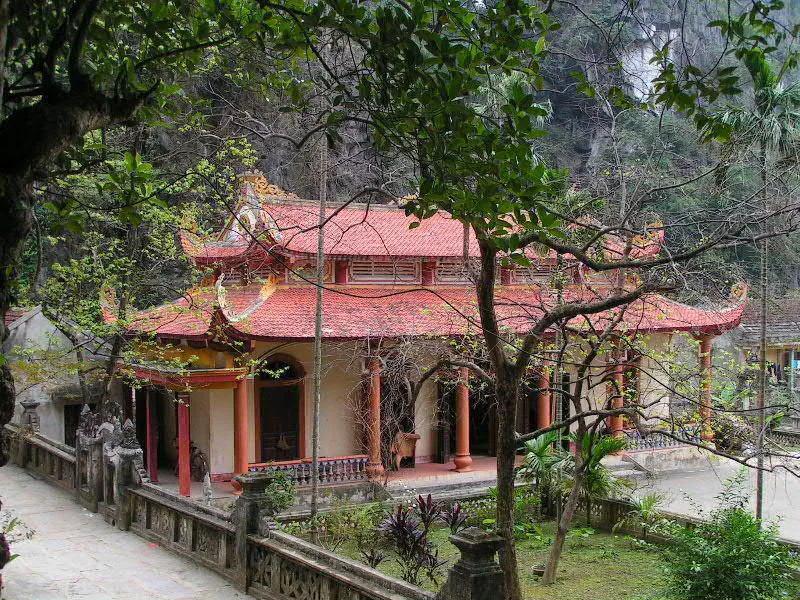
Bich Dong Pagoda (Chùa Bích Động) is one karst tower in Ninh Binh province with three cave temples stacked one above the other: Lower Pagoda at the foot, Middle Pagoda halfway up, Upper Pagoda near the summit. Admission to the temple grounds is free according to multiple travel guides, so the only cost you are likely to meet is a small parking charge near the gate. This guide covers where the temple sits, how to reach it from Tam Coc or Ninh Binh city, what is inside each tier, how hard the staircase is, and what to pair with the visit nearby.
Plan on 60 to 90 minutes if you climb all three levels and pause for the view, plus travel time from wherever you are staying. The visit is short but vertical: roughly 120 steps to the Middle Pagoda, then about 40 more to the Upper Pagoda, then 21 more to the Dark Cave, according to a detailed showcaves.com description of the site. If you are weighing the temple against the wider region's sights, the Ninh Binh Attractions guide is the place to compare what each one demands of your day.
What Bich Dong Pagoda actually is
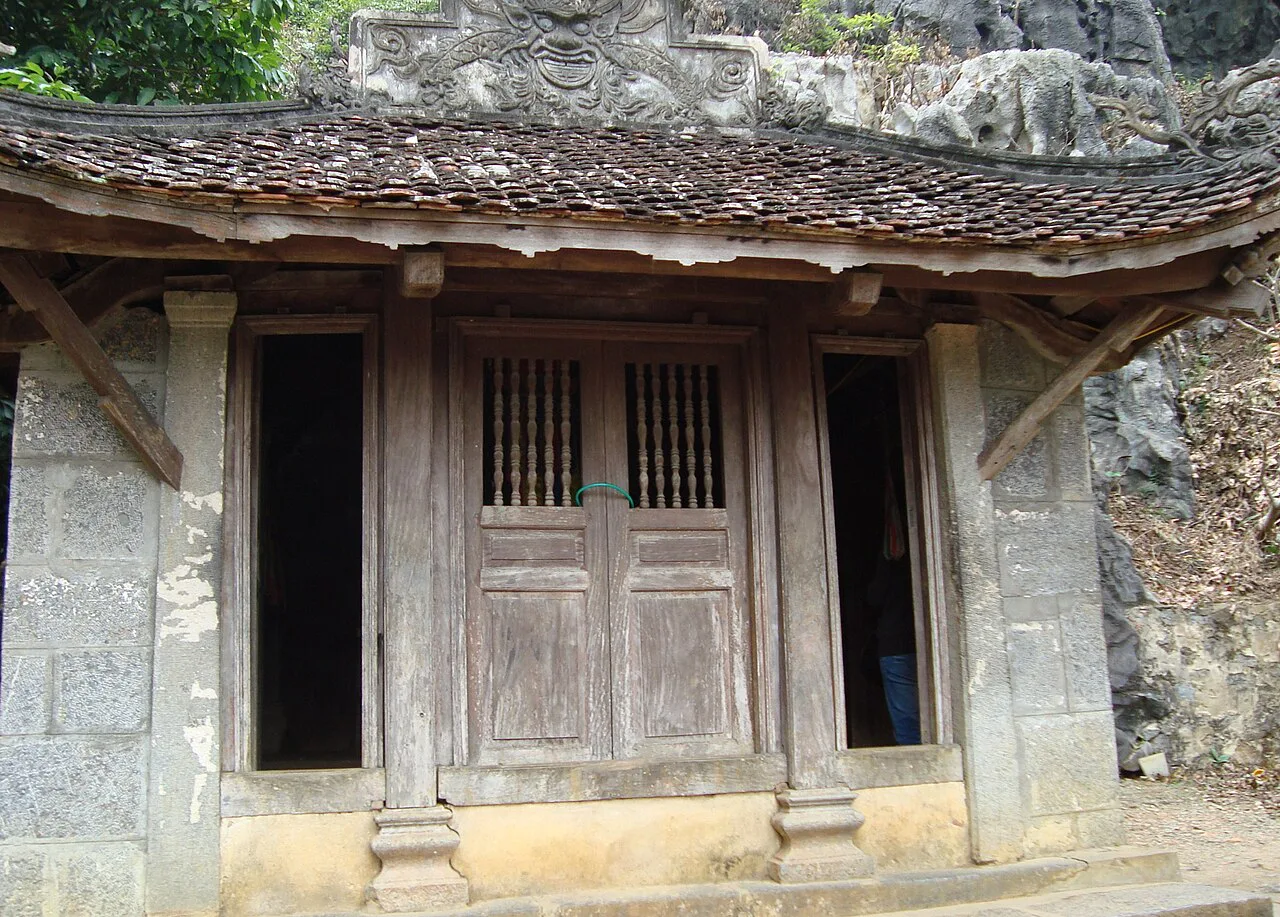
The complex is a vertical sequence rather than a single building. The Lower Pagoda stands at the base of Ngu Nhac Mountain beside a stone bridge and lotus pond, the Middle Pagoda sits part-way up and is half carved into the cave portal, and the Upper Pagoda occupies the higher rock with a forecourt looking back over the valley.
What matters for your visit is that the temple is inseparable from the limestone: roofs, walls and altars are built against and into the rock, and the walk between tiers is a walk up a mountain rather than through a courtyard complex. As Asia Tours describes it, passing through the gate into the grounds feels like stepping into a quiet pocket of the countryside.

Where it sits: Ninh Hai commune, Hoa Lu district
Bich Dong Pagoda is in Ninh Hai commune, Hoa Lu district, Ninh Binh province, about 3 km east of the Tam Coc boat station and roughly 7 km from Ninh Binh city center. Use the Tam Coc boat wharf or your Tam Coc guesthouse as the reference point rather than a street address; there is no useful postal address to hand a driver. Two of the province's other sights have their own dedicated guides: the Phat Diem cathedral and the Thai Vi Temple (Đền Thái Vi) near Tam Coc, both a different kind of visit from a cave temple.

How to get there from Tam Coc or Ninh Binh
From Tam Coc, the easiest approach is a bicycle or scooter along the flat lanes through the rice fields, which takes around fifteen minutes at an easy pace. Rental rates are quoted by travel blogs rather than by any official body: one guide puts bicycles at about 50,000 VND per day and scooters at 100,000 to 150,000 VND, so confirm the current rate with your guesthouse before you ride off.
From Ninh Binh city, a metered taxi or a car arranged by your hotel is the straightforward option, and the drive is short enough that the fare stays modest; agree the price or insist on the meter before setting out. Many visitors see the temple as a stop on a Trang An and Tam Coc day tour, which solves the transport question but fixes your time at the site, so check how long the itinerary allows before booking.
Opening hours and admission: what the sources say
There is no entrance ticket for the temple itself. Showcaves.com lists the site as open all year during daylight hours with free admission, and the travel guides reviewed for this page agree that entry to the grounds costs nothing. The disagreement is over the daily schedule: one guide gives 06:00 to 18:00, another roughly 07:30 to 16:30, and a third 09:00 to 18:00, so treat all three as indicative rather than official and confirm the day's hours with your hotel before you go.
Parking and the small-fee confusion
You may be asked for money at the gate, and it is almost certainly a parking charge rather than admission. Sources describe it as small and variable, with 10,000 to 20,000 VND for bicycles and motorbikes quoted in one guide and a range of 10,000 to 30,000 VND in another, and at least one source warns that informal parking charges levied on visitors can vary unpredictably. Carry small notes, ask the amount before you park, and remember that you are not buying a temple ticket.
Some guides repeat the claim that a Tam Coc boat ticket includes the pagoda, and at least one source explicitly disputes it. The practical reading is that the temple is free, the boat ride is a separate purchase at the Tam Coc wharf, and any combined ticket you are offered should be read carefully before you pay.
The entrance walk and the Lower Pagoda
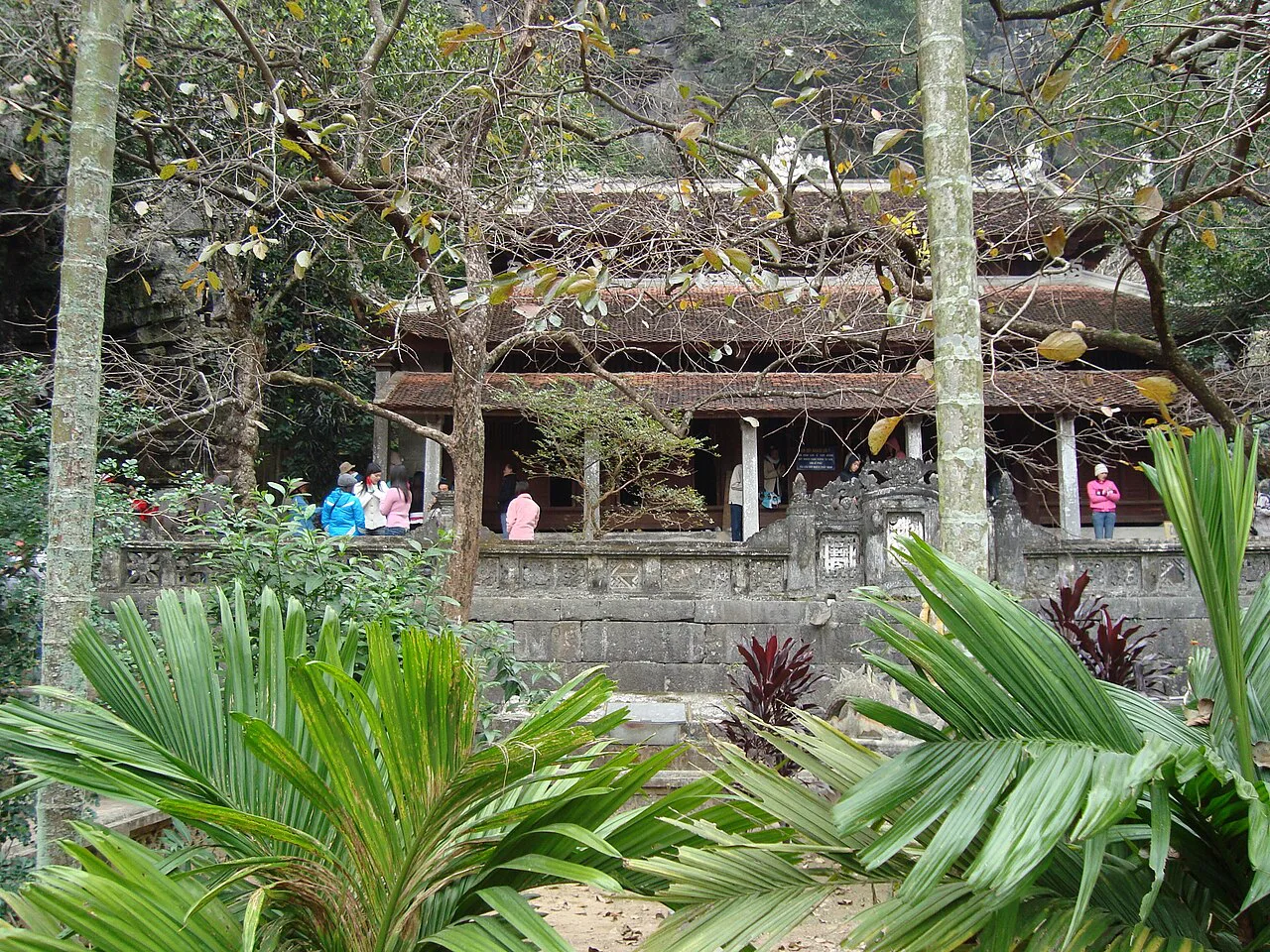
The visit begins at a stone bridge without railings, crossing an artificial lotus pond toward a gate set into the rock. In early summer the pond is green with lily pads, which is why the bridge is the most photographed spot on the site; it is also narrow and unfenced, so watch children and keep your footing. Beyond the gate the courtyard opens onto the Lower Pagoda, a two-story, five-room wooden structure with ten roof sections and an ironwood frame. According to showcaves.com, the Lower Pagoda was built in 1428 during the reign of Emperor Ly Thai To.
Middle Pagoda: the climb and the cave
The climb to the Middle Pagoda is about 120 steps up a stone staircase, and it is the point where the visit becomes physical. The temple itself is split: one part stands outside under a tiled roof, and one part sits inside the cave portal, where a large bronze bell hangs from the ceiling and the air stays cool. According to showcaves.com, this upper level was added by the monks Tri Kien and Tri The in 1705.
Upper Pagoda, the pond and the Dark Cave
From the Middle Pagoda, about 40 steep steps lead to the Upper Pagoda, which has a forecourt and two rooms with a stone altar and a shrine to the Bodhisattva. Continuing a further 21 steps brings you to the Dark Cave, which has no temple inside but holds a large bronze bell cast by the founding monks in 1707 along with numerous Buddha statues and paintings on the rock. Between these tiers lies a small pond known as Cam Lo, said locally to have healing water — treat that as folklore rather than advice.
How long to allow and how hard the climb is
Budget around an hour for the full climb with stops, and up to ninety minutes if you linger at the top or wait for the light. The stairs are steep, uneven and slippery after rain, and every source reviewed agrees the site is not suitable for wheelchairs or strollers.
What to wear and how to behave
This is an active place of worship, so cover your shoulders and wear trousers or a skirt that reaches past the knees. Remove hats and sunglasses, and take off your shoes before stepping into the inner altar rooms; footwear should be easy to slip off because you will do it more than once.
When to go and how it pairs with Tam Coc
Early morning is the best window: the air is cool, the stairs are drier, and the tour groups that fill the courtyards by mid-morning have not arrived. Several guides make the same point, and it matters most in the high season when Tam Coc boats queue at the wharf. The natural pairing is the Tam Coc boat ride, which launches from the wharf a short ride away and takes you through the caves by rowboat.
For a wider menu of options beyond this one temple, the Lantern Cities list of things to do in Ninh Binh sets the pagoda alongside the region's other half-day draws, which helps you judge how much else fits in the same day.
Nearby: Thai Vi Temple, Hang Mua and the city
Thai Vi Temple (Đền Thái Vi) is a short ride from Bich Dong and makes an easy second stop, with a quieter courtyard and a different history from the cave temples. Hang Mua's ridge-top stairs and the Trang An boat circuit are both within the same day's reach if you start early. Back in the city, Ky Lan Lake (Ho Ky Lan) in Ninh Binh is a pleasant place to end the afternoon, while Chợ Ninh Bình is where to pick up fruit and snacks for the ride home.
Is Bich Dong Pagoda worth the climb?
Yes, if you are already in Tam Coc or spending a day in the Ninh Binh countryside, and you should treat the climb as the point rather than an obstacle. The three tiers give you a working temple, a cave shrine and a view in under two hours, all for free, with only a small and variable parking charge at the gate.